
The Adventure of Learning
The Adventure of Learning is a space for meeting and exchange around learning to discover what practices, atmospheres, spaces, and agents make communities work; their whys and hows, or in other words, their aspirations and protocols.
This project starts from minimal and easy-to-formulate premises. The first has to do with the conviction that knowledge is a collaborative, collective, social, and open endeavor. The second embraces the idea that there is a lot of knowledge that does not arise within the walls of academiaor any of the canonical institutions specialized in its production and dissemination. And finally, the third argues in favor ofknowledge is more an activity of doing than of thinkingand less argumentative than experimental.
The objective of these didactic guides is topromote the implementation of collaborative projects that connect classroom activities with what happens outside the school grounds.
Without adventure, there is no learning, as the tasks of learning and producing are increasingly inseparable from the practices associated with sharing, collaborating, and cooperating.http://laaventuradeaprender.intef.es
Project conceived and coordinated by Antonio Lafuente for INTEFhttps://intef.es. Work published under a Creative Commons Attribution-ShareAlike 4.0 International License.https://creativecommons.org/licenses/by-sa/4.0
For any matters related to this publication, please contact: National Institute for Educational Technologies and Teacher Training. C/ Torrelaguna, 58. 28027, Madrid. Tel: 91-377 83 00. Fax: 91-368 07 09. Email: lada@educacion.gob.es.
Ministry of Education and Vocational Training; Directorate General for Evaluation and Territorial Cooperation. National Institute for Educational Technologies and Teacher Training (INTEF); Digital Educational Resources.
Who is this guide for
Mariana Alonso Briales
Professor in the Department of Theory and History of Education and M.I.D.E. at the University of Malaga. Her research interests include teacher training, inclusive education, Culture of Peace, and ICT.

María Teresa Rascón Gómez
Professor in the Department of Theory and History of Education and M.I.D.E. at the University of Málaga. Her research interests include inclusive education, intercultural education, and attention to diversity.
Ignacio Calderón Almendros
Professor of Theory of Education at the University of Malaga. His research interests include processes of exclusion in schools and the promotion of inclusive education.
Educational community of CEIP La Parra (Almáchar, Malaga)
This educational community is made up of all the teaching staff, families, students, administrative and service personnel, and political leaders and representatives from various entities belonging to the social fabric of the municipality of Almáchar (Malaga). The driving team, which has coordinated all the work described here, is composed of: Alicia Cristina Granados Holgado, Amanda Pérez Lozano, Aroa Palma Palma, Begoña Gaona Ruiz, Carmen Dolores Mates Llamas, Cristina Sánchez López, Cristina Vega Díaz, Diana Farzaneh Peña, Florentina Jennifer Zamora Vigo, Francisco Javier Giménez Carretero, Juan Diego Carvajal Hidalgo, Juan Gámez Gutiérrez, Julio Moratalla Gallardo, Lucía Gámez Gámez, Marco Antonio Alcaraz Lozano, María del Mar Herrera Fernández, Moisés Gutiérrez Marín, Mónica Reyes España, Raquel Cerezo García, Rocío España Godoy, Rosa María Paredes López, Sandra Barrado Fernández, Sara Giménez Miguel and Sheila España Palomo, Victoria Yolanda Rodríguez González.
Introduction
This guide is a resource that has been developed with the aim of helping schools to initiate and develop a Participatory Action Research process to make them more welcoming and inclusive. It is an open and versatile tool created to be implemented in any educational community. You just need to introduce the necessary changes to adapt it to your school reality… And voilà!You are now ready to begin!
School is not only a formative space where content is internalized, but it is a place where we learn to respect, value, and coexist. Diverse knowledge merges here, generating fundamental knowledge for our daily lives. For many particularly vulnerable children, school also constitutes a refuge of hope, an opportunity to interact with diversity, build a personal identity, and participate in the development of a collective identity that leaves no one behind.
Do we want to make our school a place where all this happens? If we are clear about this, let’s start by turning it into a laboratory for life learning. This task requires two basic conditions from the educational community: commitment and responsibility. Commitment to provide the means and resources available to build, together as a community, a more welcoming and inclusive school. And responsibility to fulfill the commitments made. One of these commitments relates to the need to acquire the necessary training to put this laboratory into operation.
We need the entire educational community to start researching, and for different formulas to be tested that lead to the desired outcome!
We have created this guide to help you in the process. In it, you can find some clues on how to carry out a Participatory Action Research process in your school.
Participatory Action Research (PAR) seeks to generate knowledge and transform a specific reality with the active participation of all those involved. PAR develops systematic and rigorous work in which the entire community acts as a research agent of its reality, developing participatory analyses, choosing action focuses collectively, designing and implementing a comprehensive action plan, and evaluating the process (Carr and Kemmis, 2005).
That is, “research carried out by ordinary people who act as researchers to explore issues of their daily lives, recognize their own resources, produce knowledge, and act to overcome inequalities, often in solidarity with outsiders.” (Dickson, 1997, p. 2).
The objective of this type of research is for the people participating in it to move from being mere objects of knowledge to subjects of change. At times, the presence of external facilitators will also be necessary to guide them through the transformation process, but they will only be methodological guides. This is very important: PAR is a democratic process, in which the community speaks and leads the process. That is, the people from the community itself question their reality while identifying their resources to solve the problems of their daily lives (Kemmis and McTaggart, 1988).
To illustrate the guide and provide an example, we will share the Participatory Action Research (PAR) experience we are undergoing at the public center for Early Childhood, Primary, and first cycle of Secondary Education “La Parra” in Almáchar (Málaga). There, PAR is characterized by the following:
- Investigate what happens in the school, that is, collect information and analyze it to better understand what is happening.
- At the same time, work to change reality according to what is learned.
- It is based on the knowledge of all people, and it is all of them who construct the analyses, reflect together, and develop and implement solutions to their problems.
The project includes students, teachers, families, administrative and service staff, neighbors, community agents, and members of the University of Malaga. As a first objective, it was decided to improve coexistence in the school and its surroundings. The center takes on the challenge of a profound change in the way of looking at and understanding the attention to diversity from an inclusive approach, which incorporates the voices of students and families to identify barriers to learning and participation, thereby generating opportunities for all students without exception. That is, it is understood that the problems are not with a boy or a girl, but are in the institutional frameworks, in the culture, and in the relationships. And to change reality, collective responsibility is required. The purpose is to build a school that responds to all singularities and to which children come happily, that have equivalent opportunities to learn and develop, to build their own life projects, and that also become autonomous and responsible individuals who want to transform their reality.
The educational community of CEIP La Parra (Almáchar, Malaga) and a research team from the University of Malaga1 have joined forces to create this resource and make you a participant in a collaborative experience that we would like to extend to other schools.
Materials
For planning
One of the most important resources for building a common project and producing learning is dialogue. Communication and active listening are fundamental processes for teamwork and for improving coexistence. Dialogue allows participants to present and confront ideas, reach agreements, and contribute solutions to problems.
To carry out the tasks we propose, it is very useful to have some audiovisual resources such as:
- Photo and video cameras, as well as audio recorders. These technological resources can be especially useful for documenting the Participatory Action Research (PAR) process, for analyzing it, and for delving deeper into educational practices in order to improve them. It allows for a meticulous observation of how learning is constructed among the research participants and how new knowledge is generated. But it also allows for sharing what happens so that anyone, regardless of their age, education, etc., can access what the community says and does. In other words, they are an extraordinary set of tools for disseminating both the process and the results.
- Computers with Internet access. The internet allows us to create and share online documents, videos, images, etc. Distances no longer have to be a problem, as there are numerous social networks and applications that allow us to communicate with the members of our educational community via text messages, voice calls, video calls, videos, etc. Schools have computer equipment and internet connection that can be made available for this purpose.
- Collaborative audiovisual tools. The use of shared documents is especially useful, as it allows the group to create collective materials. There are also applications that can facilitate certain tasks related to organization and the transmission of ideas within the group, allowing us to create cognitive maps, flowcharts, infographics, attractive audiovisual presentations, etc.
Also necessary are stationery materials, such as continuous paper, colored markers, adhesive paper, adhesive tape, notebooks, pens, markers… - Especially useful can be LADA Guides. There is a whole series of guides that precede this one that can be used to develop some of the processes we propose on these pages. They explain in detail how to do them. You will find the links throughout the document.
Steps
Step 1. Responding to a demand and negotiation process
The first requirement to start PAR in our school is that there is ademand. This claim generally arises when members of an educational community notice symptoms of unease in their school and decide to take action. It also arises when a desire to improve something that is a concern emerges. Awareness is the step prior to any action, and when it occurs, it is important to inform the rest of the educational community and request their collaboration.
All change requires prior organization and a negotiation process.That is why it is important that the demand is accompanied by prior planning that lists the objectives to be pursued and clearly sets out the conditions and commitments necessary to initiate the transformation process. It is essential that the participants reach agreements and adopt responsibilities in which they can involve other members of the educational community. The more of us there are, the more significant the change will be! Let’s not forget that the school is made up of everyone who inhabits it: families, students, teachers, administrative and service staff, members of institutions present in the environment, and other educational agents.
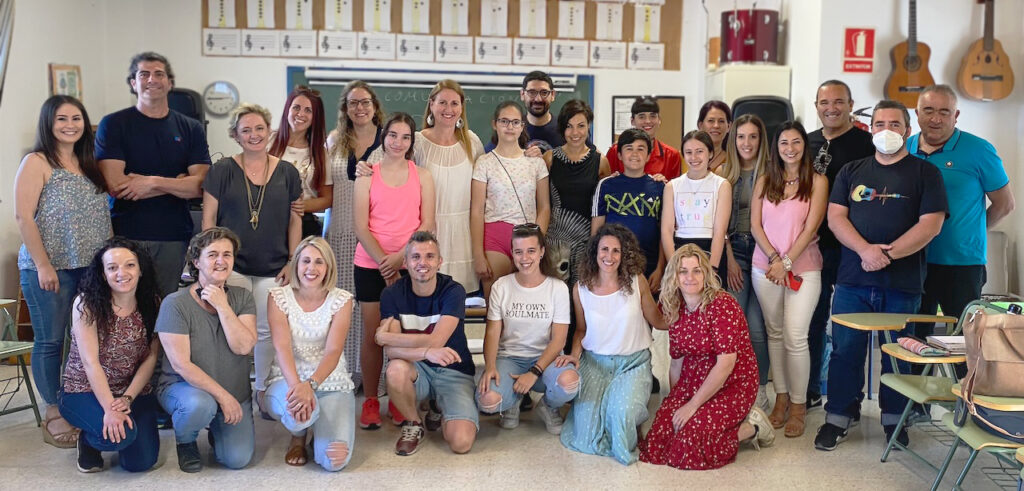
The demand for collaboration can come through various channels. At CEIP La Parra, it arose from the celebration of aworkshop titled “New perspectives in school counseling, for children and against segregation,” a meeting held at the university between professionals and families to think together about how to create schools for everyone. There, connections were made that encouraged some members of the school to recognize a need that they turned into a desire: to make their school more inclusive. It was then that the Faculty decided to request a course to train them to achieve their goal and, to do so, asked for the collaboration of the team that had organized the event.
That training lasted only two sessions, but that’s where it all began; in a meeting where we could get to know each other, work together, and learn from one another. From the good connection that was established and the value that both parties recognized in the work and the desire for improvement of the other group, something more ambitious would emerge: a proposal for continuous and collaborative training that would crystallize into a Participatory Action Research (PAR) project.
But as we were saying, there are many ways a demand can arise: a small group of teachers who would like to advance their methodologies, a group of mothers and fathers who want the school to be more open to the environment, a group of students who feel left out… The demand can come from any sector and from any symptom. The key is to involve the community and turn it into a collective project.
Step 2. Diagnosis and Identification of the problem to investigate
The second step we propose is to carry out a participatory diagnosis of the school, something like setting up a radar to detect the problems that people see. Because one thing is what sparks the demand (the demand itself), and another is what actually happens in the school. To this end, it is important to invite the entire educational community of the school: students, families, teachers, and other community stakeholders. The more people who can attend the meeting, the better, as everyone plays a fundamental role in this process. The goal is to build a school that accommodates all the needs and interests of its members, and for this, we need to listen to all voices. We must move from the perspective of those who initiated the process to building a collective perspective.
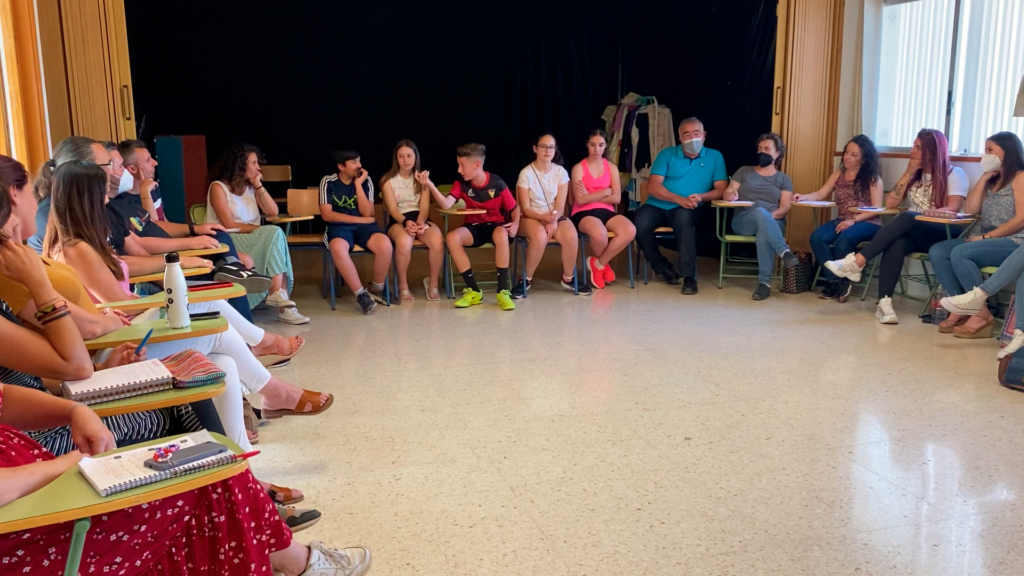
A very dynamic way to carry out the diagnosis is the one developed at CEIP La Parra, where a huge amount of work was done in a full morning of a school day, mobilizing the entire community. It began with an initial diagnostic workshop for families and students, in which the teaching staff and other external advisors acted as facilitators. For the development of the workshop, various rotating work tables were set up in different rooms: one for families and others for students from different grade levels, who were mixed to form heterogeneous groups. That is, we brought together primary and secondary students, and students from different years of early childhood education. Heterogeneity must be very present in the formation of these groups. Subsequently, the teaching staff also participated in the process. Then, each table was given a large piece of continuous paper (flip chart) with one of the following topics:
- What is the school we have like? (General overview)
- How is teaching and learning done in our school? (Detecting barriers to learning)
- What is the relationship like with your classmates and teachers? (Detecting barriers to participation)
- What is the school of your dreams like? (Projection of the desired school)
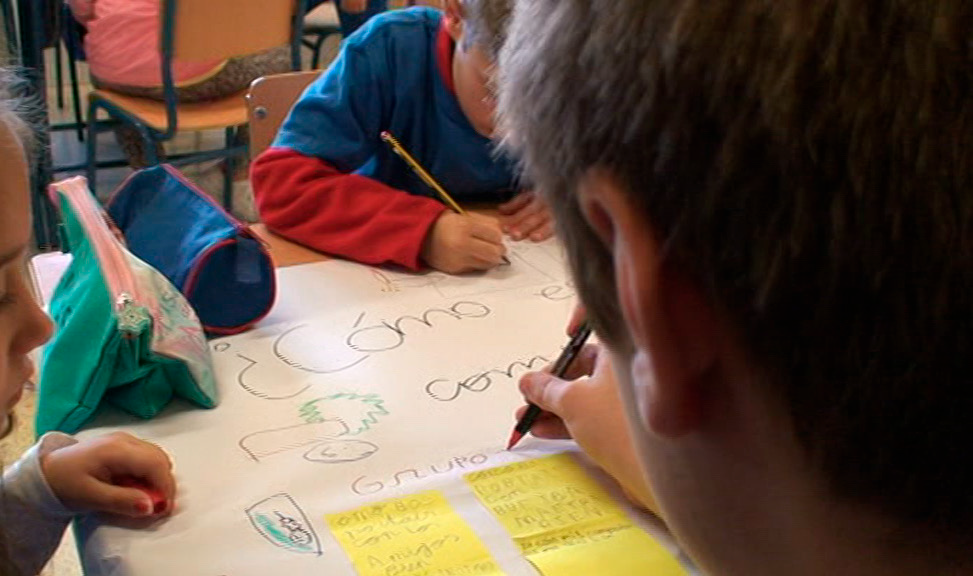
These were the questions we used, but you can invent others. They should be broad, clear, and aimed at understanding something fundamental about reality. For example, asking about barriers to learning and participation is asking a question about what needs to be addressed to make the school more inclusive.
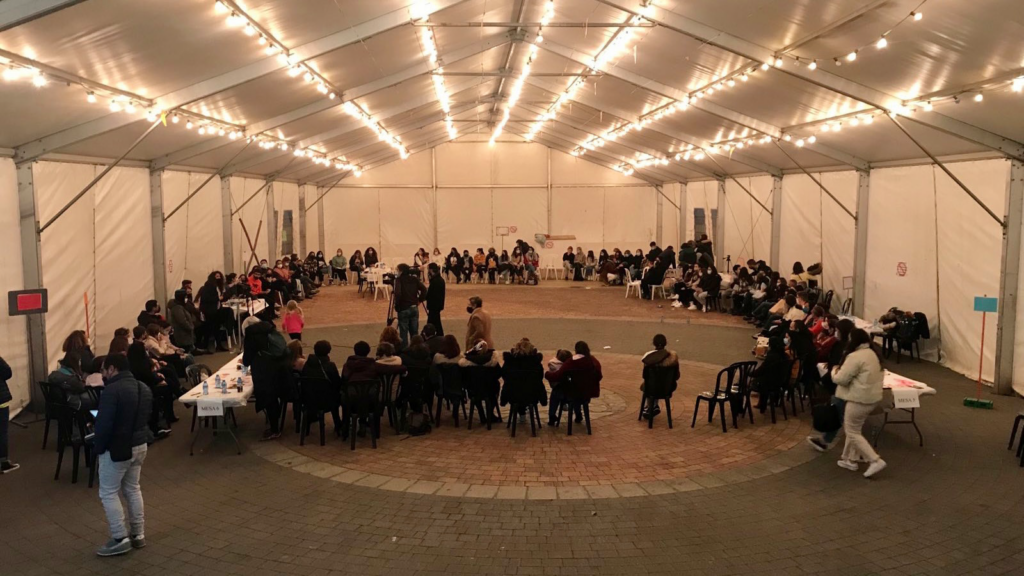
Whether you have used this organization or a different one, the important thing is that people and groups who are not usually in communication have dialogued in the process. Then something new will have already begun to appear in the school! That is fundamental and the richest part of it all. Then comes the task of ensuring that what has been produced in these small groups reaches the rest of the community, which involves setting up an assembly where… the entire school community meets! Perhaps in the playground? In the auditorium? In the town square?
The general assembly should conclude by sharing the problems, strengths, and desires that emerged from the different workshops, which will offer a picture of the complete process to the entire community that has participated in it. In the assembly, it is expected that latent conflicts that exist in any social context will emerge, thus constituting the first step to begin working on them. Participatory Action Research (PAR) does not shy away from conflict; rather, it understands that it is inherent to being human and is always present. The important thing is to make it a key part of the process. Because, just like an iceberg, only the tip shows, conflicts reveal major systemic inequities, structural violence, etc., which point to a review of the consensos that have been silencing disadvantaged groups, alternative visions of teaching, etc.
After the meeting, some time must be dedicated to a meticulous analysis of the information collected on the flip charts created during the diagnostic session. This is a moment to organize ideas, situate problems, dimension them, and relate them in order to improve.
Step 3. Constitution of the Participatory Action Research Group (GIAP)
The GIAP refers to a research team made up of students from the center, teaching staff, management team, families, administrative and service staff, other community agents, and external facilitators, such as university professors or professionals familiar with participatory methodologies. As a whole, it constitutes a stable group that works collaboratively and meets periodically.
Membership in the GIAP requires its members to adopt commitments and be involved in all phases of the process, at least for one cycle. This research group also acts as an informant, providing significant information about the nature of the relationships within the school and the networks that exist between it and its environment. In the GIAP, every voice is worth the same as another, regardless of their position in the school, age, level of education, etc., as we are trying to understand the reality we live in common.
Initially, it is advisable to establish a plan and schedule for the different sessions that will be held throughout the year with the GIAP, and to create work dynamics that facilitate the active participation of all sectors. For example, in the evaluation of the second cycle of the IAP of La Parra, some students expressed that they had been bored in the GIAP sessions. This means that the dynamic developed was not connecting with their interests, languages, concerns, and needs, which should lead to a reorganization of future work. The timing of the sessions should be aligned with the objectives pursued, so that the content to be worked on is clear and well-structured, trying not to oversaturate the GIAP members. To this end, it is important to ensure that we reserve sufficient time for dialogue. The concerns and worries that arise within the group must emerge during the process, as misunderstandings can cloud the development of our Participatory Action Research.
Step 4. Analysis of information and self-diagnosis
The GIAP must constitute a space for dialogue where the problems arising from the participatory diagnosis session can be freely discussed. It is advisable to know how to differentiate between fundamental problems and those that encompass others, something that should be addressed through dialogue. Another aspect to consider is the number of times the problem is pointed out by the community and its relevance in explaining school life. On the other hand, we can synthesize the records of desires into what we could call “big dreams.
One of the formulas used by the GIAP of CEIP La Parra to identify the problem that would be the object of study was to discuss each of them to understand them and order them according to the level they affect (e.g., personal, relational, and/or structural level) and the degree of control that the educational community has over it, that is, to determine to what extent we are capable of transforming it. It is useless to choose a problem that is not in our hands to solve, although it is true that, as PAR progresses, the community becomes more competent to overcome what was not foreseeable within its possibilities.
After placing all the problems in a quadrant, a dialogue can be initiated to establish cause-and-effect relationships between them. There are problems that cause others, problems that are the effect of others, and problems that are both cause and consequence. All this systematic, rigorous, and strongly participatory work can help us to think about reality in order, to work on it.
There are various resources to make this possible. One widely used is the diagram, which is nothing more than a graphical representation of ideas. Diagrams can be of various types: flowcharts (graphical representation of a process), Gantt charts (for planning and tracking tasks), concept maps (to explain a specific topic based on the relationships between its components), etc.
Below, we show an example of a flowchart, also called a flow diagram:
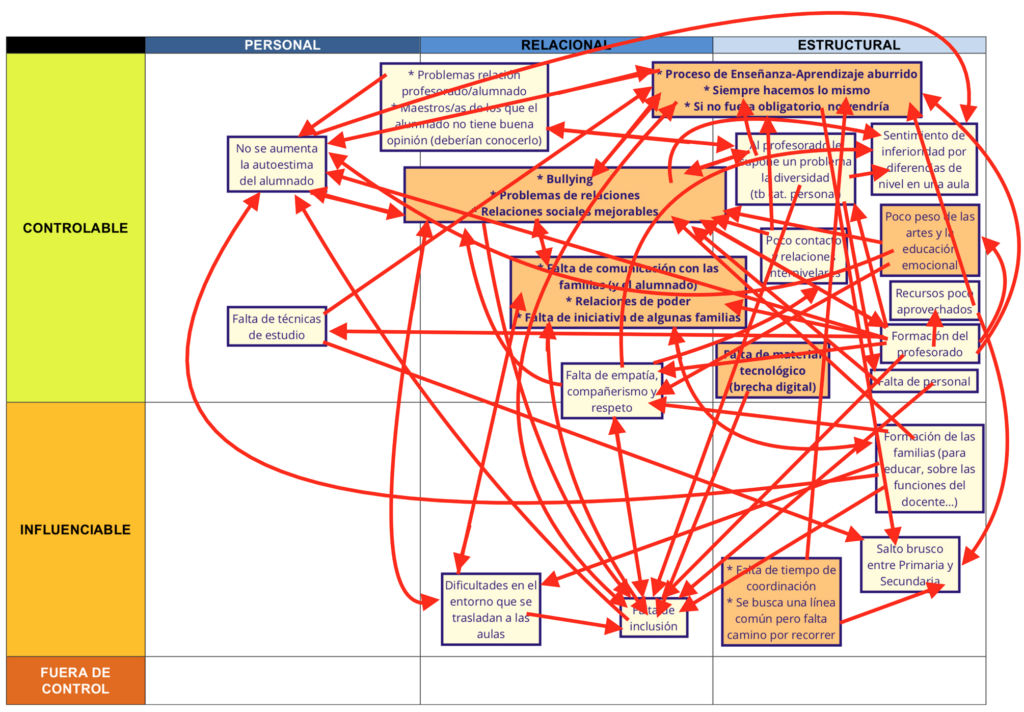
Flowchart: consists of collectively creating a diagram that visualizes the cause-and-effect relationships between the various elements related to the topic under discussion in order to identify critical nodes, that is, the main factors where one should begin to resolve (Alberich et al., 2009).
Tables: tables are a particularly useful analysis tool, as they allow information to be classified, defined, and related. They are visual presentations made up of a series of rows and columns in which numerical data, textual data, or a combination of both can be presented.
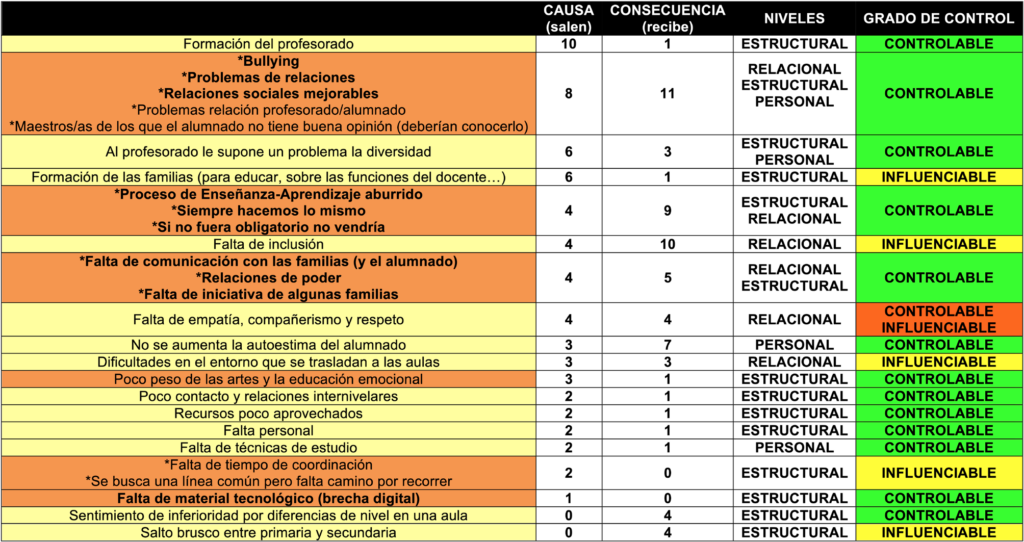
The rows and columns in which each problem is located refer to the level and degree of control. The orange color implies a problem repeatedly raised by the community on the flip charts. The arrows identify the cause-effect relationship between the problems.
These analysis techniques will help us choose a focus to investigate collaboratively that has the potential to modify something significant in the life of the school. At CEIP La Parra, all the data pointed to a fundamental focus: relationships within the school. Choosing this problem was related to its connection with most of the school’s problems; the number of problems it in turn causes, which is within what the school can control and which affects the different levels worked on (personal, relational, and structural). On the other hand, the only problem that seemed to cause more problems than the chosen one was teacher training, which in turn was addressed through working on relationships. PAR always constitutes a space for training and professional development for teachers. In summary, we can see the relationships of the chosen focus (relationships within the school) in the following graph:
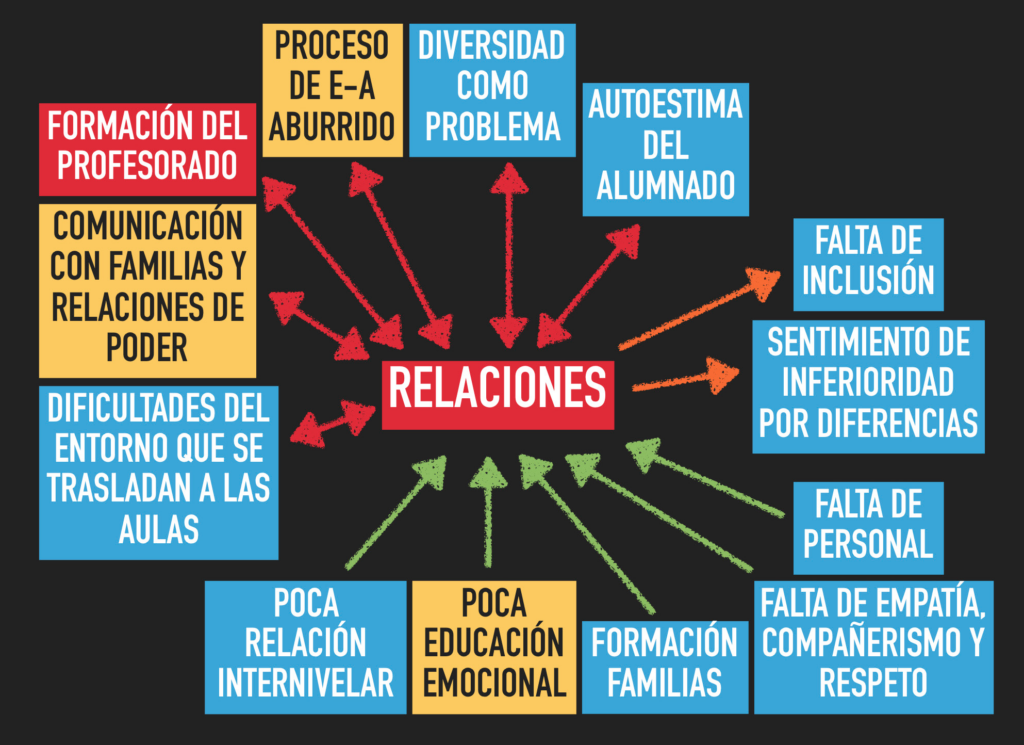
Addressing this problem, La Parra’s PAR group observed that it could influence the improvement of other problems (red and orange arrows). Once chosen, the problem was turned into a challenge and stated as the focus of the first PAR cycle as follows:improve coexistence in our school and its surroundings.
In turn, working with this focus allowed the GIAP to approach some of the community’s dreams, as can be seen in the following illustration:
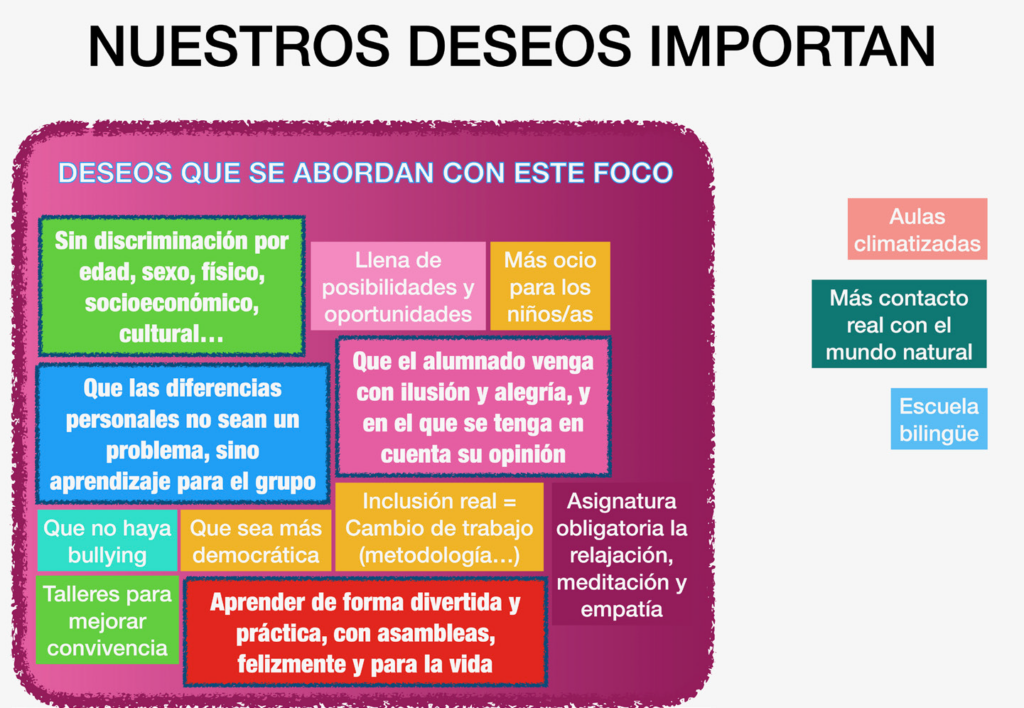
influence of the chosen focus on them.
Choosing a good research focus is fundamental. One that aligns with people’s concerns, has repercussions on other issues, and, by addressing it, provides solutions to some of them. That it is feasible. Sometimes it is better not to be overly ambitious and to prioritize that you can see your capacity for transformation.
The timing and duration of the cycle of a PAR are variable, as they depend on the human and material resources available and other structural and organizational factors. You will have to consider what is a reasonable time to carry out your task.
Step 5. Investigating the problem and returning diagnostic results
After evaluating the main difficulties your school encounters in achieving the goals related to the focus of study you have chosen, it is advisable to become well-informed about the topic and project how you want that topic to be in your school. At that point, the entire school and other members of the social fabric can take the reins of the information gathering, analysis, implementation, and evaluation process. In other words, we have started from the information generated by the entire community, we have organized the information, and now we are once again relying on the community for it to investigate, generate information, and build proposals. The entire school has become a team of researchers.
For this process, CEIP la Parra had the help of students, teachers, families, administrative and service staff, neighbors, some community agents, and members of the University of Malaga. All of them gathered important information about coexistence and relationships at the center. To do this, various information gathering techniques were used, some of which are listed below.
Participant observation
It is an attitude present throughout the entire research process. It consists of not letting details escape, even if they may seem insignificant, which can appear at any time, whether in classes, at the entrance and exit of the school, in informal encounters, during recess, in tutoring sessions, in faculty meetings, in the School Council, in the management team, in the AMPA… Even beyond the school: in the town, in the neighborhood, during games, interactions between neighbors… It is also important to pay attention to some types of relationships in particular: between men and women (boys and girls), teachers and students, between people with different abilities, nationalities, ethnicities, ages, etc.
Students can observe the relationships between their peers (not just of their age and group), between teachers, between families, between the management team, and all these agents among themselves. Teachers can observe the studentsfeeling strangethe gaze (making strange what is commonly seen) at their own classmates, at the families, and at the management team. Families can observe their sons and daughters, their own family, and all the agents who converge in and out of school. From all of this, some simple notes should be taken in a notebook regarding the place, the people, the events, and the observed circumstances. It is useful to copy verbatim phrases. All these annotations, added to the results of the interviews and the previous data collection, complement, in a very enriching way, the general vision of the social relationships in the center.
Interviews
Interviews are conversations that are held individually or in groups. Interviews usually have a script (although they can be conducted without structure) that allows us to address all the topics that interest us to understand what relationships and coexistence are like in and out of school. Like observations, interviews should be conducted by the entire community: students, teachers, families, administrative and service staff, and citizens in general.
- When we introduce ourselves, we state that it will not be known who was interviewed (anonymity).
- We do not state our opinion, because we want to know their truth.
- We record it (with their consent) or, at least, take verbatim notes of the most important statements.
- It is best to form pairs so that one person can take notes.
- Let the topics emerge spontaneously. Only bring them up if they haven’t come up by the end.
- At the beginning, we discuss the simpler topics. At the end, the more complicated and conflictive ones.
- Say goodbye thanking for the participation, remembering that the results will be shared and emphasizing anonymity.
All information must be sent to the GIAP. It must have been summarized, so that even if a class has generated a lot of information, each researcher will also have made a one-page summary of the most important aspects of their fieldwork.
Workshops
A good way to gather information about relationships and coexistence can be through workshops, in which we can use group dynamics. This allows us to avoid conducting so many interviews. Here are a couple of examples of dynamics:
Brainstorming. Ideas are generated spontaneously and freely, without group debate or discussion. Feelings and attitudes towards the topic proposed by the facilitator are stated in a disordered way. All opinions are written down on a whiteboard, for example, and then analyzed, debated, and the most valued ones are accepted. The whiteboard is photographed, and the fundamental agreements and analyses are summarized.
Philips 6/6. This consists of dividing the large group into subgroups of six people who discuss the topic proposed by the moderator for six minutes; afterwards, a spokesperson from each group presents the conclusions they have reached, and the facilitator writes them down on a whiteboard. Once all contributions are known, they are debated in a plenary session until a general consensus, or at least a majority consensus, is reached.
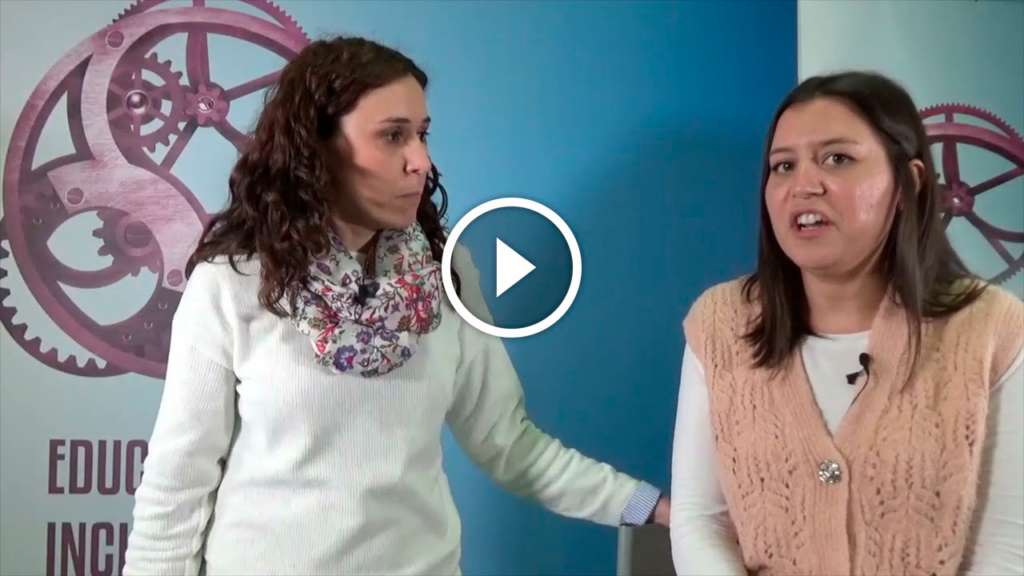
Stories
This involves narrating (in writing or orally, with the help of another person) an event and/or a story about a relevant fact concerning the specific theme of relationships and coexistence. Narratives from people who want to share their personal experiences are especially welcome, whether due to the positive value that the school’s relationships have had for them, or because they have had a negative experience. Narratives from all sectors of the community (students, mothers and fathers, teachers, school staff, etc.) in a brief format are valuable. Of course, anonymity will be guaranteed. You can find more information in the GuideHow to create a life story or in this tutorial.
Returning information to the community
Once all the information has been gathered, it must be sent in its entirety (for archiving and documentation) and in a summarized form (for more agile work) to the steering group, which will be responsible for organizing it so that the community can regain a holistic view of what has been found. To this end, we think about how we can communicate this information creatively, so that the community has the opportunity to create action proposals from it.
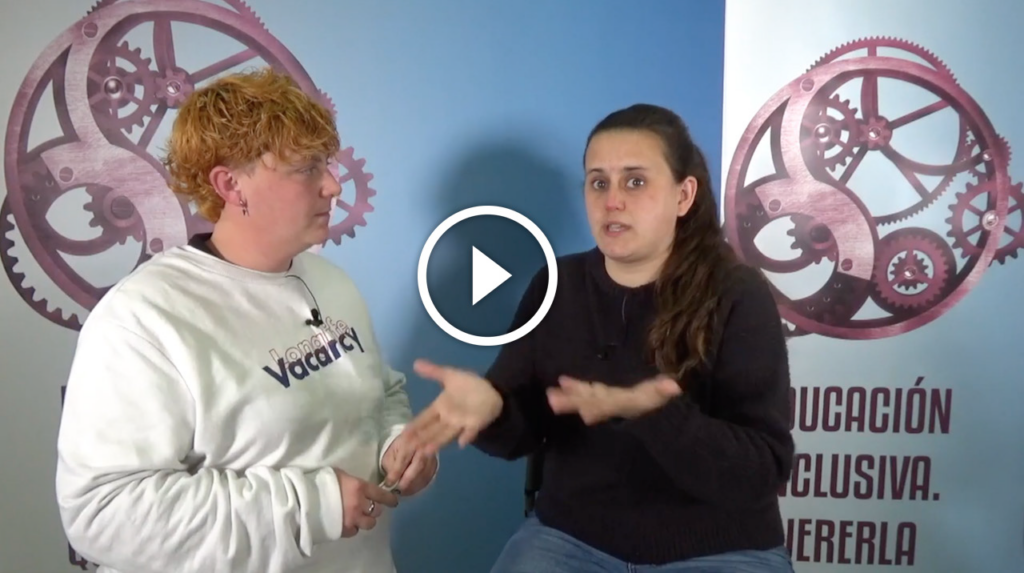
For the creative return of information, part of the educational community of CEIP La Parra and university researchers organized a workshop for the entire center. This opened with a video in which different members of the educational community (families, students, and teachers) and the research team external to the center presented the project and spoke about what that experience had meant to each of them. Subsequently, a series of simultaneous workshops were developed that addressed three topics, which were found to affect the main object of study: coexistence. These workshops dealt with the following themes, which were presented with their respective videos, in which students from the center performed an act that problematized a situation and set the stage for the collaborative design of action proposals:
- A. Social networks, relationships, and culture.
- B. Methodologies as a form of relationship.
- C. Recess as an educational space.

The entire educational community participated very actively in the process. These audiovisual creations addressed other issues affecting coexistence, such as school bullying, the loneliness felt by many children in the playground, the overuse of memorization and unmotivating methodologies, the misuse of technology by some adolescents… After watching the videos, time was allocated in each workshop for members of the educational community to discuss what they had seen and share their experiences. Finally, a closing assembly was held where all attendees had the opportunity to participate, and a final video was presented showcasing the students’ aspirations for their school. The session was recorded to preserve the information developed during the discussion.
Step 6. Design and Implementation of the Comprehensive Action Plan (CAP)
After the diagnosis and the feedback of results, it is time to proceed with the design and implementation of the Comprehensive Action Plan. The design refers to your research proposal and the way you begin to address your object of study. The Participatory Action Research Group (PARG) participates in the design, and the following sections should be highlighted:
- Identification, selection, and justification of the object of study. This involves identifying and delimiting what we are going to study, as well as explaining how the demand for it arises, who is responsible for making it, who the recipients are, what issues need to be addressed, and what context it affects (structure, physical, socioeconomic, and sociocultural characteristics, social fabric that composes it, resources it has…).
- Objectives. It is important to collect the goals we intend to pursue. These objectives can be general (those that broadly cover the object of study) and specific (those that refer to concrete missions). On some occasions, it is preferred to speak only of ends; it is another possibility. The point is to define and organize what we intend to achieve.
- Work proposal, definition of the tasks to be developed and its phases. This section aims to account for all the phases that will be followed during the implementation of the plan, the different activities we will carry out, who will carry them out, how the community will be encouraged to carry it out, organization of committees, timeline, etc.
- Information gathering techniques. The different techniques we will use are described and justified so that what happens is not forgotten. We need to know if what we are doing is serving what we intend to achieve. These techniques can be quantitative (questionnaires, surveys, scales…) or qualitative (interviews, participant observation, narratives, focus groups…). Again, operability must be prioritized. The process cannot be cumbersome, but useful.
- Resources. In this section, it is necessary to list the human and material resources we have and those we will need. Think about allied agents beyond the school itself!
Once the project is designed, it is time to implement it. This requires coordination within the working group and the assumption of responsibilities. Periodic meetings can be organized to monitor the process and assess whether or not modifications are necessary based on its progress. If needed, we can seek external advice, especially if we encounter difficulties in developing any of the project phases. It is important to maintain internal coherence between the intentions, methodology, and resources used in each of the designed activities, as otherwise, the results obtained may differ significantly from those expected.
At CEIP La Parra, different activities were designed to work on its object of study, coexistence. Below, we list some of them:
- Create a new subject that would serve to educate students about the consequences that the inadequate use of new technologies and social networks can have on themselves and their environment.
- Offer conferences and training courses for the center’s teaching staff, as well as informative workshops for parents and students, on some of the topics worked on throughout the research process. Among others, workshops were offered on the educational use of ICT (aimed at students and families) and workshops to get started in Participatory Action Research.
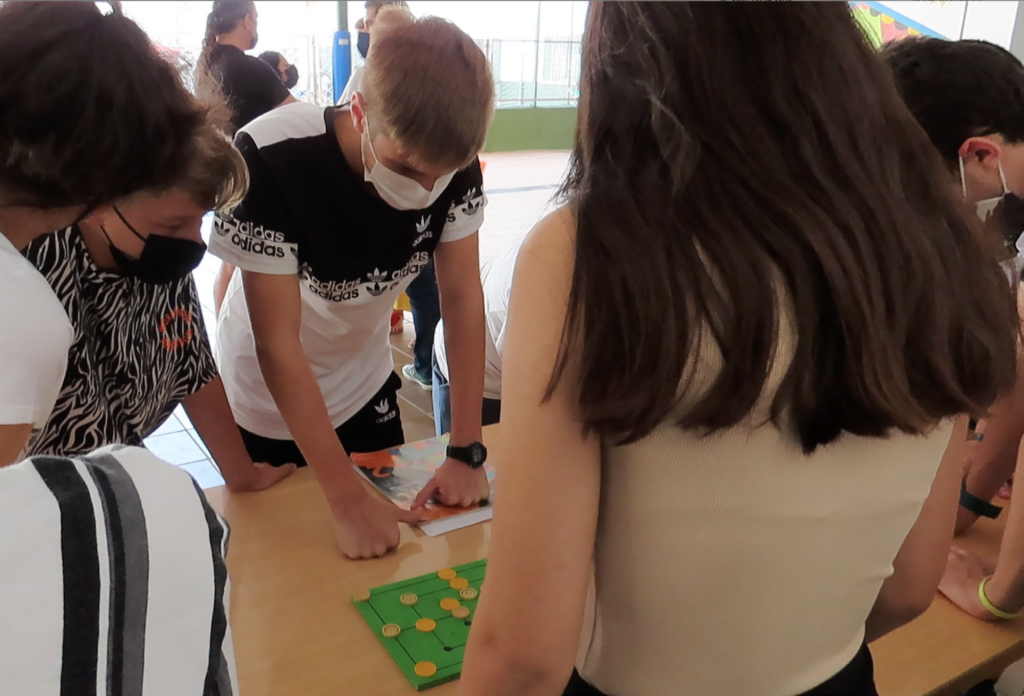
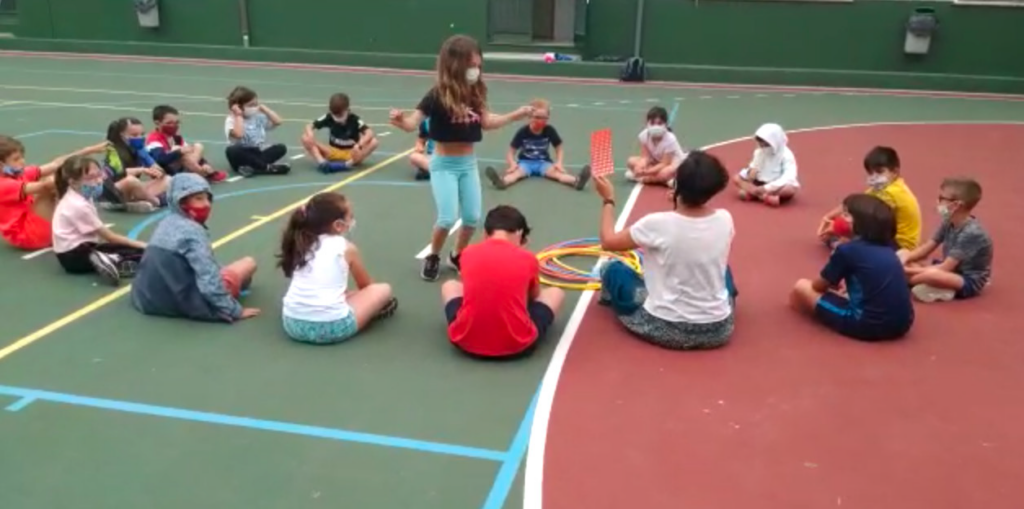
- Provide students with resources to eradicate loneliness during recess, such as board games, balls, collaborative games to practice different skills and apply acquired knowledge (puzzles, cards, Cuisenaire rods…).
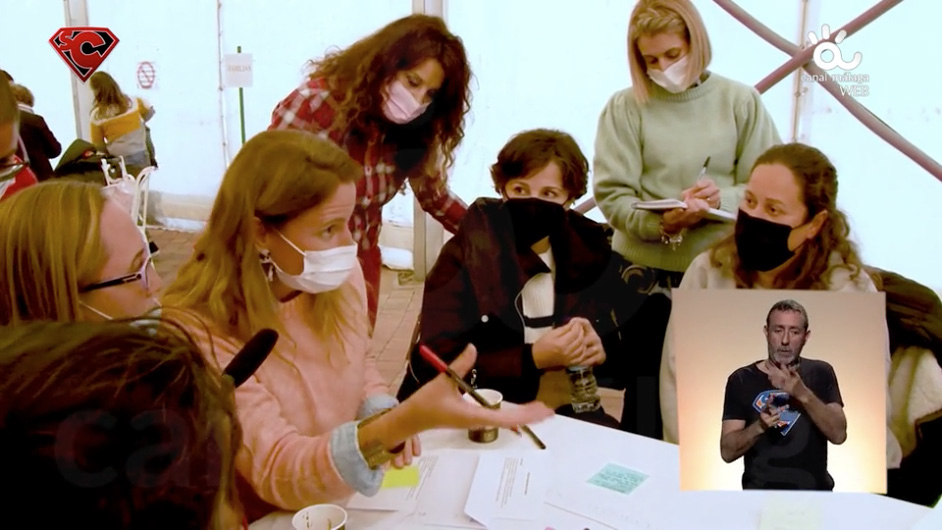
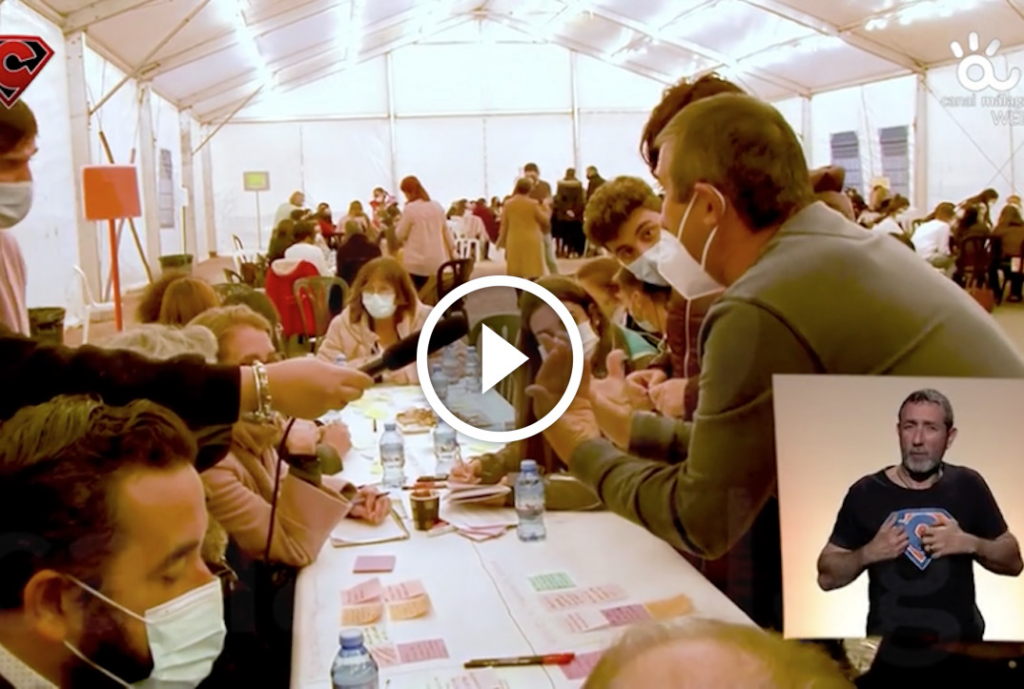
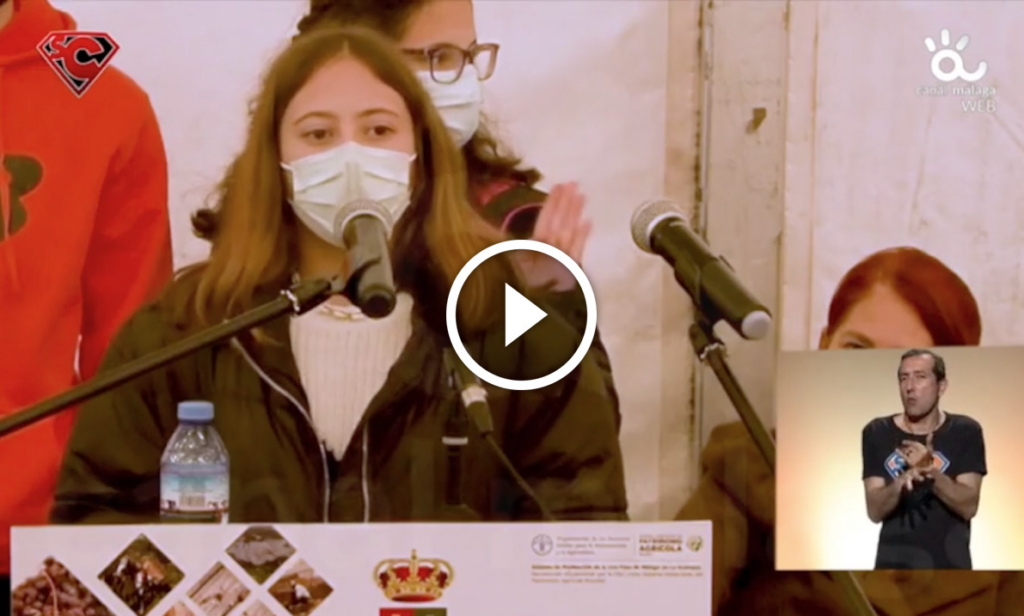
- Celebration of the Conference ” Inclusive Axarquía. With this conference, CEIP La Parra was able to share its experience, establish the adoption of commitments, and create action networks to promote inclusive education in the Axarquía region (Málaga). To this end, a participatory meeting was organized, attended by students, teachers, families, public and private entities, NGOs and associations, political leaders, university researchers, and other educational stakeholders from the Axarquía area.
A good idea was to invite the local television to the event, and they did a great job documenting it. You can watch the report at the link in the footer.
Step 7. Cycle evaluation
In Participatory Action Research, each cycle must end with an evaluation process. This task allows us to know the level of achievement of the pursued goals, the impact that the knowledge built during the research has on the school and the community in which it is inserted, the level of commitment and involvement of the school community and the rest of the agents that make up the social fabric, analyze the difficulties encountered, and verify the adequacy of the methods and information collection techniques to the objectives.
A widely used technique in evaluation is SWOT analysis. It seeks to identify the difficulties encountered, the successes and errors made, the dangers the research may face, and proposals for improvement. To do this, you must review the information that has emerged from the action plan implementation process and gather the GIAP so that together you can identify the Strengths, Opportunities, Weaknesses, and Threats of the project. Subsequently, they are analyzed one by one, and decisions are made about the actions to be developed to improve the process going forward.
Evaluation should also be a moment of celebration where achievements are enshrined and difficulties are identified to continue working on them. It is important to agree within the GIAP on which evaluation instruments will be used and to reserve time and space for discussing the results obtained within the working group and with the other stakeholders involved in the process. From this meeting, proposals and commitments should emerge to improve the school institution and its relationships with the environment, and networks should be generated to transfer the results obtained to a broader community of subjects. And of course, the work of the first cycle has ended, but other possible areas for research and action already emerge in the evaluation itself. You are already starting the next cycle!
Summary
- Response to a demand and negotiation process.
- Diagnosis and Identification of the problem to be investigated.
- Constitution of the Participatory Action Research Group (PARG).
- Analysis of information and self-diagnosis.
- Inquiry into the problem and feedback of diagnostic results.
- Design and implementation of the Comprehensive Action Plan (CAP).
- Evaluation of the cycle.
Tips
When an educational experience is successful, our commitment as education professionals is to share it so that it can be adapted and applied to other contexts. Inclusive education should not rely on isolated practices, but should be part of our daily educational practice, permeating content, objectives, methodologies, physical and temporal spaces… It is about introducing small changes that gradually permeate and modify school culture.
Inclusive education cannot simply be a right written on paper. It is essential that we work collaboratively to make it a reality present in all our schools. Often, education professionals feel that they do not have sufficient resources, support, and training to start a Participatory Action Research project in their school. However, experiences developed in other educational centers show that, if we have enough initiative and conviction about our focus of study and add effort, we will have advanced a large part of the process. We only need to join forces and create networks with the rest of the educational community and with other agents of the social fabric to ensure that educational transformations occur.
In-school training can be a good alternative to the insecurity that undertaking a new project can create. Centers that have some experience in the field of inclusive education could be responsible for this training.
Who could be more suitable to guide us in this process than someone who has gone through it before and knows firsthand some possible difficulties and ways to overcome them?
This is why we encourage schools to dare to try. There will be moments of confusion, but also very rewarding processes that must be shared. This is how training and transformation agents are developed, sharing their inclusive experiences and fostering the creation of networks with other educational centers. It may sometimes be necessary to seek the help of external advisors to guide us methodologically throughout the process, but the ultimate responsibility for inclusive education becoming the only possible education lies with the school and society.
Notes
- The facilitation team is linked to the project Emerging Narratives on Inclusive Schooling from the Social Model of Disability. Resistance, resilience and social change (RTI2018-099218-A-I00), funded by the Ministry of Science, Innovation and Universities.
Resources
Guides of interest
- The didactic guides of The Adventure of Learning promote the implementation of collaborative projects that connect classroom activities with what happens outside the school grounds. They are all available at: http://laaventuradeaprender.intef.es/guias/proyectos-colaborativos. Particularly useful may be How to make your school inclusive.
- UNESCO-OIE (2022). Reaching all students: A UNESCO-OIE resource toolkit for inclusion and equity in education. UNESCO.
- The guides generated by the European Union Project Reaching the ‘hard to reach’ can also be interesting for finding activity proposals to work on student voice.
Audiovisual resources
- WorkshopOrienta: New perspectives in school guidance, for children and against segregation.
- Conversations about the (inclusive) school and the document Analysis and proposals for a new Education Law. Citizen conversations about inclusive education (Octaedro, 2020).
- Awareness campaign for inclusive educationQuererla es crearla. The campaign starts with a video and a website.
- Tutorials for your community to research. They are short videos, about 5 minutes long, which condense the necessary information and guide ordinary people to become researchers of their own reality.
- A school working towards its dreams. Some information about the experience in building CEIP La Parra, on which this guide is based.
- Documentary Inclusive education. Quererla es crearla. Directed by filmmaker Cecilia Barriga in 2022.
Bibliographical resources
- Alberich, T. et al. (2009). Participatory Methodologies. Manual.CIMAS.
- Alonso, M. and Vila, E. S. (2019). Thinking collectively about a better school. Continuous training and inclusive education. Aula de Secundaria, 33, 18-22.
- Basagoiti, M., Bru, P. and Lorenzana, C. (2001). We Take the Floor. Pocket Participatory Action Research. Acsur-Las Segovias.
- Carr, W. & Kemmis, S. (2005). Staying critical. Educational Action Research, 13(3), 347-357.https://doi.org/10.1080/09650790500200316
- Dickson, G. (1997). Participatory action research and health promotion: the grandmothers’ story. PhD Diss. University of Saskatchewan.
- Herrera, M. M., Matés, C., Farzaneh, D. and Barrado, S. (2021). Walking towards inclusion through participatory action research in an educational community.Latin American Journal of Inclusive Education, 15(2), 135-153.
- Kemmis, S. and McTaggart, T. (1988). How to plan action research. Laertes.