[Música]
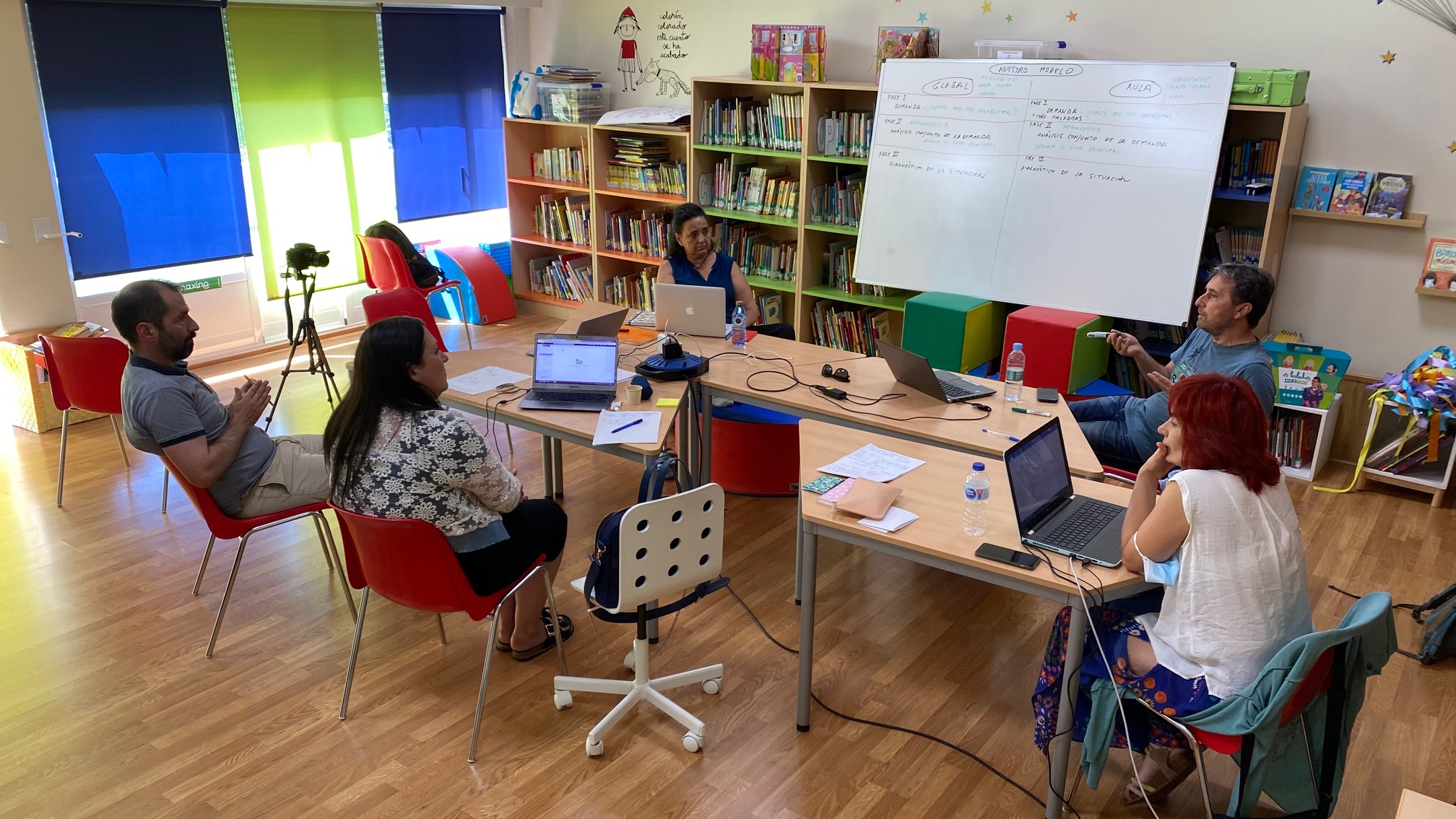
well we give way to the first panel we are the alter evaluation collective
we belong to Quererla es crearla we were saying here we are many
we are very excited and nervous we have a lot of responsibility
we hope to do it well If that exists doing things well and badly and well I have
been assigned the role of moderator we thought we would introduce ourselves one by one as we speak
yes uh we agree and well I will give the floor to the first colleague to introduce herself
herself well good morning my name is María José and well it's a pleasure to be here
con todos vosotros compartiendo pues estos días no de de trabajo que
esperemos que sean fructíferos me han encomendado el marrón
de abrir de abrir la mesa y la verdad que escuchando las intervenciones que he
estado oyendo pues me dan ganas de cambiar bastante parte de lo que de lo
que yo llevaba preparado aunque no iba muy desencaminado sí que voy o sea voy a
empezar leyendo una parte pequeña porque si la Leo voy a ser más escueta y si la
cuento me voy a explayar mucho Bueno Mírame a este niño como
orientadores es pues una frase típica que repetimos muchas veces que nos han dicho en en miles en miles de
occasions to those of us who work in guidance, clear, and I
well, I'm going to tell you a story about this one, about Look at this child, let's say his name was
Abel, a child of 8 years old when I met him
uh, the child was the target where all the problems of that
Educational Center were focused, okay? He and his family suffered
what is unspeakable. But well, that's harassment and demolition,
mistreatment, a lot of problems from his tutor, from the management team, the
educator, and all the rest of the staff who came into contact with him.
aula mi intervención no sirvió absolutamente De nada o sea yo no
conmigo no querían contar porque mi intervención no interesaba mi mi manera
de enfocarlo y y y nada pues o sea me
ningunear me devaluaron y fue inútil cualquier intento por por Pues por poner
cordura al final porque eso era inhumano Qué pasó pues que salimos del
centro yo El niño y la familia a otro centro al niño le dieron plaza en el
mismo centro que me habían dado a mí la la definitiva porque claro le dije a la
madre que que tenían que salir de ahí que ahí no podían continuar era el único centro de esa población y el niño se
came to the population or rather to the school where I had been given a place in another town, so the mother
had to, well, I'm not going to get into it, the child arrived in September with a phobia
of school, he didn't even want to enter the school, and of course, I understood perfectly
because I felt the same. What happened in the new center? Well,
look, nothing special was done, but the teachers
coordinated
was a tutor who was respectful of children, eager to improve as a teacher, and
almost like, well, as a person, I would dare to say. What happened in that new center that
that the question was always how do we do it in
plural was never how do we get rid of this child
uh in the center where he was the topic of resources came up in the center
where he was it was a classroom with 10 students with 14 people a week of
support the tutor was never alone what do I mean by that it's not a matter of
resources that yes resources are needed no one is going to deny that but that resources are not the
solution for what we are talking about in a couple of months the child told
his mother Mom I'm happy at this school me
quieren 8 años de un centro al otro según Google
Maps apenas hay 5 km cómo puede ser que que un niño en un
centro no quepa y en otro centro sí que quepa un centro con más complejidad con
mayor número de alumnado y y con menos recursos personales
vale Yo cuando he contado esta u otras historias a veces a mí me llama la
atención Aquí también ha salido y también me ha llamado la atención la necesidad de de Qué le pasa a ese niño
de nombrar qué es lo que Pero qué es lo que tiene Pero qué diagnóstico tiene no
importa qué diagnóstico no importa Qué características tenga el niño
llevamos años que tenemos que dejar de focalizar en el niño o en la niña ni qué
es lo que le pasa ni qué es lo que le deja de pasar lo que tenemos que cambiar es el entorno ha salido también creo que
lo ha dicho Diana en el chat que había que cambiar la mirada hay que cambiar la
mirada y la mirada o sea oímos muchas veces ahora mismo que el niño tiene
barreras el niño no tiene barreras la niña no tiene barreras Las barreras están en el entorno y en la relación que
se crea de una persona con x características con un entorno que no está creado ni pensado para para esa
persona ya no digo adaptado Eh entonces no O sea no no puede ser que
sigamos con la misma pregunta de de o sea de ver el déficit o de ver la
disability does not exist nor special educational needs Well yes it is the
terminology used in educational legislation but we should
ban that no one has educational needs nor is an neae nor nor that that
type of terminologies uh Well the convention is that I have already
gone off track or rather the point is to move from the individual model which is
what we come from in the years ago to the social model we in our
work as counselors uh that was a point we wanted to work on and it was
difficult for us to break that individual gaze to break to the social model
then the colleagues will explain a bit more about the model that we propose, how we have created it, and also it has been mentioned here that you don't need to have a recognized disability to be suffering in school. We have seen many students and their families. I mean, we could give thousands of situations we have seen, like the institutional mistreatment that school gives to a large part of the student body because the school doesn't look at the needs of children, but rather continues to do the same thing and not
We propose
how we have created it
you don't need to have a recognized disability to be suffering in school
We have seen many students and their families
I mean, we could give thousands of situations we have seen
like the institutional mistreatment that school gives to a large part of the student body
because the school doesn't look at the needs of children, but rather continues to do the same thing and not
consider How can we change because the easiest thing is to get the child off
because because in the family it's easier to have the family
against And if you want them to leave, don't ask yourself, what am I doing, what can I
change so that this, so that this improves? And well, here
some voices of counselors have emerged and well, and counselors, we have
a large part of the responsibility because traditionally what we have been doing is segregating students and
Well, we have been instrumentalized to and we have accepted it to send the student
out of the classroom to a tea room as it has been called or to a center, to a center
the UN specifically told us in a report in 2017 to guidance counselors that that's enough
okay from the reports we are doing and that we have to move to the social model and the social model is
it's the the well I think it's one of the problems of of the misunderstanding
And well that's I think that we all the educational community
must unite families students and and professionals to to be able to make this
change that that as has been said before is too slow because it's little by little
little by little we've been hearing it for many years and and it's time for more students to continue suffering in school and
well I'll give way to another of the topics that has come up which José was asking about
Ramón lago de Cómo cerrar los centros de Educación Especial Pues ahora Marta la
compañera os va va un poco a decir cómo están haciendo ellos Vale
gracias Bueno me llamo Marta ejerzo las funciones Dei dirección de un centro de
educación especial en la localidad de almansa en la provincia de albacete Castilla la Mancha para los que estáis
Al otro lado del Charco y bueno nosotros pertenecemos a
una asociación la asociación asprona en que es una asociación a nivel provincial
y que tiene tres centros de educación especial en tres localidades distintas de la provincia somos centros
concertados con la consejería de Educación y iniciamos Ya hace 10 años un
proceso de transformación eh haciendo un ejercicio de coherencia interna que era necesario eh si somos una entidad que
trabajamos por la inclusión de las personas con discapacidad no y apoyamos a las familias en esos en esos
procesos se caía por su propio peso el tema de tener centros de educación especial y mantener centros de Educación
Especial Entonces como digo en ese proceso de transformación
eh asumimos Y nos identificamos como centros segregadores que creo que es un
paso imprescindible que todos los centros de Educación tienen que hacer porque el cambio de mirada el cambio de
perspectiva pasa principalmente por darse cuenta de lo que uno es Y de lo que uno está haciendo que es segregar
desde ahí empezamos a trabajar e con muchísimas dificultades que no voy a
comment but also with a lot of support because there are other centers that we have discovered in the national territory
and I want to name the Joan Mesquida center in the city of Manacor in the Balearic Islands, which is doing excellent work
having everything against them and they are working along the same lines as
we are trying to build that transformation, and it involves transferring resources, something as
simple as the resources that are currently in special education schools being moved to mainstream schools
I see it as simple, I think we are doing it in a simple way. When you
tell this in other forums or tell it to colleagues who are in special education centers and allow me to
add the caveat of public ones, and I'm sorry, it's my experience, it seems like an impossible task to them, it can't be done
eso que vosotros hacéis es imposible nosotros no lo podemos hacer no y todos son barreras impedimentos para llevar a
cabo esta labor bueno nosotros lo estamos haciendo Eh no sabemos si bien o mal nos guiamos
los indicadores para nosotros son lo que las familias nos cuentan y lo que nos hablan los cuerpos de nuestros alumnos
que son los que nos dónde quieren estar o sea nosotras
percibimos la diferencia de cuando están en las cuatro paredes de nuestro centro que sí que es verdad que podemos llegar
a generar un espacio seguro un espacio donde el alumno es reconocido donde el alumno se siente bien sí no se encuentra
pues lo que pueda encontrarse a veces en la escuela ordinaria no que es esa agresión esa violencia ese
rechazo pero sus cuerpos no son los mismos su mirada no es la misma que
when they are in mainstream classrooms, we have students with great
support needs. Our colleagues from Catalonia have also mentioned that in their center they have a student. We
are also supporting this type of student. We do not have students in early childhood or primary education
enrolled in our center. The students who remain in secondary education are all in
combined schooling, meaning they spend some days at the mainstream center and some days with us, and then the rest who remain
are in the post-compulsory stage. Okay, yes, it is possible to have education.
inclusive. It's not easy, certainly, but well, we are an example that it is possible.
to find the way, the formula can be found, and it is essential that families, schools, and students go together.
es una transformación de comunidades educativas y no se puede hacer solamente con una pata de la mesa se necesitan las
tres y es un proceso de colaboración colaborativo y de construir juntos y parte primero de darnos cuenta qué somos
y qué es lo que estamos haciendo que creo que es la pregunta esencial que nos tenemos que hacer todos en la escuela y
nada eh Buenos días
e estoy un poco nerviosa la verdad Bueno yo soy Susana y vengo del movimiento
social vengo de una asociación muy pequeñita que hay en ferrol eh que nació
pues hace 30 años allá por el año 94 coincidiendo con la declaración de
Salamanca e yo por por aquel entonces estaba en el instituto todavía
eem 10 años después yo era maestra y era psicopedagoga y pues esta asociación me
contrata para eh defender el derecho a la educación inclusiva eh
[Música] mi papel desde la asociación es acompañar Pues los procesos de inclusión
o Esto es lo que a mí me gusta pensar porque en realidad lo que hago es Eh
Pues tropezarme con un montón de Barreras Las barreras que encuentran las familias las que encuentran los
estudiantes y las que encuentran también los profes y otros profesionales de la de la
educación y esas barreras pues lo que hacen muchas veces es acabar expulsando a
a los estudiantes que lo viven en primera persona a Pues a un sistema segregado y eso
sucede Porque existe ese sistema vale tenemos un sistema que permite que uno
pueda estar Pues eso apartado del resto de la
sociedad para mí lo más impactante de mi trabajo pues tiene que ver con escuchar
a Esas voces en primera persona vale siempre digo que pues llevo 20 años
trabajando aquí y creo que lo que me ha eh amarrado a esta asociación Pues creo
que es justamente esos Relatos en primera persona escucharlos como te cuentan que son insultados eh Pues que
los han tirado por las escaleras que todos los días resp ponen
dibujos para colorear que nadie se preocupa por enseñarles
que les gritan que los tratan como si fueran pequeños que les hacen
bullying o que están siempre vigilados por si les pasa cualquier
cosa o que simplemente Pues nadie los va a echar de menos si se van de su
escuela y esto este relato llegan a interiorizarlo y a
legitimar considerando que sus derechos no cuentan
eh Y que de alguna manera ellos entienden que el mundo para ellos funciona de otra manera que no es lo
mismo del otro lado está Pues la otra cara de la moneda
eh Y escuchamos a los profes también cuando nos dicen cómo voy a enseñarle
mathematics if they don't know how to speak to learn to write first
they will have to learn to speak [Música]
or they don't know how to relate to their classmates, they have to go to the special education classroom or the adaptation
curricular has to be worked on in the support class. I am not a specialist in therapeutic pedagogy, they will have to go to the
special education center, which is where the specialists are, and I could go on listing
hundreds of stories like these and many more, uh
and well, in a way, my job consists of listening to them, of removing those barriers that
are preventing them from remaining in that mainstream system and not having to be expelled
eh en tratar de desmontar verdades que parecen
incuestionables [Música] en Bueno al final es eh fortalecer a la
familia abrazarla escucharla y recordarle que sus hijos tienen unos derechos en escuchar a las voces de esos
estudiantes que de alguna manera consideran que que no importan y Bueno pues hay que
recordarles que sí importan y que además eh tienen que ser ellos mismos también los que reivindiquen sus sus
derechos y también pues la otra parte es aprender a escuchar HM
y no morir en el intento pues a veces todas esas eh situaciones que se viven desde desde
la escuela no escuchar a los profes y y y y saber
cómo remover y Cómo dejar de Pues eso dejar que que que las
escuelas dejen de ser lugares de sufrimiento porque al final lo son y lo son para todos em
[Música] se me acaba el tiempo y yo quería
aprovechar para reivindicar desde aquí el papel de las asociaciones que muchas de ellas
nacieron e para dar respuesta eh a ese modelo
rehabilitador para dar respuesta porque había algo que bueno pues que no existía
no es decir pues las personas con discapacidad antes no tenían recursos HM
no podían estar Simplemente no estaban Y de alguna manera muchas asociaciones nacen para dar respuesta a esto pero eh
I believe we also need to evolve and, as María José said, we need to make that leap to the social model and understand that the role of
organizations can be important in changing that perspective.
And I also wanted to say from here that, well, as a professional in an organization,
I also feel that rejection that people who are labeled feel, because in the end, I also come from an
association where, in reality, my professional category is not considered equal to that of any other
professional. I am also labeled. I wanted to say that in this search and
in this feeling of being labeled, I met all these people and, well, little by little
a network was created, and today, sometimes when I have a meeting at a school, I can suddenly call
Paula que es una mamá y le digo me voy a enfrentar a una situación y y no sé qué
es lo que va a pasar quiero que me cuentes Y quiero escucharte o de repente puedo llamar a María
José Porque pues me voy a enfrentar con una situación y creo que ella me puede ayudar o Necesito escuchar a Raúl o
llamo a Carmen porque me está pasando algo y creo que ya pues eh puede ser importante su voz Entonces quiero decir
desde aquí Que bueno Pues para mí es muy importante esta red que se está creando y este grupo que bueno pues creo que
también gracias y que juntos somos más
fuertes gracias Bueno pues yo voy a leer un
poquito porque así sé lo que voy a tardar vale eh Soy Mari sensi eh empiezo
hablando un poquito de mi trayectoria en este en este colectivo participé en el primer workshop de Málaga con muchas y
muchos de vosotros al que asistí como familia y por aquel entonces pues me encontraba en un proceso de de búsqueda
de otra escuela para mi hijo y para mi hija y unos años antes había conocido a a Marta y a otras familias en en almansa
de donde yo soy eh que andaban buscando lo mismo en Málaga fuimos conscientes del sufrimiento de muchas familias que
habían vivido procesos de exclusión y de segregación de sus hijos y de sus hijas eh Poco después como orientadora ya me
encontré formando parte de de este grupo alter evaluación que que hoy estamos aquí y y primero pues tuvimos o tuve que
comprometerme con con esas líneas rojas en las que empezamos nacidas en en el
seno de este grupo después tuve que recuperar mi mi espíritu como activista
educational, although I knew that for my son and for my daughter it was already too late, as you have commented. And
I had it, but I had to be consistent with everything I had learned in this search process, my journey
as a substitute teacher has allowed me to get to know different schools, so that's also a luxury.
At first, the truth is that it was very hard and very difficult for me to realize, to see that from within the school
what I sometimes intuited from the outside could be
even worse than I imagined. Although I needed my time
to complain, I needed my time to complain, I had to
get out of the complaint, of course, I had to be proactive and align what I felt with what I thought.
and with what I did, uh, in that process, I also realized that that mistreatment by
the school towards children and adolescents, most of the time
is systematic and unconscious. That is, because we don't realize it. That's why I think that, that we've talked about here this
morning, it's important and necessary to review usual practices. We have to initiate
research processes to question many of the perpetuated and consented actions without these
review processes, the school is condemned to maintain them without even being aware that they are
exclusionary, segregating, or harmful. And so, for example, we talk about, without holding back,
adaptation periods in early childhood education, and if we think about it, it's outrageous. We try to adapt children and
to 3-year-old girls in a space that is totally hostile to them without reflecting, I mean, if we reflect, we should
talk about welcome periods, for example, in which the school is the one that adapts to the boys and girls; the center
should be for the students; it is the spaces and practices that should adapt to the children; the school
should be, should always be respectful and welcoming towards everyone; this is
just an example that occurred to me suddenly, but we would have to continue reviewing lists as we have
commented on here this morning, and to do so, we must listen; the attitude of listening in our collective is
fundamental; we must listen to the entire educational community; I am going to tell you now from my experience as a counselor
a specific situation very similar to those already told, but on this occasion, I am talking about a secondary school
la que un compañero Voy por el pasillo y me aborda hablándome de un alumno Enseguida lo escucho pero intuyo que
detrás de esa pedida de de ayuda subyace la creencia de este chico no debería de
estar aquí Este no es su lugar en ese momento yo acepto acojo esa demanda de ayuda desde la necesidad del docente
porque es el docente quien no puede quien no sabe cómo actuar vale el Peque
es como es bueno en este caso el chico es como es y soy yo como escuela la que no sé cómo hacerlo entonces tengo que
escuchar y empatizo con el con el profe inicio un proceso de escucha participativa para construir una
respuesta desde un modelo colaborativo No desde una respuesta como experta yo no soy experta escucho ese profesor
entiendo desde Dónde nace su angustia Y eso sí le dejo bien claro desde el primer momento que este es el lugar en
el que tiene que estar el chico en su aula con sus iguales no dejo lugar a la posibilidad de pensar otro sitio para él
seguidamente recopilo información de los contextos del chico Necesito escuchar a la familia conocer su realidad me doy
cuenta que hay mucho sufrimiento detrás la familia está acostumbrada a que le hablen de los problemas que tiene su
hijo y es brutal el alivio que intuyo cuando cambiamos la rendición de cuentas
por escucha e interés por conocer al chico cambian los ojos de la persona de la familia en el proceso de escucha se
amplía al propio chico al profesorado al alumnado Y juntos y juntas vamos descubriendo y entendiendo Por qué de
muchas situaciones y cómo se podían cambiar tenemos en cuenta las opiniones y surgen muchas ideas y medidas cercanas
y y posibles desde aquí el aprendizaje para todos y todas es brutal en ese proceso hay momento de desencuentro por
supposed, but as it is a collaborative model that we have been discussing here, the loneliness that has also come up is not so much, it is not so much, there is no
loneliness for the teacher, nor for the counselor, nor for the family, nor for the students, and most importantly,
the loneliness of the child, and magical moments arise, I'll finish now, a magical moment
in which a situation, an encounter in the same hallway with the same teacher after
the same question, to which I say, how are you? And the answer that at one time would have been, well, very bad, look, the
child did a handstand in class today. Well, today's answer is, well, very good, really great. Well, today the child has
done a handstand in class. The child is still the same, still doing handstands in class. What has changed is the
teacher's attitude, and that is the beginning and the end. To guide
school towards inclusion by ceasing to look in the wrong direction
[Aplausos]
Thank you. Well, I am Vicky Burriel, I am also a counselor
and and in that collective when we were working, uh, in the end we reached a
conclusion, and that is that we should transform all those evaluations
psychoeducational that they ask us for children, so that we make them a report, give me a report, look at me, look at a child who
actually means making a report, well, it's useless, well, it's useful for for labeling and those things, okay? But
since we are already there, we should try to transform that into processes of
participatory action research, okay? Participatory action research, uh, a network has been created
national, um, right now, um, well, I don't know if everyone knows, but, um,
a national network of schools has been created that we are going to, um, try to advance inclusion and
and equity by carrying out participatory action research in our schools, okay? You know there's a collective
of students for inclusion that created a guide to do participatory action research in
schools, okay? It's a guide published by the Ministry of Education. You know there's another guide that
has been published that deals with how to do participatory action research
in a school, and that was done, the experience was done at the La Parra school, okay? in the March in Malaga, which
are not here today, but are participating online, and please, comment on something that, that
We want to hear you. Okay? And and well, that is the path
we are on, and why we are on this path of participatory action research, which I don't know if everyone
knows, but what it entails, I don't know if I'll summarize it well, is to open processes where
mechanisms are put in place for people to talk and listen to each other. Okay? And through
those mechanisms, people start researching what is happening in their environment. Okay? What is
happening in the school, in this case, and everyone researches. It's not that the counselor comes and sees what's happening. No.
We are going to research because when people start looking at what's happening,
we know, and we start from the conviction that when people start looking, we know, and especially when we start
a mirar y aparece el Aparecen las situaciones injustas que se
dan en la escuela y que se dan en la sociedad porque estamos en una sociedad pues muy injusta y violenta y
competitiva y todo eso cuando todo eso aparece y cuando se escucha lo que
aparece es pues la empatía y aparece pues toda la parte de pues vamos a buscar soluciones cosas cosa que pasa en
ese momento y que Quizá antes no había pasado porque pues no no se había creado esa situación no
entonces eh yo eh me había planteado poneros un ejemplo Bueno lo voy a poner
rápido queda poquito tiempo no pongo el ejemplo rápido e no es de
una persona con discapacidad es de un niño cualquiera de un centro cualquiera un niño de 9 años un niño que sí que esa
family is being monitored by social services because there seems to be a bit of neglect AND the teacher
says Oh this child this child is doing very badly, very badly because this child, look, he's not
doing anything, he's not doing anything and besides he spends 60% of the time outside the classroom and I said Great, yes, yes, yes because of course
as I told him at the beginning that when he bothered he should go out for a bit and then come back, now it's him who
tells me, look, I want to go out and he wants to be outside most of the time. Oh, yes, yes, he says, besides, look, his classmates
don't like him either, because he's very puncha, that's what they call it in Valencia, very puncha, he gets into things, he's very
puncha and his classmates don't like him and and he also smells bad, he smells bad and
he's and and he comes very dirty and and well
que está muy disruptivo es que se está pasando Mira ya le he puesto dos partes Vale y dic Mira si ponemos el tercero
habrá que ir aplicando el reglamento de régimen interno entre paréntesis no lo
dijo pero eso es la expulsión eh eso es por un lado vale por otro lado digo
Bueno voy a llamar a la madre vale s llamo a la madre y la madre y me dice Ah
bueno y la tutra me dice esa madre además ha tirado la toalla es que no puede con su hijo y nada llamo a la
madre y la madre digo Oye que me ha dicho la tutora que que está muy preocupada que qué pasa me ha dicho que
no puedes con tu hijo Cuéntame qué pasa por teléfono eh Y por teléfono y dice la Perdón la verdad es que no
puedo la verdad es que no puedo con él dice Es que mira sabes lo que me ha pasado digo qué eh antes de ayer a las 9
de la mañana sale el niño y nos estábamos viniendo para clase y me dice Mira mamá lo que llevo en el bolsillo y
llevaba unas tijeras y dice Mira si se meten conmigo mira lo que se van a
encontrar y la madre Me dijo Es que no supe ni qué decirle y yo claro me quedé helada Y
entonces me dice Es que sabes qué pasa que es que yo no sé qué hacer porque lleva lleva
todo el curso pasado y lo que llevamos de este que no le han invitado a ningún cumpleaños Y dice Bueno le invitaron a
uno un niño le invitó a uno y al día siguiente vino el niño y me dijo que que lo había desinvitado porque porque
porque es que le caía mal mi hijo le caía mal a esa madre y la madre me decía cómo puede caerle mal un niño de 9 años
y esa madre después me contaba que al niño venía y que venía triste que venía
in an ad that said that they called him fat that they called him disgusting that they told him he smelled bad and
that they told him where are you going to celebrate your birthday in a dumpster
they told him that, okay, well, and other things we talked about and so on
let me put this on the table because a situation
like this Mel says something, she says, uh, that to
advance in inclusion is actually something technically simple, that is, the
things that need to be done to achieve inclusion are not for people with disabilities, inclusion is that the
school should be more respectful, more welcoming, more flexible, and have more
calidad para todo el mundo eso es la Bueno para mí eso es la inclusión vale Eh entonces qué es lo que pasa que
cuando cuando nos enfrentamos a este tema por mucho en en en esa escuela hay
docentes que están a tope por transformar las cosas que están a tope por la inclusión y tal esta docente en
particular no vale pero pero lo hay vale esto no lo podemos cambiar esta
situación la podemos abordar Por ejemplo eh yendo yo o otra compañera que estamos
por la inclusión y diciéndole No hombre no que la solución con este niño no es que lo expulses vale venga va y podemos
eso puede después esa tutora o otra persona un poquito más empática ir y
hablar con esos alumnos el grupito de alumnos y decirle Oye eso no se lo podéis decir a ese niño muy mal No
hagáis eso jolines que os estáis pasando un montón que eso ya roza el acoso escolar eh No y además tú cómo te lo
tomarías si te dijeran a ti eso vale vale sabéis lo que va a pasar si hacemos
eso pues seguramente esos alumnos no le van a volver a decir nada de eso pero segura ente no le van a volver a dirigir
la palabra y desde luego no le van a invitar a ningún cumpleaños y resulta que no lo van a invitar ni a él ni a
varios niños que a mí ya me ha llegado a los oídos que no les invitan a los cumpleaños en esas aulas Vale entonces
claro cuando nosotros decimos procesos de investigación acción participativa Es
que la forma de romper eso es poner a la comunidad a que busque qué problemas hay
y que salga esos problemas y que pueda salir o en una asamblea como esta o en
other forms of participation on this topic so that people can hear it and then
there can be processes of empathy, processes of empathy where a
mother can participate and say, gosh, how I have gone from from from
uninviting a child or gosh, how we have gone from not thinking about this child in those processes of listening, of looking, of
looking at the collective, that is where that transformation can happen faster and better, and that's why we
are pushing for
that in these participatory action research processes
there is also the diagnosis phase, but it is not that question of
este niño es capaz de que está basado en sus capacidades en su
cuerpo de Ahí pasamos o podemos llegar a pasar a en vez de dificultades de
aprendizaje a dificultades de enseñanza es ese docente es capaz de pero también
estamos poniendo el foco en capacidades
a desde el modelo social a pasar a la pregunta consideras que este diseño de
este entorno es adecuado para este niño y para este docente o es necesario hacer
transformaciones en ese entorno
malaguzi hablaba del Tercer maestro el tercer maestro implicado en en los
teaching-learning processes is the relationship with the adult, the relationship with the students, and the relationship with the
environment. So here I want to put a part of that design phase
in in what is the evaluation of the environment, the evaluation of the
context is to change the gaze, to change the gaze, even to step out of our
eyes and look with our chest. That is, when we enter to observe a classroom where
we have been given space to observe it, it is what do I feel? What impact does it have on me?
because that is what it is. It's already an intellectualization and it distracts us. I feel overwhelmed. That is the
overwhelm that the teacher feels. That is the overwhelm that I was going to say the
students but this morning Jesus and I were talking and he told me we cannot
talk about that because in Colombia it is very clear that alumnado comes from
Latin alum meaning lack of light like those who have no light and we must
enlighten them but yes they have lights and very bright ones and they are the ones we must
listen to and who should enlighten us what are you feeling in this classroom How would you like your
classroom to be in in our observation in what we perceive is where we can see
truly spaces that are truly sick and that make us sick how to
transform them into healthy spaces that heal we can talk then about about
spatial disorders is not the same as disorders with a deficit of nature or
disorders incompatible with life, which would be dead classrooms, because there are classrooms where there is no life and where there is no
space for life. Life is movement, there is no space for movement, life is joy, there is no
space for joy or emotions, and there is no space for many
children. Of course, there are teachers who say, "It's the classroom I found, or it's the center I found." The
participatory action research processes imply changes. It's not what you found; it's the classroom you
want to create, or by accepting that classroom that has been left to you, you are accepting
a way of acting.
eh decían que los que los Eh manicomios no un un espacio sino un
criterio quién está loco y quién no las aulas tampoco es solo un espacio sino
también un criterio cuando diseñamos un aula Ya sé yo quiénes van a tener cabida
en ese aula Y qué niños y niñas no van a poder desarrollarse en ese aula
entonces poner la mirada sobre sobre Ese diseño es es importante porque ya vamos
a decir antes de que empiece el curso Quién va a fracasar Y quién va a
triunfar hay otras formas de Educación donde los los Los problemas son de otras
personas por ejemplo las granjas escuelas tienen éxito los chavales que fracasan en en en los centros educativos
en determinadas aulas muy tradicionales muy cerradas tenemos nuestra función
también como orientadores es abrir esas aulas tradicionales y transformarlas en espacios abiertos en espacios que se
adapten a las necesidades de de cada curso y para no irme del tiempo lo mismo
que hablamos de las aulas podríamos hablar de los patios Pero y hay y hay todo un debate
abierto en esto que es el patio para uso libre o el patio con actividades
dirigidas H porque a lo mejor tampoco es la solución las actividades una vez más
estar dirigiendo actividades y actividades y otro de debate también Respecto a los patios es eh patios y
recreos con un horario fijo o que esa utilización del patio y del Descanso lo
they feel it, the teacher feels it and says no
right now they are not for listening, I think 10 minutes of recess is fine
there are schools where they don't have recess time and it's the teachers who say when to rest and when to return
I mean, there are many things being done, many different things, and many things that open up new
spaces for all types of
students, I don't have time left, I don't have
Okay, well, I'm David, and for the last few years I've been working as a counselor in
a small school, literally in the middle of the mountains. It's a place called Terra de
Montes que os recomiendo visitar y la localidad se llama forcarei Y con estas empecé a colaborar
con estas personas que hay aquí eh proponiendo o elaborando una propuesta para estas personas
Sí una propuesta para que uno de los escollos más grandes que tiene la
evaluación inclusiva que era la evaluación inclusiva no la educación inclusiva que era la evaluación psicopedagógica tal y como la hacíamos
para dibujar cómo Debería ser si queremos llegar a ese a ese objetivo que
no que no es llegar sino empezar a caminar bueno no me voy a lear con esto cuando salga la guía la leéis y ya lo
entenderéis todo yo os voy a contar un ejemplo de cómo pasé de estar al
principio cuando hablábamos sintiéndome que lo que yo hacía día a día estaba lejísimos de poder hacer eso
y y lo veía un poco irreal y os lo cuento Así es decir entonces qué hacías ahí Bueno pues ya veis
pero justo el otro día nos llaman para que expliquemos toda la propuesta en un
encuentro de dime que hay un par de personas aquí del colectivo dime que es otro colectivo de profesores que entre
otros objetivos también quieren la inclusión educativa y a raíz de preparar Esa esa
explicación empecé a pensar ejemplos y me di cuenta que ejemplos míos del pasado mente sí que podrían encajar
mucho mejor de lo que yo pensaba con ello Y entonces Os he traído un ejemplo y este ejemplo empezó como siempre hay
que mirar a hay que mirar a eso sí esta vez había una diferencia a veces solo te lo dice el profesor Pero de esta vez me
enteré que ya la familia había empezado a tratar de mover hilos para que se
hiciese algo con respecto a algo lo voy a dejar así en el aire esto podía ser un ejemplo real o ficticio pero no lo voy a
decir para proteger los datos demás bueno entonces en todo este proceso que
tenemos integrado de dar la vuelta a esa demanda que nos llega Por qué Porque esas demandas llegan en forma de Bueno
ya lo sabéis diagnóstico y demás entonces en la persona no queremos darle la vuelta para empezar a mirar como ya
han dicho mis compañeras hacia el contexto y compañero eem este nuevo punto de vista no es
fácil Muchas veces ni para docentes ni para familias porque tenemos incluso para nosotros nos cuesta mucho Incluso
nosotros que llamos hablando mucho tiempo de esto tu cerebro te sigue tirando lo de siempre no Bueno entonces se trató de hacer ese análisis conjunto
em y es verdad que en nuestro propuesta ese análisis conjunto Hay que hacerlo en
conjunto juntos y hablando y demás pero pero yo en esta situación lo hice
hablando por separado con las personas como está ahora de moda de decir en diferido
y luego luego os explico por qué cuento esto así porque claro est estas eran las cosas que me hacían pensar que no
encajaba con el modelo lo que yo hacía no y incluso también claro comoo no hay
que contar con las voces del alumnado Pero bueno las propuestas que se estaban poniendo sobre la mesa al alumnado le
encantaron y y este aspecto solo me quería parar un segundito porque una idea que hemos
hablado muchas veces nosotros es que la propuesta que nosotros hacemos se parece a hacer un cuadro pintar un dibujo para
lo cual definimos un marco pero luego ahí podemos dibujar de formas muy diferentes no Y esto es muy importante no vamos a hacer una propuesta que sean
recipes from one step to another, but rather that framework in which to paint
I had written down here is that I just saw it now I said why did I write this, of course, I said well, this time no
you can form the group, but look, before riding a bike, you have to put on some training wheels, right? So there with people
that first you can make a mistake or not, but sometimes I prefer to go little by little, right? Well,
So I was negotiating, darn it, time really does fly by.
Uh, well, so I managed to shift from talking about ADHD, protocols, guidelines,
of consequences, conflict, difficulties in problem-solving, that is, it has to, and
we managed to get to the point where we are all talking about what we can do, as this topic has already come up, right? And so what we did was
all we could do was very simple, as you can see, all this vocabulary, behavioral problems, and so on, were redirected.
we were going to form cooperative groups where we would solve some problems, which is trendy now.
unplugged computational thinking, they were A3 sheets, little cards to solve problems, but
it sounds much better if you say it the other way, especially when the inspector asks you.
so this is where we had to fit in well how now she can be the boss
for 5 minutes. Now she's not, now the boss is her. You continue, and that was how
that whole way of making the classroom a welcoming place for everyone to learn was going to be rebuilt, and also, hey, there are some
rules that can be learned and respected, right? And I'm almost finished. I have to tell you that it worked very well.
students delighted with that activity, of course, you take away the book and they are playing with the chess pieces, but it was
important that the first intervention was a disaster and I took some notes and in the second one it was where I was happy and
this is another very important aspect of participatory action research, the cycles, but well, the bad thing is that
although everyone agreed that it had gone well, it was not continued. I think it's because it's not in the book
in summary, no, but well, I don't know how you see the clear example, I'm telling you this before telling you about the guide
because it hasn't been published. When you see the guide, you can judge if this example fits the guide well or not. Although
I cheated a bit, no, but well, that was my message, to tell you my anecdote
personally so that you can see how I feel that I did apply the model we are talking about. Then I
cuentan mis compañeros si es verdad o no y y y nada em es que tenía aquí una
frase para terminar Ah sí que creo que con transmitiendo este equipo de
ejemplos se parece un poco más a lo que puede llegar a pasar en las aulas que si contamos la cosa muy teórica y gracias
por escuchar [Aplausos]
hay preguntas no lo sé
sí se oye sí no sé si hay tiempo para preguntas o intervenciones
No te preocupes en primer lugar una de las intervenciones iba precisamente para ti en
agradecimiento una compañera que el nombre era
Carmen Palomera, I believe her name was, not María Panadero,
who is from one of the schools whose reference center you are.
And what I wanted to thank you for is the work you are doing and how you help them, accompany them, and manage to
reinforce all the work they are developing in favor of inclusion. And then we had another intervention
from Charu, who shared her experience
where, with a change of school, her son's schooling
had changed considerably. She had managed to feel part of the school, and she attributed
one of the possible explanations to the fact that, on this occasion, upon arriving
with her therapist from the association prepared a talk to introduce herself
to the new classmates AND with that talk and with the preparation that the
welcome, of course, also from the classmates, she has managed to feel part of the school. So
she told us that they didn't know how to make her feel like one more in the previous school, and
now, by openly sharing her abilities and difficulties
with the rest of her classmates, she has managed to feel like one more in
the educational community where she is now. These are the interventions for
now. Very good. Thank you. There are several, several here.
hands well first of all my name is Marta uh Thank you for letting me participate in this uh
congratulate the colleague who spoke about the patios I thought it was a great idea Uh well Uh after all the
interventions or rather I try to put all my ideas in order and uh try to
convey them I am a trainer I train people in inclusive education uh I am
also a Special Education teacher although I don't practice and Well uh I think
lately we are as in general in all areas of life in in a world of of complaining right of uh
it's enough because the trains are late and I complain but we don't look for a solution Okay so uh nowadays the
teachers I meet in training are I'm going to complain I'm going to raise a complaint to Marta and let's see what solution she gives me
for example, of course, if I have a student with ASD and they start screaming, what do you want me to do? I don't know.
what if I don't have support? I don't know. It's always complaints and they don't try to find a solution, but rather for someone to give them a
tool on how to solve that problem. I think I always tell them, I mean, I think with a little reading about
inclusive education, you can also find a tool that will solve that problem for you. But well, so there it goes, right? We
complain, but we don't look for a solution. And and well, I'll participate more because everything I wanted to say has
slipped my mind.
thank you. In addition to readings, I would say here, some ideas have already been mentioned today
that go beyond just knowing, because for example, before, uh, not
I don't remember if it was Vicky who mentioned it or if it was uh I have a problem and I talk about it and
I have a network of people who help me solve the problem So
I don't feel alone, it's not just that I read in a book what supposedly
needs to be done, but that there are other people I'm telling my story to and those people give me feedback
Can I say something quickly?
yes, and more than more than a tool, I think that's precisely what's asked for, methodology
and methodology and tools and resources are requested, I think that's what matters least, it's really a matter of
consciousness, culture, political commitment, and not of relationships, and we
vamos siempre las herramienta y las herramientas son lo de menos se puede hacer de muchas maneras diferentes pero siendo respetuosos con los Derechos
Humanos siendo sensible con el otro entendiendo que hay un ser humano delante es que se nos olvida y nos pensamos que todo es metodología y en
realidad es lo de menos Sí yo quería es que me ha llamado
muchísimo la atención Marta os habéis definido como centro segregador en mi pueblo los profesores de centro de
Educación Especial salen una camiseta que pone somos escuela inclusiva somos escuela inclusiva y en
los debates que tenemos en las sesiones de orientación la pelea la pelea esc la orientadora allí que yo son escuela
inclusiva perdonad no sois escuela inclusiva vosotros no lo sois entonces
el papel vosotros habéis estado hablando fenomenal del trabajo como orientadores Y tal Pero llega un momento por ejemplo
qué hacemos cuando el centro de educación especial no quiere asesorar al instituto cuando es el centro de
Educación Especial el que no quiere un dictamen inclusivo y el que presiona a
las familias para que los niños no vayan al instituto y los amenazan Vale qué
hacemos qué hacemos Qué hace la administración Qué hace inspección Entonces si ese centro yo planteo a la
mesa sois orientadoras como yo o planteo a los orientadores qué hacemos como orientador cuando un centro de Educación
Especial dice que el niño no tiene que ir al instituto que tiene que dar centro de educación especial y la orientadora del instituto le pide esa centro de
educación especial asesoramiento para trabajar en el instituto claro no le
quieren asesorar entre otras cosas porque el asesoramiento no va a ir por desplazar a Los profesionales del centro
from Special Education at the institute because they refuse because they don't believe it because they understand that their positions will be eliminated
their positions because they understand that that's the difference in contracting with the public sector because I understand that my position at the institute will be eliminated
position and I prioritize my personal interest of securing a position at the institute
over the student's interest, and someone has to stop that, either we parents stop it as associations
by exerting pressure, they pay more attention to us when we are parents. As a colleague said, it's like a teacher, you said it, a teacher can't
say certain things clearly because if you say certain things, you say, 'well, you are administration, okay, but
now I'm speaking as a mother, so it's quite funny when I go to a meeting with the inspectorate, right? And now I'm not Juan or the counselor, now I'm the
mother. Of course, it shouldn't be like this, it shouldn't be like this. The criticism
como has dicho tú ti que ser constructiva yo tengo que hablar de tú a tú yo no tengo que tener el miedo de que un inspector me llame atención abreme un
expediente si quieres si no me lo vas a abrir si por suerte o por desgracia por algunas cosas somos funcionarios
tendríamos que utilizar el ser funcionario para decirle Es que no me va a salir un expediente y tengo que denunciarte lo que estás haciendo Y tú
tienes una obligación y yo tengo otra es que yo diría que lo que no puede ser es que pens pemos que hay más Libertad en
por ejemplo que Marta tiene más libertad que un funcionario público un funcionario público tiene más libertad
de acción que es verdad que que el funcionario público se atiene a una
entidad a un a una maquinaria que es muy compleja que es muy pesada y todo eso
pero la libertad que tengo yo como funcionario público yo en mis clases hago las clases como yo quiero hacer las
clases y y además tengo la obligación y y no no puede ser que que pensemos que
porque somos públicas ese es el problema No justamente la pública tiene algunas
cosas igual que que Marta ha dicho la los beneficios
que para ella ha tenido ha tenido el trabajar en asprona yo digo también los
beneficios que para mí tiene el trabajar en en este caso en la universidad pública pero ahí en la mesa también hay
varias personas que están trabajando en la pública y y la pública es la que tiene la inmensa
mayoría de la diversidad humana en los centros O sea que eso hay que tenerlo
claro el mayor el el mayor el mayor problema el mayor freno es el miedo que
no hemos hablado de Ello hay miedo hay miedo en las familias hay miedo en el alumnado hay miedo en el profesorado y
hay miedo en los orientadores y orientadoras bueno no me presenté soy Raúl y vivo vivo en El delta del ebro y
y soy orientador de alter evaluación eh
eh eso es lo que coarta mucho más que cualquier cosa me comentaba una
orientadora sobre sobre las vivencias de su hija y terminaba llorando dice es que
me da miedo denunciar todo eso en el centro porque luego lo puede pagar mi hija y yo le dije Y yo le dije te
entiendo porque yo como padre también he vivido ese miedo y por supuesto Y por
supuesto que no estás obligada a jugártela como madre Ahora eres
advisor and official there Don't tell me you're afraid because you have nothing more at stake than your
conscience That's where you should speak like that mother who can't speak out at the center where her daughter is, uh, if if
we lose our fears and fears can only be overcome by not feeling alone and by having other people with
whom to share fears if this group has power it's because we talk about our
fears and our failures and our emotions and we support each other more than intellectually, uh, emotionally, and I think
these professional support networks are necessary, but personal support, heart-to-heart support
because that's where the strength is found to be able to change despite and
with fears I I think it's important that we know that nothing will happen to us
que todos o la mayoría hemos recibido presiones cuando tú estás viendo el
sufrimiento del pues del eslabón más vulnerable y te plantas Porque no tu
conciencia por lo menos a mí no te deja hacer otra cosa no puedes hacer otra cosa lo pasas mal Claro que lo pasas mal
porque te tienes que en pues desde inspección a lo que sea pero al final quién firma el dictamen lo
firmamos nosotros si tú te plantas y pones que no qué va a pasar no pasa nada
y luego es que las redes yo creo que son fundamentales y lo digo y siempre lo digo con Raúl por ejemplo que nos
encontramos por el 2016 o por ahí y para mí él entonces trabajaba como orientador
en huelva y me dijo por redes no estás sola no estás sola o sea esas tres palabras
I repeat it from those years because they were very important to me because I was alone
my guidance team, we were 30 professionals and I was alone and I suffered
workplace harassment and pressure from inspection and you have to change and I said no, no, I won't
change. I saw before, Alejandro, I bothered Alejandro, I bothered him, I bothered
Nacho, what do I do and how do I do this? But you resist, you disobey the
orders because the orders you are being given are unjust and what you can
do is only disobey that and follow your conscience because otherwise
you are disrespecting yourself too and what you think and what
you see that it is causing harm, so I encourage us to disobey
that we see that it is not fair, that we stand firm and defend what
is just and what is right
also now, well, I'm Mónica and I come from
Balearic Islands. We have already commented, well, some of the people here, that in the Balearic Islands we are doing things
well, but it has also been a little bit because of that, because both loneliness and
fear, we are trying to overcome it by uniting, families,
teachers. Today, well, I am super proud because I have half the faculty here
from my children's school here and I think this is super important but well I've taken the microphone to
ask Marta a question, especially because in the Balearic Islands, in
Mallorca specifically, she has already spoken about a school, a center that is now, well, it began as the center that
it only started to to to form and do
as a resource center. At this moment, it has suffered a setback
with the new administration that the Ministry of
Education in the Balearic Islands has, they are trying to prevent this
progress, that these 14 centers that it serves stop having that resource and that
vuelvan esos alumnos a sus a su escuela con las familias con la federación de
familias y aquí es donde quiero hacer un inciso es superimportante que apoyemos a estos centros Porque eh en este momento
hemos pasado ese ese revés Por el simple
hecho de que las federaciones de baleares le hemos apoyado eh todas las familias de las ampas de
las escuelas donde van estos centros se han han salido a la calle los
ayuntamientos han pedido ese recurso para sus pueblos entonces creo que es
aquí donde tenemos la fuerza Entonces esto me parece super importante que lo tengamos en cuenta que la fuerza la
tenemos nosotros y que eh si nos unimos se pueden superar pero sí que quiero
hacerte una pregunta porque ahora en a raíz de de de que han conseguido que se
apruebe legalmente que puedan seguir yendo a las escuelas a atender a estas
14 escuelas que atienden eh han sacado un un decreto para poderlo hacer vale la
autorización y ahora se nos da el caso de que eh está contemplado que cualquier
centro de baleares tenga de centro de Educación Especial tenga la posibilidad de ser centro de recursos la puerta han
abierto pero te comento Cómo se está utilizando Que supongo que ya sabes vale
estos centros están yendo a las escuelas no digo yo a mesquida eh o sea hablo del
resto de centros de educación especial de menorca quiero es que porque quiero
speaking, so it seems important to me that these centers are acting not as resource centers. So I want you to
explain please Marta what a resource center is and what it is not, and forgive me for the
length, I only came for one
question. I think the essential thing is not that the administration gives you that
title, puts that label on you and tells you you are a resource center, if there is no internal transformation in that center, if
there is no prior process that I have told you about that we have experienced, the center can become a space
for attracting new students. That, which you might experience in the Balearic Islands with this
decree, a resolution that has just been issued, we also experienced it in Castilla-La Mancha with the SAES. We have the
specialized advice and support services and it is true Juan that
meaning special education centers that have this service that this service is supposed to be to accompany
mainstream schools to advise mainstream schools to prevent students from ending up segregated in
Special Education centers we have a process in Castilla La Mancha called a tutoring process that precisely tries to avoid this in practice if there is no
gaze it ends up becoming the opposite therefore the indices of segregated students in
special education are increasing Catalonia also has the ceps sires and they are being demonstrated with data there is data
objective where uh There is an increase in segregated students meaning the ceps sires are also not working
generalization okay I know that some centers are also fighting and working for this to be the case but
we run that risk well uh I
wanted to we're not going to cut it now we're going to cut it now but now we're going to go Well we're going to take a break now to
have coffee and then we're going to continue working that is to say that afterwards The idea is to continue in the workshops Now we're
going to think about what the three workshops that will come next will be in the workshops we make
all the contributions to do analysis and proposals okay I know that the times
are short even if we go over time but but we have two days to keep
talking well thank you very much to the panel and to those who have participated [Aplausos]
[Música]