Students for Inclusion
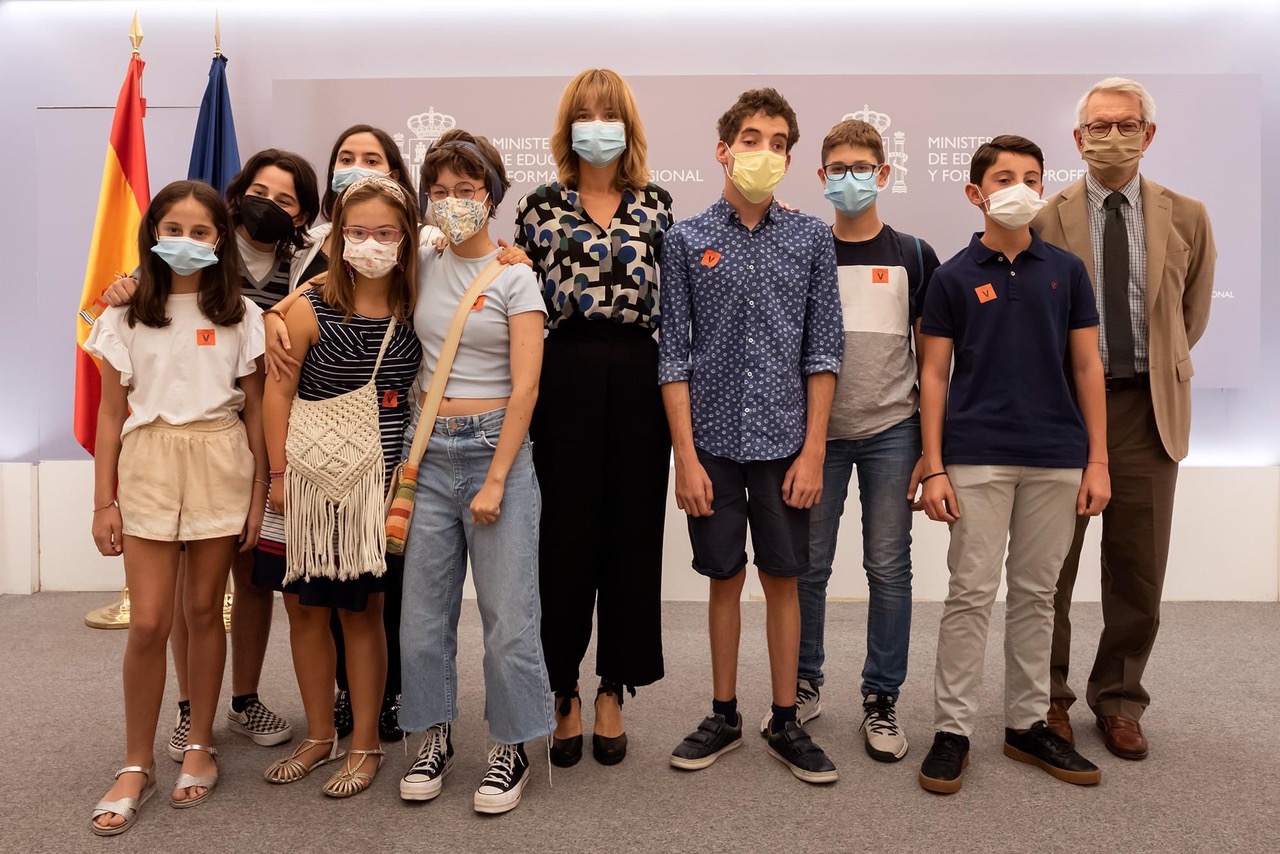
Since mid-2020, ‘Estudiantes por la inclusión’ — a very diverse group of secondary school students from different parts of Spain — has been holding working meetings with the intention of building a guide aimed at other students to ensure their schools respond to the diversity of the student body. The guide was presented on 09/13/21 to the Minister of Education and Vocational Training, Pilar Alegría, who was very interested in the proposal.
The text, which is very practical, is already published and available for any student who wants to make their school more welcoming. Or for other members of the school community who want to help students develop their own voice for the transformation of their schools. One of the most interesting initiatives of Quererla es crearla.
'Youth Teams in Education Research' Award
‘Estudiantes por la inclusión’ has been awarded by the American Educational Research Association to participate in its upcoming conference, which will be held in Chicago in April 2023. The group was one of the 10 high school student research teams selected from around the world to participate in this important international conference.
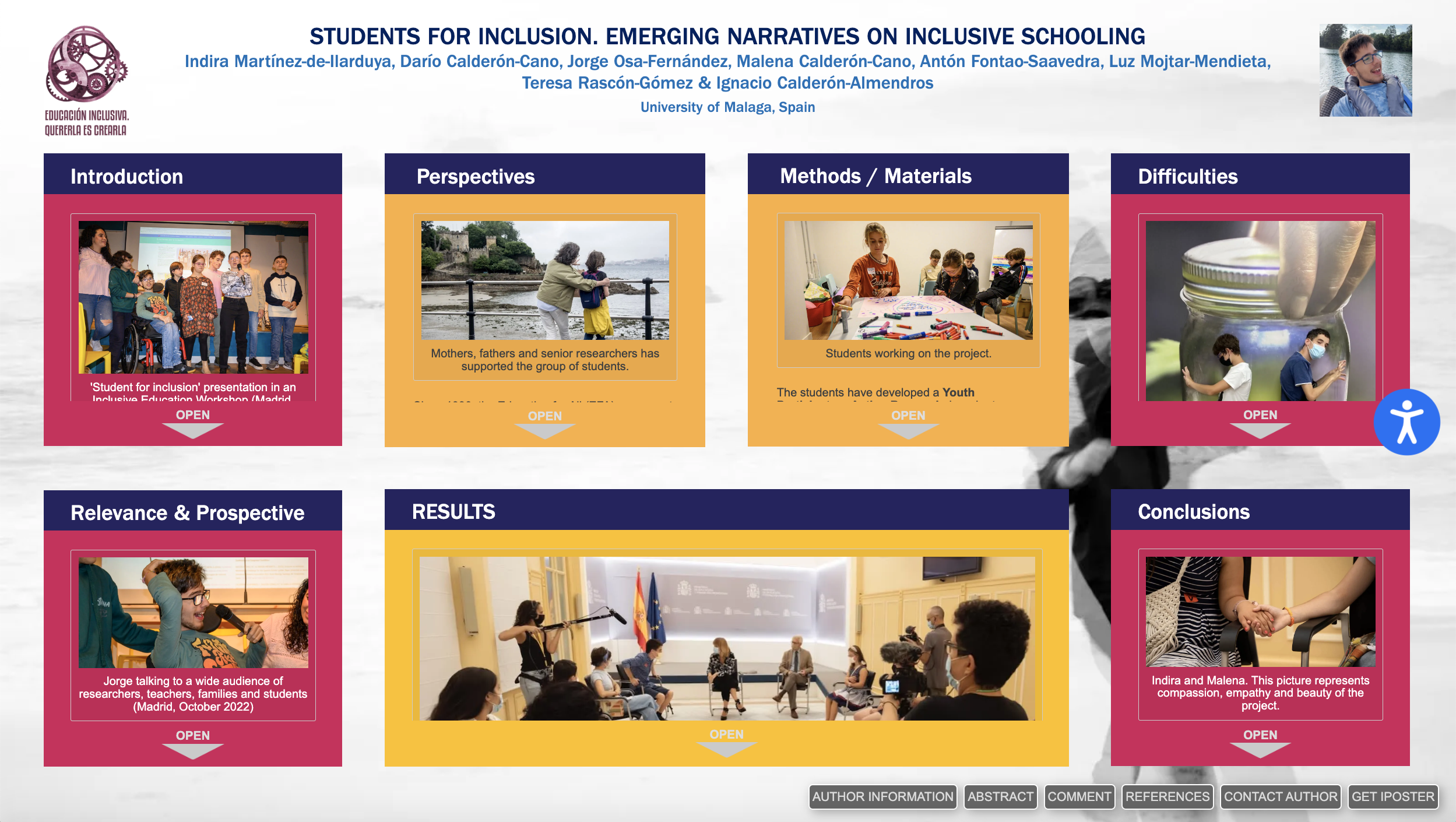

“On behalf of the American Educational Research Association (AERA), we are pleased to inform you that your high school student research team has been selected to participate in theAERA Youth Teams in Educational Research Program at the 2023 Annual Meeting in Chicago. This special initiative is designed to showcase the work of high school students who use research tools to answer critical questions about education and to cultivate students’ knowledge and interest in the field of educational research. The program attracted dozens of proposals from youth teams across the United States and around the world. The selection committee was impressed with the quality of your proposal and the substance of the work being done by the student researchers on your team. Congratulations!”
Writing to claim one's place in the world
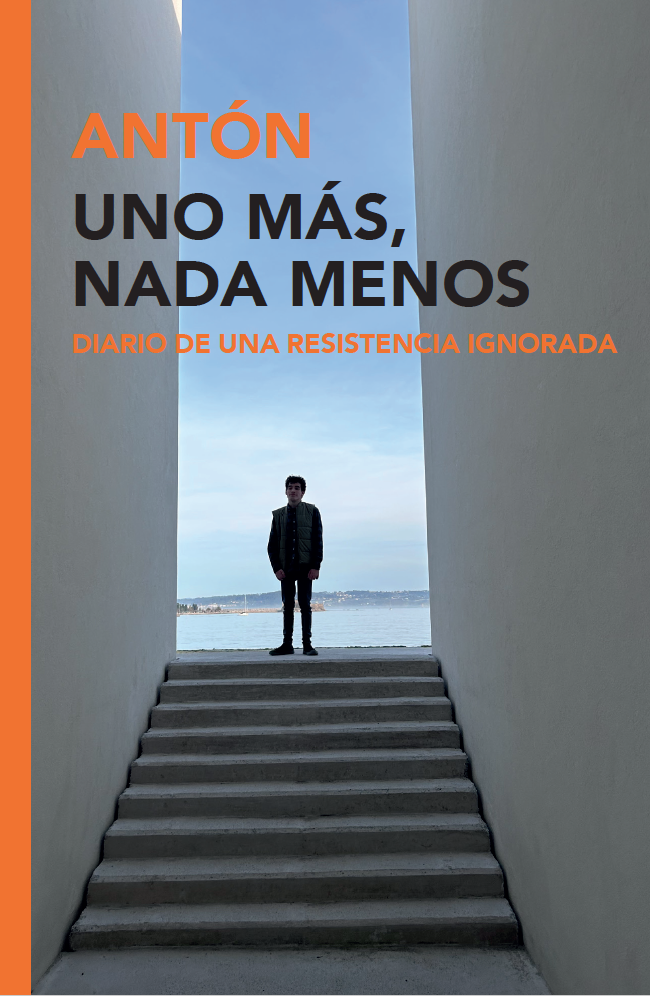
Antón Fontao’s writings go beyond the diary of an adolescent. What has marked his life and, above all, his time at school, has been the fact of being a person labeled by disability and, from there, seeing his right to learning, participation, and coexistence violated.
Writing has served a therapeutic function for Antón. It has also allowed him to form a community that has provided him with the acceptance and self-affirmation that was denied to him in the educational environment. In turn, that community has received valuable lessons by listening to his voice in the first person.
- For sale at Editorial Manelia
World Down Syndrome Award
On October 31, 2023, the World Down Syndrome Awards, organized by Down Syndrome International, the international organization that brings together groups of entities from different countries across the 5 continents. The World Down Syndrome Awards are granted to projects, achievements, or practices that improve the lives of people with Down syndrome. There were over 200 nominations from all over the world, and only 5 awards, one of which—the one in the Self-Advocacy groups for inclusive education category—was awarded to ‘Estudiantes por la inclusión’, the student group promoting the movement Quererla es crearla. This powerful team of young people, with their calm and unpretentious journey, continues to teach lessons all over the world. They will present their project and actions on March 21, 2024, at the United Nations headquarters in New York.
Award winners: https://www.ds-int.org/world-down-syndrome-awards
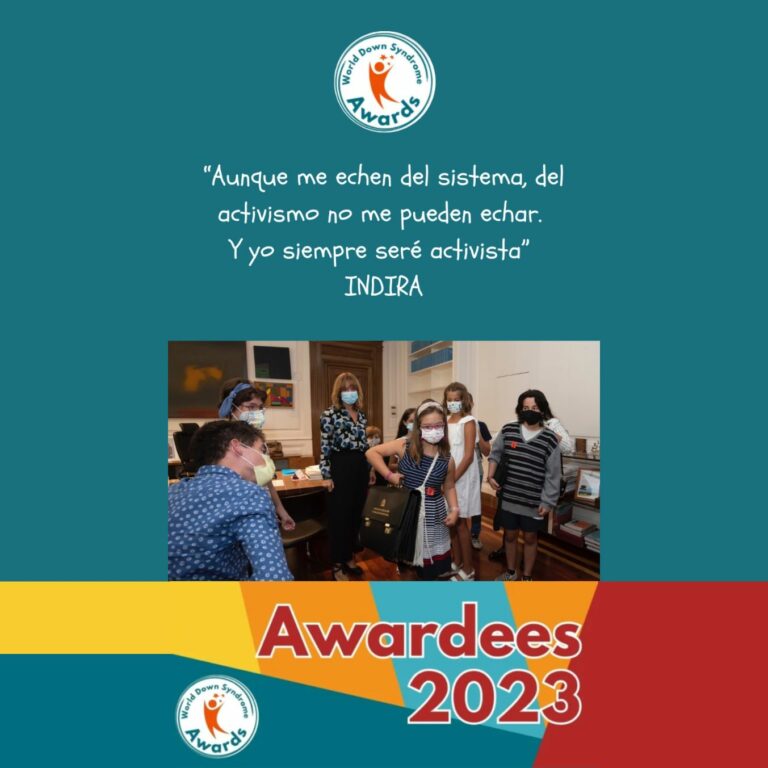
“Estudiantes por la inclusión” have been promoting inclusive education in secondary schools by sharing student stories, developing a guide on “How to make your school inclusive,” and advocating for inclusive education before the Government and the media. Congratulations!
"If we are separated as children in school, coexistence is impossible"
Interview on Basque Public Radio and Television with Indira Martínez de Ilarduya Preciado. Podcast available at https://eitb.eus/A_gYmPPA/
Estudiantes por la inclusión: "Don't judge a book by its cover"
World Down Syndrome Awards 2023 ceremony, held on 3/22/2024 at the United Nations Headquarters in New York.
"Now I know that we are all perfect just as we are"
Speech by Antón Fontao on hate speech in the Parliament of Galicia, invited by the Global Campaign for Education.
How to make your school inclusive
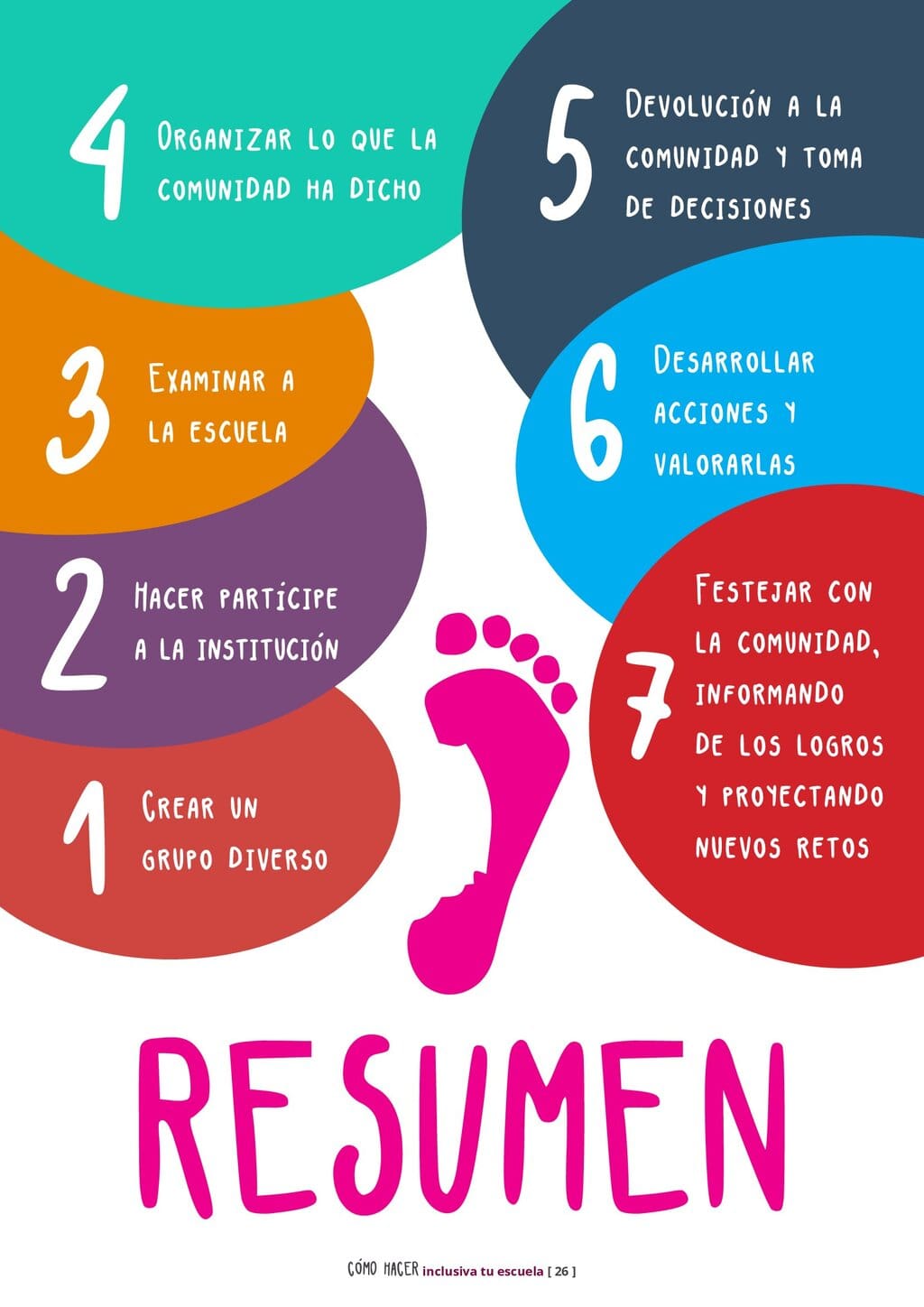
The result of the intense and prolonged work of the ‘Estudiantes por la inclusión’ group together with a team of researchers from the University of Malaga, the Guide ‘How to make your school inclusive’.
The diverse composition of the group was the key to ensuring that the ideas born from it, sifted through sustained debate over time, kept the focus always on the inclusion of all students, without any restriction whatsoever on that ‘all’. Their work is a huge example that when we talk about inclusive education, Quererla es crearla.
The guide draws on three major lines of research widely developed by the Educational Sciences and other Social Sciences. These currents of research and action to promote social justice in situations affecting young people have been shuffled and blended in these pages with the idea that it should be the young people themselves who lead the change in our schools and high schools.
You can use this guide...
If you are a student, because the guide is designed for you.
If you are a teacher, supporting your students with this guide.
If you are a family, promoting the guide, disseminating it, and collaborating with the student body to implement it.
If you are a member of a school leadership team, organizing an assembly at your school to invite students to use it, and promoting collaboration between the teaching staff and the students…
If you are dedicated to teacher training, developing service-learning practices to empower students in schools with the guide.
If you develop educational policies, by disseminating the guide, generating training plans that utilize it, and introducing it into educational innovation calls.
Audio description [AD]: Intro of the program 'Llegó la hora', hosted by Roberto López. Presentation of the 'Estudiantes por la inclusión' project.
(Music)
Roberto López - R.L.:— The time has come. Today is Thursday, the 23rd, and on Thursdays, we dedicate a space in this television slot to talk about university. And, today, I am joined by three researchers, three friends who are going to tell us about a project that is very, very interesting.
To my right, Luz del Valle, who is a researcher in the Department of Theory and History of Education and M.I.D.E. Hello, Luz, how are you?
Luz Mojtar - L.M.:— Hi, I'm good, and you?
R.L.:— Well, thank you. What exactly is M.I.D.E.?
L.M.:— Research and Diagnostic Methods in Education.
R.L.:— My goodness, so many things. Thank you, Luz, for being with us. Also joining us, to my left, is María Teresa Rascón. She is a tenured professor in the
Department of Theory and History of Education and also M.I.D.E.
Teresa Rascón - T.R.:— Good morning.
R.L.:— We already know about the M.I.D.E. stuff. How are you?
T.R.:— Fine, and you?
R.L.:— Fine, thanks. How are classes going, everything good?
T.R.:— Everything is fine for now. We have good students, we cannot complain. There is a future and there is hope.
R.L.:— Yes, we already know, we know. We are also joined by Ignacio Calderón, who is a tenured professor in the Department of Theory and History of Education, and also M.I.D.E. Nacho, how are you, how are you doing?
Nacho Calderón - N.C.:— Very well, we are repeating ourselves. All colleagues from the same department.
R.L.:— Of course, because in the end you are all working on the same project.
N.C.:— Yes, we are all working on the same project. There are people from other departments and other faculties, but, yes, we, those of us representing the project today, are all from the same department.
R.L.:— A very comprehensive project, Luz, because we are going to share how students, professionals, families, and researchers have come together to analyze an issue that matters deeply to us: inclusion in education, in schools.
L.M.:— Exactly.
R.L.:—That is, in essence, somewhat the objective of your work.
L.M.:— Yes, all together, all rowing in the same direction, so that education is inclusive, equal for everyone.
R.L.:— Let everyone understand: there is room for everyone in the classroom. Attention, because your project, and I believe you are one of the driving forces behind it, has won a global award for the “Estudiantes por la inclusión” project.
L.M.:—Yes, well, “Estudiantes por la inclusión” is part of a larger project which, from the university, is “emergent narrative,” but which is “Quererla es crearla.” That group of people you were talking about at the beginning.
R.L.:— An initiative that has received the World Down Syndrome Award 2023, an award for your study, not for your work. How has it been received by the team?
L.M.:— Well, with great joy, we are super proud. I believe images of the students who have received the award are being shown. Just imagine, we are super proud of them, for the work they have done, and of us, as the professional team that accompanies them and makes this possible.
R.L.:—Nacho, tell me, what does this award-winning project consist of, please?
N.C.:— Well, the awarded project is called “Estudiantes por la inclusión” and it is a very diverse group of students that we brought together a few years ago to create a guide that the Ministry had commissioned us to do. The guide is a student guide, built by those students, who worked over more than a year of periodic meetings in which they helped other students make their schools more inclusive. In other words, it is the students themselves who take the lead and decide to reach out, let's say, to make schools more inclusive, rather than waiting for teachers or families to do it.
And from that beginning, which was creating a guide, these students have gone on to train teaching staff, give a lot of lectures, and participate in a documentary. In short.
R.L.:— The students themselves?
N.C.:— The students themselves training teachers. Yes, indeed.
R.L.:—Students, moreover, with diversity. I mean, very different people.
T.R.:— We all have a very, very diverse group. Students with disabilities, with different sexual identities, of different genders, with very different academic performance, race, ethnicity…, in short, it is a very, very diverse group, but they have fit in perfectly. That is to say, in the group, those categories are never mentioned.
R.L.:— Yes, how great. They are all students, together, chatting. Because I read that they talked about their experiences regarding the issue of inclusion, even sharing their life stories. That is where a kind of laboratory of ideas begins. They start talking, reaching conclusions, and they are the ones who are later re-educating others.
L.M.:—Yes, it is very curious, the group is made up of people who did not know each other. Beforehand, they did not know each other; some had very sporadic contact because there were two mothers who knew each other, but the group consisted of strangers and was very, very diverse, as my colleague says. But, by sharing their experience and making it known to others, they realized that they had many things in common, that they shared similar experiences. And a group has been created that are friends.
R.L.:— How old are these students?
L.M.:— The youngest was 14, who is now 15. But from about 14 years old, in secondary school, up to 20.
R.L.:—And you bring this group together, and what is it that you do? I suppose you mentor, accompany, and also draw conclusions, right?
N.C.:— Well, the project, both with students and with other groups, such as families or professionals, provides theoretical and scientific support to the knowledge of those people which, to a large extent, is not yet highly valued in schools. And we know that it is precisely through the recognition of that knowledge, and the value of that knowledge, that schools can progress to become more inclusive, so that everyone fits within them.
What we do is facilitate that happening and provide scientific support to that work, which they are doing and building: a citizen science, which children and families carry out, and which is neither naive nor useless. In fact, in the images, you can see another previous international award they received from the largest scientific association in the world. They received it in Chicago at the beginning of the year.
R.L.:— That's great. We are seeing the images of the group of boys and girls that you have formed. Those 16 students with great internal diversity, who discuss their experiences and tell their life stories. Who reach conclusions and present all of this at conferences, workshops, in the media, and on social networks.
T.R.:— At the Ministry, they are also training teachers, providing teacher training courses.
R.L.:—Oh my goodness.
L.M.:— On Monday, precisely, they have one in Galicia
R.L.:— I would love to talk to them. I don't know if we could do it someday.
L.M.:— Whenever you want.
R.L.:— How interesting. You know, we have been talking to departments and researchers for years and years, and I don't know if anything similar had been done. At least in the Andalusian context, right? I don't know.
L.M.:— We are not aware of what you are mentioning regarding the Andalusian context. It is true that, outside of Spain, we know of students. These images that were released were from a conference in Chicago where there were other student groups. They awarded 10 student groups from all over the world, but we are not aware of any similar movement among groups closer to us.
R.L.:—And that is why you have received, or they have received, the World Down Syndrome Award, but, of course, what must be made clear is that it is not only about Down syndrome, but that it addresses any issue that has to do with any one of us.
T.R.:— Exactly. On this occasion, that was the reason for the award, but, as Nacho rightly said, last year they won another one for inclusive education. In other words, as I was telling you, there is no room for those labels here in the group. At all times, it is a group of young activists who are fighting to transform education and turn it into inclusive education.
R.L.:— That is what I am getting at, and I am opening the debate. Can education really be, and should it really be, inclusive? Please, enlighten me.
N.C.:—It can and it must, because it is morally necessary, and it has to be because it is legally mandatory. In reality, there is still a whole debate, unfortunately, about whether or not to have inclusive education, but that debate should already be transcended because there is a wealth of international scientific evidence from the last few decades that says that inclusive education is not only morally better. It is a legal and moral mandate that we educators have, and furthermore, it is scientifically more effective than segregated education. So that debate should actually disappear.
It must be inclusive. Now, the question will be how we do it. That is where there is
a lot to talk about and debate.
R.L.:— Ah, of course. I am a father of girls who have gone to school, and sometimes we have encountered other moms and dads at the school gate who make comments like, "we all know that this child shouldn't be in the class because they hold back the growth and education of the rest of the group." And yet, you say, "no, it is quite the opposite."
T.R.:—We say it, and international scientific evidence says it. That is to say, all scientific studies are indicating that there is no evidence that it affects academic performance, nor, logically, social development; rather, it is quite the opposite, that having diverse children in the classroom is beneficial.
R.L.:— And how do we do it, well.
N.C.:— That is the debate. I was thinking, while Teresa was speaking, that we know inclusive societies do not happen unless we socialize together and learn together. That is to say, talking about inclusive societies without
schools being truly inclusive will not happen, it does not happen. Do we expect that to happen through the mediation of companies? What is the space where children can learn to recognize the value of another person without it being a value mediated by the economic? There is no better space than school.
R.L.:— Besides, children, in that regard, it's like they have it perfectly clear. Right, Luz? What is in your class? Classmates. They don't wonder if one is of a certain color, if another has... No, they have that as standard. It is us, later on, who get confused.
L.M.:—There is no doubt. Indira is the girl in pink who appears in the images. I have a young daughter. When they celebrated Down Syndrome Day, my daughter said in class that she didn't know anyone with Down syndrome, and she knows Indira perfectly well because she has slept at my house. So, where is the difference? Indira is just another girl. Indira is Indira. Where are the differences? The ones we impose, because things have to be labeled, but in daily life, it works better, and it is proven.
R.L.:— I insist on the question, how do we do it? What conclusion do we draw? So that those of us here and those at home watching TV today, for this little while, ask themselves: what can I do to make schools more inclusive? And, therefore, our society.
N.C.:— We have examples of schools that are moving forward to become more inclusive. One cannot say 'this school is inclusive' in the same way that we cannot say 'this school is as fair as it could possibly be.' We can always be fairer, we can always be more inclusive, but there are schools that are making progress, and those advances are fundamentally based on placing dialogue and participation at the forefront. That is to say, ensuring that everyone can speak, can understand what is happening in the school, and can decide how to transform it.Here, in Malaga, we have a school that has been moving forward. One from which we have also been learning, and which has been making great progress in its process of becoming more inclusive. And now we intend to launch a
network of schools as well, learning from that one, from a guide that has emerged from that school. That school has been developing a process called
"Participatory Action Research". In it, people analyze in order to transform things, and they do so through participation. This process has been documented in a guide that helps other schools develop their own processes to become more inclusive.
R.L.:— That is great, truly. On this program, we have time for the university, but we always dedicate some time each week to talk about Education. We talk about the children, the teachers, the educational community, and I find everything you are proposing very interesting.
To wrap up, what are the next steps for the project you have? Because this is just one part of what we have discussed. You will have to come back to talk about everything else.
T.R.:—As we were saying, this project was completed, but we have been fortunate enough to have it renewed by the Ministry, so the idea now is to continue working and even give a more international focus to this work we are doing with families, professionals, and students.
We want to cross borders. In fact, we are establishing contacts with schools in Latin America, because the idea is for this to become—as UNESCO once established for the 2030 Agenda in fulfilling the goal of inclusive education—a way to continue working and, above all, involving schools that truly believe in this project.
You asked Nacho, how can we do it? We can do it by putting families, teachers, and students to work. By sharing information about successful practices that are also taking place in other schools. Through participation and dialogue.
R.L.:— Inclusive schools, a better future, which is what it's all about in the end. Thank you so much for coming and for telling us about this project. I found it extremely interesting, and I hope you at home found it interesting as well.
Ignacio Calderón, Associate Professor in the Department of Theory and History of
Education, thank you for being with us.
Thank you, Luz del Valle Mojtar, researcher at the Department of Theory and History of Education.
Thank you, María Teresa Rascón, tenured professor at the Department of Theory and History of Education
In unison:— Thank you very much.
R.L.:— Thank you. Let's stay in touch; I would love to keep talking about this topic
L.M.:— When you want to talk to the students, we will bring him to you.
R.L.:— That is done. Now, on the way out, we will talk. You speak with the production team, and we will find a date. Thank you to everyone for the time at the university, our most cultured section.
2024 City of Málaga Education Award
On 9/13/2024, Malena and Darío Calderón, members of Estudiantes por la Inclusión, received the City of Málaga Award in the Education category, from the Mayor of Málaga, Francisco de la Torre, and the Councilor for Education.
Audio description [AD]:
Introduction to the 2024 City of Málaga Awards. Francisco de la Torre Prados, Mayor of Málaga, is present along with other council members of the Municipal Corporation.
Following the mayor, the award recipients move through the audience toward the stage to receive their awards.
(Music)
Jorge Gallardo:—
It is time for the City of Málaga Education Award. In this case, it goes to Malena and Darío, two siblings surnamed Calderón Cano, secondary school students at the Jesús Marín and Torre Atalaya institutes, recently recognized alongside their peers from the 'Estudiantes por la Inclusión' collective with an international award at the UN headquarters for their activism in favor of inclusive education.
Audio description [AD]:
Close-up of Darío, sitting among the attendees,
attentive to the presentation.
Jorge Gallardo:—
His work is focused on the prevention of isolation and loneliness in the classroom. We are going to see part of their work.
(Music)
Audio description [AD]:
On a giant outdoor screen, images of the group ‘Estudiantes por la inclusión’ appear, showing them in joint activities, workshops held with families, teaching and research teams, receiving an award from the American Educational Research Association in Chicago, and at the UN, receiving the World Down Syndrome Award.
On a large screen, scenes are projected of the group ‘Estudiantes por la inclusión’ in joint activities, workshops with families, and collaborations with teaching and research teams. Also, the presentation of an award from the American Educational Research Association and from the UN (World Down Syndrome Award).
Jorge Gallardo:—
Malena and Darío Calderón Cano accept the award, which is presented by the Mayor of Málaga and María de la Paz Flores Delgado, Councilor for Education and Employment Promotion.
(Music)
Audio description [AD]:
Francisco de la Torre, María de la Paz Flores, Darío and Malena Calderón stand up from their seats and walk towards the awards area. Upon arriving, the mayor presents them with the award and they briefly exchange words of thanks. Then, they stand side by side for a group photograph taken by journalists.
Jorge Gallardo:—
Family photo. The siblings are going to have to fight over it now… I don't know where they'll put the award, whether in the sister's room, the brother's room, or in the living room. I suppose in the living room. They'll reveal it to us now.
Audio description [AD]:
Darío and Malena head towards the podium, where the event host, Jorge Gallardo, is located.
Jorge Gallardo:—
Congratulations.
Audio description [AD]:
Darío takes the floor.
Darío Calderón:—
Good evening. First of all, we would like to thank you for this award, both on behalf of my sister and myself. Honestly, we are both very grateful and we would never have expected that we would have the opportunity to be here today.
This award is very important to us, and it is an honor to receive it as good citizens of Málaga. However, we truly feel this award belongs to everyone in our group, 'Estudiantes por la inclusión,' as none of this could have happened without them.
Therefore, it is necessary to thank our peers who are not present today: Alberto Sánchez, Antón Fontao, Carmen Manzano, Indira Martínez de Illarduya, Jorge Osa, Juan Estefan Marí-Mayans, Leo Osa, Mariama Samba, Martín Zabaleta, Pablo García, Patricia Fernández, Rafael Soto, Yasmina Ennadi, and Zulaika Hadmed.
With these individuals, we have created our project, which has filled us with excitement, from which we have learned so much, and in which we have all contributed our grain of sand so that schools value our diversity and commit to our rights.
We also want to thank Luz Mojtar, from the University of Malaga, and our parents, who have been supporting us every step of the way in this process.
Audio description [AD]:
Malena takes the floor.
Malena Calderón:—
Today we have the honor of receiving this award, and we believe it is a good moment to share our concern regarding some injustices that have persisted over the years.
Many children and young people are not taken into account in their classes. Some cannot learn because the pace or the way of teaching does not change. Others find themselves alone at school and in high school. There are also people who are invited to leave or are directly expelled from
their classes and their schools to put them into special classrooms or specific centers.
In many of these cases, they have succeeded. It is something that continues to happen, also, to people in our group, 'Estudiantes por la inclusión', and it is something unjust and illegal. We denounce what is happening in many schools, and also what we students, well, do not do well. But we have strived to provide solutions to improve the conditions within them so that no one feels excluded.
That is what is being awarded today, and it fills us with pride. Thank you very much.
Video subtitled in Spanish and English. Full program, broadcast by Canal Málaga, available at this link.
2025 'Ser de Álava' Chain Award
On 3/31/2025, Indira Martínez de Ilardulla Preciado, a member of Estudiantes por la Inclusión, received the “Ser de Álava” Award for their activism for an inclusive education system at a gala held at the Palacio Europa in Vitoria-Gasteiz.
Audio description [AD]:
A male presenter and a female presenter, on the stage of the Palacio Europa in Vitoria-Gasteiz.
Presenter:—
For their fight for an inclusive education system without segregation, an activism recognized with the United Nations World Down Syndrome Award in March 2024.
A video is projected on the big screen:—
Indira Martínez de Ilarduya, from Vitoria-Gasteiz, accepted the World Down Syndrome Award at the UN headquarters in New York. She did so on behalf of a group of secondary school students called 'Estudiantes por la inclusión' who, in 2020, created a guide to ensure their schools respond to the diversity of the student body. Indira wants to change things after having felt sidelined and alone during periods of her education due to her Down syndrome, so that no other child has to go through the same thing. For Indira, it is not Down syndrome that causes problems, but the barriers that people put in place.
Presenter:—
Presenting the award is Ángel Garabieta, Commercial Director of CaixaBank in the Basque Country...
Presenter:—
And receiving the Indira Martínez de Ilarduya award is her, accompanied by her mother, Noemí Preciado. Please.
Hello everyone,
Today I am very happy; I am moved that the work of 'Estudiantes por la inclusión' is being recognized here, in my city.
I love my city, and to be able to live together in it, it is very important that we are not separated at school. That is what we, the 'Estudiantes por la inclusión', work for, and we are never going to give up. Never.
We fight to make schools inclusive and thus build societies and cities where all people can live together, with the same rights and opportunities.
If we are separated from a young age, it is impossible for us to learn how to live together.
I would like for us all to be able to be, work, and enjoy life together in my city, and in every city and place in the world.
I want to thank Cadena Ser for valuing our work. Thank you very much, from the bottom of my heart.
I also want to thank everyone who has accompanied me on this journey:
To my family, who are here.
To my mother, for supporting me and teaching me to defend my rights and not let anyone trample on them.
To Miren, my friend.
To Jon, Izan, and Alejandra, for being my friends and supporting me when I needed it most.
To those who made it difficult for me and put up barriers. I have a message for you: you have made me stronger, and more of an activist.
To those who thought I wasn't worth it or that I had to be separated from my peers. You were wrong, you were not right. You have taught me how to resist.
To Luz and Nacho. Thank you for believing in us. I love you.
And of course, thanks to my group, the 'Estudiantes por la inclusión': Alberto, Malena, Darío, Antón, Martín... I am not going to name everyone because there are many of us, we are 16. This award is yours too, friends.
It is a great honor to receive this award in my city. A million thanks.
Video subtitled in Spanish. Full program, broadcast by Cadena Ser Álava, available at this link.
Featured social media posts
Ver esta publicación en InstagramUna publicación compartida de Quererla es crearla (@quererla_es_crearla)
Indira Martínez (Vitoria), a member of the 'Estudiantes por la inclusión' collective, receives the World Down Syndrome Award at the UN headquarters in New York.
(Indira applying lipstick to her mother, Noemi Preciado, in a natural setting.)
Indira Martínez: I am Indira, I am 17 years old and I live in Gasteiz. I am a person who does not tolerate injustice, who moves forward to fight against injustices. In schools, there is a lack of love for some people.
(Applause as Indira receives the award at the UN headquarters)
Indira: It was a great honor. We were given that award there for working to make schools inclusive for everyone.
(Members of the collective in a square, in front of sculptures of several men in suits under an umbrella, by Ju Ming.)
Indira: It is a group from all over Spain, diverse. We meet and, as a result, we talk about what school should be, and we saw that there were still things to change. We made a very interesting guide. So that children do not go through what I went through.
My school is […] it doesn't have specific classrooms or anything like that. Everyone is together, there, learning. It is simply the best for everyone.
Noemi Preciado: Our fight is and has been for Indira to remain within the system. Indira has been pushed out of the system. The options the system gave us were segregated options.
Indira: What I always say is that coexistence among everyone is possible.
("The work has been presented to the Minister of Education, Pilar Alegría.")
Indira: I love studying, yes, yes. I am already an activist. And also [quiero ser] politics to ensure that laws are complied with.
("Indira wants to become a politician to change things, after having felt pushed aside and alone at school.")
Indira: The United Nations Convention states that persons with disabilities have the right to an inclusive education.
(Detailed view of some members of the collective. In the foreground, Antón Fontao Saavedra.)
Indira: There are still laws that allow us to be separated. The teachers didn't explain anything to me. So, of course, I was bored. They considered that I should be apart. Segregated in a special classroom. They said I had to be with 'my own kind'.
("The UN recognizes inclusive education as a fundamental right of students. Indira's experience and that of other peers are captured in the documentary 'Quererla es Crearla'.")
Noemi: In secondary school, Indira was in the mainstream classroom because it was 'my stubborn insistence.' It has never been understood as her legitimate right. She was there, in class; it was physical inclusion.
Indira: There were 30 of us, and who was the -1? Me. They just needed to get to know me. I wasn't with my classmates. And believe me, I tried, you know? But nothing, it was impossible. I was completely invisible. I was wearing a sign.
("The documentary shows the struggle of these students and their families for an education where all children have a place.")
Noemi: It lacks humanity. And the conviction that, when people are segregated due to their condition, the rights of those individuals and the rights of others are being violated. Because they are being deprived of the right to live with diversity.
Indira: I am studying, I take training courses for the unemployed. There are no specific classrooms there, and that is where they really teach me. I am just one of the others, I go happily.
More information
Scientific productions
Publications
- MOJTAR-MENDIETA, L. (2025). The Student Voice in the Construction of Inclusive Identities, Schools, and Societies.Latin American Journal of Inclusive Education, 19(2), 187-203. https://doi.org/10.4067/S0718-73782025000200187
- MOJTAR-MENDIETA, L., RASCÓN-GÓMEZ, T., & CALDERÓN-ALMENDROS, I. (2025). Students as subjects. Resistance, youth agency, and inclusive education through participatory action research. International Journal of Qualitative Studies in Education, 1–18. https://doi.org/10.1080/09518398.2025.2454281
- MOJTAR MENDIETA, L.; FONTAO SAAVEDRA, A.; RASCÓN GÓMEZ, M.T. and CALDERÓN ALMENDROS, I. (2024). “So they don’t go through what we went through.” Inclusive education, collective struggle, and resilience in the life of Antón Fontao. In E. Vila, M.T. Rascón and M. Hijano (Coords.), Thinking and researching education: social challenges and emerging lines (pp. 49-68). Octaedro. http://doi.org/10.36006/09639-0. Available at online.
- SOLDEVILA-PÉREZ, J.; CALDERÓN-ALMENDROS, I. & ECHEITA, G. (2022). My (school) life is expendable: radicalizing the discourse against the miseries of the school system. In J. Collet, M. Naranjo & J. Soldevila (Ed), Global struggles for inclusive education: lessons from Spain (pp.17-32). Springer, Switzerland.
- CALDERÓN-ALMENDROS, I. & RASCÓN-GÓMEZ, M.T. (2022). Weaving struggles for the right to education: Collective and personal narratives for inclusion from the social model of disability. Social Pedagogy. Interuniversity Journal , 41, 43-54.
- MOJTAR-MENDIETA, L. & CALDERÓN-ALMENDROS, I. (2021). Silenced voices leading school changes. Enabling Education Review, 10, 28-29.
- CALDERÓN ALMENDROS, I. & RASCÓN GÓMEZ, M.T. (2021). Rhetorics, possibilities and torn childhoods. On inclusive education in the LOMLOE. Cuadernos de Pedagogía, 526, 74-80.
- CALDERÓN, I.; MOJTAR, L.; CABELLO, F. & ‘ESTUDIANTES POR LA INCLUSIÓN’ COLLECTIVE (2021). How to make your school inclusive. Ministry of Education and Vocational Training, Madrid. https://doi.org/10.4438/LADA048_2024. Available online.
Conference presentations at scientific congresses
- RASCÓN-GÓMEZ, M.T. & MOJTAR-MENDIETA, L. (2021). Inclusive or exclusive education? A challenge for the Spanish School system. Paper presented at World Educational Research Association 2021 Focal Meeting, Santiago de Compostela, Spain. https://hdl.handle.net/10630/23241
- CALDERÓN-ALMENDROS, I.; RASCÓN-GÓMEZ, M.T. & CABELLO-FERNÁNDEZ-DELGADO, F. (2021). How to make our schools more inclusive? The case of Spain. Paper presented at Comparative Education Society of Asia (CESA) 12th Biennial Conference. Kathmandu, Nepal.
- CALDERÓN-ALMENDROS, I. (2022). Involving communities in the promotion of inclusive school cultures. 1st International Conference on Education and Training – Thinking education in transition times, Lisbon, Portugal. https://www.icet2022.pt/en/content/abstracts/abstract-book/abstract-book.html
- RASCÓN-GÓMEZ, M.T.; CABELLO FERNÁNDEZ-DELGADO, F. & CALDERÓN-ALMENDROS, I. (2022). Emerging and transformative narratives on inclusive education through documentary cinema. Paper presented at the American Educational Research Association Annual Meeting 2022 (AERA). San Diego, USA. https://hdl.handle.net/10630/24019
- CALDERÓN-ALMENDROS, I.; RASCÓN-GÓMEZ, M.T. & MOJTAR-MENDIETA, L. (2022). Intersectionality, emerging narratives, and inclusive education in Spain. Paper presented at the American Educational Research Association Annual Meeting 2022 (AERA). San Diego, USA. https://hdl.handle.net/10630/24086
- CALDERÓN-ALMENDROS, I.; MOJTAR, L.; RASCÓN-GÓMEZ, MT.; FONTAO, A.; MARTÍNEZ-DE-ILARDULLA, I.; OSA, J.; CALDERÓN, M.; CALDERÓN, D. (2023). Students for Inclusion. Emerging Narratives on Inclusive Schooling. 2023 American Educational Research Association Annual Meeting (AERA). Chicago, USA.
- MOJTAR-MENDIETA, L., CALDERÓN-ALMENDROS, I. & RASCÓN-GÓMEZ, M.T. (2023). Students as subjects. Resistance and collective resilience to challenge barriers to inclusion. Paper presented at the American Educational Research Association Annual Meeting 2023 (AERA), Chicago, USA. https://hdl.handle.net/10630/27300
- MOJTAR-MENDIETA, L., CALDERÓN-ALMENDROS, I. & RASCÓN-GÓMEZ, M.T. (2024). From oppression to activism. Student voice and social change. Paper presented at the British Educational Research Association (BERA) Conference 2024 and World Educational Research Association (WERA) Focal Meeting. Manchester, United Kingdom.
Awards and recognition
- ‘Youth Teams in Education Research’ Award (2023), granted by the American Educational Research Association (American Association of Inclusive Education) to the Secondary School Students Research Team ‘Students for Inclusion’.
- ‘World Down Syndrome’ Award (2023), awarded by Down Syndrome International to Students for Inclusion
- City of Málaga Education Award (2024), granted by the Málaga City Councilto Malena and Darío Calderón Cano representing the collective ‘Estudiantes por la Inclusión’.