The benefits of inclusive education
- Ignacio Calderón Almendros (University of Málaga)
- Gerardo Echeita Sarrionandia (Autonomous University of Madrid)
This text was previously published as part of an article by the Oxford Research Encyclopedia of Education (Calderón-Almendros & Echeita, 2022)
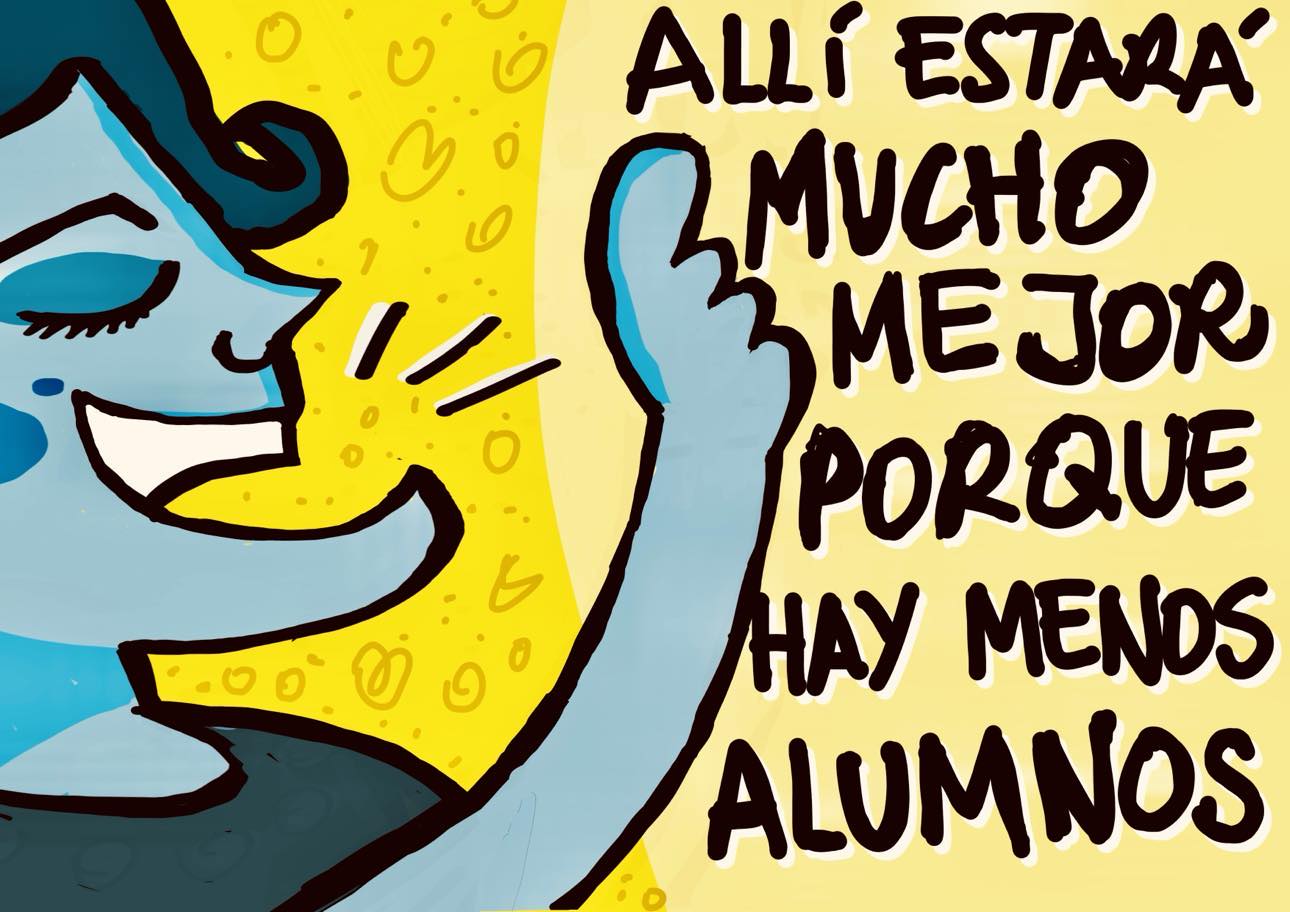
This text aims to respond with scientific evidence from recent decades to that oft-repeated expression used to justify school segregation: “They will be better off in (special) education”.
It doesn’t matter if it’s a special classroom or a special center; in both cases, we are talking about school segregation, which goes against human rights (Calderón-Almendros & Echeita, 2022). The question then bypasses this fundamental point, which is the rights-based and ethical perspective that guides inclusive education: an argumentation focused on outcomes is not necessary (Ziljak, 2013; Cologon, 2020; Lindsay, 2007; Cara, 2013; Haug, 2017; Ainscow, Booth & Dyson, 2006; Lipsky & Gartner, 1996; Slee, 2001), nor can its understanding be limited to market margins (Miles & Singal, 2010). However, as the social and radical project it is, it is not exempt from pressures exerted by powerful forces contrary to the changes it proposes.
Despite this, it is very common to find debates and claims that attempt to suggest that the best option for certain individuals (especially many individuals with disabilities) is not inclusive education, but segregated education. It is often argued that special education is something like a high-performance center that would mitigate the adverse effects of social segregation. Far from this, international scientific evidence for over half a century has been very consistent and is growing, supporting the benefits of inclusive education over education in segregated environments.
Particularly noteworthy are the systematic reviews and meta-analyses by ARACY (2013), Cologon (2019), Hehir et al. (2016), Fisher, Roach & Frey (2002), European Agency for Development in Special Needs Education (2018), and Szumski, Smogorzewska, & Karwowski (2017). The benefits of inclusive education, beyond the social justice it promotes, are distributed across different areas or dimensions: improvement in socialization, sense of belonging to a community, feeling of well-being from social relationships with peers and teachers, and social inclusion; academic learning, as well as the maintenance and generalization of learning; improvement in communication and language development, and behavior, among others. Other benefits are also shown, such as the improvement of teachers’ instructional practices by making them more sensitive to students’ needs (Jordan, Glenn & McGhie-Richmond, 2010; Purdue, Ballard & MacArthur, 2001). Furthermore, the benefits of inclusive education affect students with and without disabilities, including those students whom many continue to label as having severe and multiple disabilities (Cologon, 2020; Ruppar, Allcock & Gonsier-Gerdin, 2017).
It should be noted that there is an absence of quality evidence to the contrary of these postulates, which supports the idea that special education offers greater benefits than inclusive education (Cologon, 2019; Hehir et al., 2016; Jackson, 2008), and the existing evidence compares schooling in special or mainstream schools, without these being classifiable as inclusive practices (Cologon, 2019; Lindsay, 2007). This is what happens when more local studies point to an increased risk of peer mistreatment through abuse of power (“bullying”) towards students with disabilities (Rose, Monda-Amaya & Espelage, 2011). Furthermore, the review of evidence suggests that attending segregated centers minimizes opportunities for social inclusion both in the short term (at school) and in the long term (after graduation) (European Agency for Development in Special Needs Education, 2018). However, segregated educational experiences continue to be common among students identified by disability, depriving them of one of their fundamental rights (Calderón-Almendros, 2018), and even though the evidence shows, as we have just pointed out, greater opportunities to learn and develop in more inclusive educational environments (Kurth, Morningstar & Kozlesky, 2014; Cologon, 2019; Hehir, 2016).
All this body of evidence, based on international meta-research, should serve as a foundation to respond to false claims that aim to argue against the fundamental rights of the most vulnerable children, as well as to resolutely undertake the transformation of education systems towards inclusive education. This is the greatest challenge facing education systems worldwide (Ainscow, 2016). Administrations and all members of the community can and must take steps to achieve this, something that benefits us all, thereby paving the way for more equitable and inclusive societies.


References
Here is the scientific bibliography used in this response, so you can delve deeper. Faced with unfair and false statements, get informed and do not remain silent!
Ainscow, M. (2016). Diversity and equity: A global education challenge. New Zealand Journal of Educational Studies, 51 (2), 143–155. https://doi.org/10.1007/s40841-016-0056-x
Ainscow, M., Booth, T., & Dyson, A. (2006). Improving schools, developing inclusion.Routledge. Australian Research Alliance for Children & Youth. (2013). Inclusive education for students with disabilities: A review of the best evidence in relation to theory and practice. ARACY. https://bit.ly/3stLgga
Calderón-Almendros, I. (2018). Deprived of human rights. Disability & Society, 33 (10), 1666–1671. https://doi.org/10.1080/09687599.2018.1529260
Calderón-Almendros, I. & Echeita, G. (2022). Inclusive Education as a human right.Oxford Research Encyclopedia of Education. https://doi.org/10.1093/acrefore/9780190264093.013.1243
Cologon, K. (2019).Towards inclusive education: A necessary process of transformation. Children and Young People with Disability Australia. https://bit.ly/3LpWPgO
Cologon, K. (2020). Is inclusive education really for everyone? Family stories of children and young people labeled with ‘severe and multiple’ or ‘profound’ ‘disabilities’.Research Papers in Education, 37 (3), 395–417. https://doi.org/10.1080/02671522.2020.1849372
Cara, M. (2013). Academic and social outcomes of children with SEN in the general education classroom. Journal of Educational and Social Research, 3 (7), 90–99. http:// dx.doi.org/10.5901/jesr.2013.v3n7p90
European Agency for Special Needs and Inclusive Education (2018). Evidence of the Link Between Inclusive Education and Social Inclusion: A Review of the Literature. European Agency for Special Needs and Inclusive Education. https://bit.ly/2kq7JYY
Fisher, D., Roach, V., & Frey, N. (2002) Examining the general programmatic benefits of inclusive schools. International Journal of Inclusive Education,6(1), 63-78. http://dx.doi.org/10.1080/13603110010035843
Haug, P. (2017). Understanding inclusive education: ideals and reality.Scandinavian Journal of disability Research, 19 (3), 206-217. http://dx.doi.org/10.1080/15017419.2016.1224778
Hehir, T., Grindal, T., Freeman, B., Lamoreau, R., Barquaye, Y., & Burke, S. (2016).A summary of the evidence on Inclusive Education.Alana Institute. https://files.eric.ed.gov/fulltext/ED596134.pdf
Jackson, R. (2008).Inclusion or segregation for children with an intellectual impairment: What does the research say?Queensland Parents for People with a Disability. https://bit.ly/33efsmW
Jordan, A., Glenn, C., & McGhie-Richmond, D. (2010). The Supporting Effective Teaching (SET) Project: The Relationship of Inclusive Teaching Practices to Teachers’ Beliefs about Disability and Ability, and about Their Roles as Teachers. Teaching and Teacher Education, 26 (2), 259-266. https://doi.org/10.1016/j.tate.2009.03.005
Kurth, J. A., Morningstar, M. E., & Kozleski, E. (2014). The persistence of highly restrictive special education placements for students with low-incidence disabilities. Research and Practice for Persons with Severe Disabilities, 39 (3), 227–239. https://doi.org/10.1177/1540796914555580
Lindsay, G. (2007). Educational psychology and the effectiveness of inclusive education/mainstreaming. British journal of educational psychology, 77 (1), 1-24. https://doi.org/10.1348/000709906×156881
Lipsky, D., & Gartner, A. (1996). Inclusion, school restructuring, and the remaking of American society. Harvard Educational Review, 66, 762–797. 10.17763/haer.66.4.3686k7x734246430
Miles, S., & Singal, N. (2010). The education for all and inclusive education debate: Conflict, contradiction or opportunity?International Journal of Inclusive Education, 14, 1–15. https://doi.org/10.1080/13603110802265125
Purdue, K., Ballard, K., & MacArthur, J. (2001). Exclusion and Inclusion in New Zealand Early Childhood Education: Disability, Discourses and Contexts.International Journal of Early Years Education, 9 (1), 37-49. https://doi.org/10.1080/09669760123904
Rose, C. A., Monda-Amaya, L. E., & Espelage, D. L. (2011). Bullying perpetration and victimization in special education: A review of the literature.Remedial and Special Education, 32 (2), 114– 130. https://doi.org/10.1177/0741932510361247
Ruppar, A. L., Allcock, H. C., & Gonsier-Gerdin, J. (2017). Ecological factors affecting access to general education content and contexts for students with severe disabilities.Remedial and Special Education, 38 (1), 53–63. https://doi.org/10.1177/0741932516646856
Slee, R. (2001). Social justice and the changing directions in educational research: The case of inclusive education. International Journal of Inclusive Education, 5, 167–177. https://doi.org/10.1080/13603110010035832
Szumski, G., Smogorzewska, J. & Karwowski, M. (2017). Academic achievement of students without special educational needs in inclusive classrooms: A meta-analysis. Educational Research Review, 21, 33-54. https://doi.org/10.1371/journal.pone.0270124
Žiljak, O. (2013). Learning outcomes and inclusive education of students with Intellectual disabilities. Revija za socijalnu politiku, 20 (3), 275-291. https://doi.org/10.3935/rsp.v20i3.1145