A conversation about the UN Report
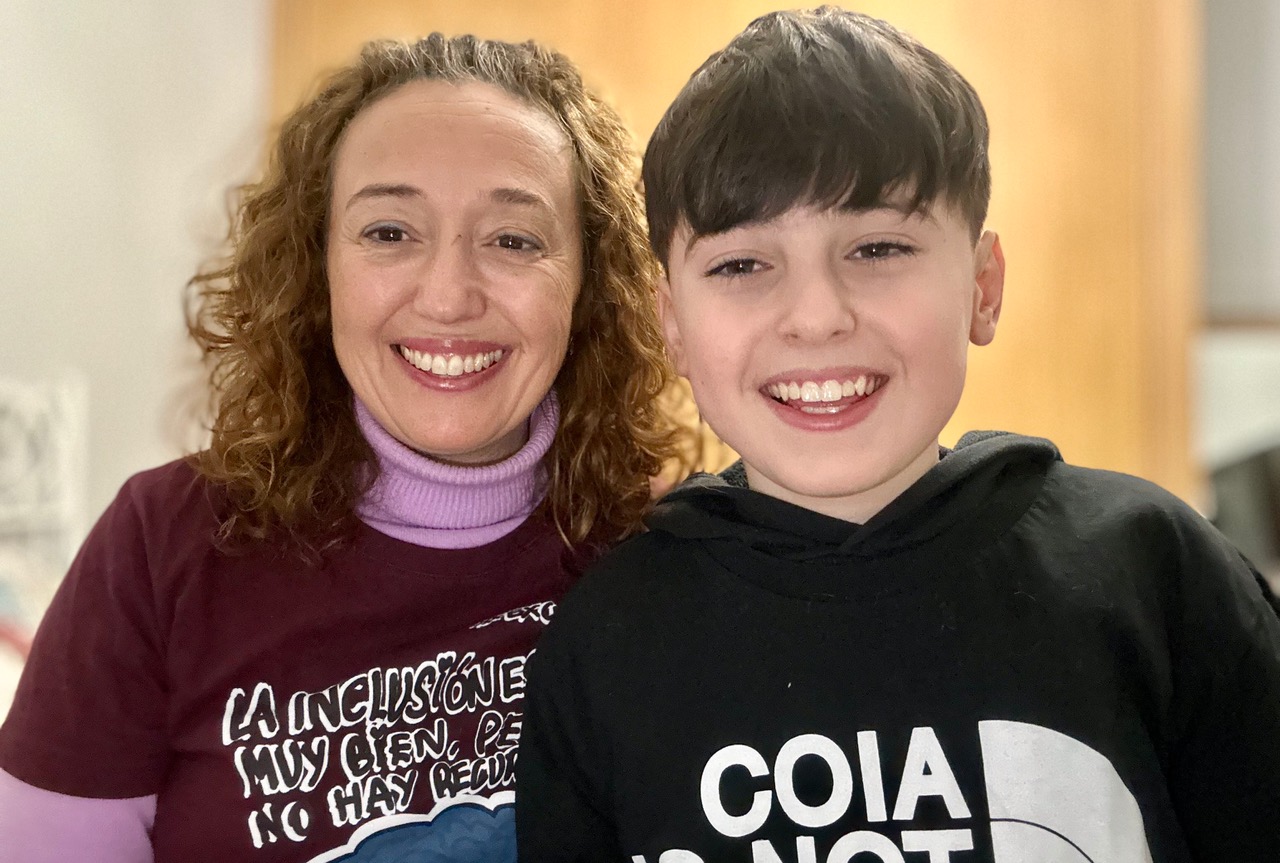
On November 26, 2024, Paula Verde and her son Lucas launched a social media campaign with a series of brief mother-son conversations following the latest UN report on the Spanish education system, released this year. This was their call:
Every night at 9:00 PM, on Facebook, we invite you to a special space where, together with my son, we reflect on important issues that sometimes do not receive enough attention.
Through simple and relatable dialogues, we will explore the rights of persons identified by their disability, inclusion, and see what the UN says in its report on education in Spain 💬❤️
🎥 Will you join the conversation? Because rights belong to everyone, and talking about them is necessary!
Let’s start with the first video 🌟 #ConversationsAt9PM#LetsTalkAboutRights #UNReport24
The campaign aims to bring to public debate a valuable and powerful United Nations report that is little known within the educational community. Discussing it, valuing it, and reflecting on it can become a good tool to assert the right to inclusive education, recognized as a human right since the approval of theConvention.
Do you want to know more?
The videos
1. What is inclusive education?
–So here begins a new space, mother...
–And son.
–To talk about the UN report, or in other words, what the UN thinks about education in Spain. I'm Paula.
–And I'm Lucas.
–Very well, Lucas, what is inclusive education?
–Inclusive education is when all children go to the same school together, regardless of their profile, and receive the support they need to learn.
–Very good. That's what the UN says, it also says that this is a right and not an option. All children must learn together.
–So there's only one type of school?
–Actually, no, but there should be. There should be a single school, according to the UN, to avoid segregation and study under equal conditions.
–So, segregation means children studying apart from their classmates.
–Exactly. Well, see you...
–In the second episode.
2. Why is it important to include everyone?
–Here we are again, in this mother–
–And son space.
–I'm Paula...
–And I'm Lucas.
–Okay, Mom, why is it so important for all children to be in the same schools?
–Lucas, it's very important, yes, the UN already says that we learn better in a diverse environment. It would help end discrimination, and on the other hand, complete societies originate from complete and diverse schools. We must include everyone.
–And what if a child needs more help?
–If a child needs more help, it's our obligation to give it to them, to provide the support, resources, and everything within our reach so that child can exercise their right to education in mainstream settings. See you tomorrow.
–At 9.
3. What about the laws?
–Here we are, one more day, in our space, Mom...
–And son.
–I'm Paula...
–And I'm Lucas.
–Mom, does Spain have laws for inclusive education?
–Yes, but they are not perfect yet. According to the UN, some allow students to continue being expelled from mainstream schools due to disability. And stop being where they belong by right with the rest of their classmates. What do you think about this, Lucas?
–I think this is very bad, because they are violating students' right to inclusive education. Those laws must be changed!
–And what do you all think?
–See you tomorrow at 9. Bye.
–Bye.
4. What if there are no resources?
–Here we are again on an afternoon-evening at 9 o'clock in our space, mother...
–And son.
–I am Paula...
–And I am Lucas.
–Today we are going to reflect on a very current topic: resources.
–Mom, what happens if a school doesn't have the resources to properly support all students?
–That's a problem. The UN also states in its report that Spain must invest more to guarantee support in all schools.
–What kind of support?
–Shared teaching, specialists, adapted technology, accessible materials, everything necessary.
There is something that is much more necessary than resources, and that is an inclusive outlook. We'll see each other...
–Tomorrow at 9.
5. Opinions on schooling
–Here we are one more afternoon in our mother... space
–And son.
–I'm Paula...
–And I'm Lucas.
–Mom, can you have different opinions about what the best schooling is for a student?
–Ordinary schooling is a right for all students. You can't have an opinion about a right. But do you know what the problem is? That unless you have someone close to you who has been diagnosed with a disability, you don't have enough and necessary information to know that you can't have an opinion about it.
–So, when students are separated, is that an illegality?
–Those types of practices are condemned by the UN, which has already given Spain several warnings to advance in the education we call inclusive, that is, in which ALL students have the OPPORTUNITY to live and be educated together.
In other words, it is a right of the person named due to their disability, but also for everyone else. See you tomorrow.
–At 9. Bye.
6. A violated human right
–Here we are again one afternoon at 9, in our mother... space
–And son.
–I'm Paula...
–And I'm Lucas.
–Continuing with yesterday's topic, if students are not together in mainstream school, does it harm everyone, then?
–Yes, Lucas, it harms everyone. We are depriving all students of a fundamental right. Although, of course, there are always some students who are more harmed, and that is those whom we oppress and discriminate against when we separate them.
–This is not an opinion, is it?
–No. As we said yesterday, rights ARE NOT OPINIONABLE, and Spain committed itself a long time ago to continue advancing in this direction when it ratified a Human Rights treaty such as the Convention on the Rights of Persons with Disabilities, and since 2008 this right has been constantly violated. See you tomorrow.
–At 9.
7. Emotional blackmail is not inclusion
–Welcome once again this afternoon-evening at 9 to our mother... space
–And son.
–I'm Paula...
–And I'm Lucas.
–Mom, why do some families accept that their children go to schools different from mainstream ones?
–Families, on many occasions, are forced to. They use arguments like 'it's for their own good' or 'they'll have more resources there,' but that's not true.
–And how do those families feel?
–Well, they feel bad, because they are supposed to choose something that isn't the best for their children, when all families want the best for our children, but within the framework of their rights.
–So resources don't justify segregation?
–No. They don't justify segregation. Resources should be in mainstream schools, and the UN already says this. Opportunities should be provided while respecting rights, and no family should choose another option that violates their children's rights. See you tomorrow.
–At 9.
8. What does the UN say about parents?
– Welcome once again this afternoon-evening at 9 to our mother... space
– And son.
– I'm Paula...
– And I'm Lucas.
– Today we're going to tackle a very delicate topic that generates a lot of controversy.
– Mom, do parents decide if their children go to schools different from mainstream ones?
– Well, yes, but they shouldn't. The UN says that the right to inclusive education belongs to children, not parents. Why?
– Because inclusion doesn't depend on adult preference, but on the child's right to learn with everyone.
–It's true, but this right, as we see in the talks we're giving at 9 AM, is constantly violated, and no child, regardless of their profile, should ever be deprived of this fundamental right. See you tomorrow.
–At 9 AM.
9. December third
– Welcome once again this afternoon-evening at 9 to our mother... space
– And son.
– I'm Paula...
– And I'm Lucas.
– Lucas, is today a special day, right?
– Yes, it's the day we raise our voices to claim the rights of the most vulnerable.
– But besides that, it's the day you were born...
– Well, yes, today is my birthday.
–Well, since it's your birthday, we'll let you make a wish.
–I wish that all these talks we have at 9 reach far and can change laws, and that my brother Héctor and all the Héctor's in all schools are included and attended to as they deserve.
–Well, for this December 3rd, that seems like a more than necessary wish. See you tomorrow.
–At 9.
10. Disability and employment
–Welcome once again to our space at 9, mother...
–And son.
–I'm Paula...
–And I'm Lucas.
–Mom, why is it important to study if there are young people, especially those we call with disabilities, who can't find work?
–That's a good observation. As you can see, the barriers go far beyond education, although as the current education system is set up, as stages progress, a certain group of students, especially the most vulnerable, are left aside and excluded, and only 10% according to the UN manage to pursue university studies.
–We should stop thinking of school as a place to train workers, but as a space to train human beings.
–To form people for future diverse and humane societies. The UN tells us that we must invest in education, think about investing in accessible Vocational Training (VT) and generate the necessary support so that everyone has a dignified job. See you tomorrow.
–At 9.
11. What happens if the administration decides for the parents?
– Welcome once again this afternoon-evening at 9 to our mother... space
– And son.
– I'm Paula...
– And I'm Lucas.
– Lucas, do you remember that we recently talked about what the UN says about parents' choice?
– Yes, we talked about how, according to the UN, students' right to education is above any opinion and preference.
– Exactly. Well, some families have told us that in many cases it is the administration that is responsible for excluding those students from mainstream schools, completely violating the students' right and overriding parents' opinions. What should we do?
– We should follow Alejandro Calleja's example and report it.
–Yes, it is. The complaint is often made in solitude and involves an economic and emotional cost. That's why, as a society, we must stand up to injustice and…
–Let's report it!!
–See you tomorrow.
–At 9.
12. What does the Spanish Constitution say about inclusive education?
–Welcome once again to our space at 9, mother...
–And son.
–I'm Paula...
–And I'm Lucas.
–Today is Constitution Day, and it's important that we remember some things.
–Mom, does the Spanish Constitution talk about inclusive education?
–Indirectly, yes. Article 27 talks about everyone's right to education and guaranteeing equal opportunities.
–And does that include children we call with disabilities?
–Exactly. Furthermore, Spain signed the UN Convention on the Rights of Persons with Disabilities, which obliges us to guarantee inclusive education as a fundamental right.
–So it's a right recognized by our laws?
–Yes, it's not an ideal, it's a legal obligation. But do you really think this is being fulfilled, Lucas?
–Honestly, no.
–So today, Constitution Day, let's remind the Spanish State that...
–The laws must be respected!!
–See you tomorrow.
–At 9.
13. What does the UN think about specific classrooms?
– Welcome once again this afternoon-evening at 9 to our mother... space
– And son.
– I'm Paula...
– And I'm Lucas.
– Mom, what are the specific classrooms that some schools talk about?
– Well, they are classrooms that are inside mainstream schools, but separate, where they put some students we call with disabilities instead of being included in their reference classrooms with their classmates.
– But that's not very inclusive.
– It's not inclusive at all, and the UN already says it's a way of segregating. It doesn't matter if students are separated inside or outside of school; if the separation is done for reasons of disability, it's violating the fundamental right to education.
–So what should they do?
–They should use all resources to ensure students are in the same classrooms with the support they need. Only then would the right to inclusive education be respected. See you tomorrow.
–At 9.
14. What does the UN say about cognitive accessibility and communication in schools?
–Welcome once again this evening to 9 o'clock, in this final episode of our mother…
–and son space.
–I'm Paula…
–And I'm Lucas.
–Lucas, how can students who cannot see, hear, or speak like the vast majority learn?
–The UN says it is essential to guarantee communication accessibility tools, such as sign language, Braille, or pictograms. Does that mean they have to learn different things?
–No, it means they need adapted ways to access the same things as others. Examples include materials or signage in Braille, materials with pictograms, or sign language interpreters.
–Do schools have them?
–The vast majority do not. But the UN states that investment is necessary to guarantee the participation of all students.
–So, is it like building bridges so everyone can cross?
–The metaphor is perfect. Communication accessibility not only helps those who need it, but benefits us all, as it is a way to learn to live together in equality. We're leaving.
–See you next season.
Do you want to know more?
- Convention on the Rights of Persons with Disabilities ratified by Spain
- Report of the UN Committee on the Spanish Education System 2018
- Report of the UN Committee on the Spanish Education System 2024
- Opinion of the UN Committee regarding the complaint by Rubén Calleja
- More information in the“We Defend” Section of the website