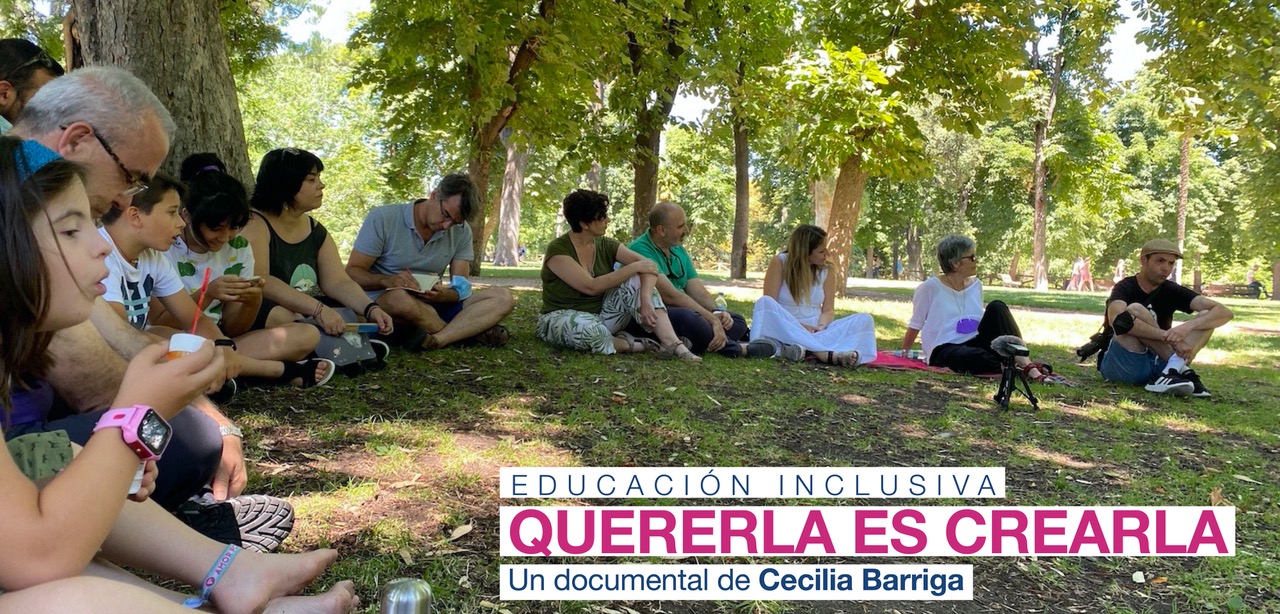
Cover of the documentary "Quererla es Crearla". Side view of a group of people, with and without disabilities, sitting in a circle in an outdoor garden space. Raúl Aguirre seems to be speaking and addressing someone off-camera. At the bottom, the text: "Inclusive education: 'Quererla es Crearla'. A documentary by Cecilia Barriga."
Official logo of 'Inclucine Festival', 2023.
Official logo of 'Fecidiscovi', 2023.
Official logo of the official selection of 'Calibelula', 2023.
Official logo of the official selection of 'Firm Film Festival'.
Official logo of the 'International Festival of Active Non-Violence', official selection '7 Ficnova', 2024.

Inclusive education. Quererla es crearla

A documentary by Cecilia Barriga, which addresses the profoundly human meaning of inclusive education and the need to generate a social movement that makes it a reality.
Audiodescripción [AD]: Primero plano de Cecilia Barriga, hablando a cámara. Cecilia Barriga:— Soy Cecilia Barriga, cineasta y creadora audiovisual. Llevo muchos años trabajando en documentales y, especialmente, en obras audiovisuales que tratan de dar visibilidad, forma y también forma estética a muchas luchas sociales y grupos que se organizan para crear nuevas alternativas en términos de derechos, de libertades y logros. Por ejemplo, el feminismo, al cual llevo retratando, prácticamente, hace más de 40 años, y también el movimiento LGTBIQ, con todas sus transidentidades, tanto raciales como geográficas y corporales. En este momento, el movimiento 'Quererla es Crearla' me ha invitado a participar en un proyecto que me parece fascinante, por su complejidad y, también, por lo que nos interpela en términos de tomar conciencia. Es el movimiento por la inclusividad, por la escuela inclusiva. A través de la Universidad de Málaga, han recibido una ayuda para desarrollar un relato, una narración de sus luchas, y de cómo están articulando esta lucha, y en ese sentido me siento completamente agradecida de ser invitada, porque siento que la inclusividad es un asunto que nos tiene que corresponder a todos hacernos cargo de ella. No es una cuestión que queda solamente en la particularidad de los grupos que de alguna manera la necesitan o la viven, sino que, sobre todo, es algo que nos va a tocar vivir a todo el mundo. Porque nuestros cuerpos, nuestra propia vida, en su proceso de existencia, termina también en un momento en el cual se necesita de los cuidados, se necesita de la atención y de aceptar las debilidades que tenemos, como seres que somos. Tengo mucha ilusión por esta película y espero que sirva a todo este gran proyecto, de este gran movimiento, que es 'Quererla es Crearla'.

Premiere of the film

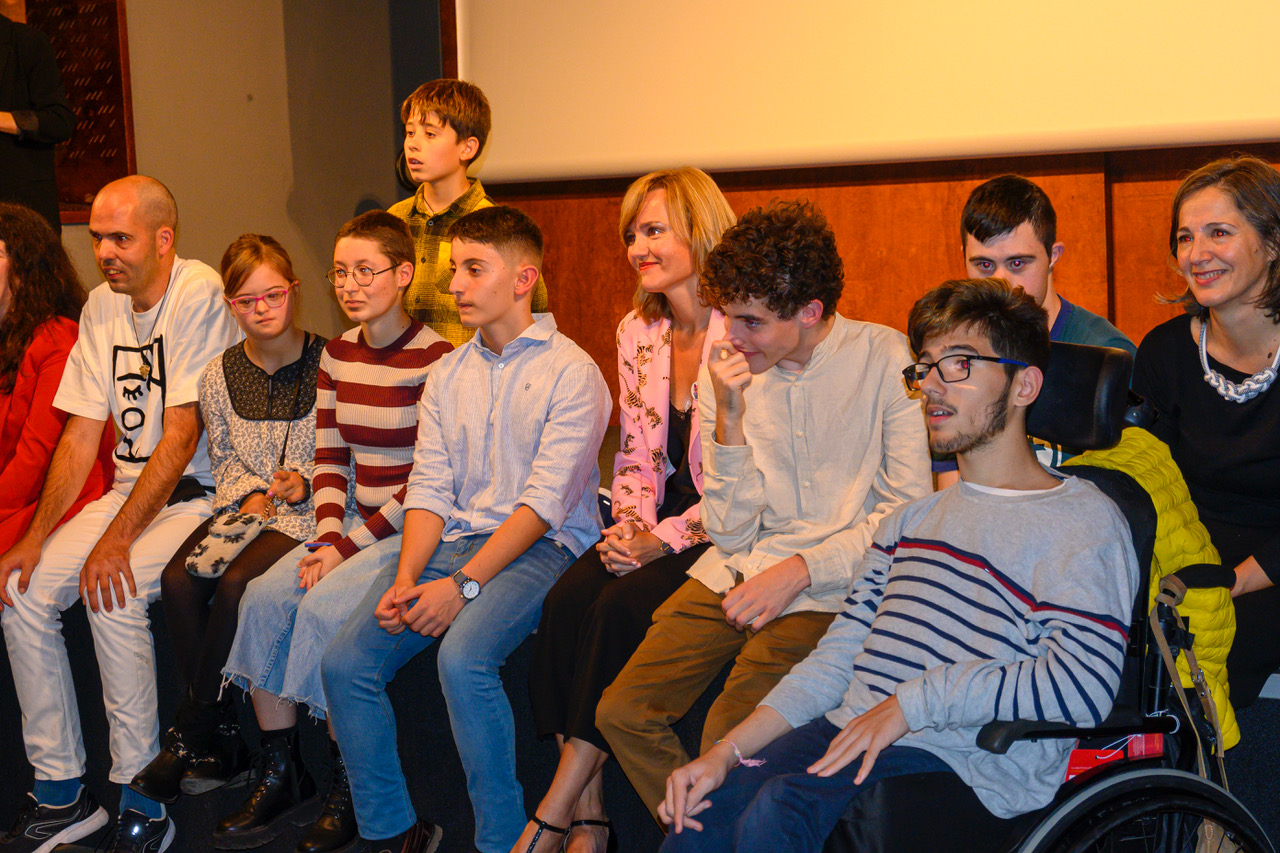
On October 21, 2022, at 5:00 PM, the film premiere took place at the Sabatini Auditorium of the National Museum Reina Sofía, C/. de Santa Isabel, 52 (Madrid), with the presence of the Minister of Education and Vocational Training, Pilar Alegría, museum executives, and the entire documentary team, including its director.
Cargando vídeo…
Reportaje Quererla es Crearla, la lucha por una educación inclusiva. Por Mario Panadero. Audiodescripción [AD]: Instantánea de la manifestación «Quererla es Crearla», en la plaza Callao de Madrid. Vista lateral de un grupo de personas, jóvenes y adultas, en plena manifestación. En la cabecera de la manifestación, una lona con el lema: «Quererla es Crearla: una escuela para una sociedad inclusiva. Por el cumplimiento de un derecho que beneficia a todas las personas». Junto a ella, una pancarta más pequeña con el mensaje: «Si tú lo dices, será». Mario Panadero - M.P. (v.o.):— Esta es la historia de una exclusiva que no tiene mérito porque trata sobre un tema del que nadie se ocupa. Trata sobre personas invisibles. [Música] Joven 1:— A mi tío lo intentaron expulsar de la escuela y tenemos un amigo que se llama Rubén que… M.P. (v.o.):— Este es el tráiler de un documental: 'Quererla es crearla'. Colectivos de familias y profesionales de toda España que defienden una educación inclusiva para personas que la Constitución todavía define como 'minusválidos'. Hace poco se quiso cambiar esa definición en la Constitución y tampoco para eso fue posible un pacto de Estado, aunque ya nadie se acuerda. Carmen Saavedra - C.S. (v.o.):— Hay gente que está muy sensibilizada… Aquí, hay muchos movimientos sociales, pero lo nuestro nunca parece que sea algo que incumbe a la sociedad. Es como si fuera un problema privado, ¿no? Como lo era el maltrato hace muchísimos años, que era una cuestión de esa familia, pues… Pues es un problema nuestro. M.P. (v.o.):— A qué colegio deben ir niños y niñas con discapacidad o disfuncionalidad, niños y adolescentes con síndrome de Down, por ejemplo: ¿colegios especiales o el colegio de todos con atención especial? Carmen es madre de Antón. C.S.(v.o.):— El hecho de que queramos que Antón esté donde estaba su hermana, donde estaban todos los niños y las niñas de su pueblo, pues como que fue una excentricidad por nuestra parte, ¿no? (Ironía) Y que a partir de ahí, ya que es un capricho o una excentricidad nuestra, pues nos teníamos que buscar la vida. M.P. (v.o.):— Making a living, a private problem… They are invisible. Indira Martínez is 15 years old, has Down syndrome, attends a mainstream school, and wants to fight for that, for inclusion. Indira Martínez - I.M. (o.v.):— I'm going to keep trying my whole life. Until I'm 100 years old or 90, or however long it takes. M.P. (o.v.):— The documentary film 'Quererla es crearla'… Antón Fontao (o.v.):— The more we look inward, the more we all resemble each other. So, you look inward and tell us what worries you, what you feel, how you feel… M.P. (o.v.):—… is directed by Chilean filmmaker Cecilia Barriga and is based on the story of Rubén Calleja, a boy from León with Down syndrome who was denied the right to attend the school he had been in his whole life and was forced to enroll in a special education center. After years and years of legal battles, the UN ruled in 2020 that Spain had violated Rubén's right to inclusive education. The premiere of the documentary brought together families and education professionals in Madrid last week. Marta Casal is part of 'Quererla es crearla' and is also the mother of a boy with a disability. Marta Casal - M.C.:— For the right to be who each person is. For not having to be in those straitjackets the documentary spoke about, right? For the right to be who we are. M.P. (v.o.):— It's a difficult issue, each case is different, it requires money and it requires something harder to obtain than money. Nacho Calderón, Professor of Theory of Education at the University of Málaga and spokesperson for 'Quererla es crearla', explains. Nacho Calderón - N.C.:— Listen. Listen to the people who haven't been heard. [Música]

Fact sheet

  • Genre: Documentary
  • Duration: 84’
  • Recording format: HD
  • Sound: Stereo
  • LanguageSpanish
  • Subtitles availableSpanish and English
  • Year: 2022
  • CountrySpain
  • AddressCecilia Barriga
  • Content production: Florencio Cabello Fernández, Sandra Fernández Carrera, Ignacio Calderón Almendros, María Teresa Rascón Gómez, Fátima Solera Navarro, Luz Mojtar Mendieta
  • Production assistant: Fátima Solera Navarro
  • Camera: Cecilia Barriga
  • 2nd camera, recording unit: Nacho Balancín
  • Direct sound 2nd recording unit: Ana Paula Bravo
  • Editing: Cecilia Barriga
  • Editing assistant: Jaime Vidal
  • Image and sound post-production: Antu Ale Miranda
  • Production: Research Project “Emerging Narratives on Inclusive Schooling from the Social Model of Disability. Resistance, Resilience, and Social Change” (RTI2018-099218-A-I00), funded by the Ministry of Science, Innovation and Universities.
  • Download the poster, available in JPG and PDF.
  • Download the technical sheet, available in PDF.
Cargando vídeo…
Trailer description: “Quererla es Crearla. Inclusive Education” Production: Faculty of Education Sciences, University of Málaga. A documentary directed by Cecilia Barriga. Funded by the Ministry of Science and Innovation. Trailer content: [Música épica] Scene 1: Meeting in an official setting with the Minister of Education, Pilar Alegría, and the Secretary of State for Education, Alejandro Tiana. Two young people seated in front of them. One of the young people addressing them. — Young Person 1: “My uncle [Rubén Calleja] was almost expelled from school”. Scene 2: Tres personas jóvenes en un espacio abierto con grandes cristales. Dos de ellas bailan. La tercera, con parálisis cerebral, está cerca de una mesa. Escena 3: — Joven 1 (v.o.): «Y tenemos un amigo, que se llama Rubén, que sí que lo echaron de la escuela». Escena 4: Un grupo de adultos y jóvenes en espacio abierto con coches, una mesa y barbacoas. El espacio parece un jardín. El grupo está sentado bajo un árbol, prestando atención. Escena 5: Una plaza pública con mesas de restaurante. Un joven camina con una mochila. — Joven 1 (v.o.): «Incluso la ONU, más adelante, cuando se enteró de este caso, dijo que fue discriminación.» Escena 6:Once again, at the meeting with the Minister of Education. The young person insists: — Young Person 1 (v.o.): “We would like you to call Rubén to fix this.” The minister, Pilar Alegría, nods. Scene 7: An outdoor space with stone walls where a group of young people, with and without disabilities, seem to be talking and smiling. As the camera moves, it captures more young people, some sitting on the ground, reading or playing with sand. — Adult 1: “My functional diversity can vary now, in two minutes, right? Everyone’s. Because we are human.” Scene 8: People of various ages talk sitting in a field, conversing among themselves and with the person recording them, off-camera. The camera slowly focuses on each of them. — Adult 1: “And yet, we live completely ignoring that. And that makes me think, at the same time, that it must be very easy to change. I don’t know how to say it, it seems like a wall to us, but I say… there must be a crack that makes this fall.” Scene 9: A group walks through the corridors of a government building towards the meeting with the Minister of Education. — Adult 1: “Because we are all of us.” [Música] Scene 10: In a natural setting with trees and flowers, a young person follows another towards a small shed. — Antón Fontao: “The more we look inward, the more we resemble each other. So, if you look inward and share what worries you, what you feel, how you feel… those outside will receive it as something of their own that concerns them, because it is true.” Scene 11: Aerial view of a group of people in a circle, joining their hands in an act of unity and motivation. — Concha Casasnovas: “I am not at all sure that it is good to dream for our children.” Scene 12: Close-up of Raúl Aguirre taking photos in a natural setting. Raúl looks at the camera. — Concha Casasnovas: “Raúl, of course, has shown us that it is absurd for us to dream for them.” Scene 13: Side view of a group of young people on a balcony wearing masks, observing the surroundings and the cars passing by. Among them, Antón Fontao. Scene 14:Group shot of the participants in the documentary, sharing laughter, camaraderie, and hugs. [Fundido a negro] "Quererla es Crearla | Inclusive Education."

Organize a screening

If you are interested in organizing your own screening of the film, confirm a place, date, and time in your locality and fill out this brief form.

Once we verify that everything is in order, we will send you the film along with a folder containing all the necessary material for the promotion of your event: poster, synopsis, technical sheet, photocall, press kit, film images to share with the media, guide for facilitating the discussion, etc. Some of the documents are prepared to be edited and contextualized for each event. Don’t think twice and organize yours!

Synopsis

“Quererla es crearla” is a documentary about a right, a necessity, a desire, a political commitment, and a possibility: making it possible for all people to learn to live together in schools. Building inclusive societies requires dismantling the prejudices we hold about diversity and differences, for which we need to re-examine the schools where some students do not fit, are mistreated and segregated, while the rest learn to see discrimination as correct and desirable.

The film reflects on this reality through various intersecting stories in defense of the right to inclusive education. It begins with the case of Rubén Calleja, who was expelled from his primary school and forced to be educated in a special education center, something his family refused to accept. After years of legal struggle, Rubén obtains the support of the United Nations, with a pioneering ruling against the Spanish education system. Inclusive education is a fundamental right, which enables the possibility of participating in the world.

Rubén’s story is the common thread of other struggles, deeper and more complex than the legal one, shared by a group of students and their families: those related to socially shared ideologies, culture, policies, and school practices, which strongly discriminate based on ability, social origin, gender, ethnicity, health, sexual orientation, nationality, etc. But which also harm those who do not fit into those categories, because no one can conform to the normality that schools serve. Against the backdrop of a struggle that must be shared by the entire population, this group of people shows the need to escape their unbearable oppressive situations, while also introducing us to the everyday, simple, and exciting dreams of any person, their actions to make them a reality, the small things that make up daily life… But above all, the film is the testimony of a collective movement: inclusion is not something distant and unattainable, but a real experience that many people live today, which deepens diversity and, therefore, our human nature.
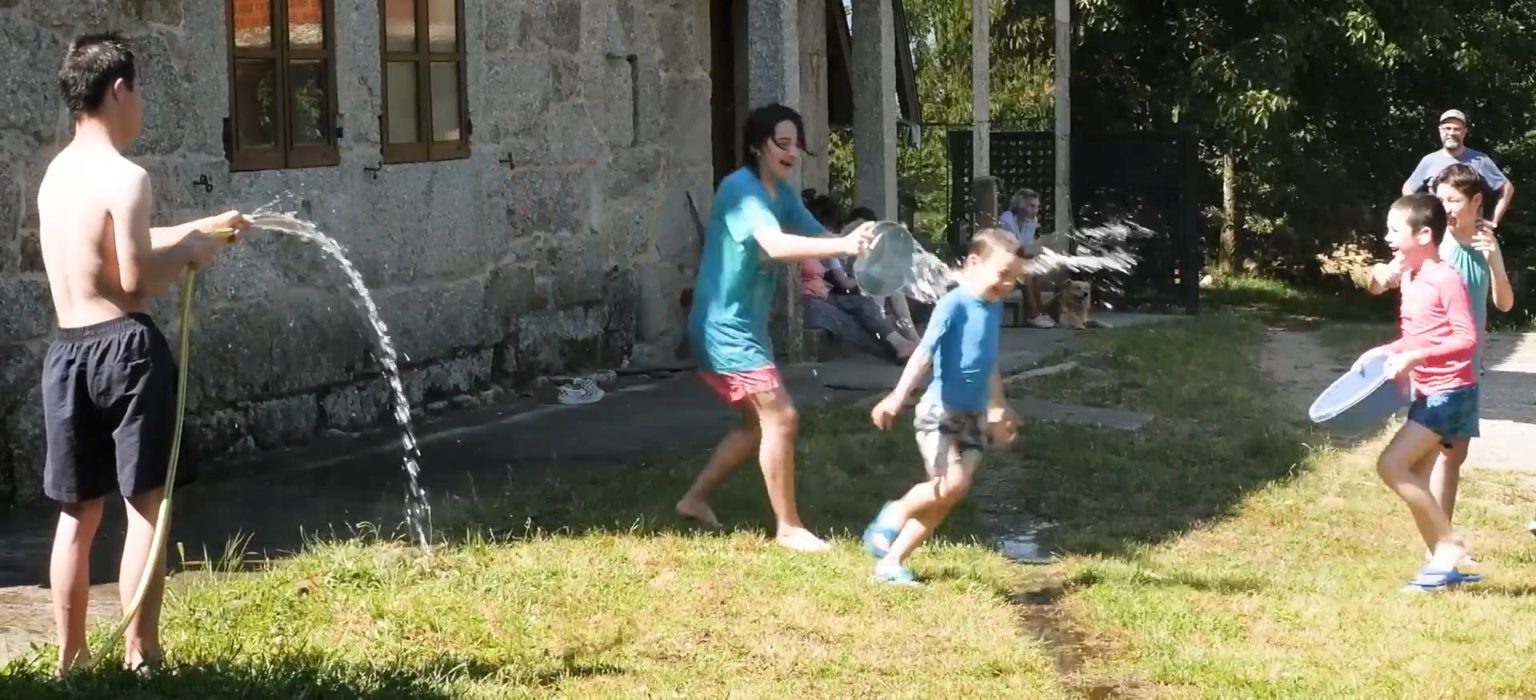
Photograph. Side view of a group of young people playing with water in a garden. It is a sunny day. To your left, a young person with a hose sprays water; in the center, another throws water from a bucket at a child who seems to be having fun. To your right, two others, laughing, participate with buckets. In the background, an adult observes the scene, while others chat sitting down.

Collaborations in subtitling and accessibility of the documentary
The process of creating the documentary has been the result of collaborative work in which many people have participated altruistically. The creation of subtitles, the LSE interpretation, and the audio description have been developed thanks to the selfless work of a group of people and institutions to whom we owe enormous gratitude. If you want to collaborate in translating the film into your native language, write to us at info@creemoseducacioninclusiva.com

Royal Board on Disability

LSE

Linguistic Normalization Center for Spanish Sign Language
Audio description

Spanish Centre for Subtitling and Audio Description

Subtitles available
Spanish

Radikales Desadaptadas

English

Inés Martín Blanco and Caroline Brinton

Korean

Danny Kim

Japanese

Takeshi Inohue

French

Gaud Fleury

Portuguese (Brazil)

Pedro Pagni

Esperanto

David González Gándara and José Antonio del Barrio
Galician

David González Gándara
Catalan

Ana Casas Bartra

Basque

KIDEON Research Group. Social and Educational Inclusion (IT1475-22)


Subtitles in progress

Russian

Inara Hasanova

Arabic (Morocco)

Ibrahim Qatanani

Romanian

Simona Rotaru

Distribute

YAQ Distribución logo. Black and white caricature of a smiling bull's head.

Some scientific productions

  • CALDERÓN-ALMENDROS, I. & RASCÓN-GÓMEZ, M.T. (2022). Weaving struggles for the right to education: Collective and personal narratives for inclusion from the social model of disability.Pedagogía Social. Revista Interuniversitaria, 41, 43-54. Available atPDFandonline.
  • RASCÓN-GÓMEZ, M.T.; CABELLO FERNÁNDEZ-DELGADO, F. & CALDERÓN-ALMENDROS, I. (2022). Emerging and transformative narratives on inclusive education through documentary cinema. Paper presented at theAmerican Educational Research Association Annual Meeting 2022 (AERA). San Diego, USA. https://hdl.handle.net/10630/24019. Available in PDF and online.
  • Cabello, F. and Rascón, M. T. (2019). Audiovisual Narratives on Resilience and EducationRevista de Innovación Educativa, 19(80), 77-92.
  • RASCÓN-GÓMEZ, M.T., CABELLO-FERNANDEZ, F. & CALDERÓN-ALMENDROS, I. (2023). How to make the participatory social documentary a tool for inclusive education? Paper presented at the American Educational Research Association Annual Meeting 2023 (AERA), Chicago, USA. Available in PDF and online.
  • RASCÓN-GÓMEZ, M.T. & CALDERÓN-ALMENDROS, I. (2024). Documenting a movement. Inclusive education as a protagonist. Paper presented at the British Educational Research Association (BERA) Conference 2024 and World Educational Research Association (WERA) Focal Meeting. Manchester, United Kingdom. Available in PDF and online.