
Presentation of the Incide Workshop
Within the framework of the elaboration process of the Strategic Plan for Inclusive Education, the Ministry of Education, in collaboration with the University of Malaga, organized a participatory meeting titled “Workshop INCIDE. A policy for inclusive education from citizen experiences” which took place on May 4 and 5, 2026, at the Ministry’s headquarters at C/ Torrelaguna, 58 (Madrid).
The Incide Workshop was a meeting between teachers and other education professionals, families, students, policymakers, and other community stakeholders to develop proposals for the Strategic Plan through participatory, systematic, and rigorous work, using citizen analysis and commitment to facilitate and accelerate the transformation process of our education system to make it more inclusive.
Participants carried out a participatory diagnosis on inclusion and equity in schools, assisted by a team from the Research Group “Education and Social Change” at the University of Malaga, led by Ignacio Calderón Almendros and Teresa Rascón Gómez. The meeting particularly took into account the voices of people belonging to disadvantaged groups in schools and generated an egalitarian dialogue in which strategic lines could emerge for continued participatory, systematic, and rigorous work over the next year. It was not a conference or a course. It was a series of assemblies and workshops to analyze the school reality based on the participants’ experiences, with the aim of shedding light on the Strategic Plan and generating working groups that will continue to advance on the main emerging lines.
- Consult the full program at PDF and online.
- Consult the information on the website of the Ministry of Education, Vocational Training and Sports.
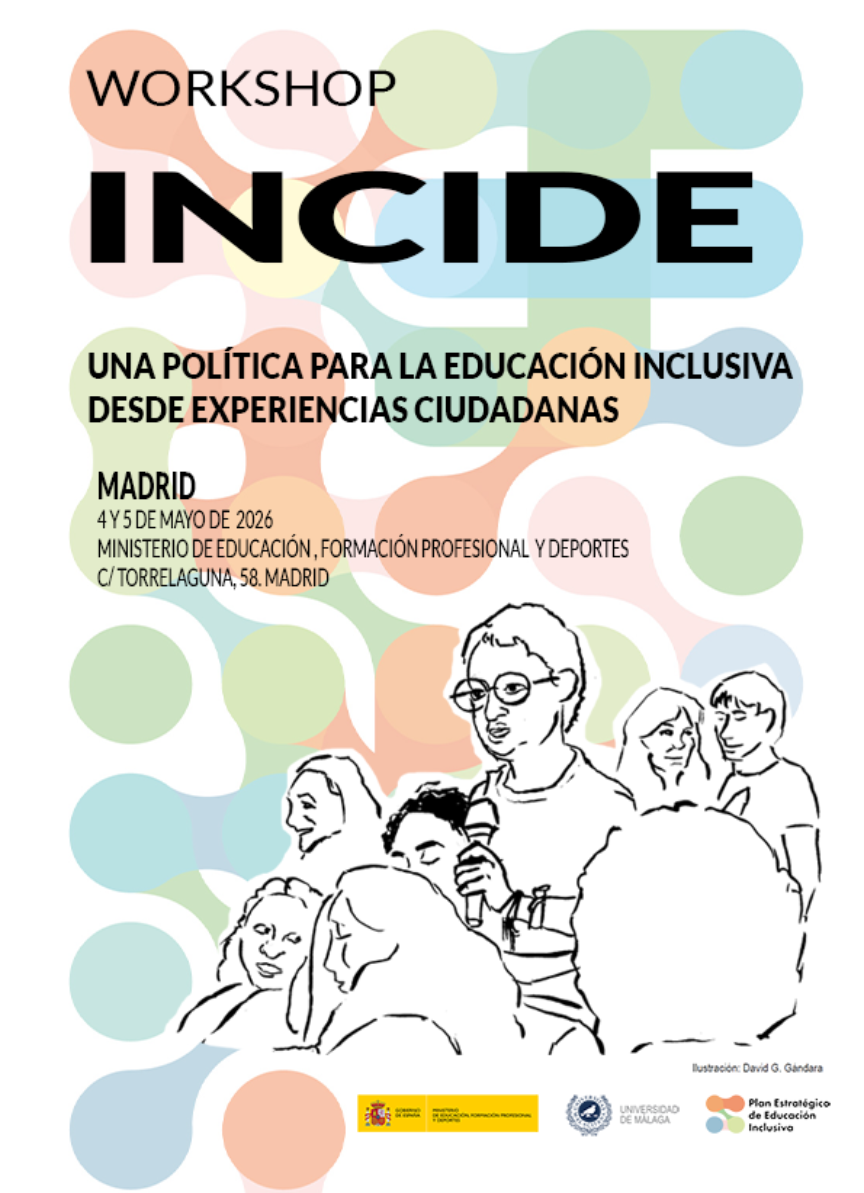
Moments from the meeting
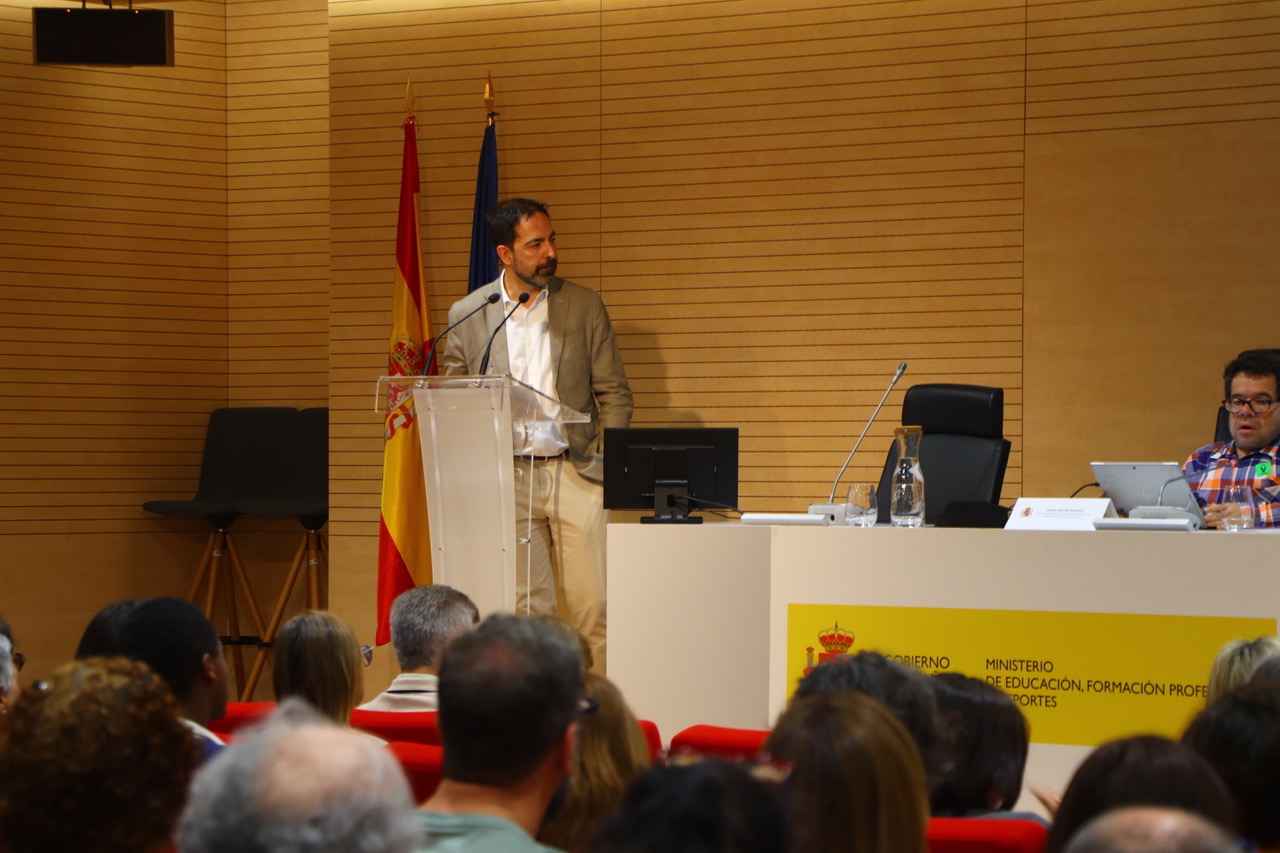
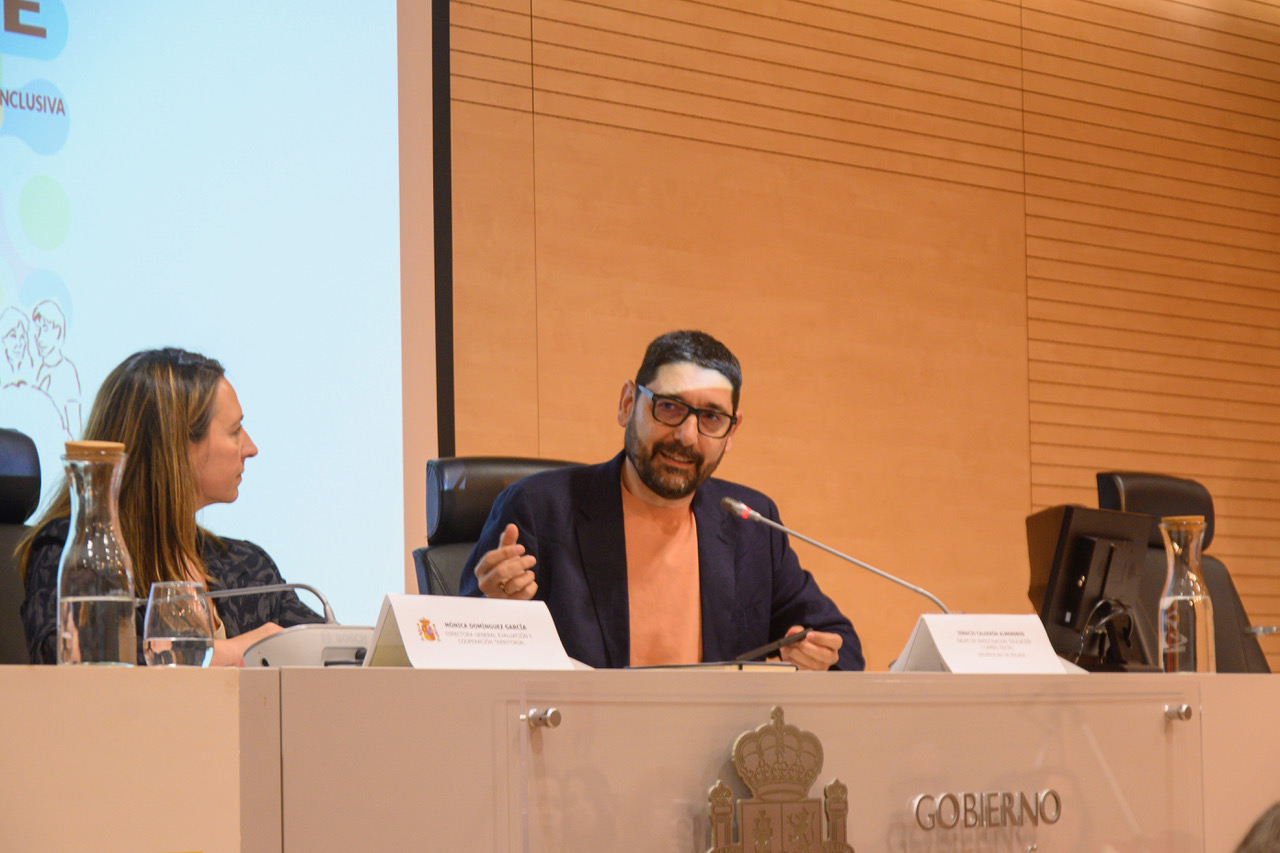
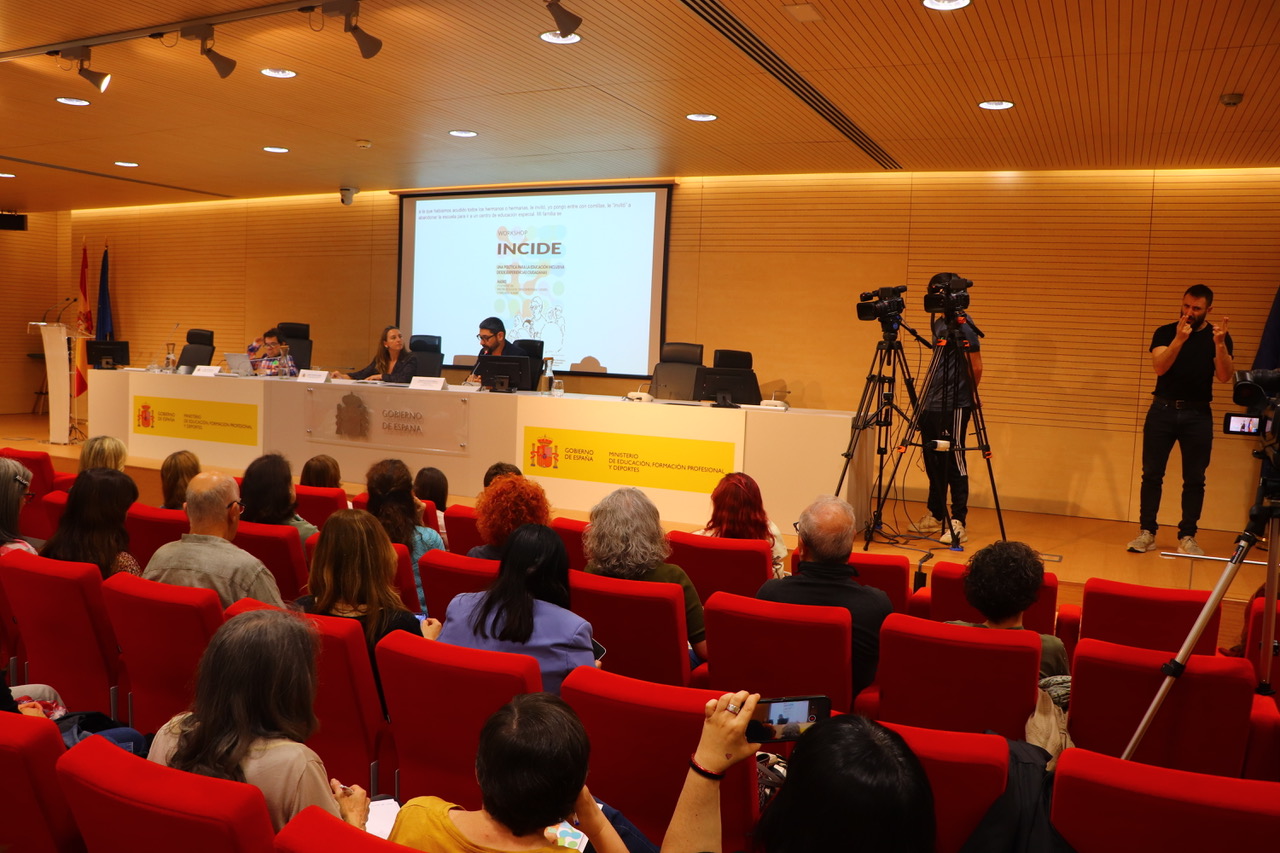
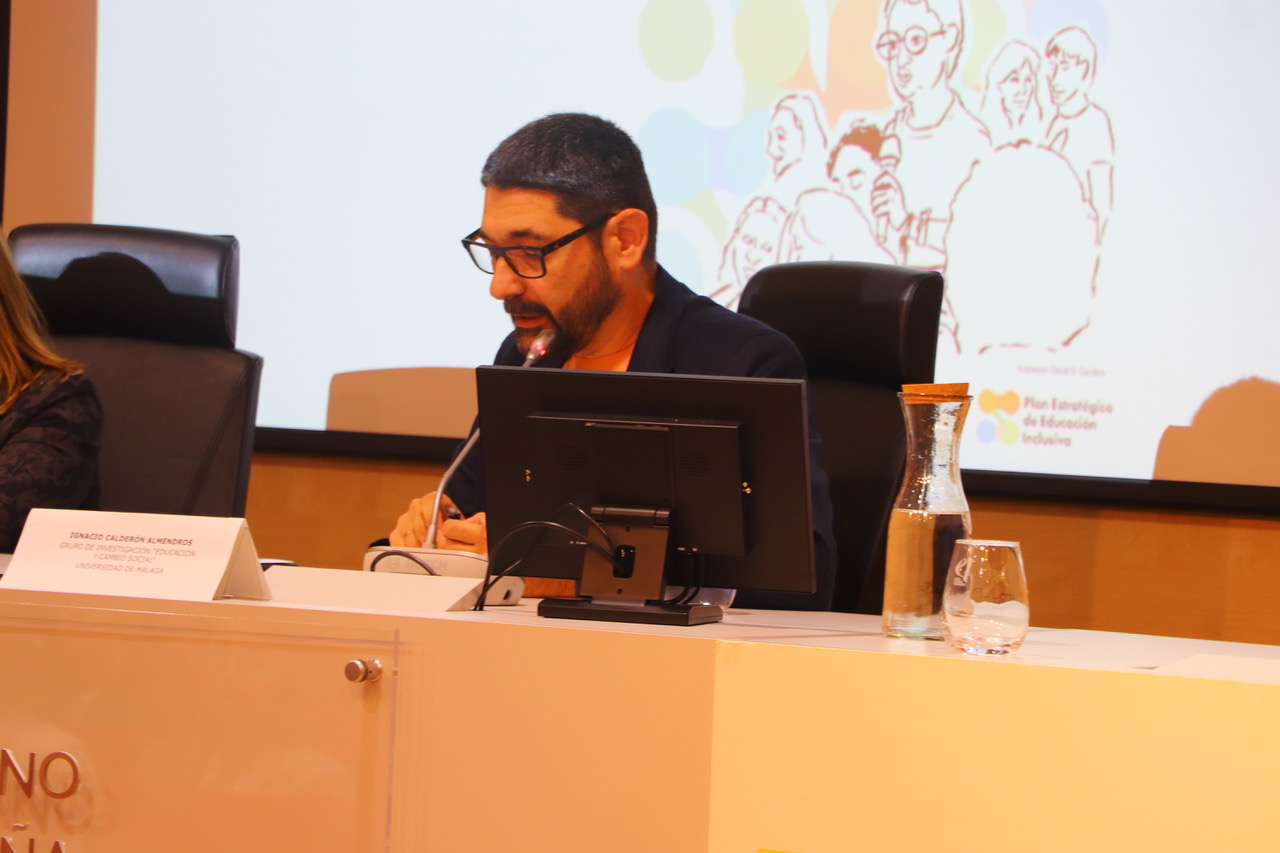
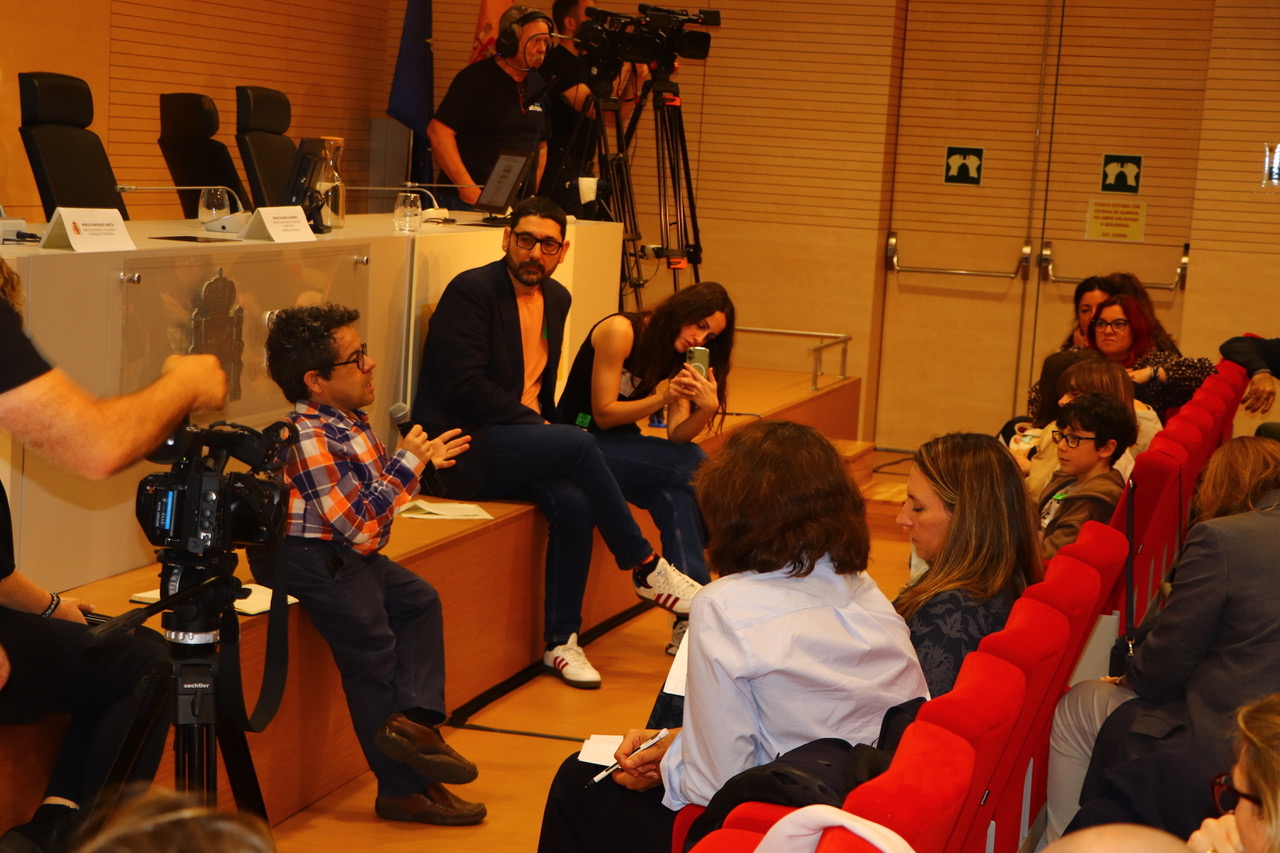
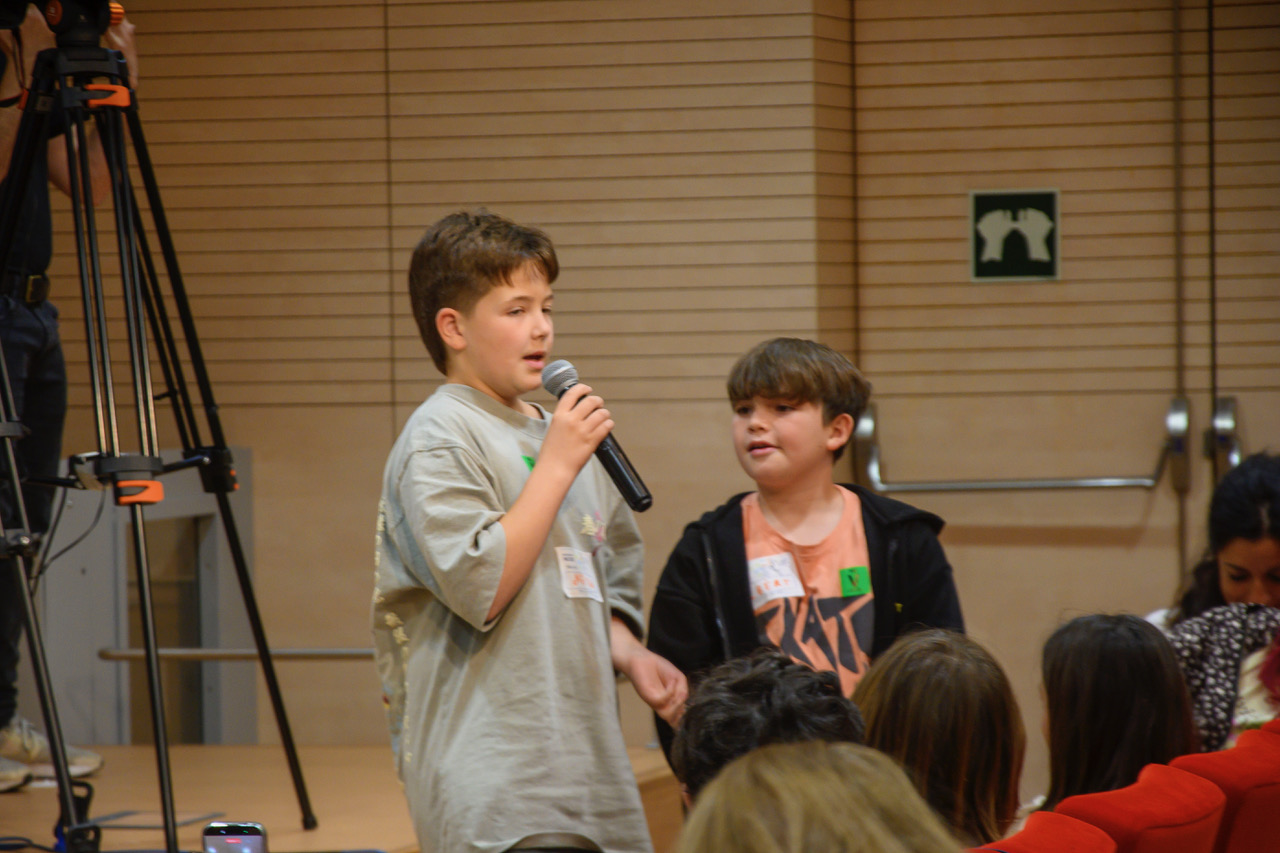
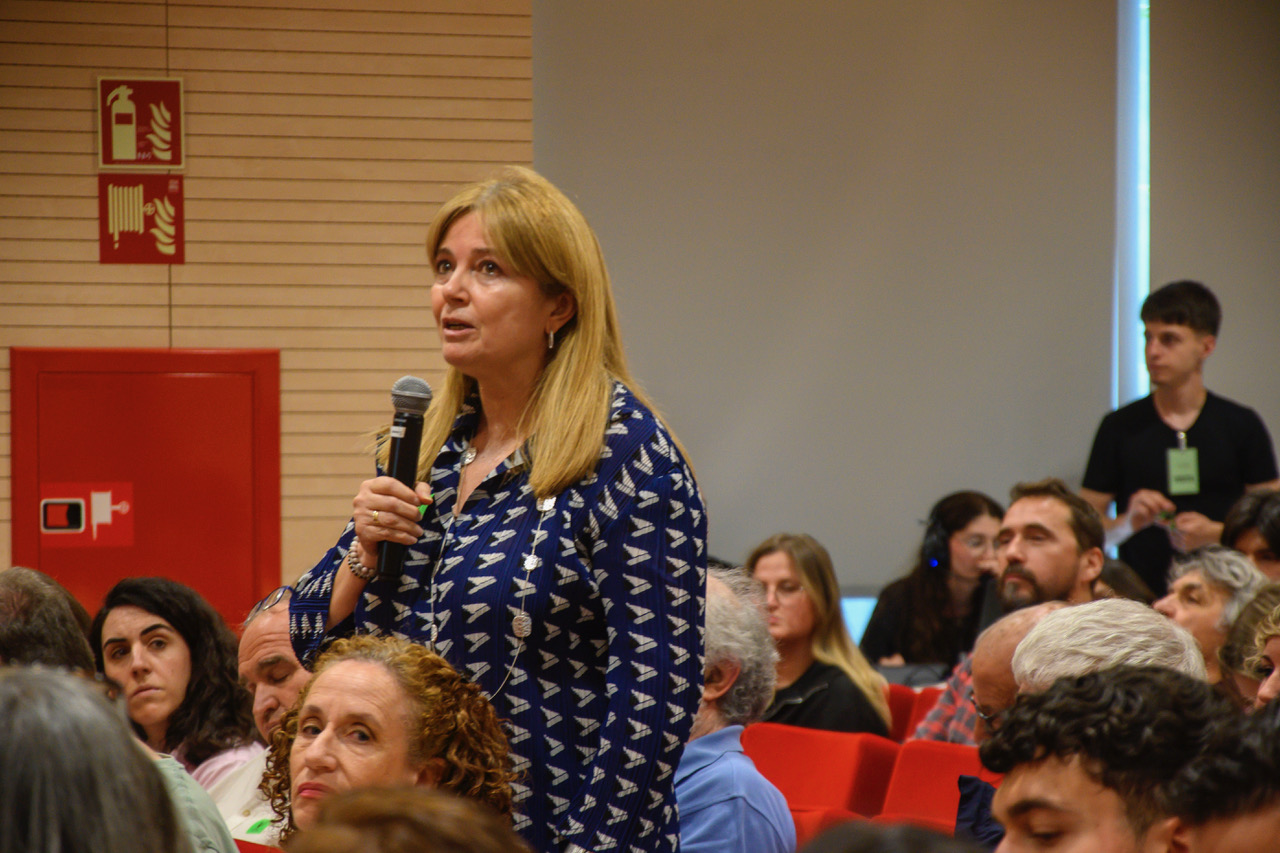
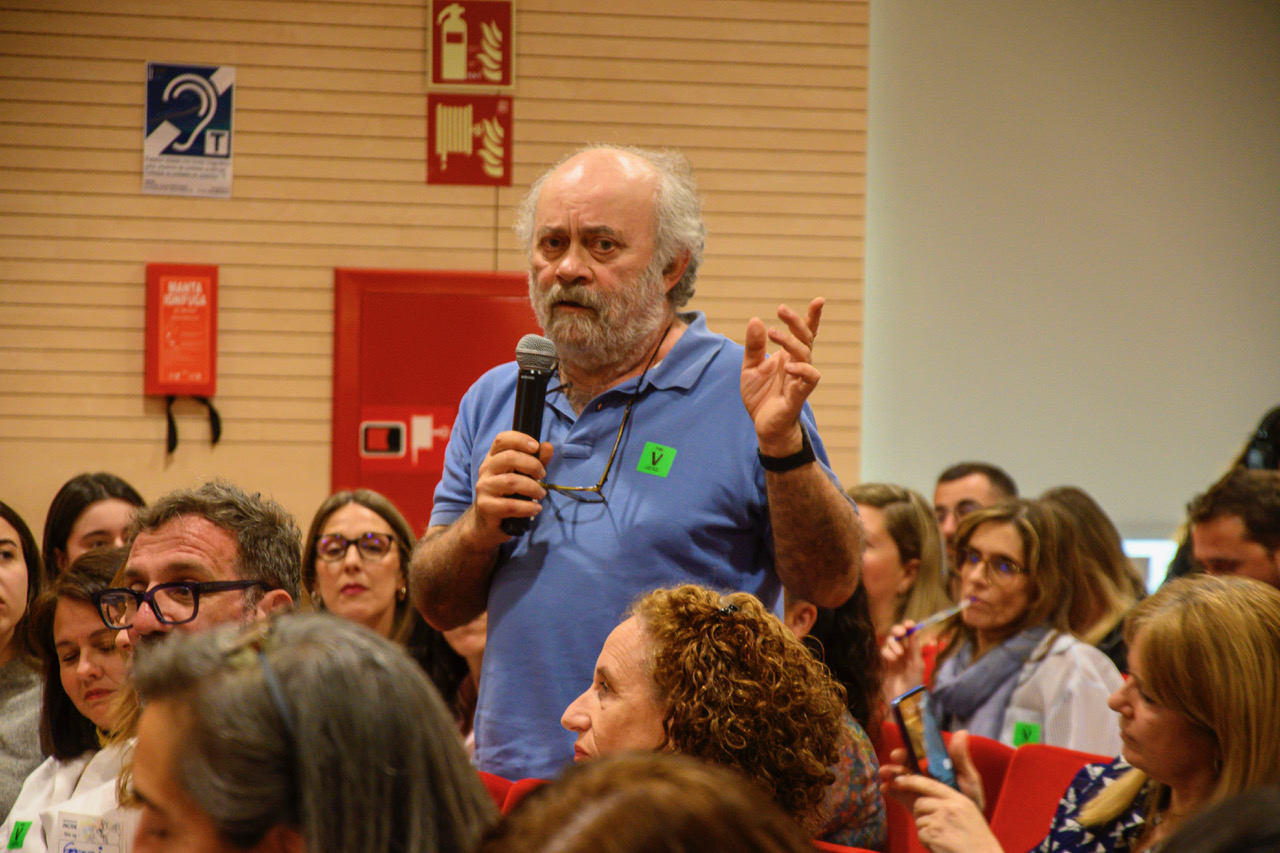
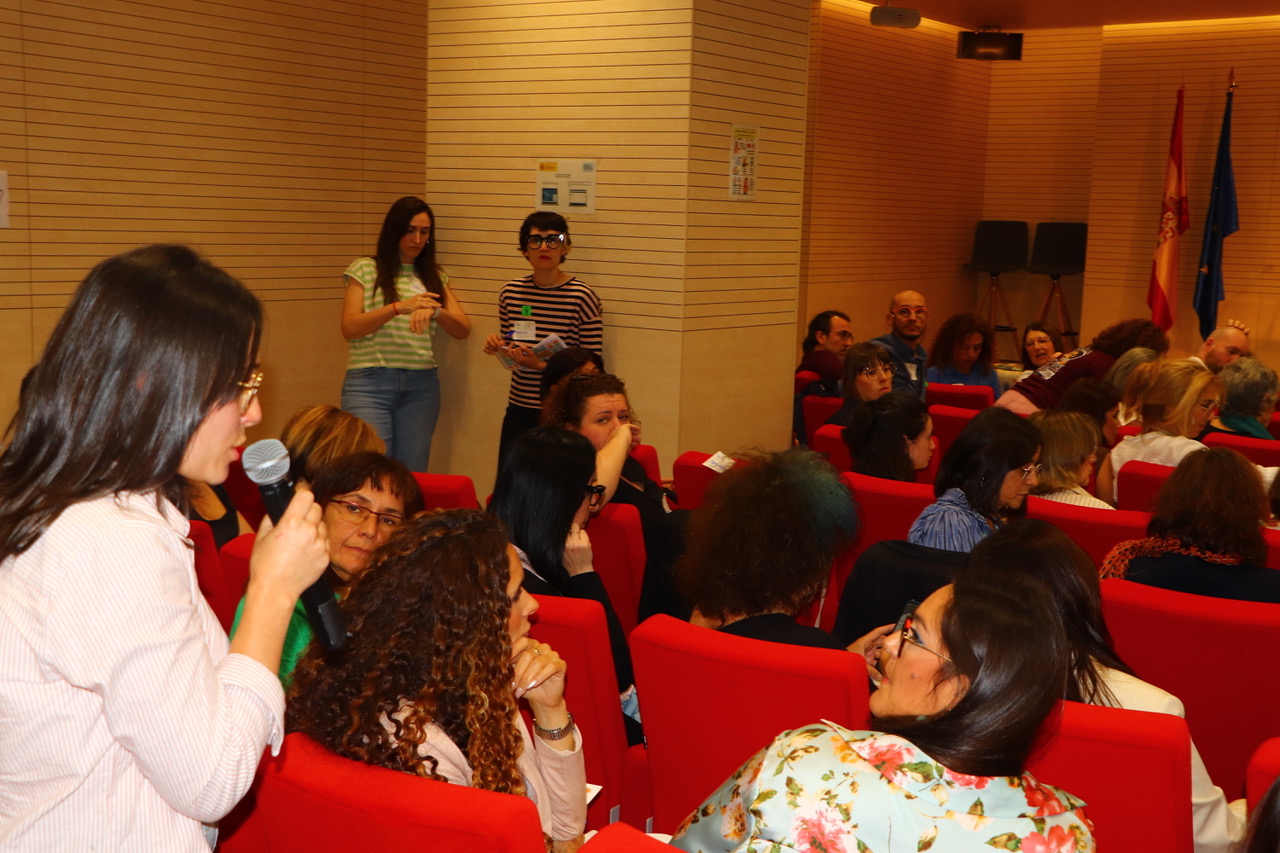
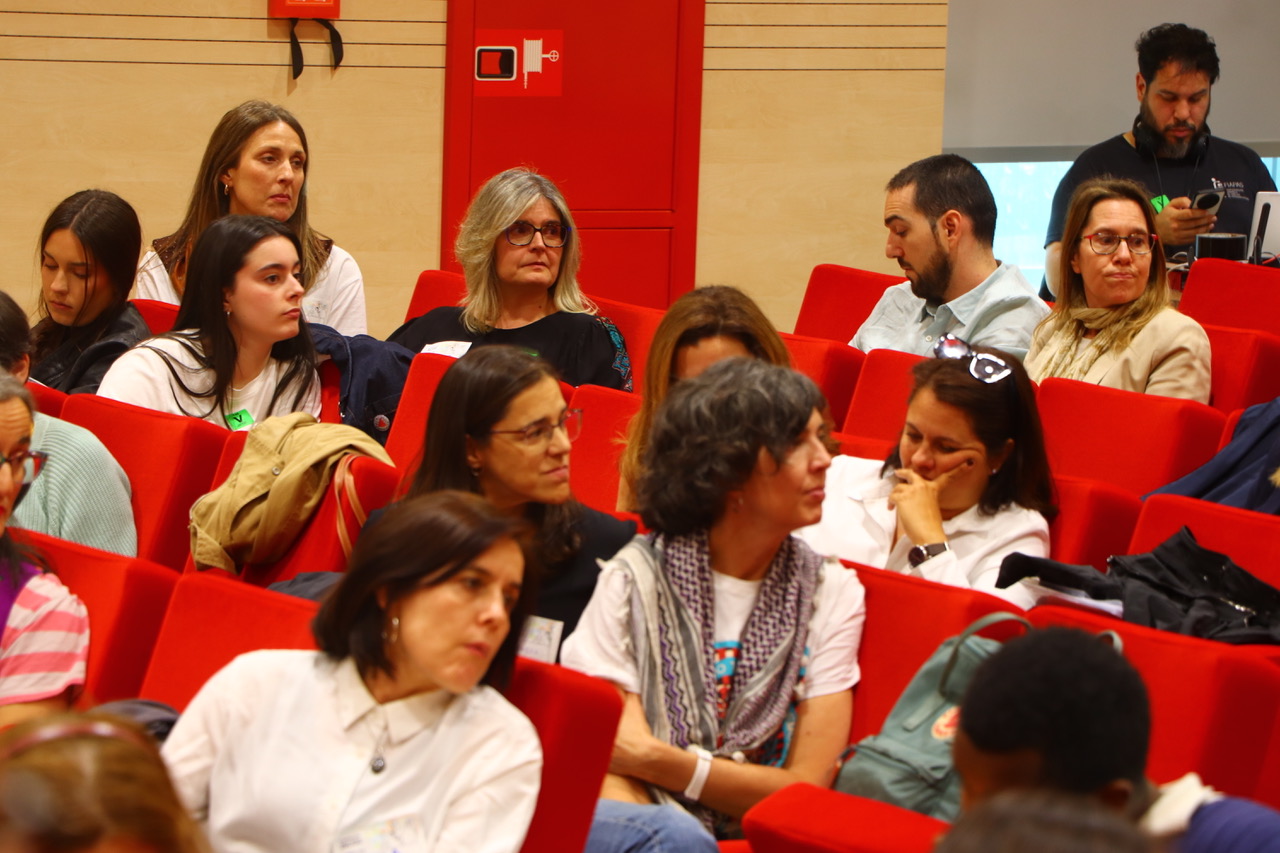
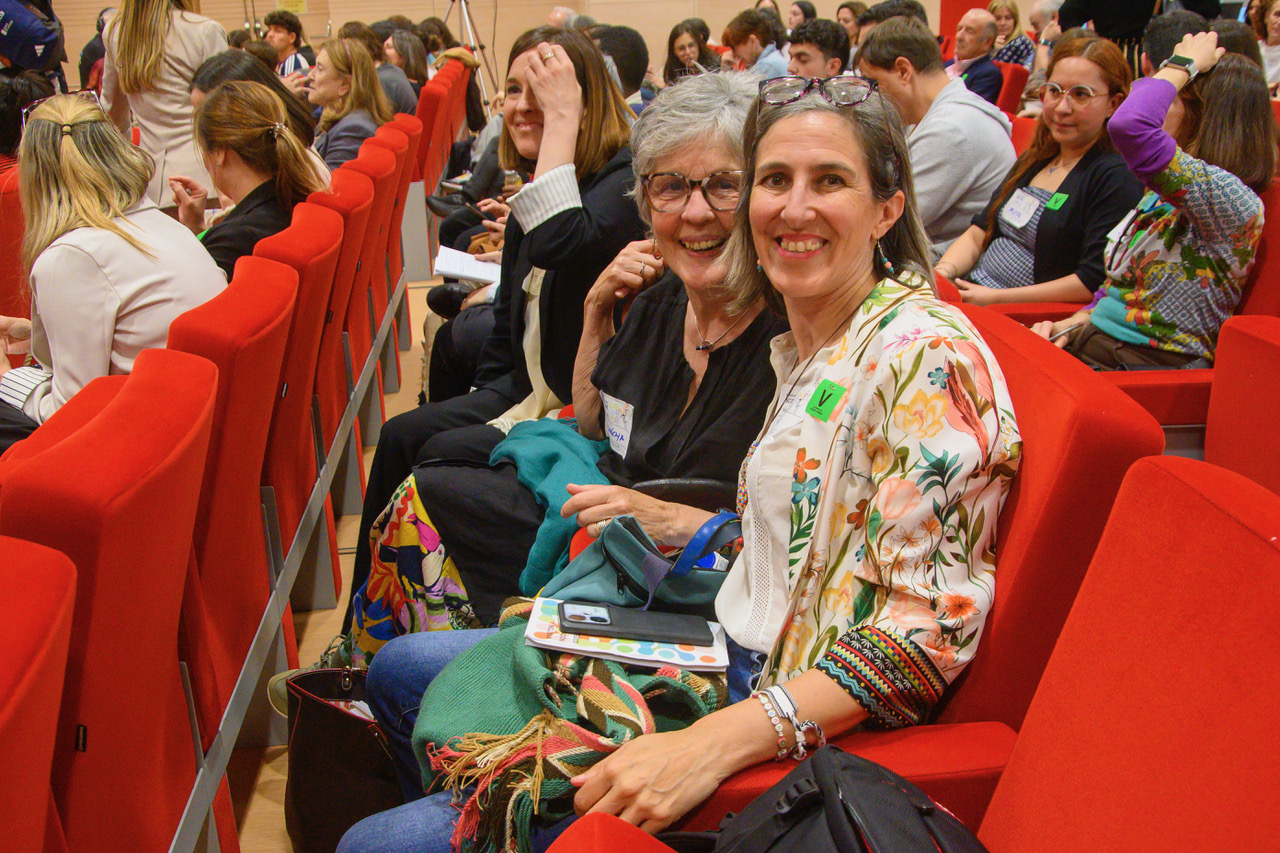
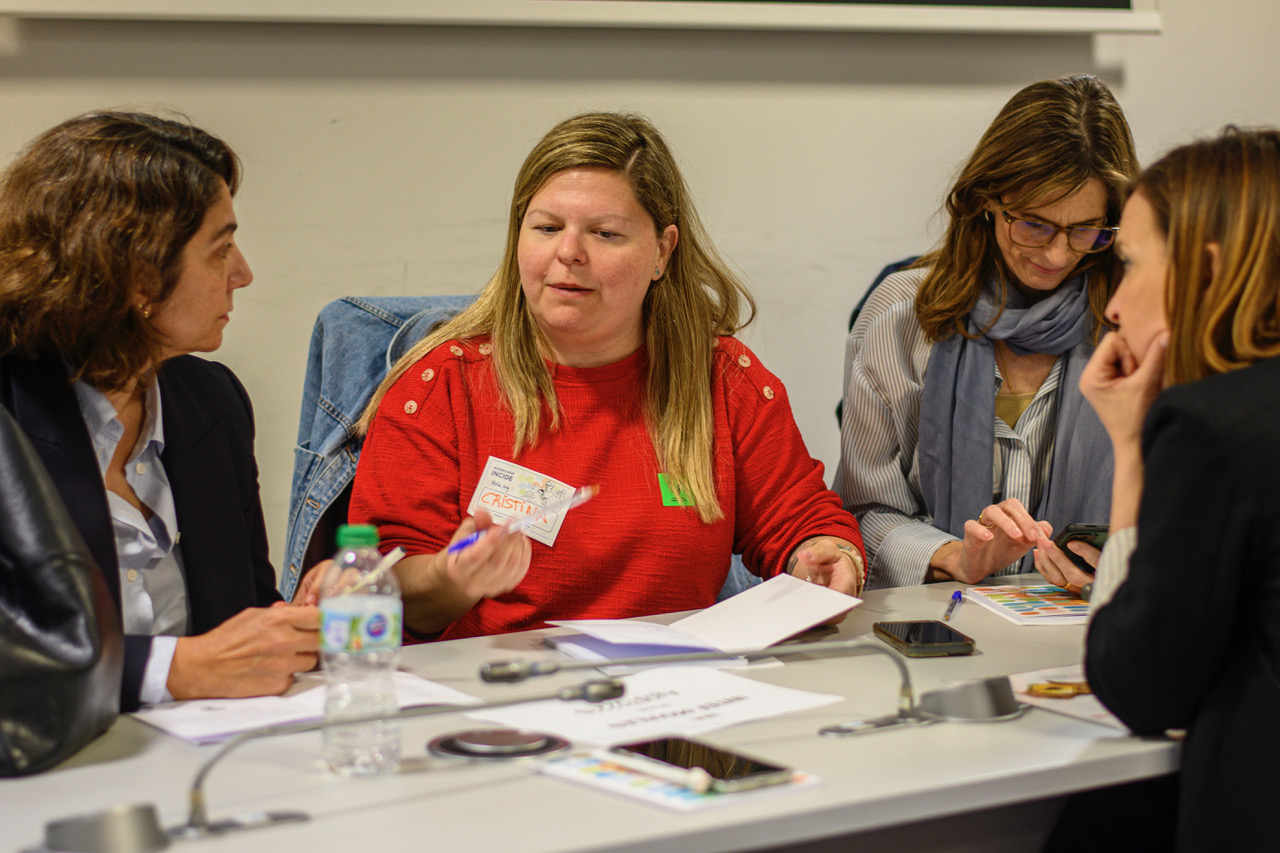
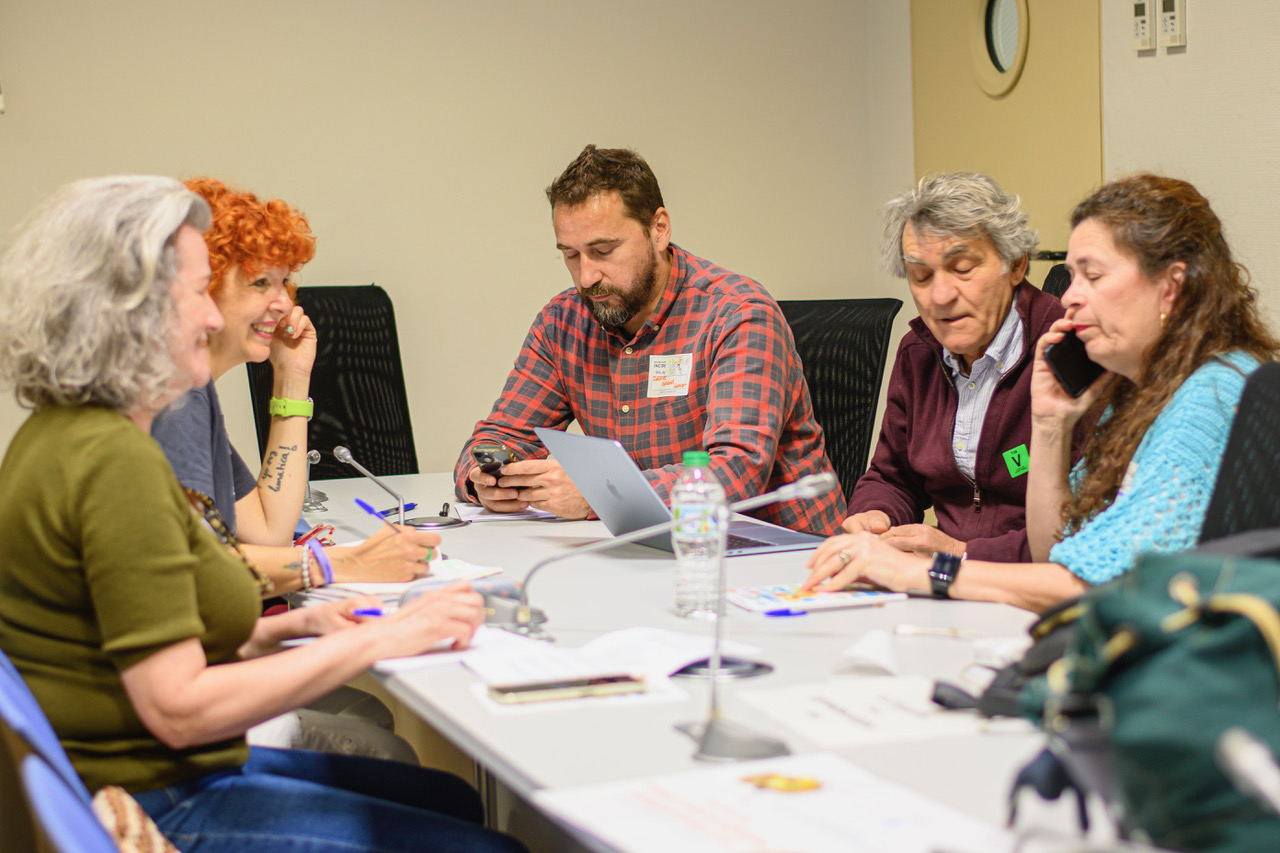
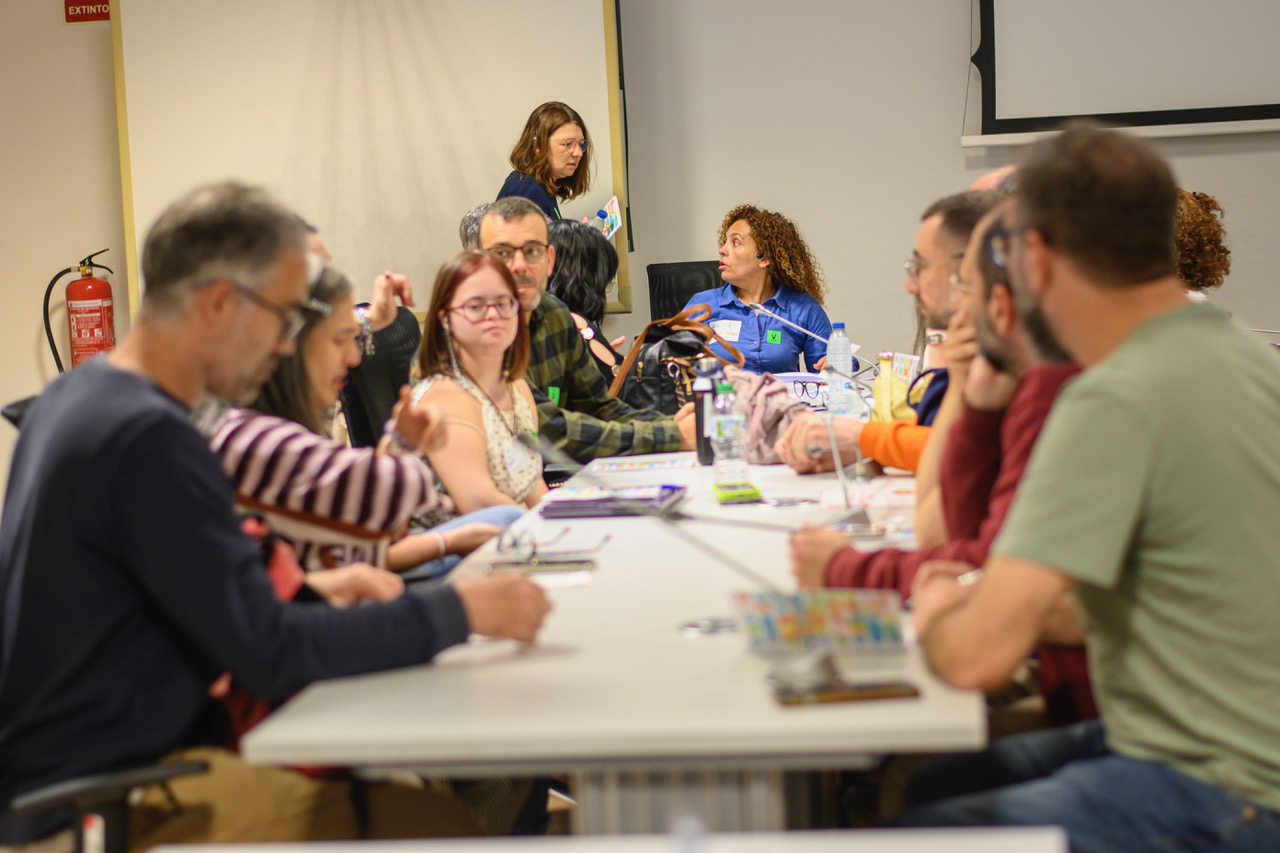
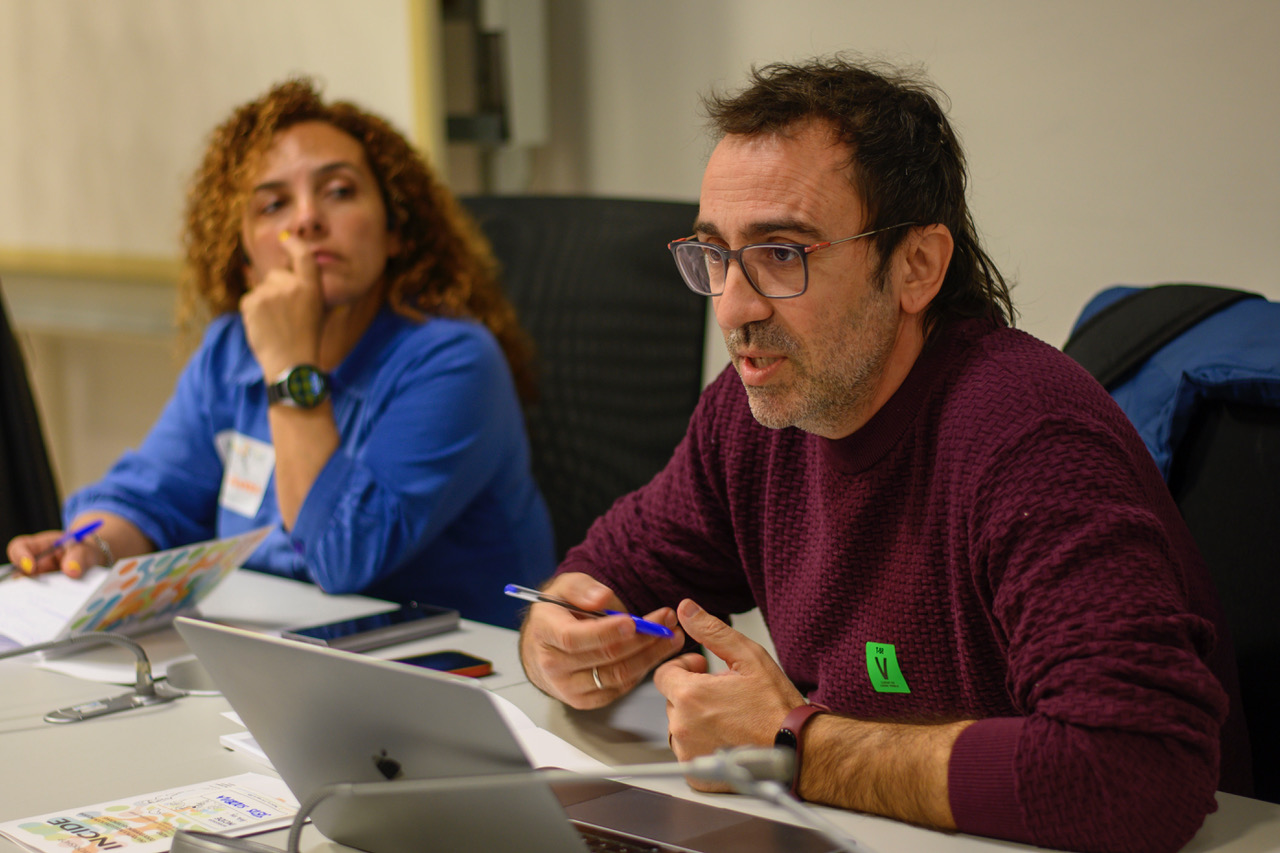
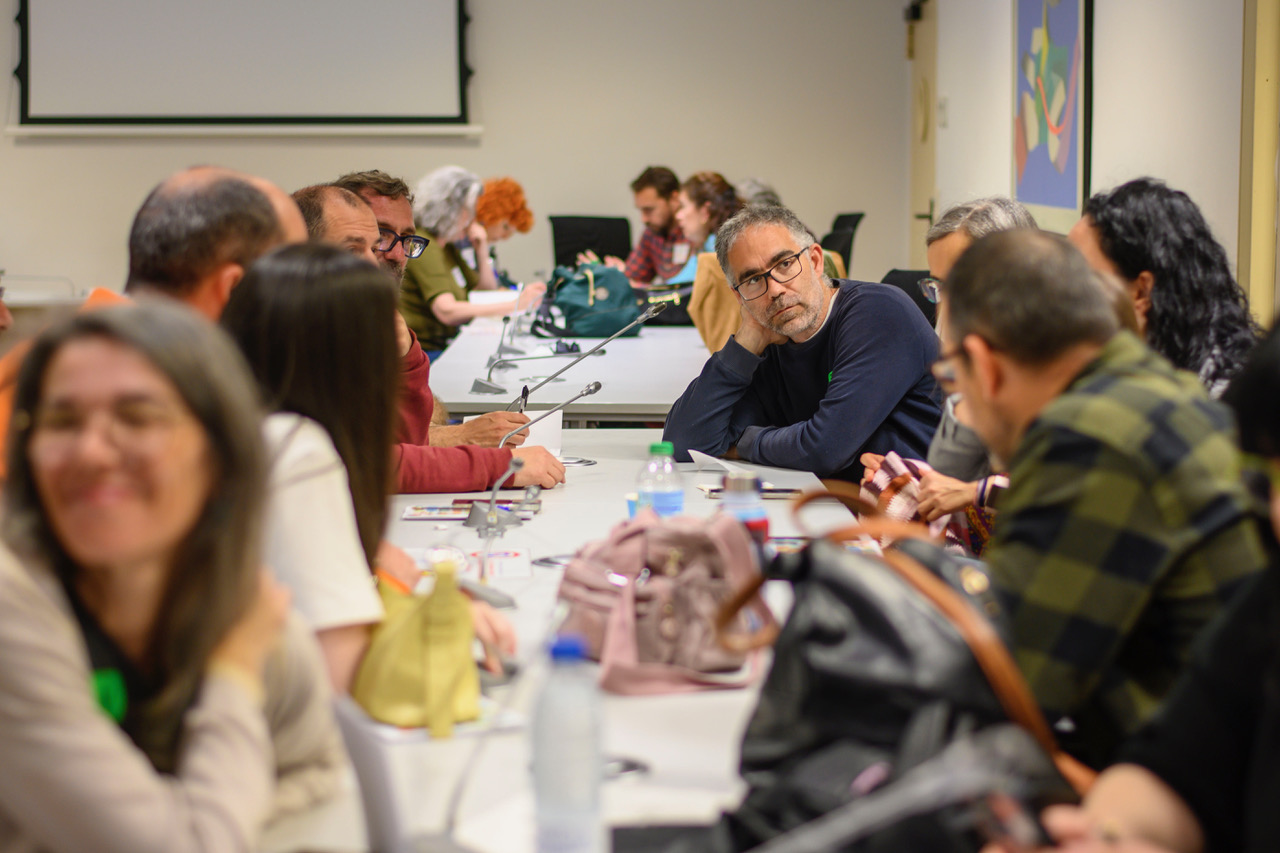
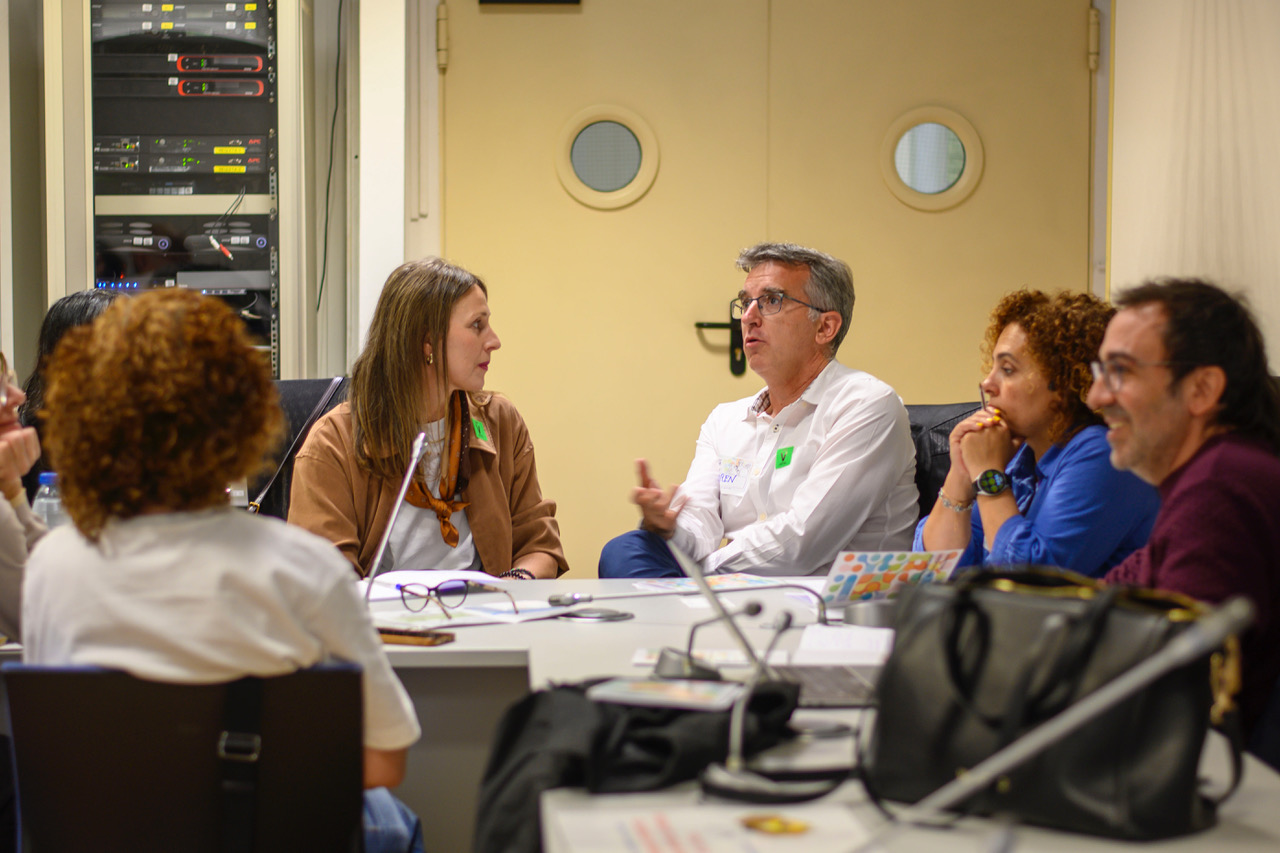
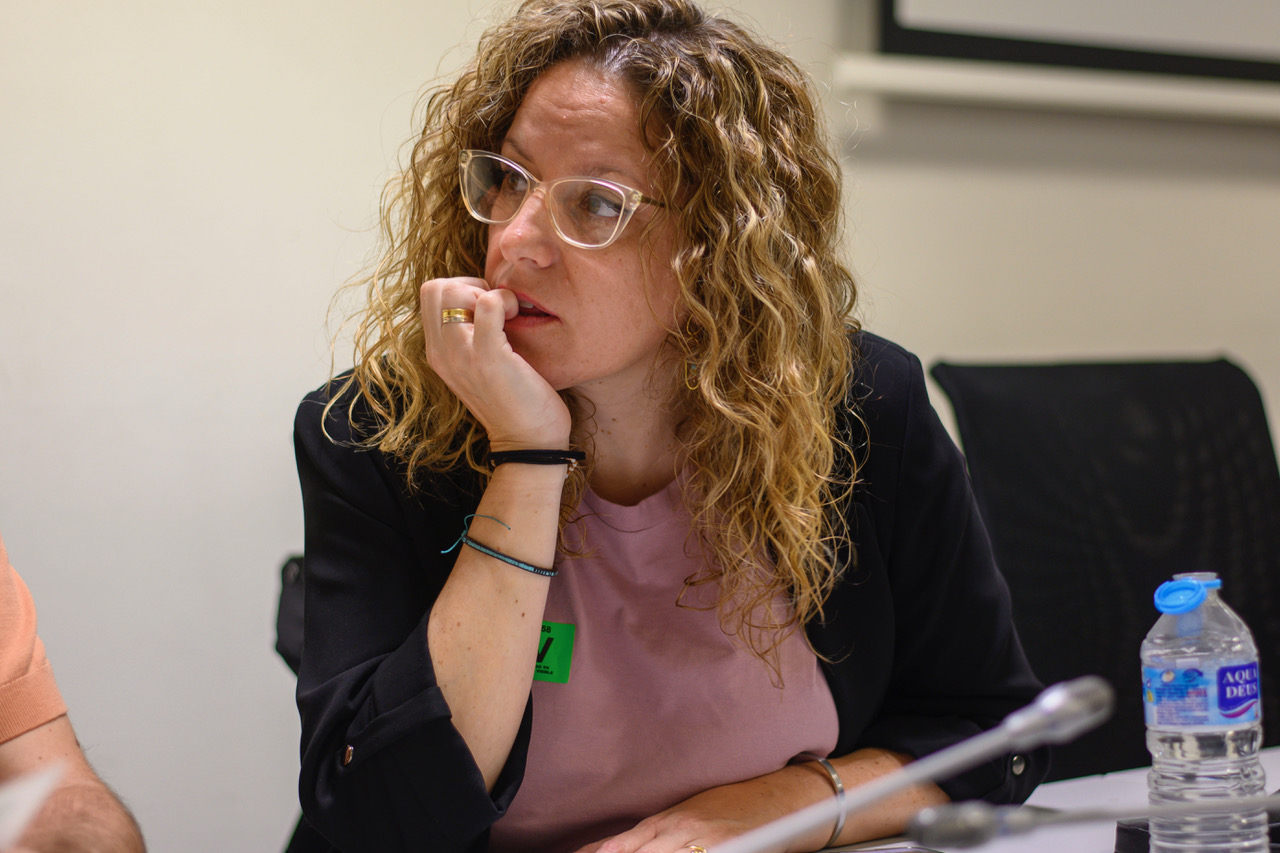
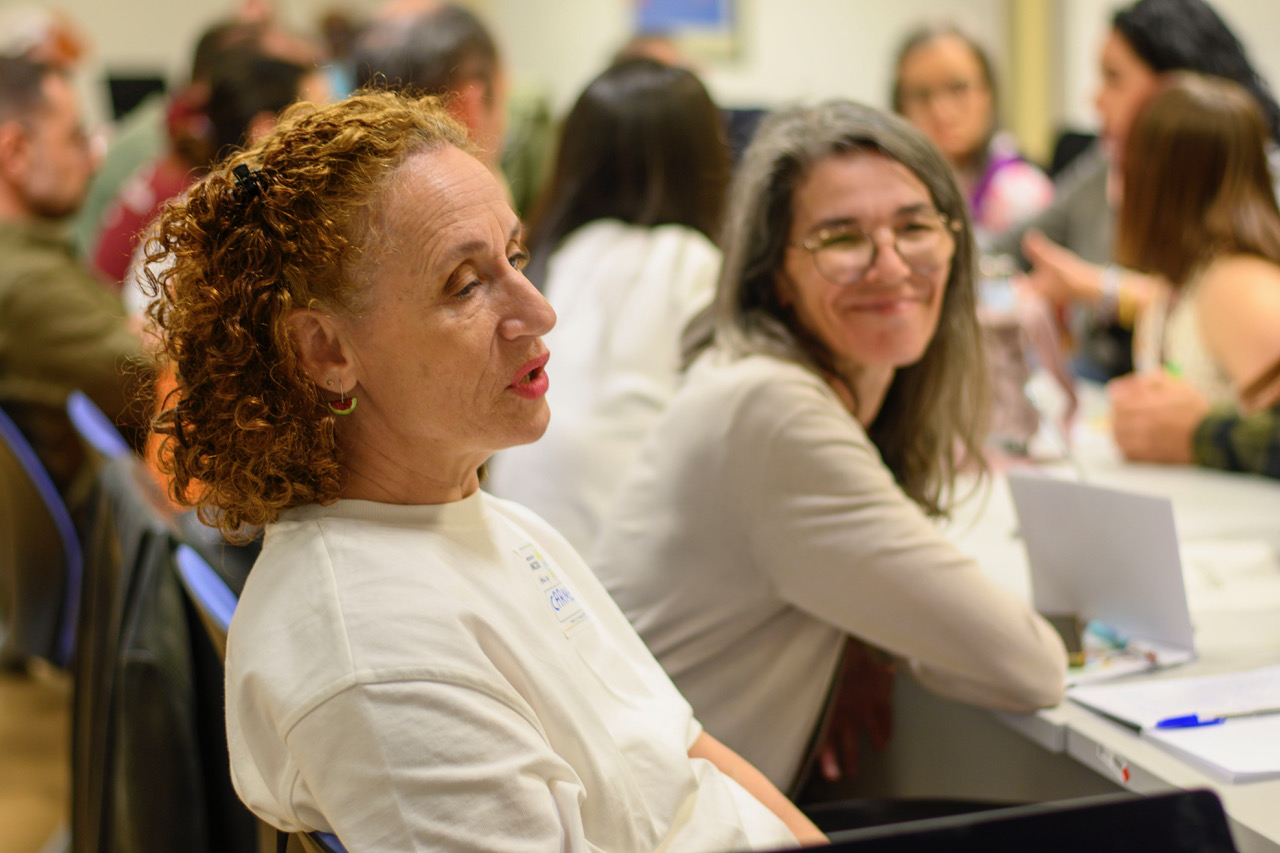
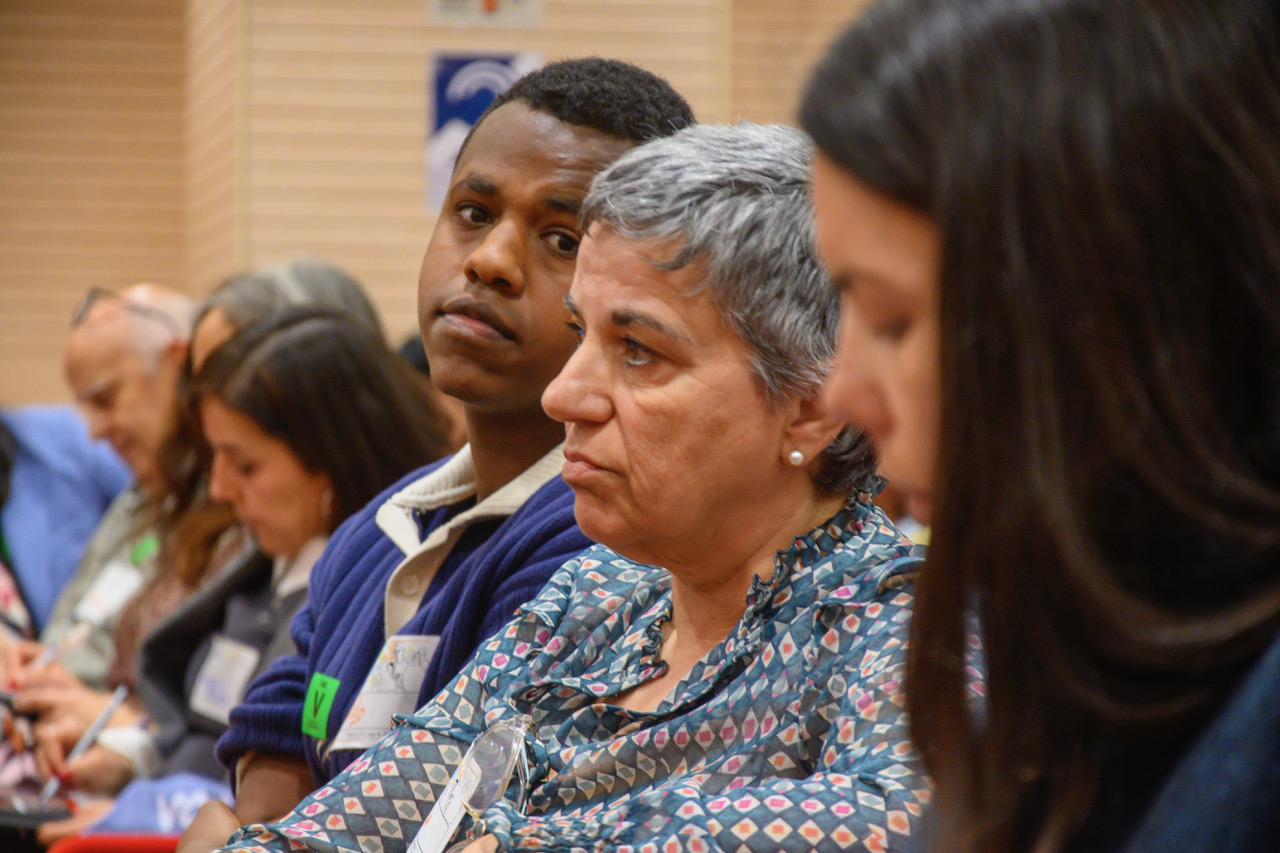
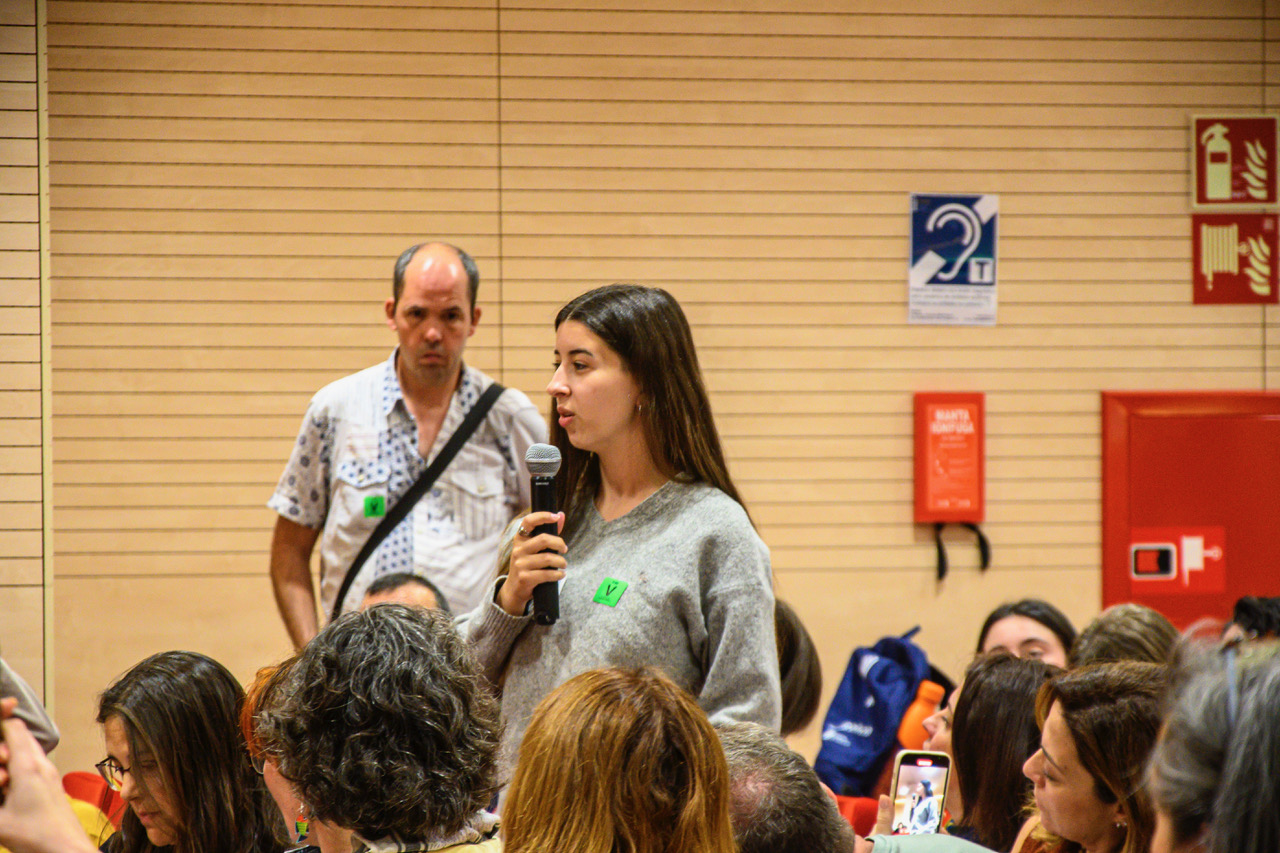
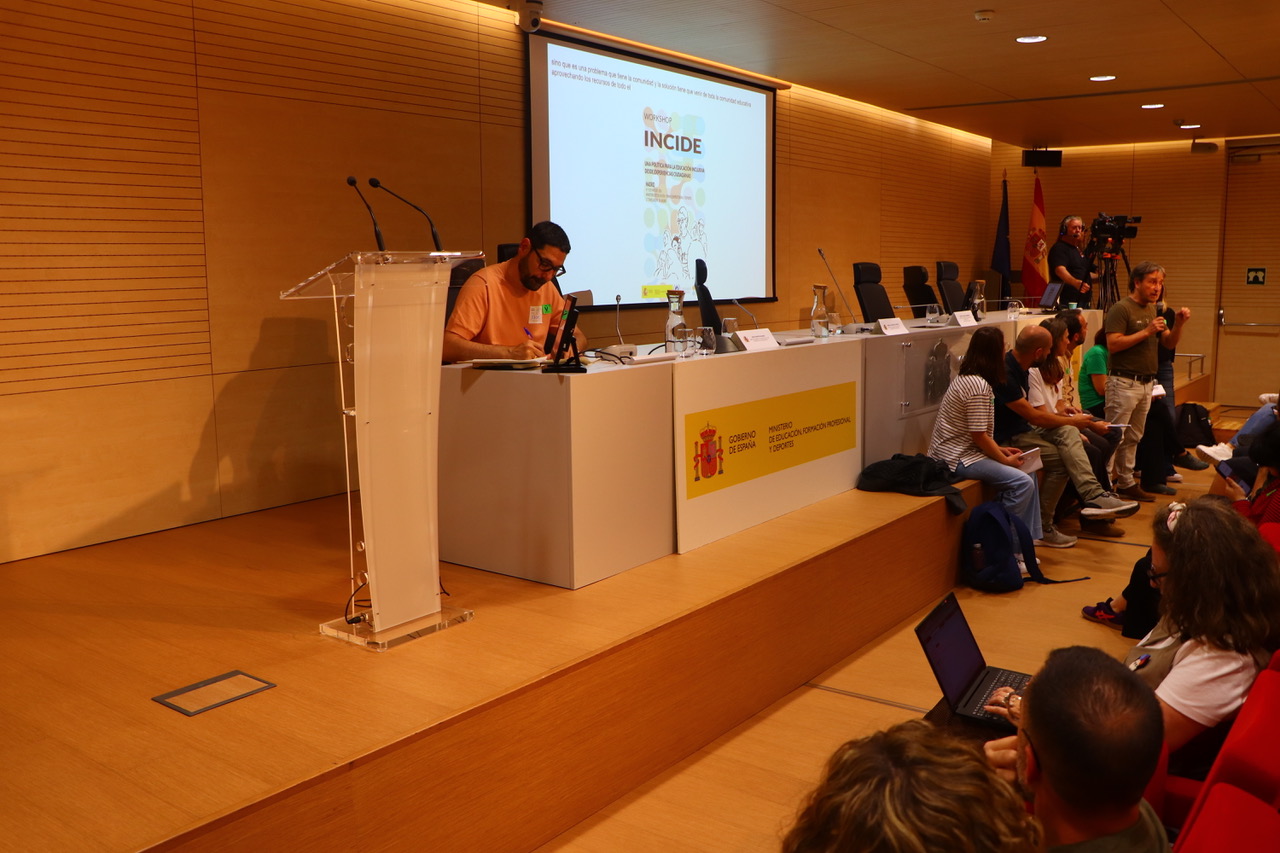
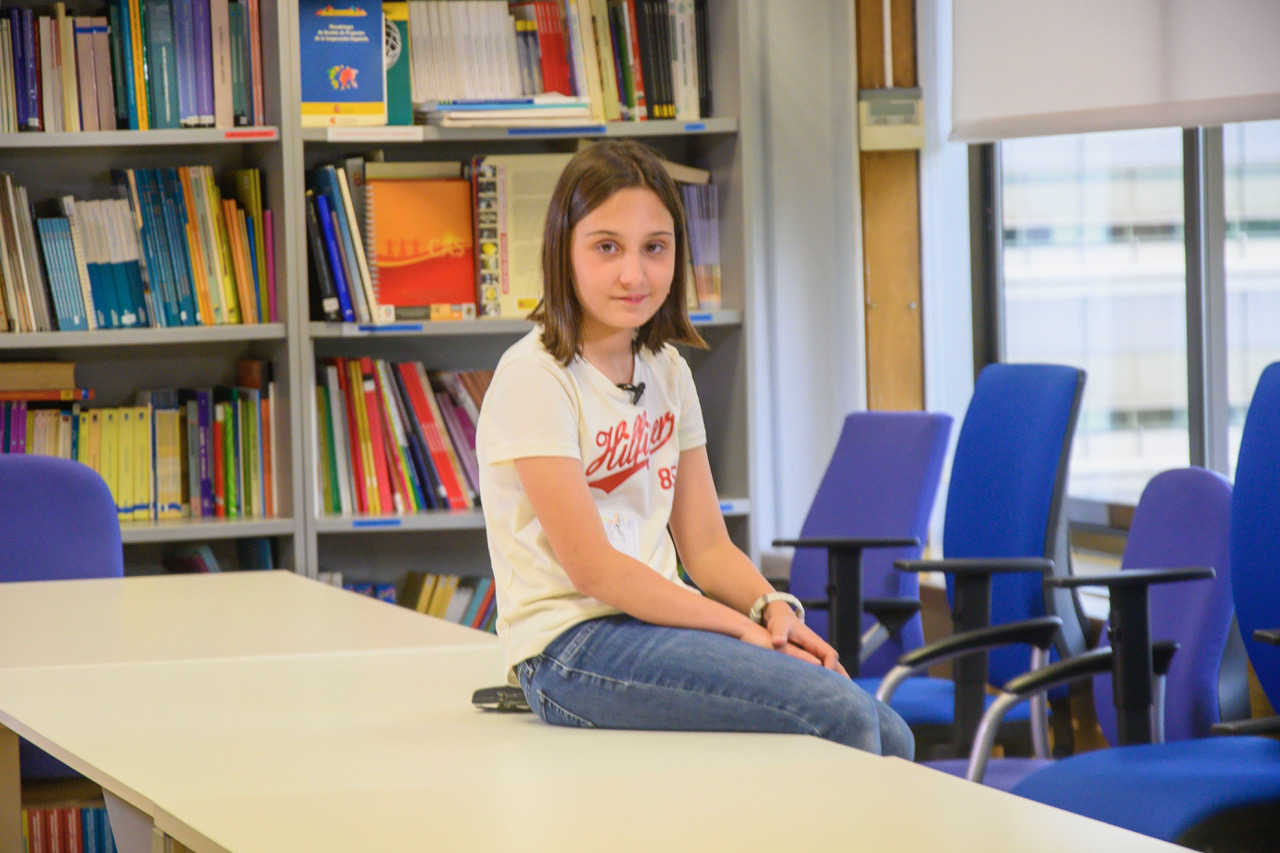
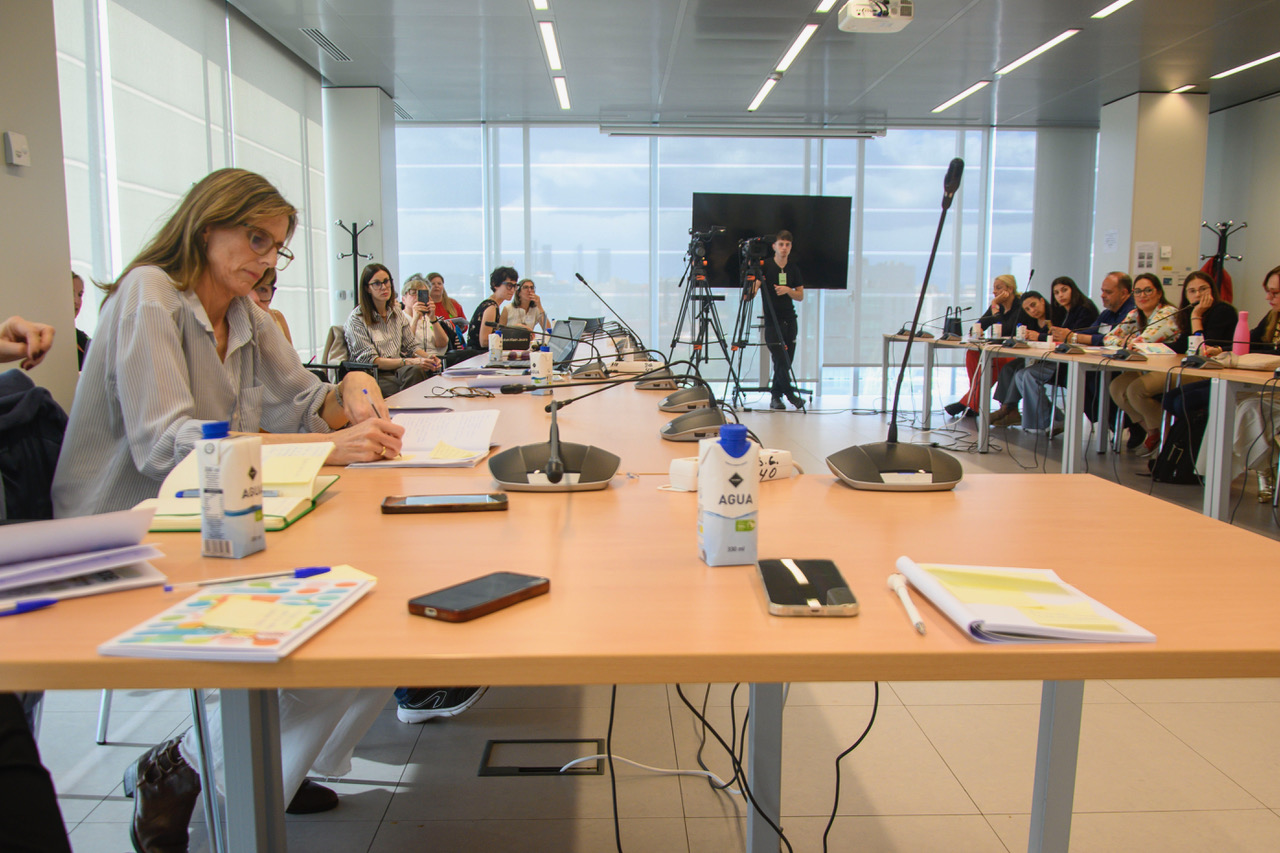
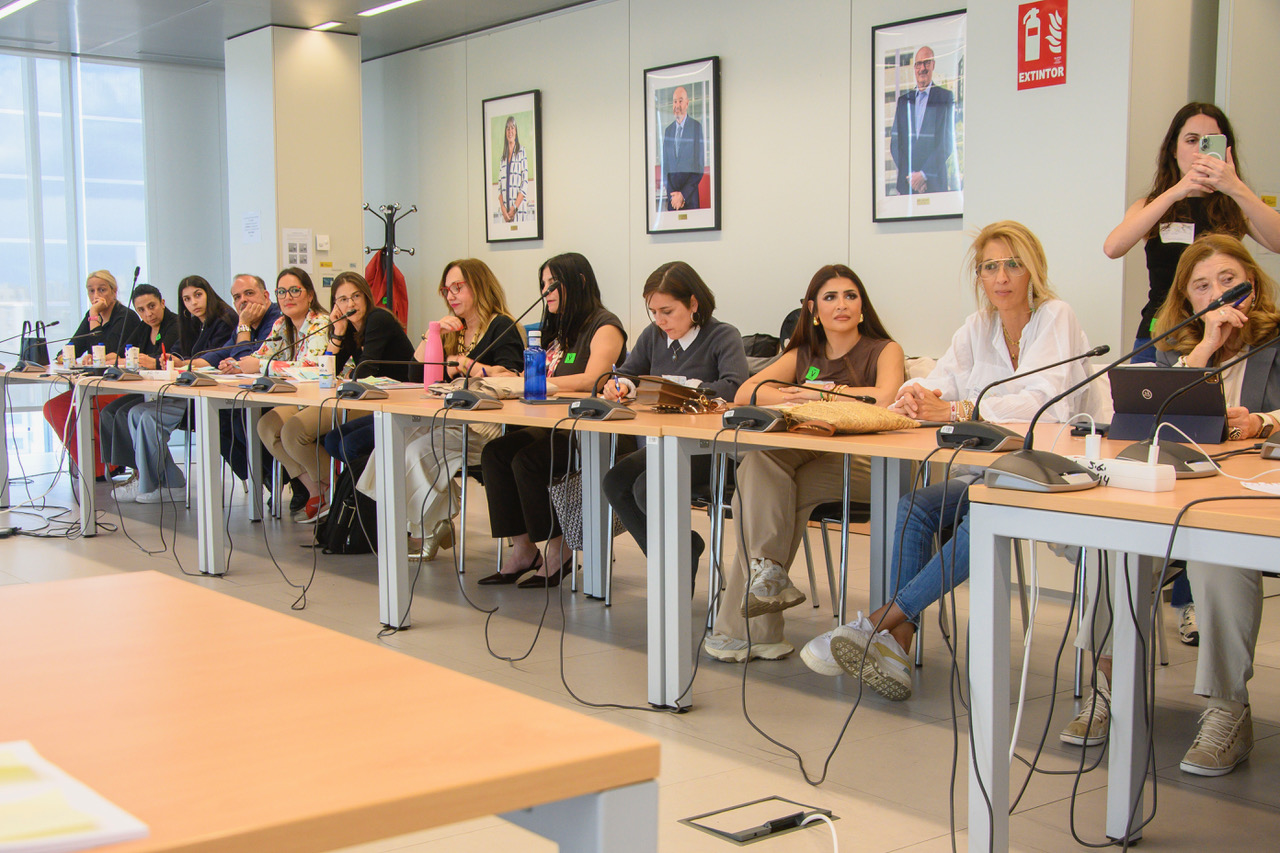
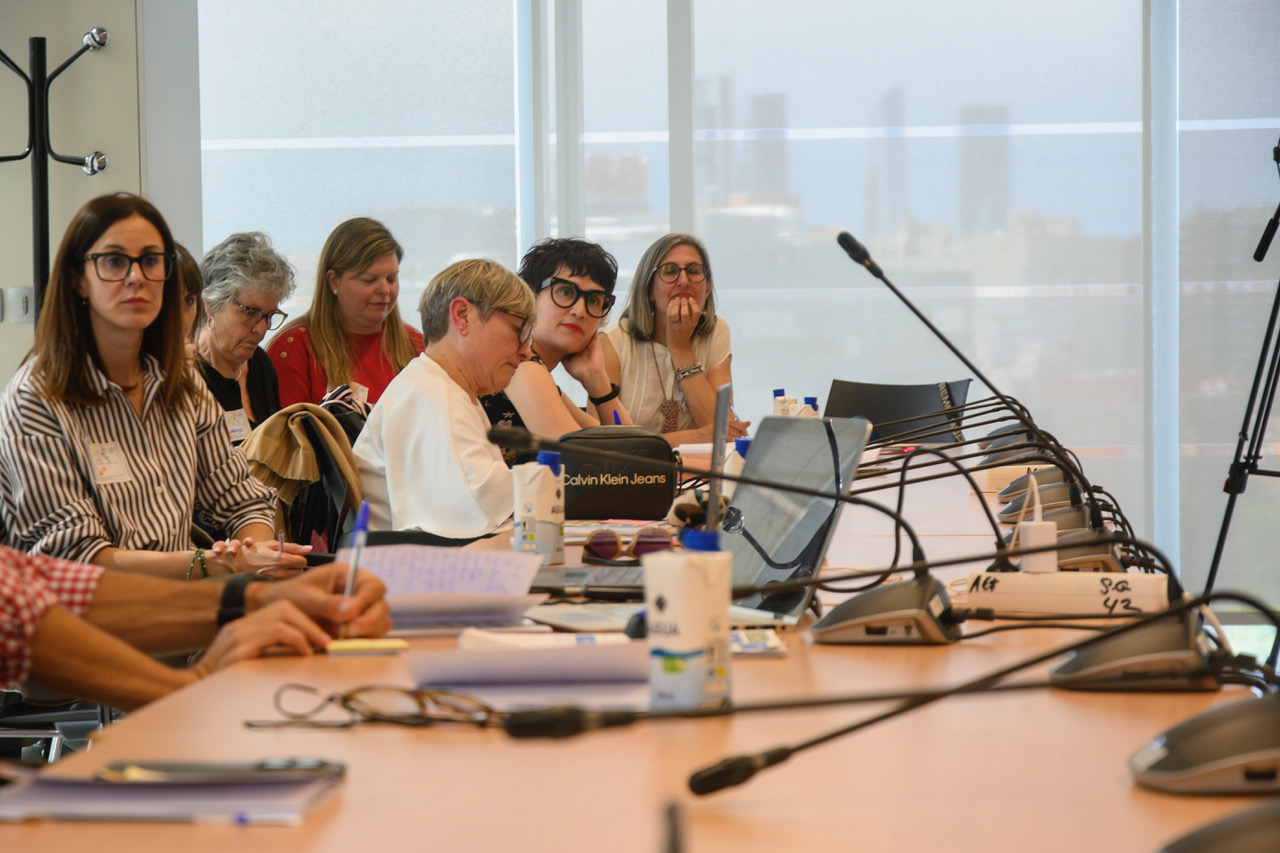
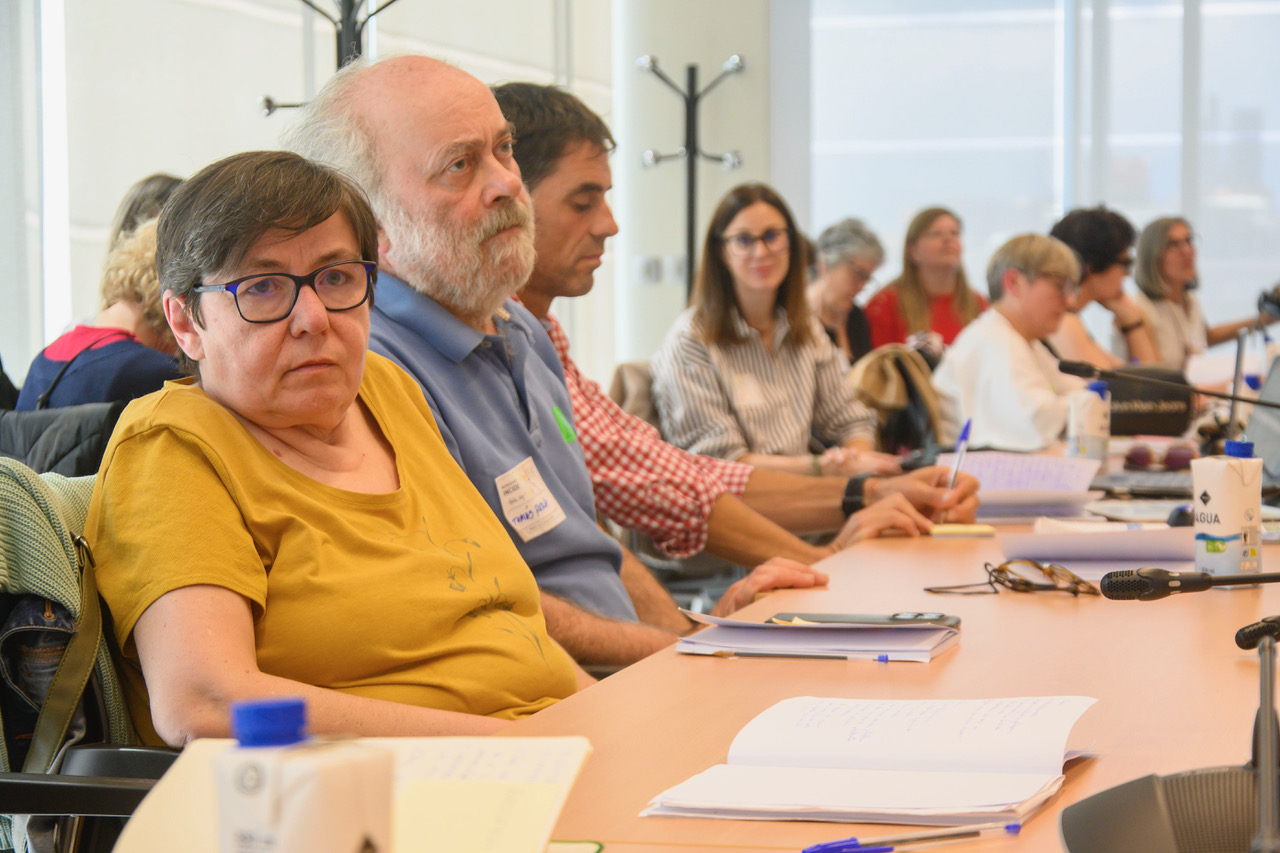
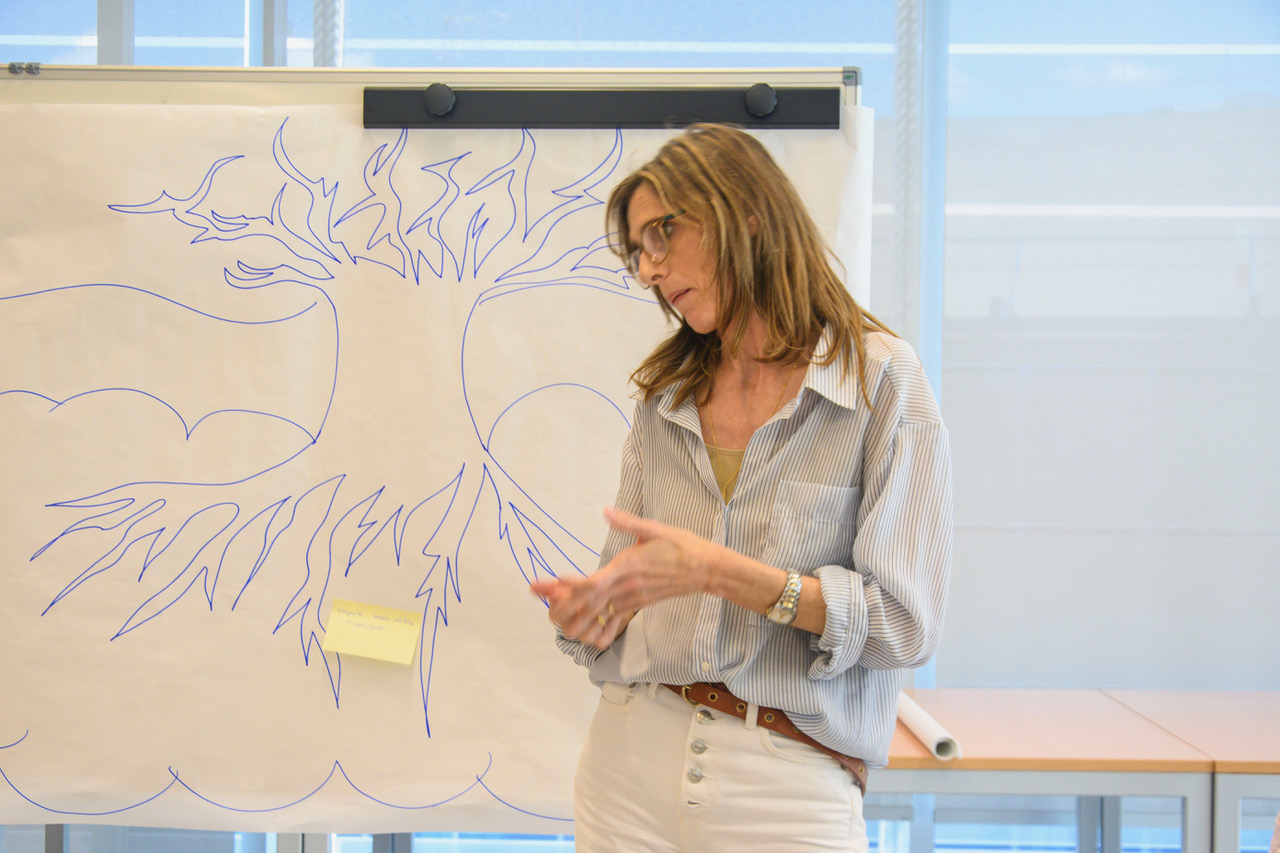
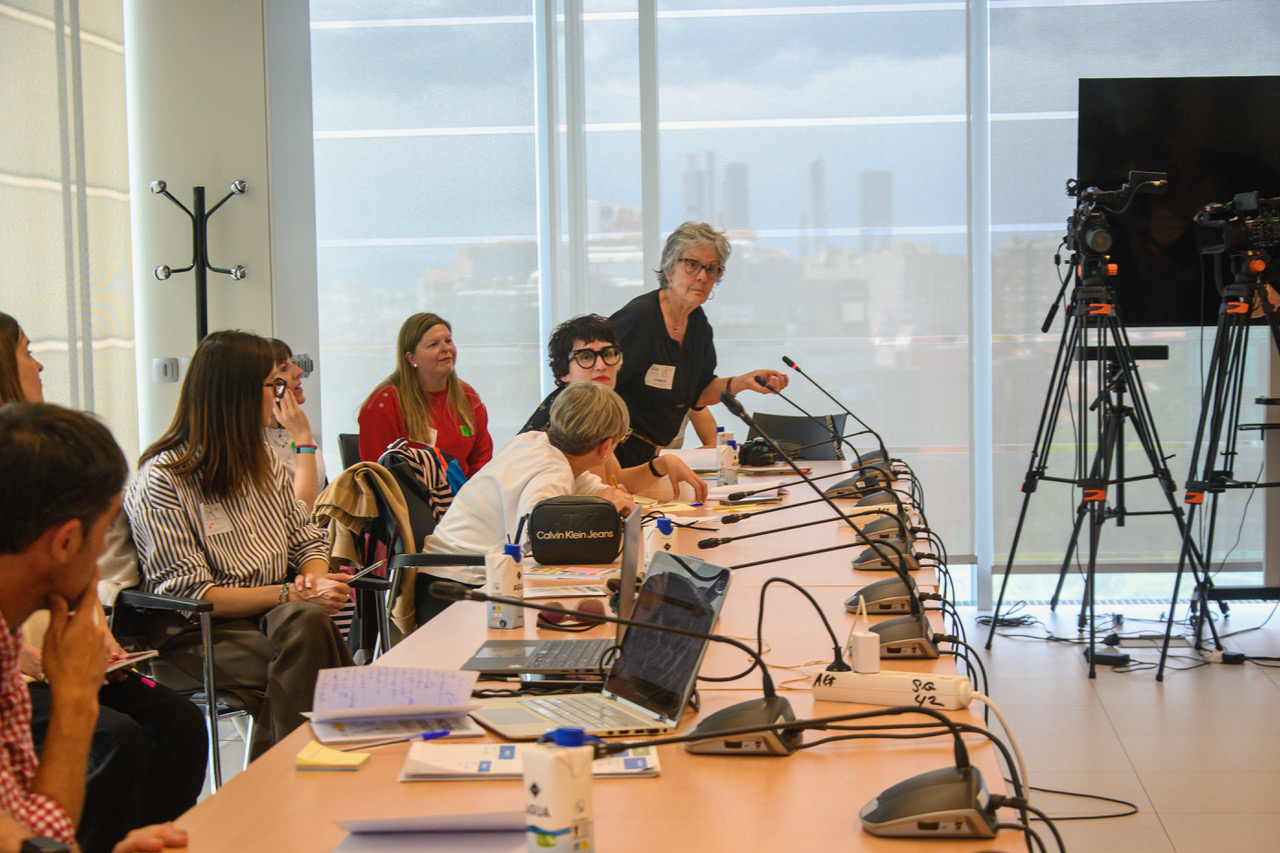
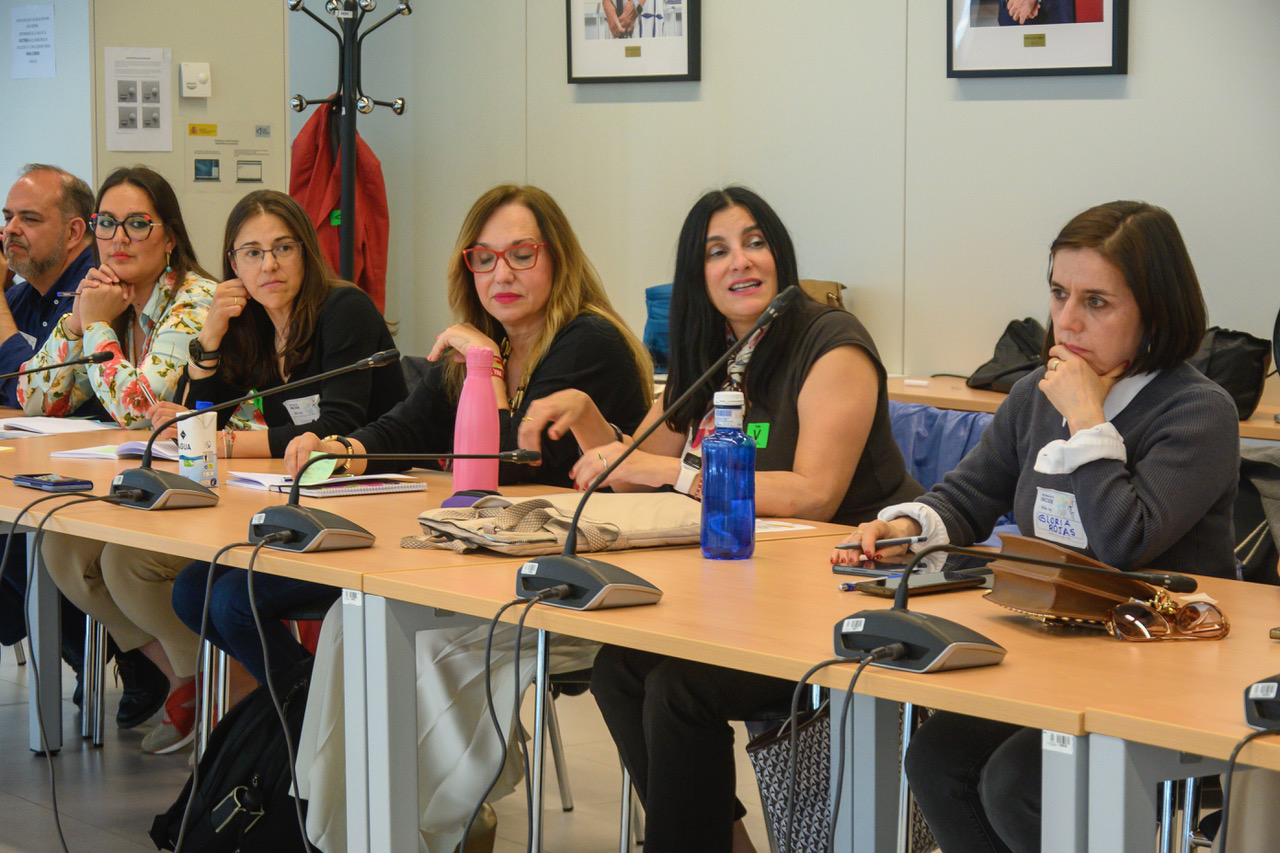
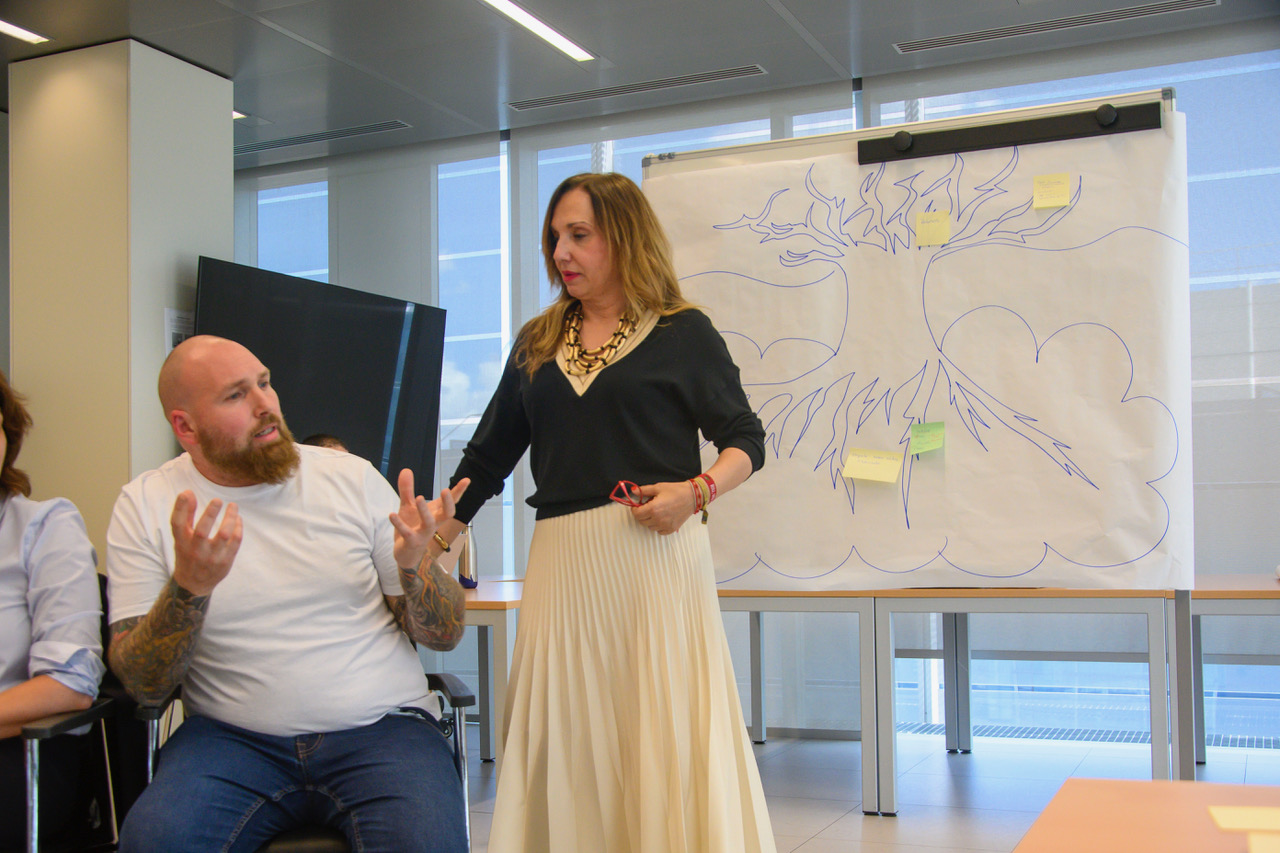
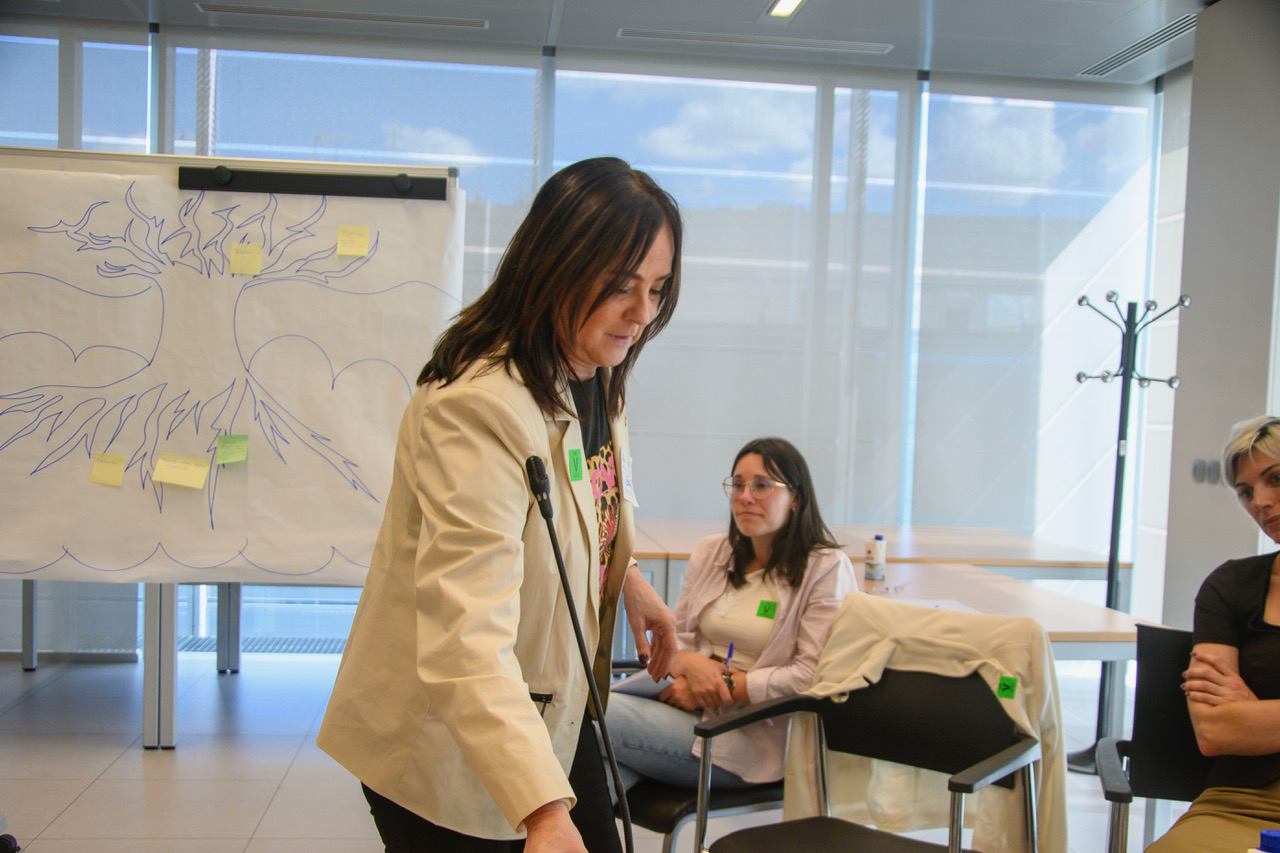
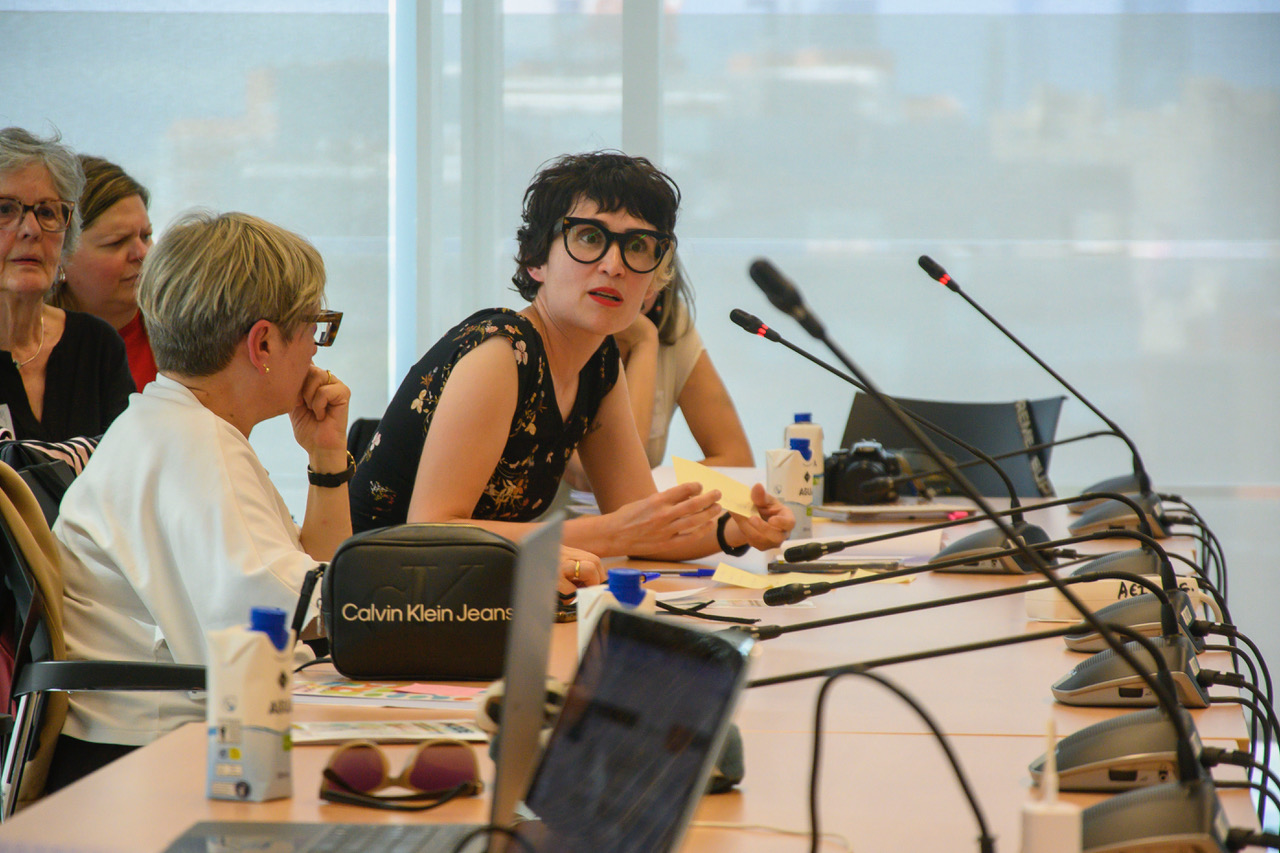
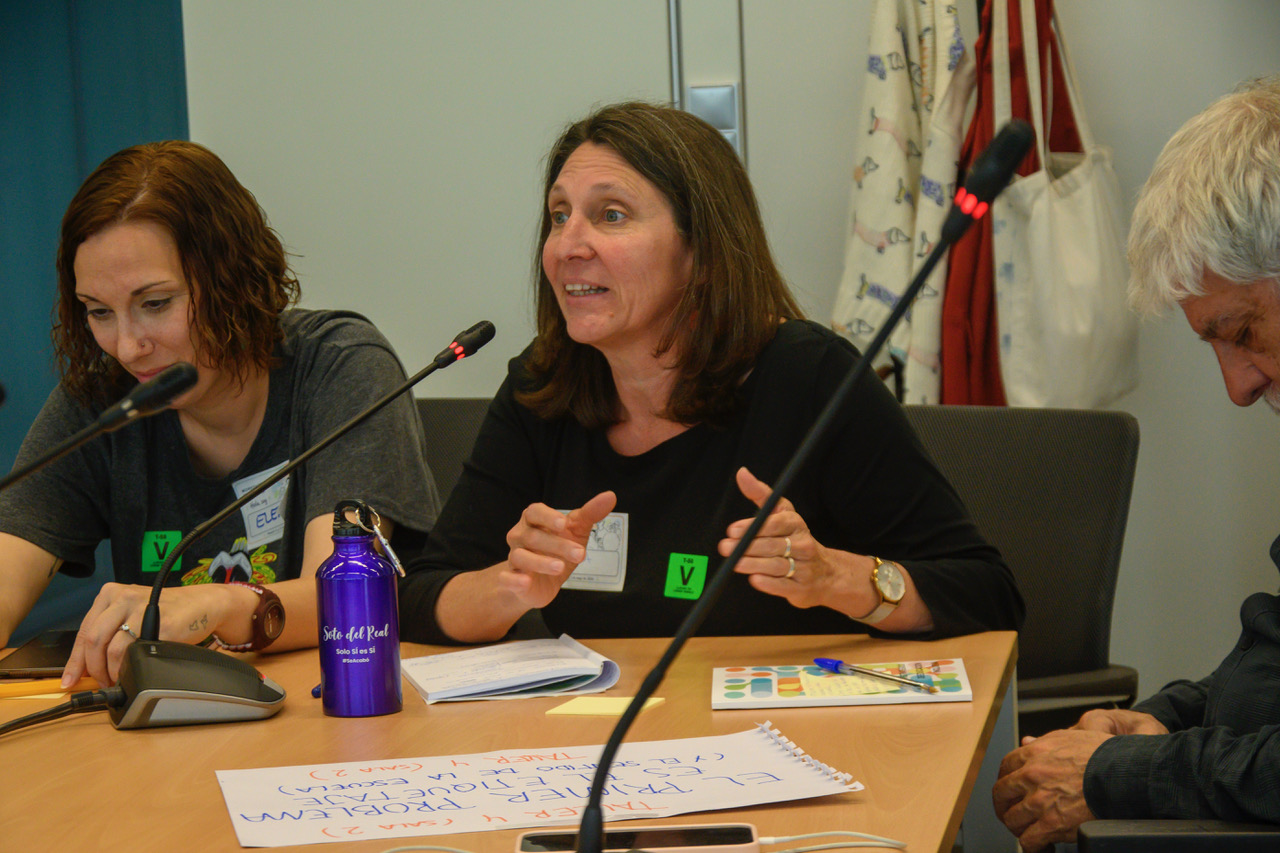
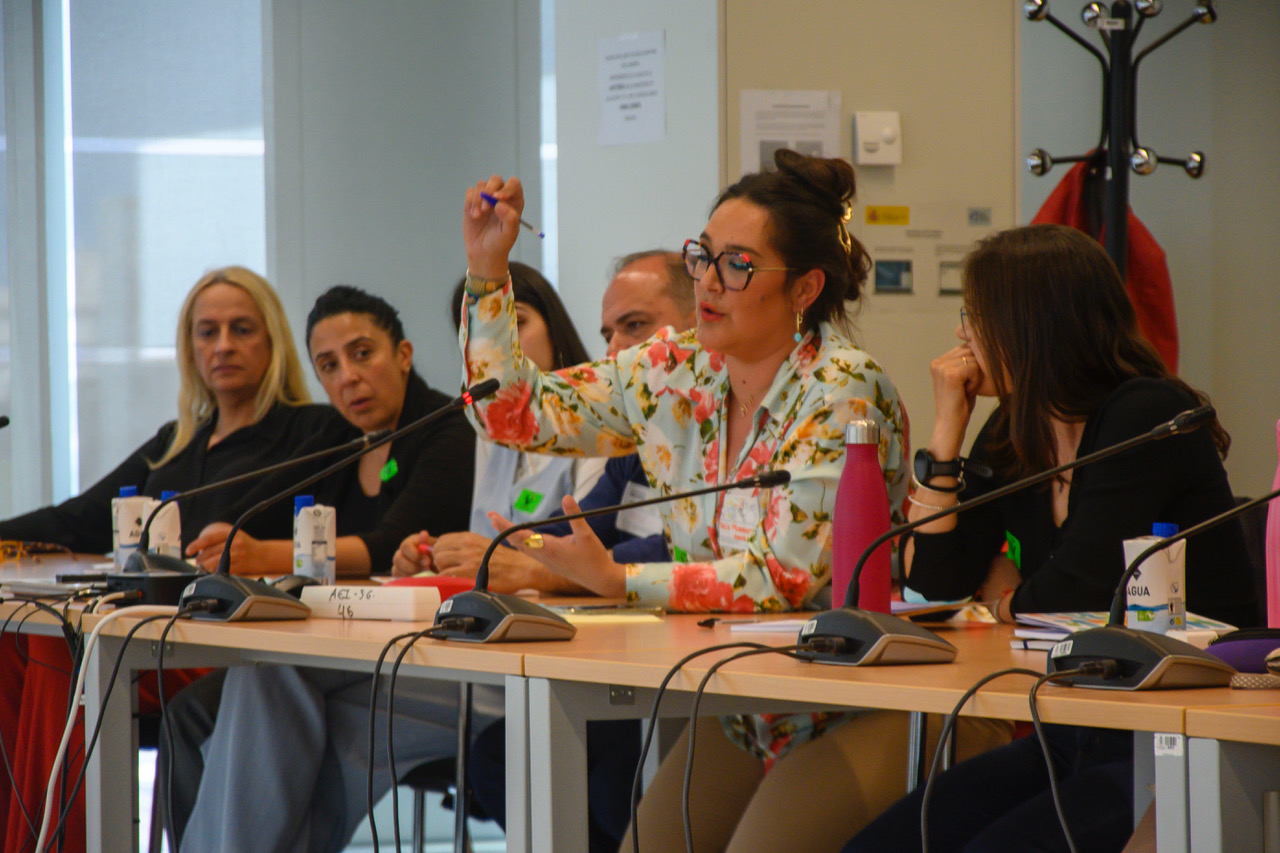
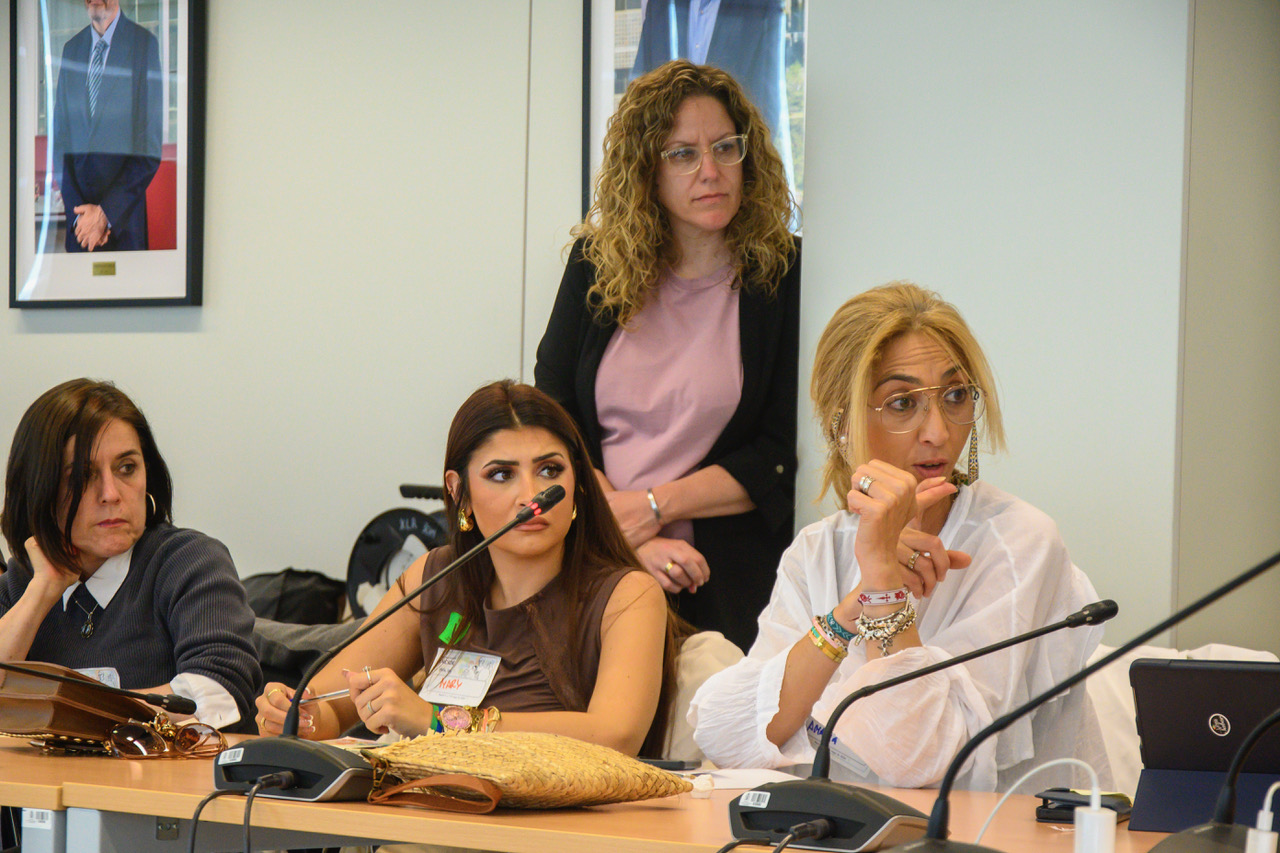
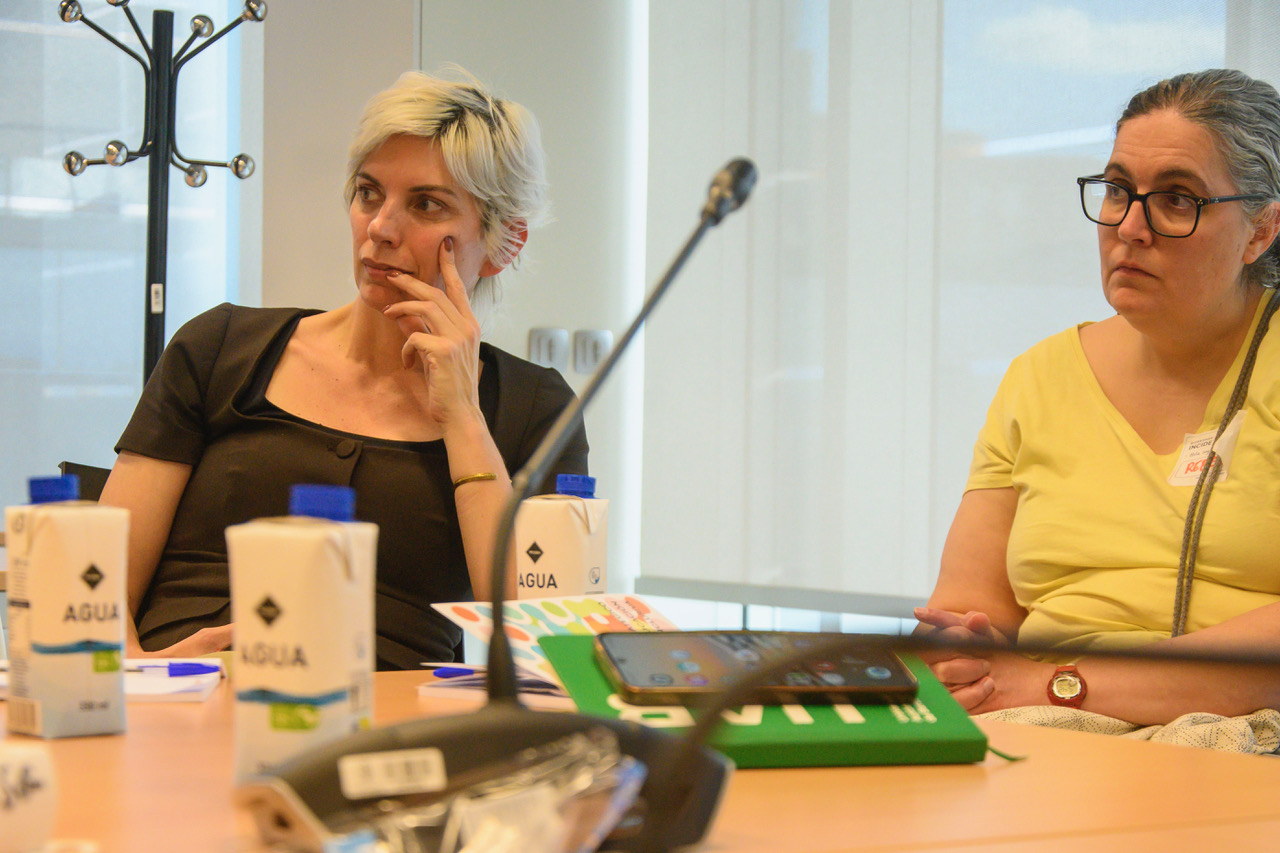
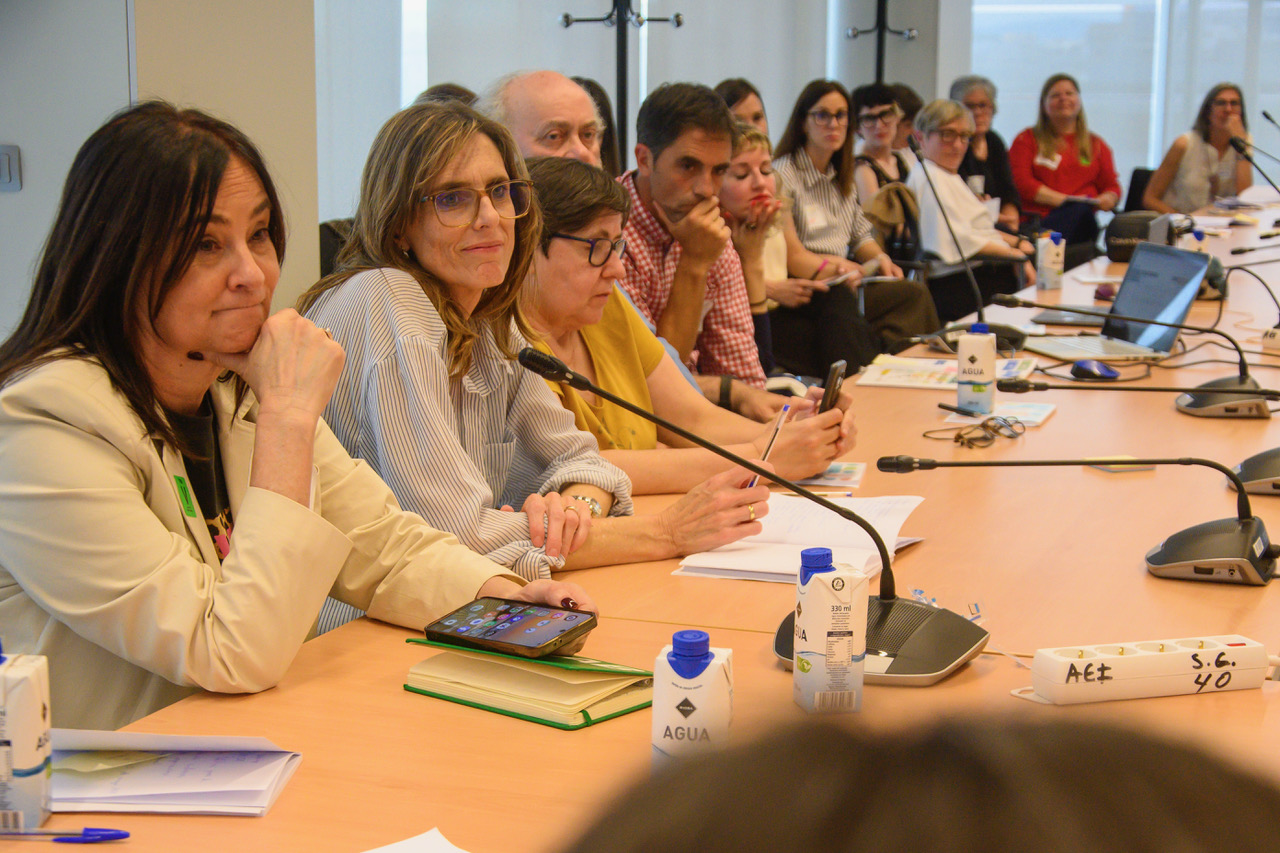
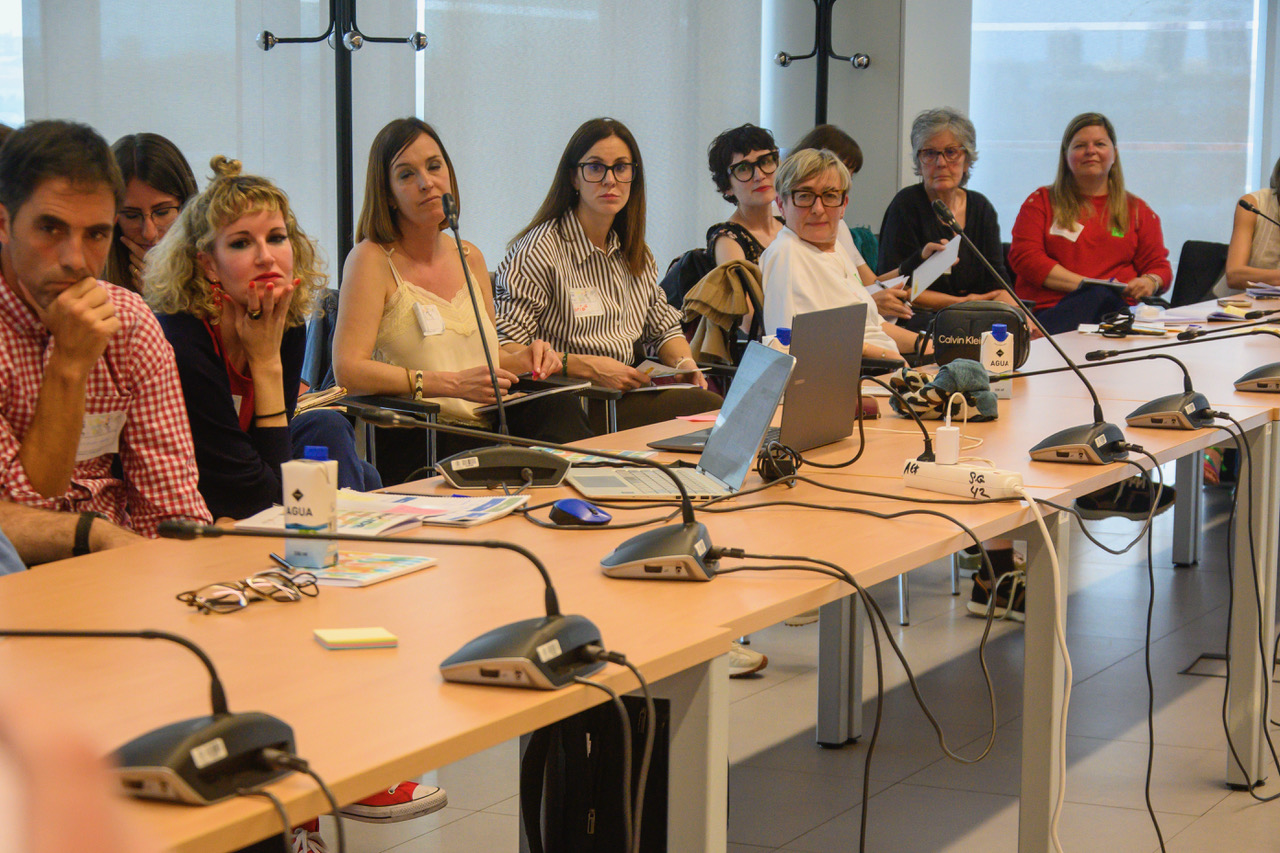
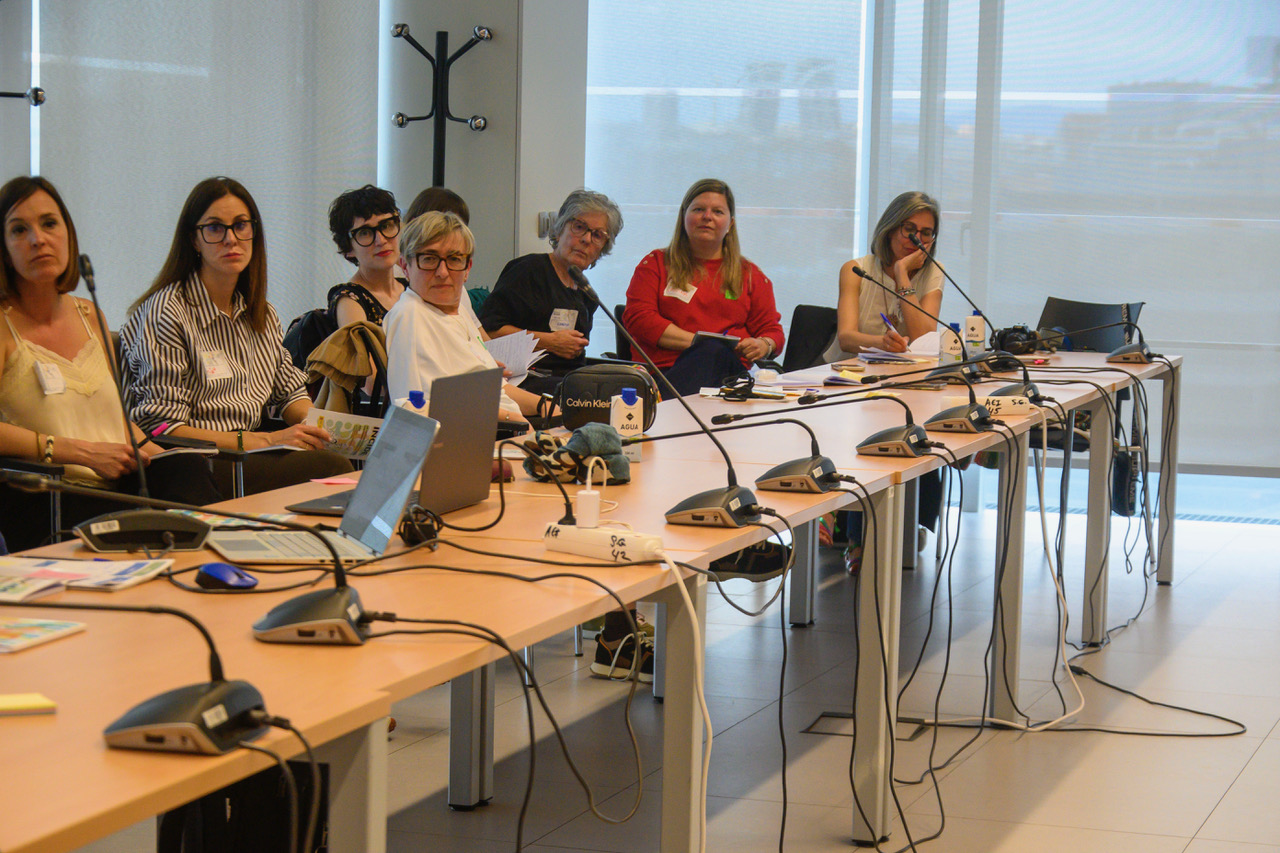
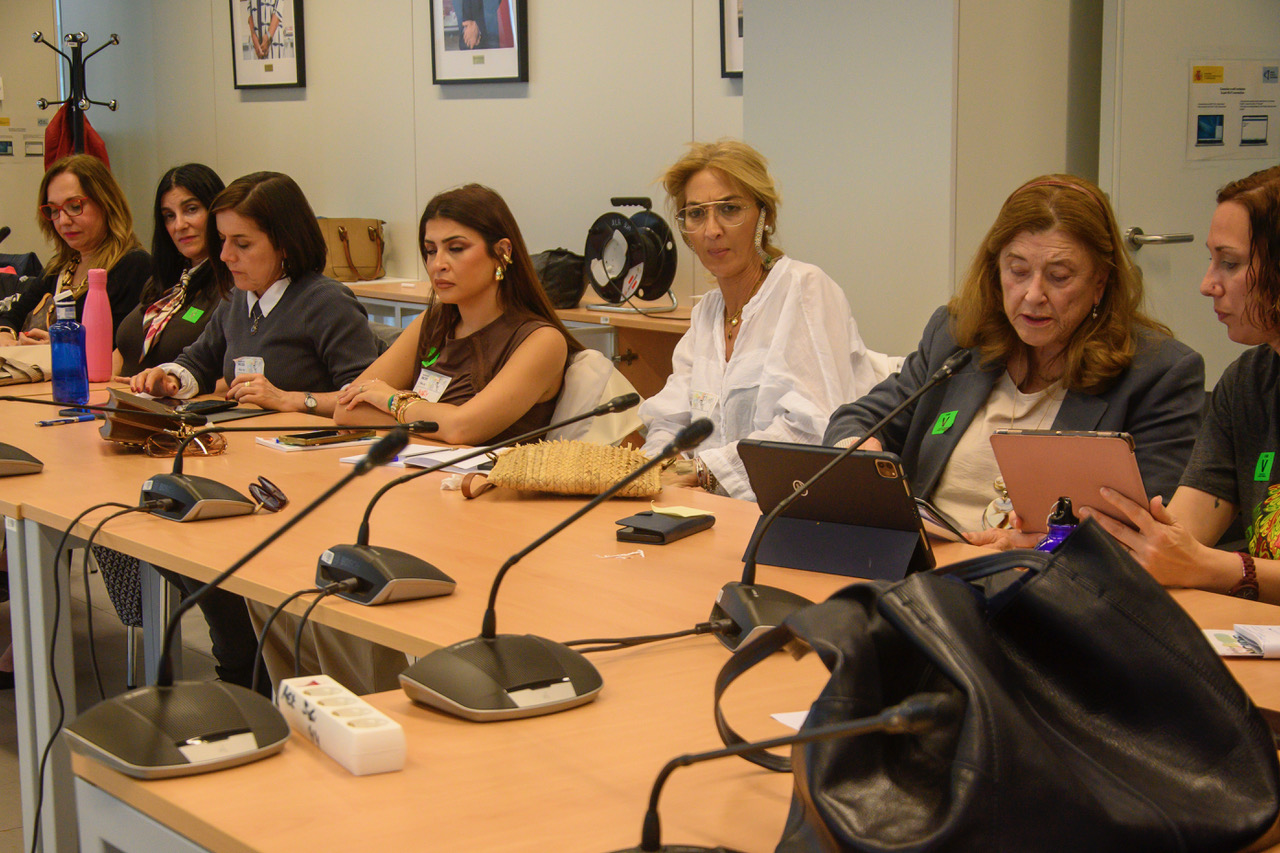
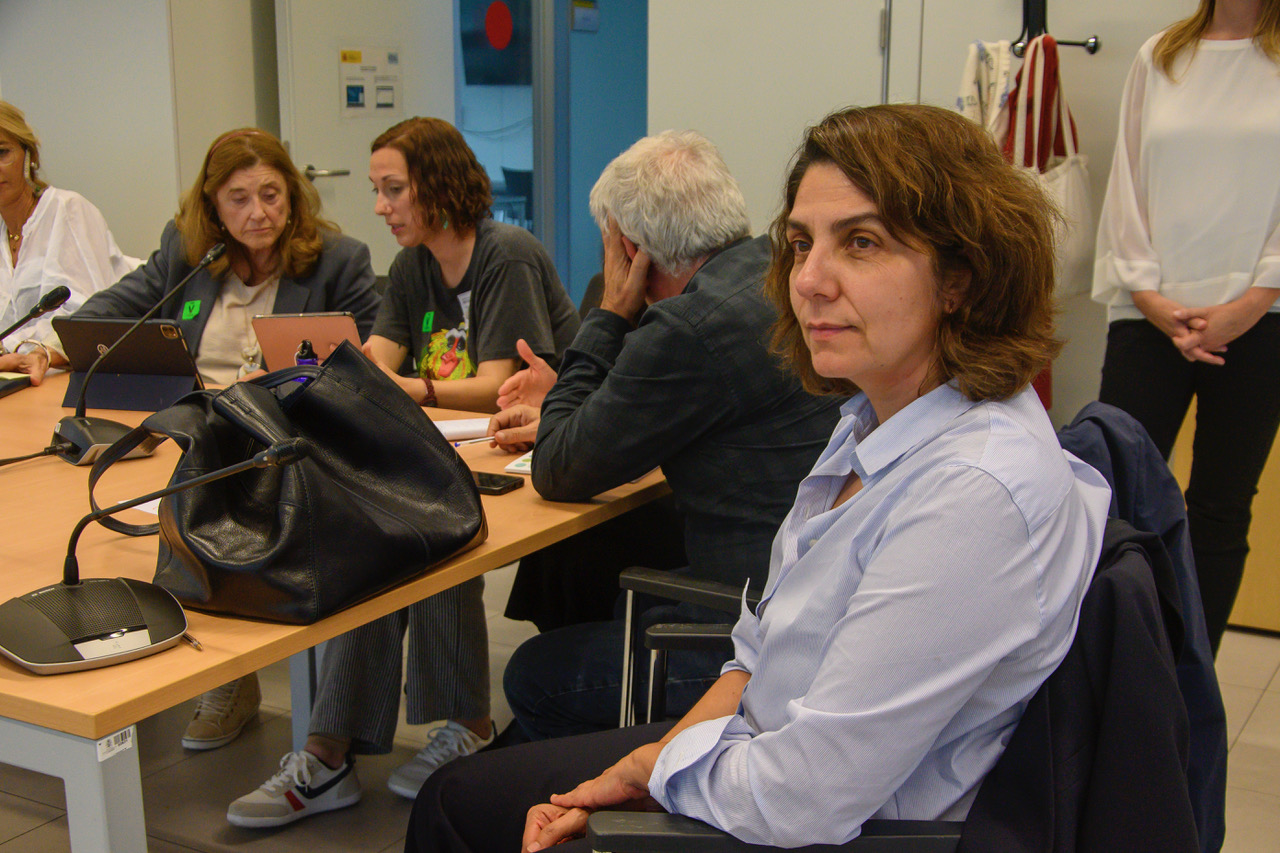
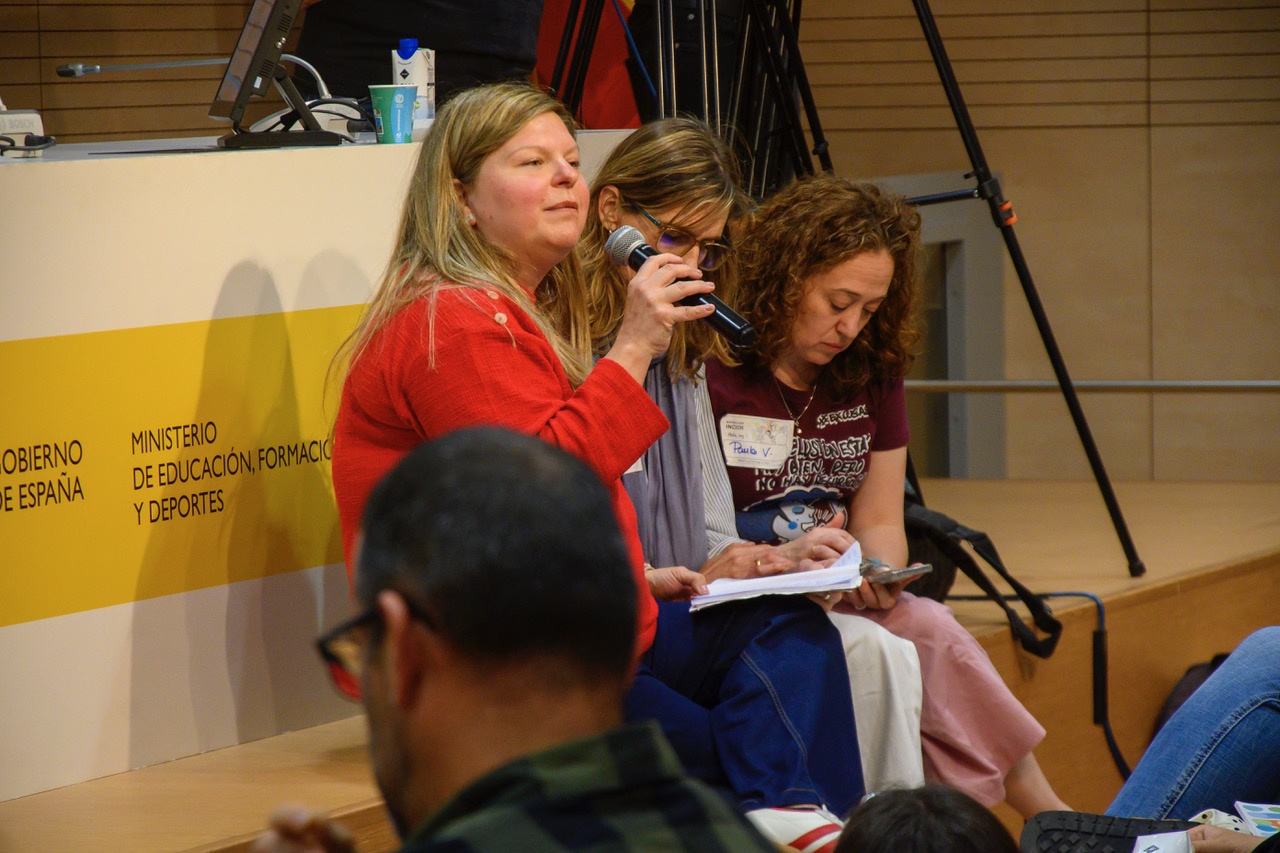
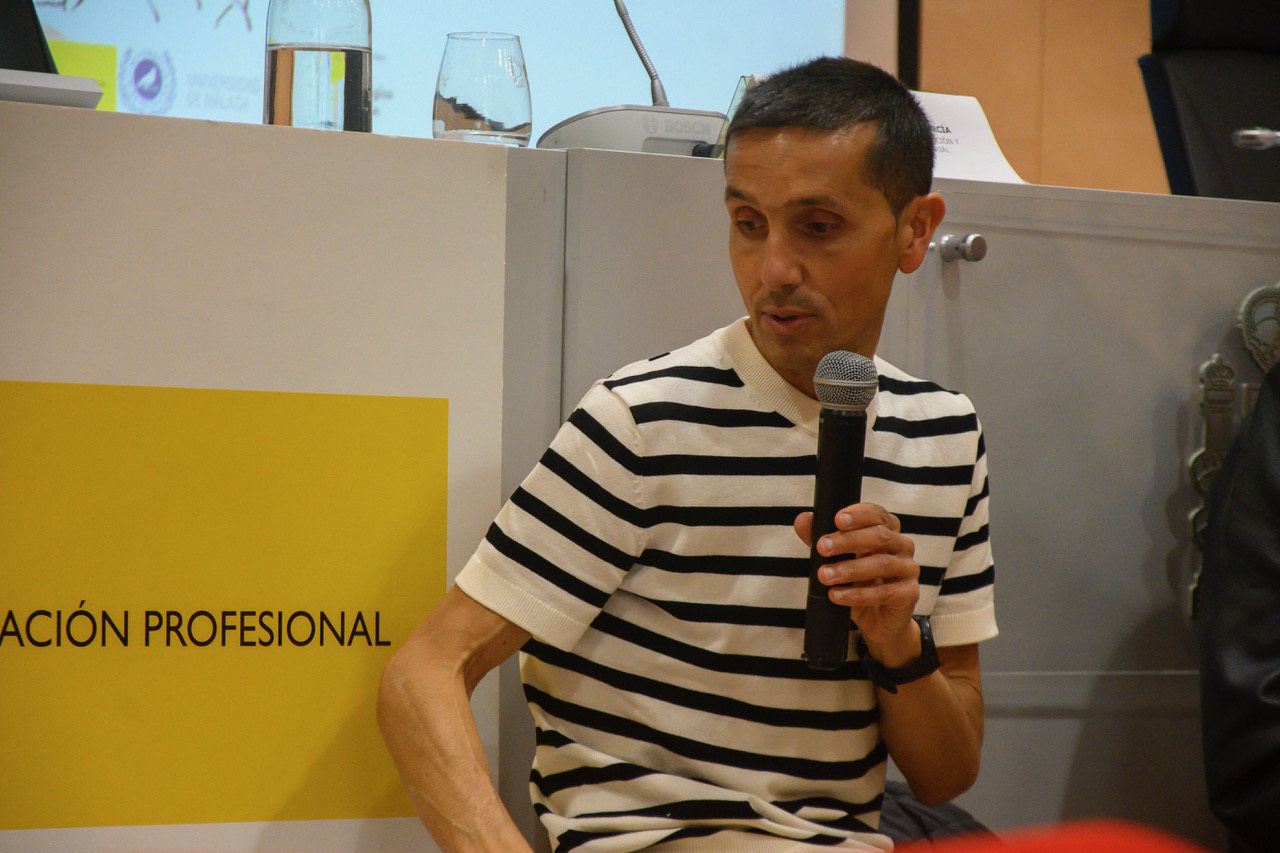
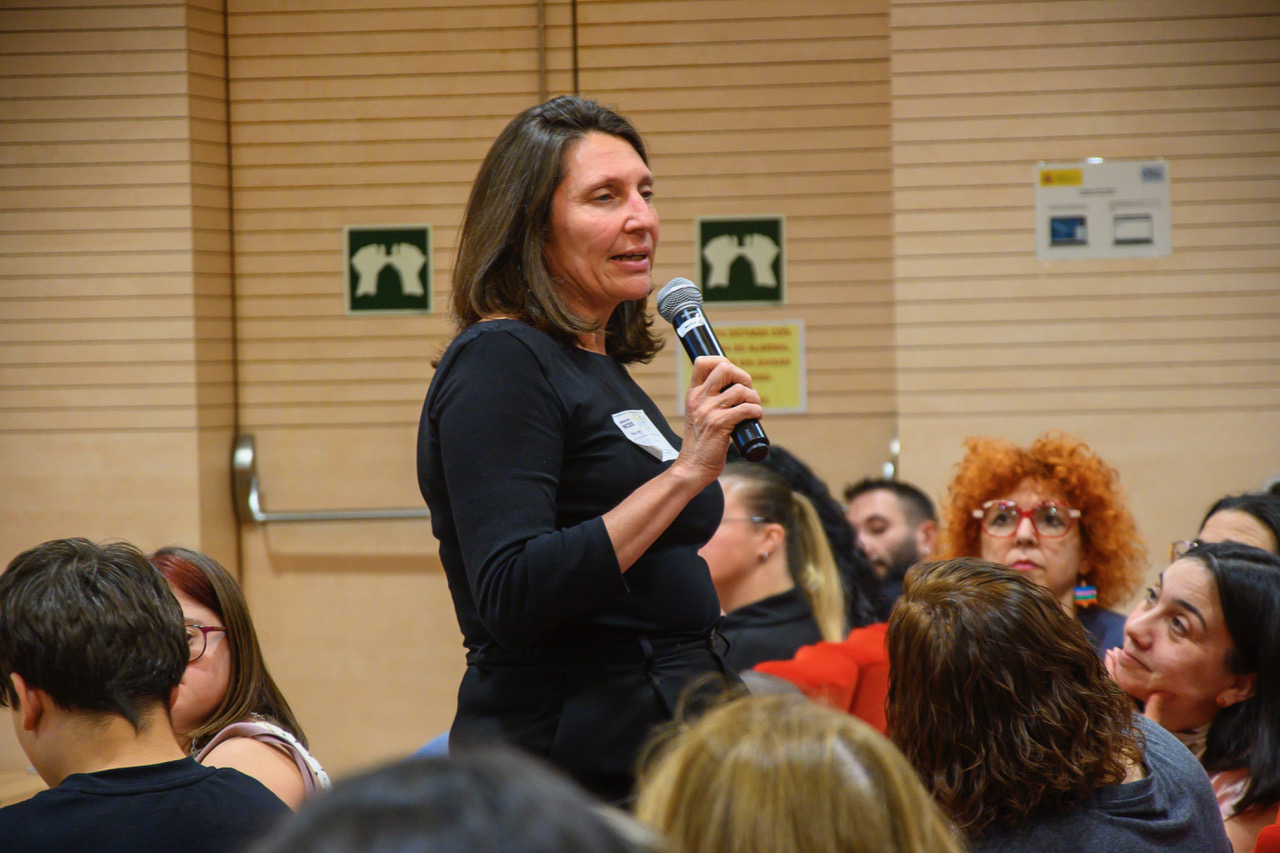
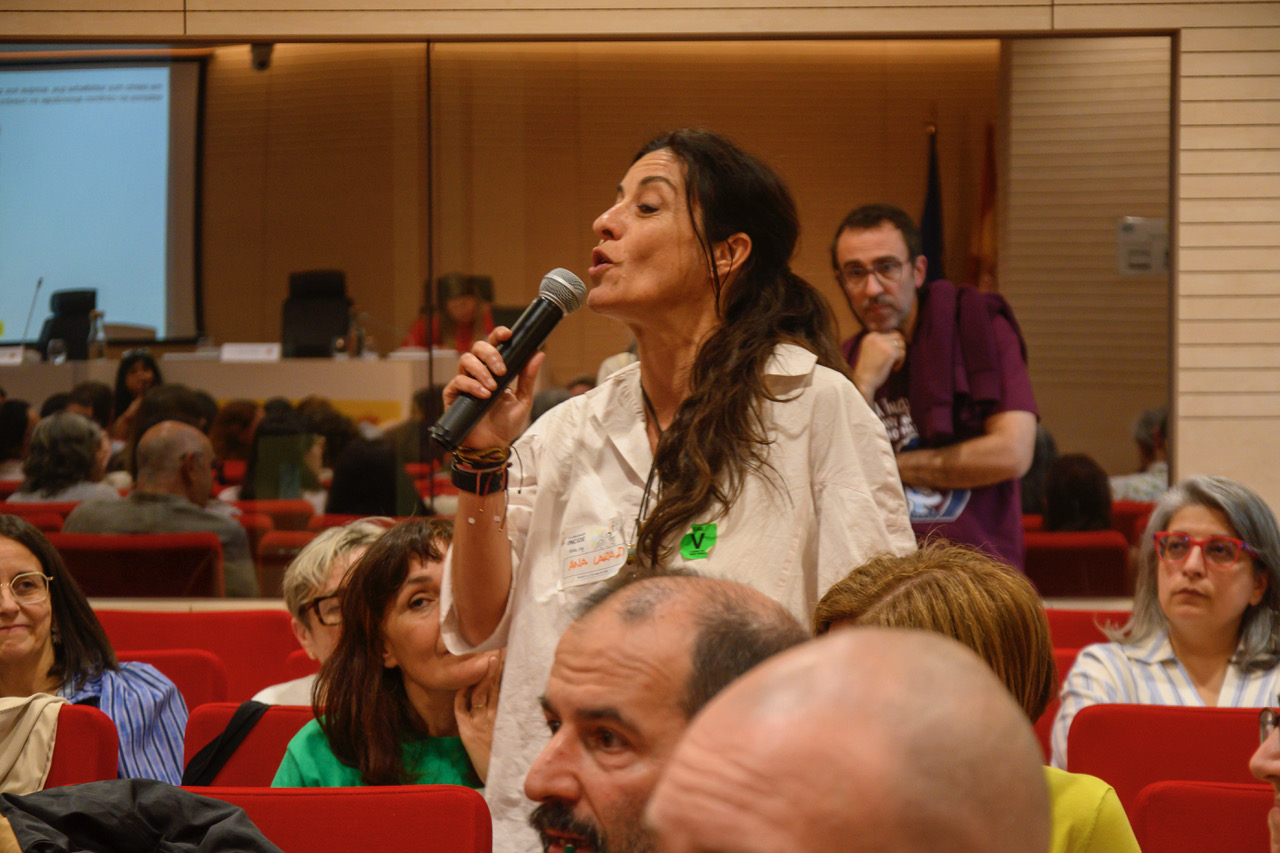
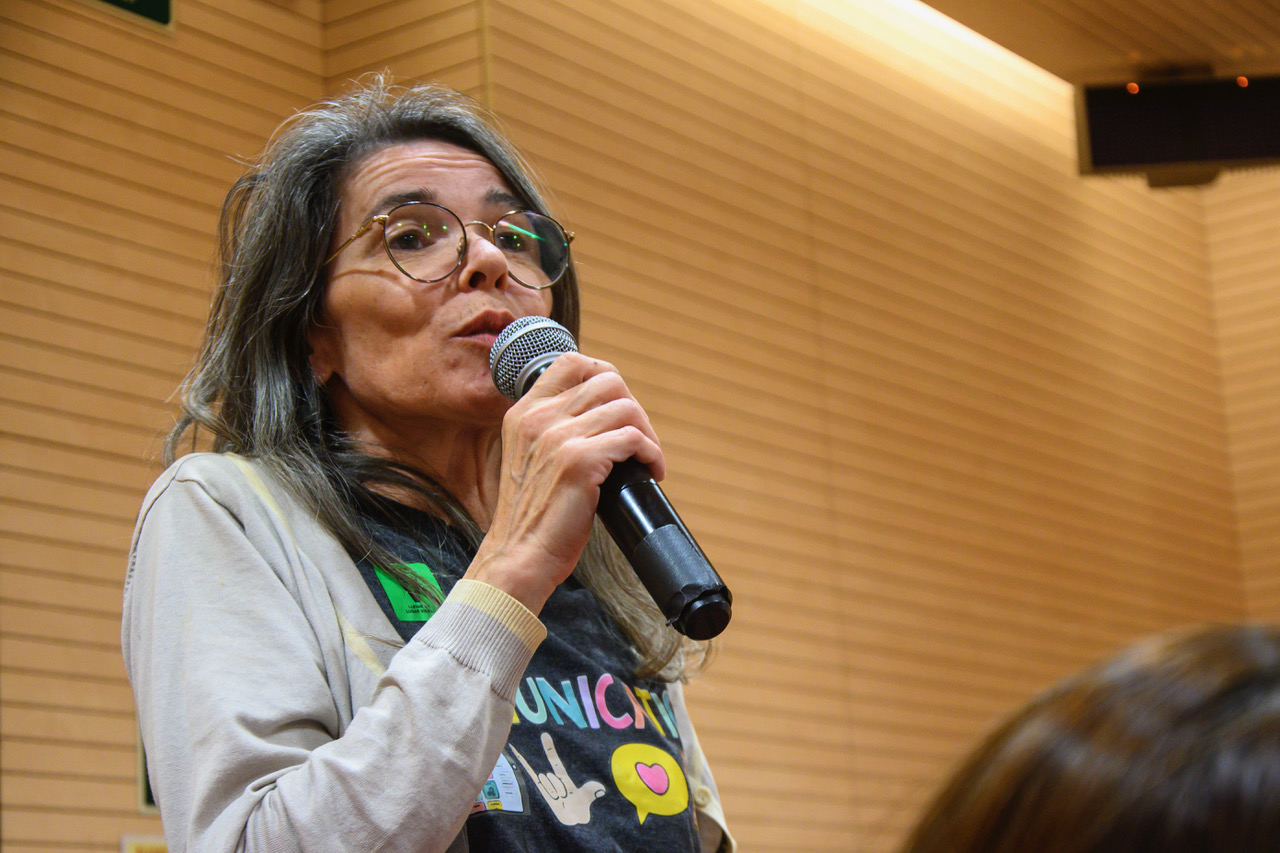
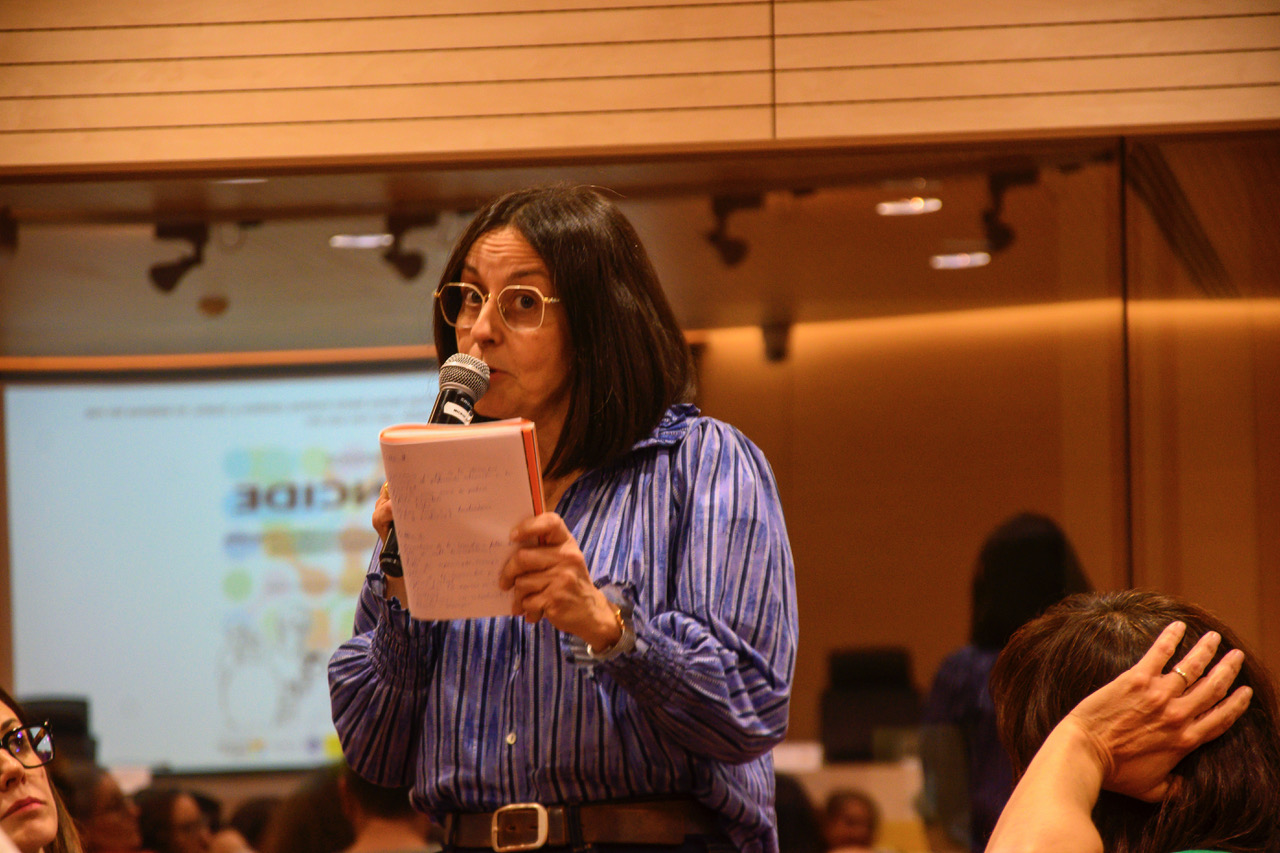
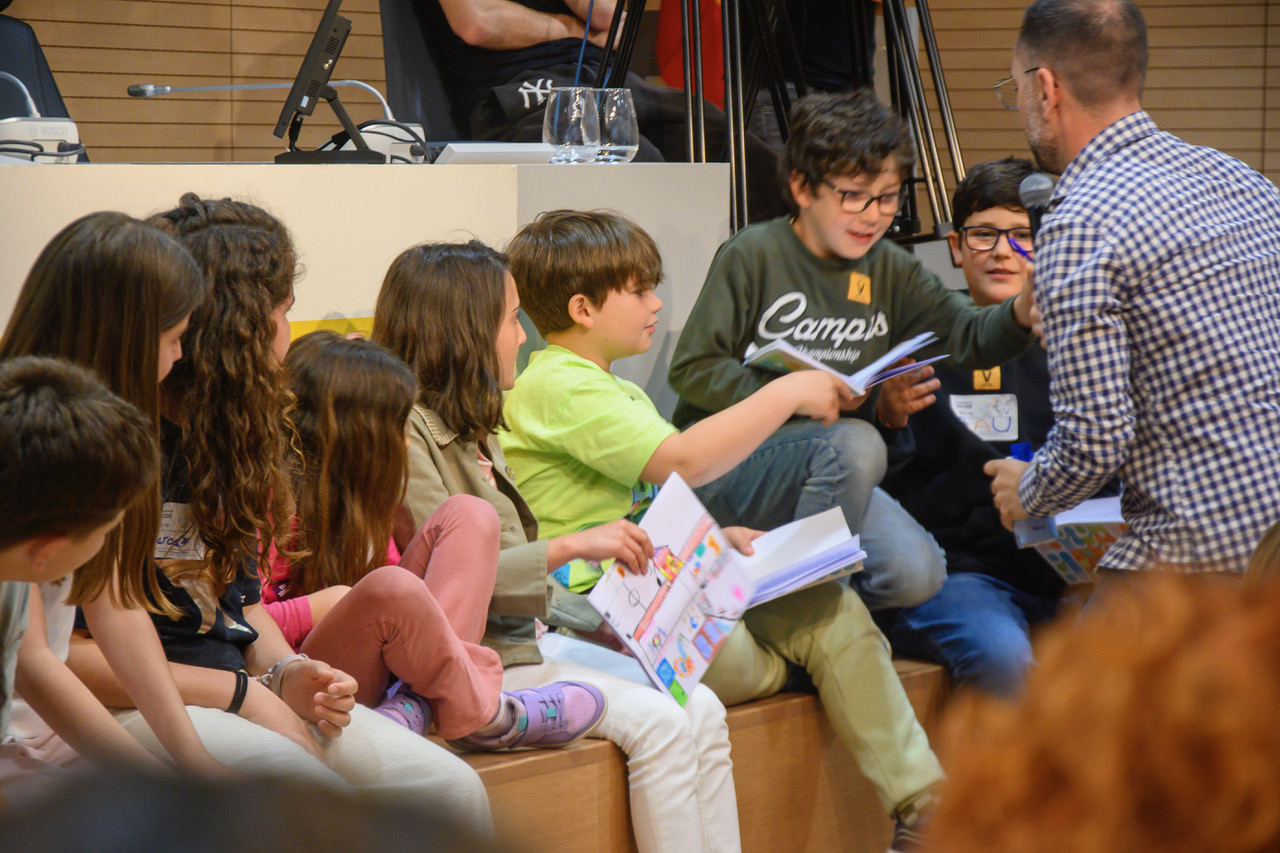
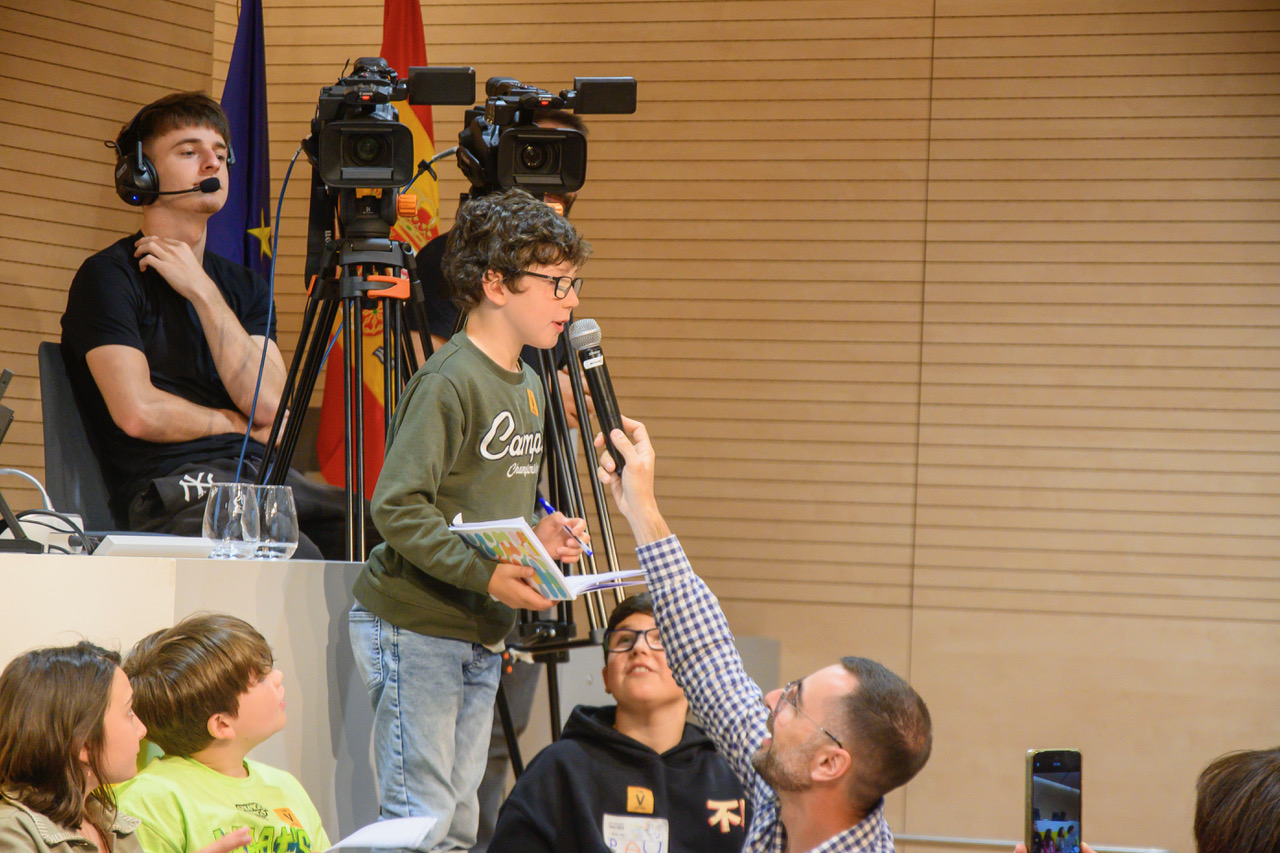
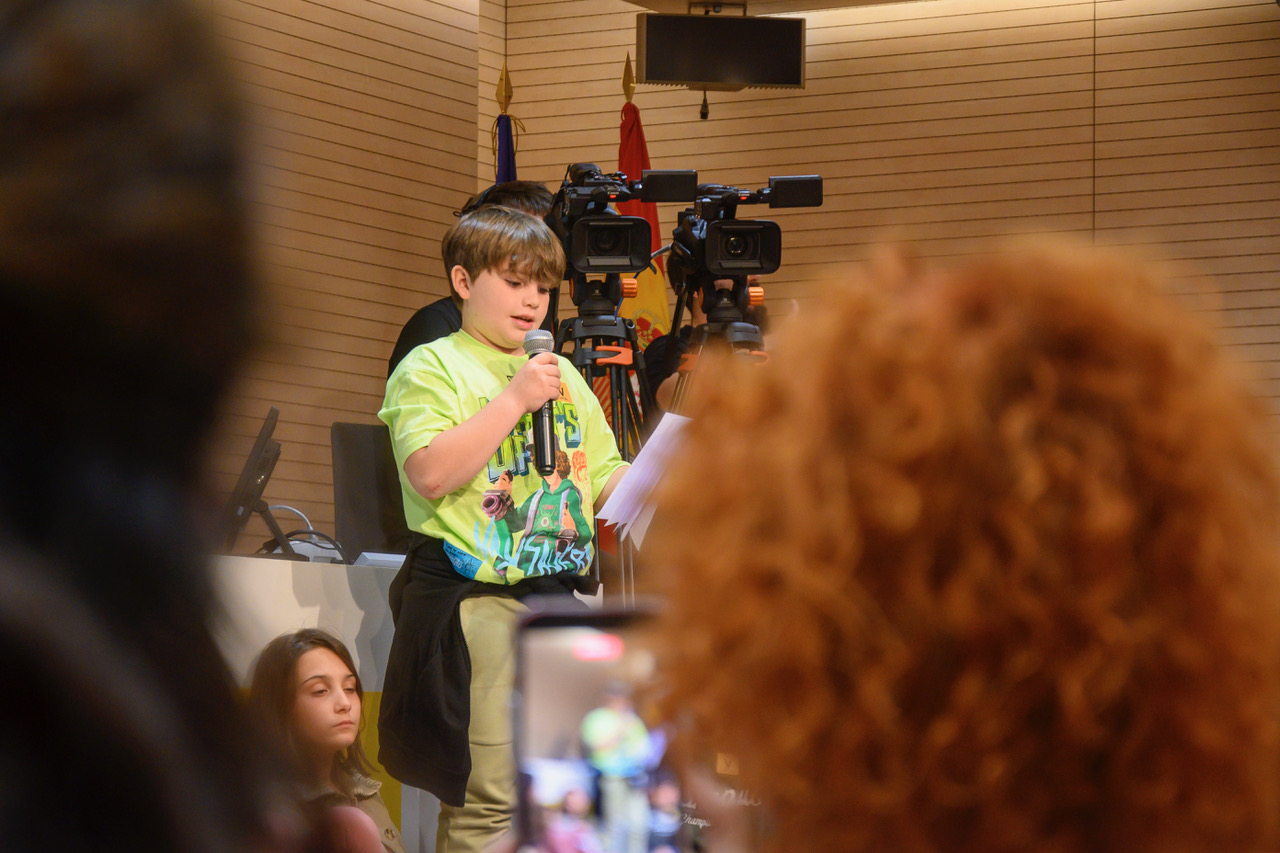
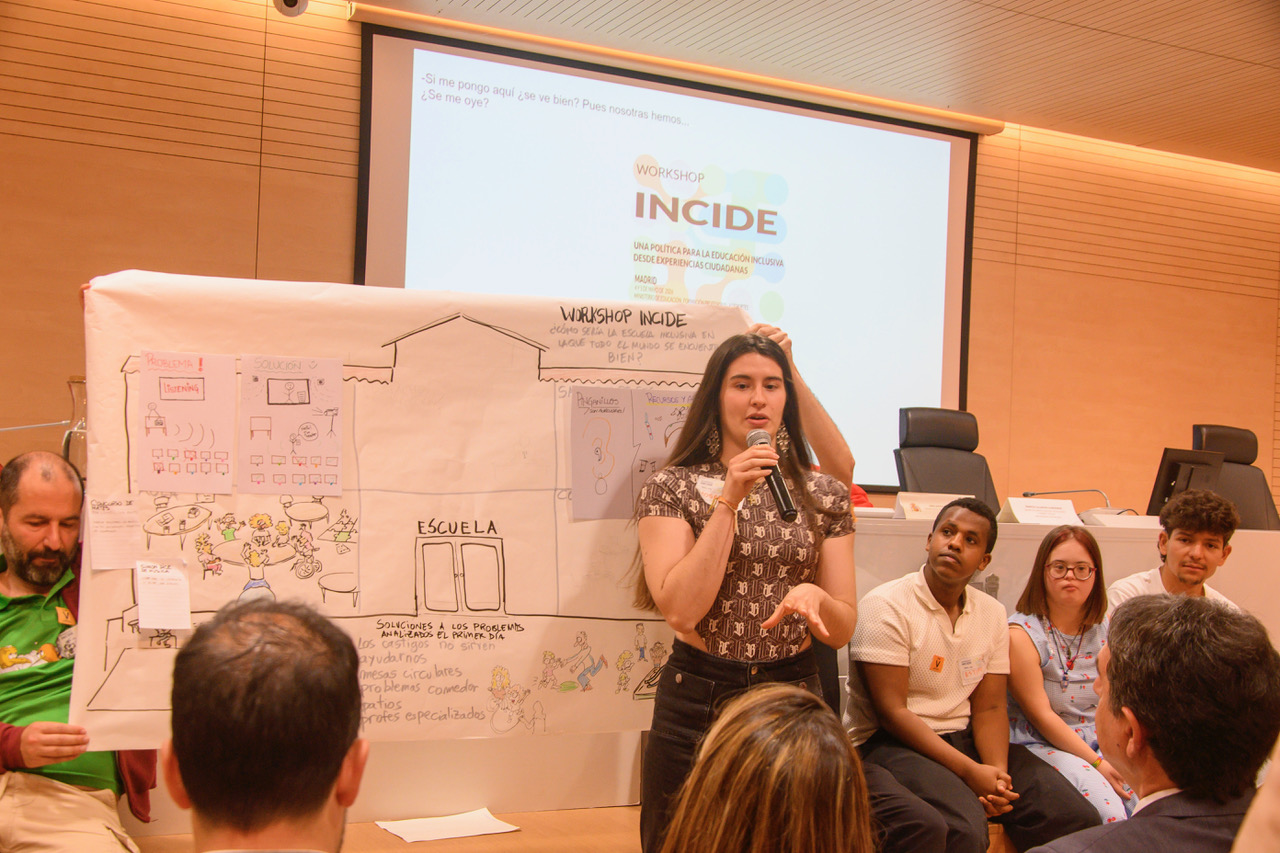
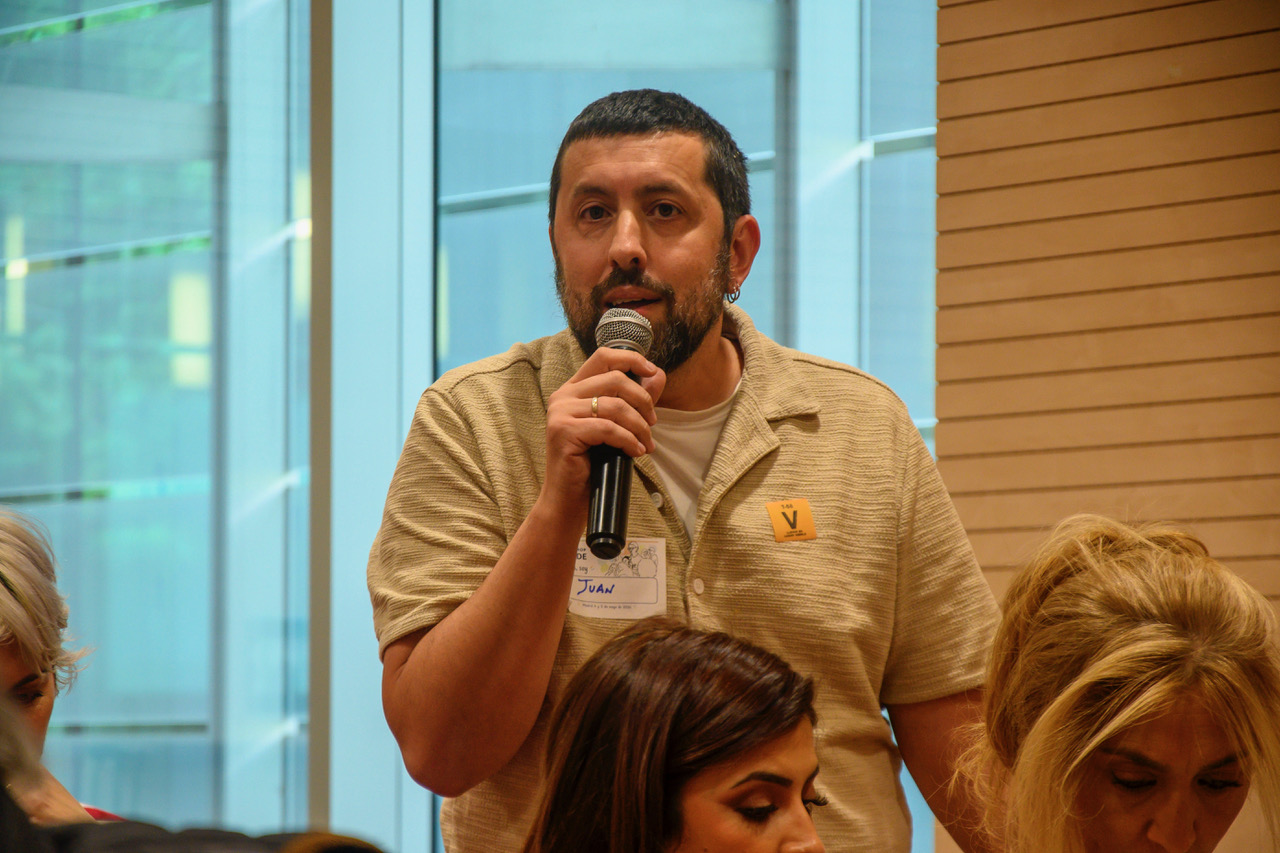
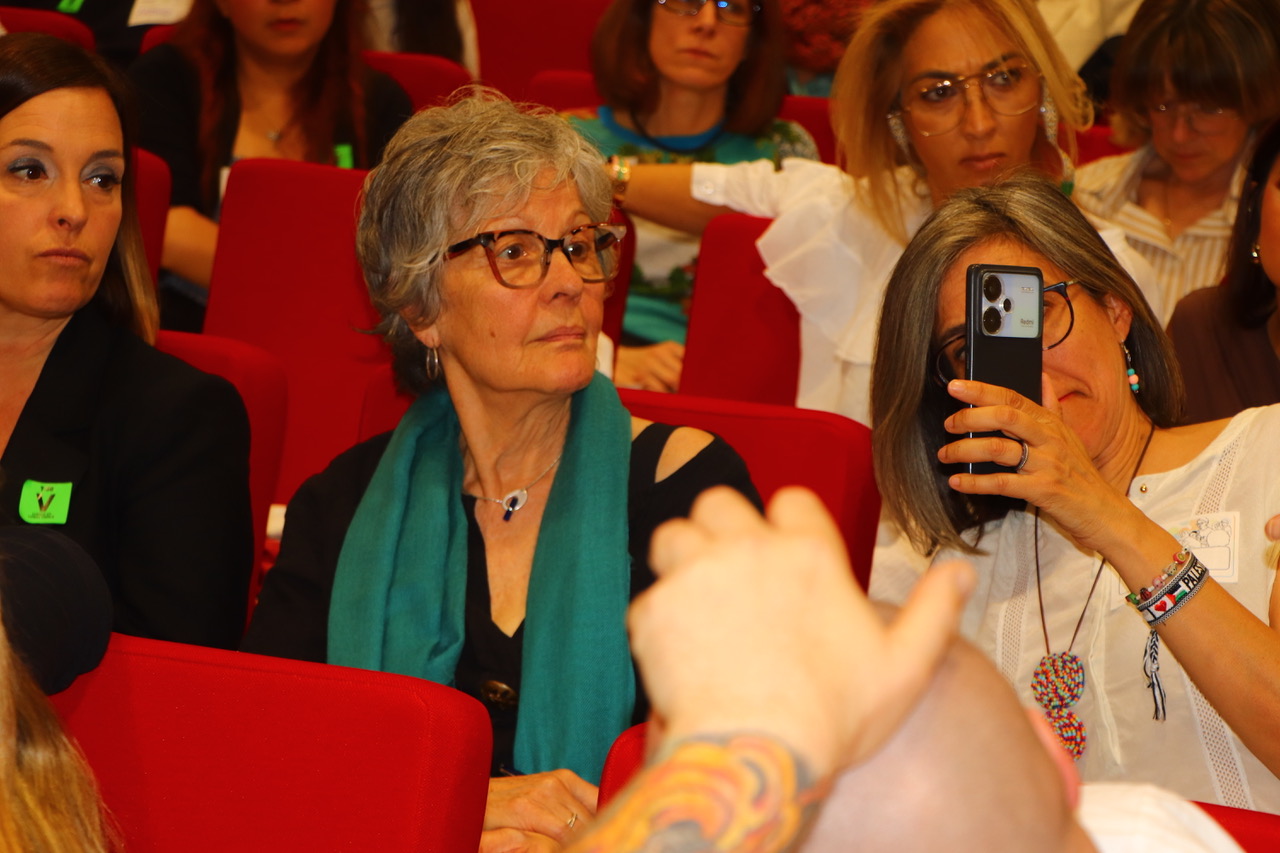
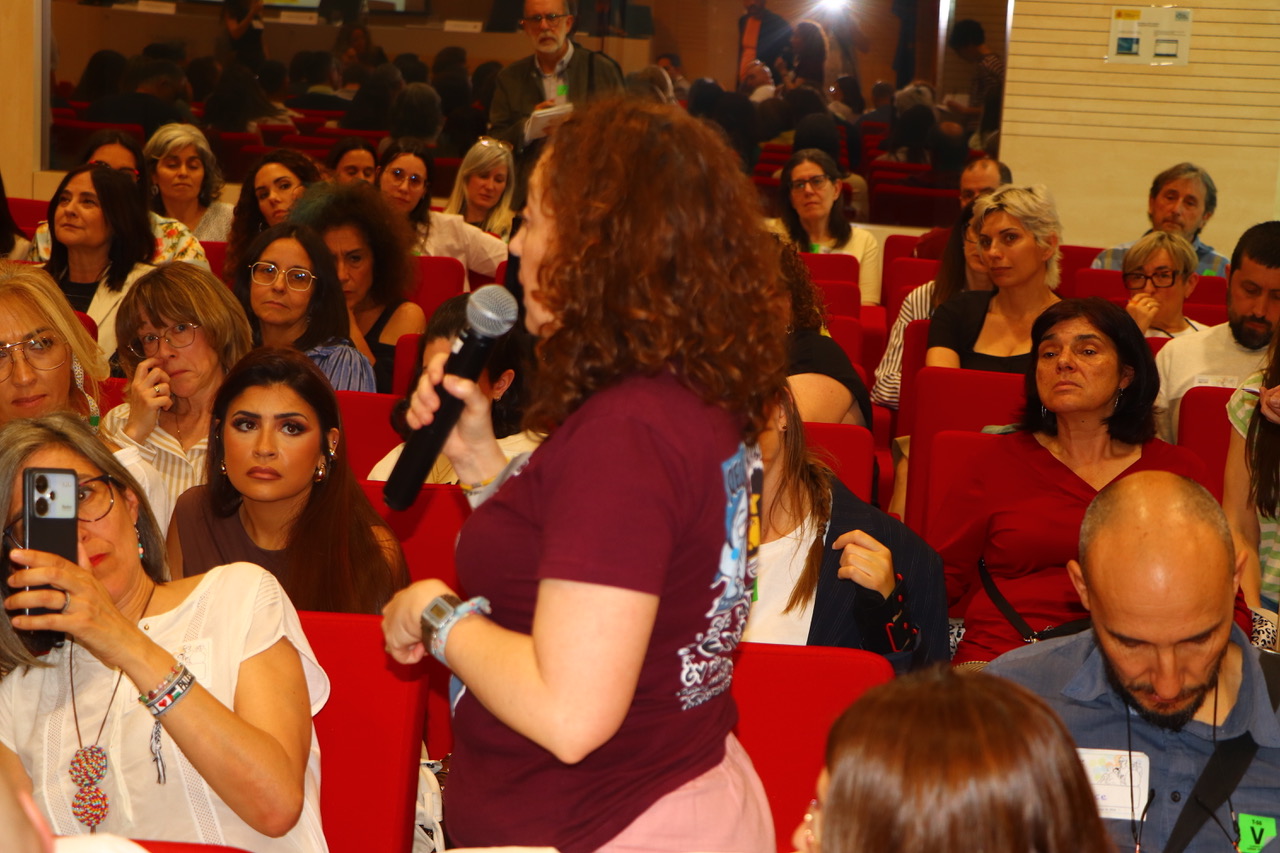
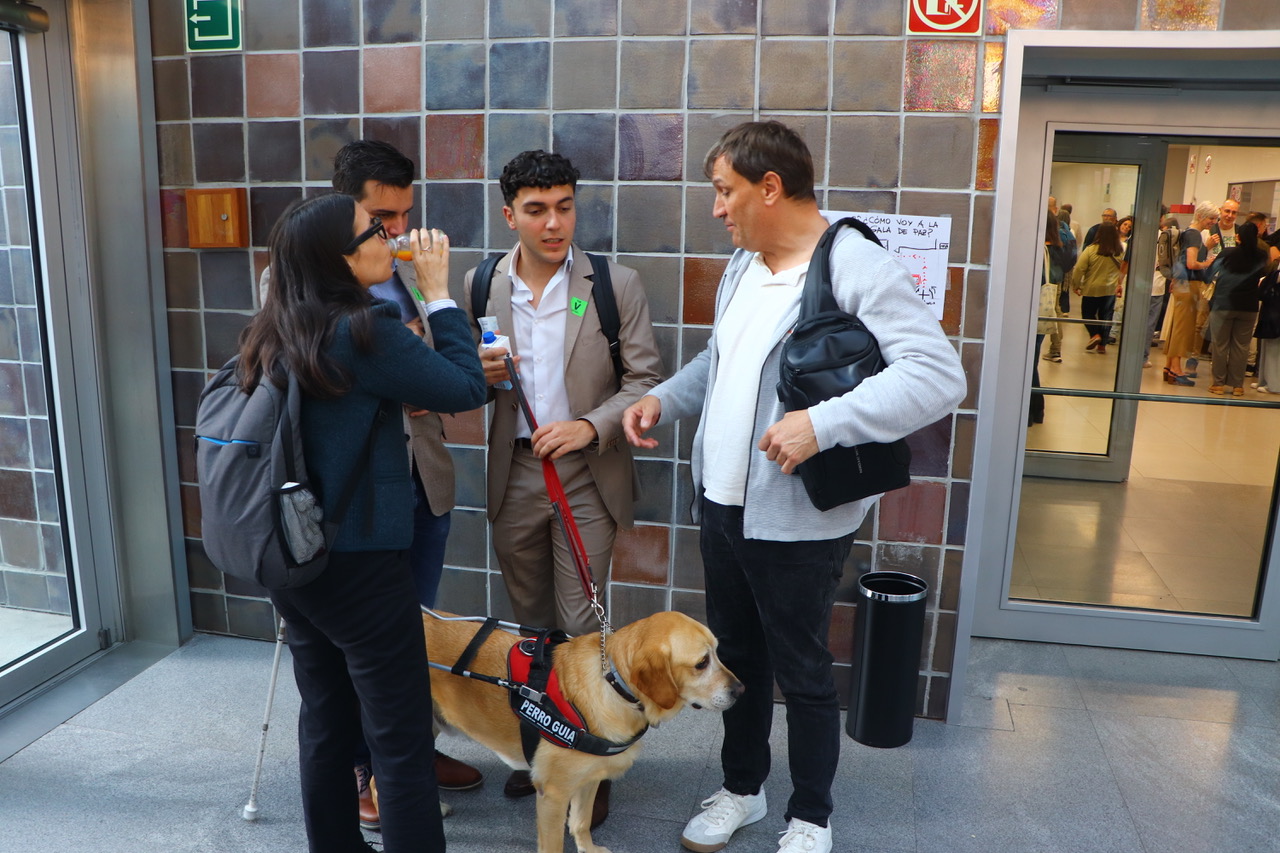
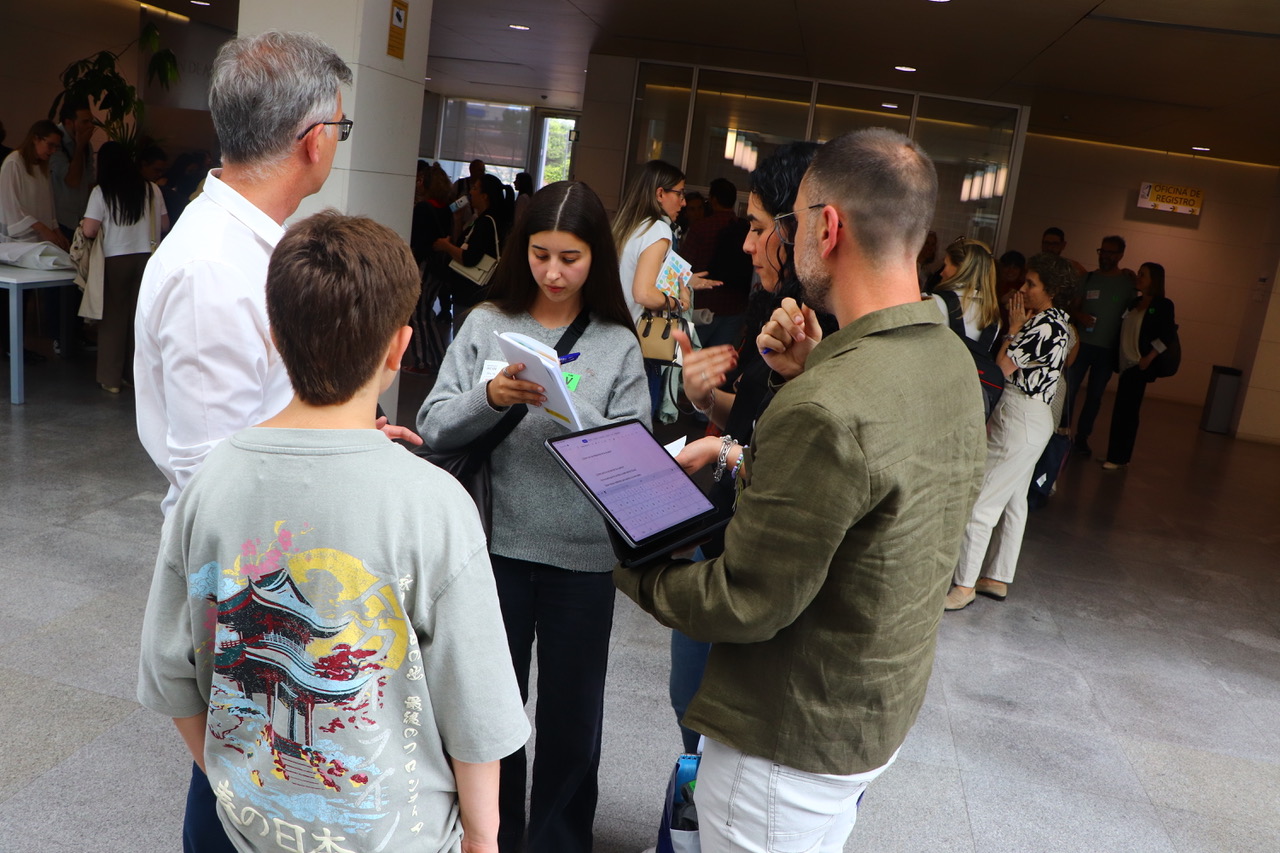
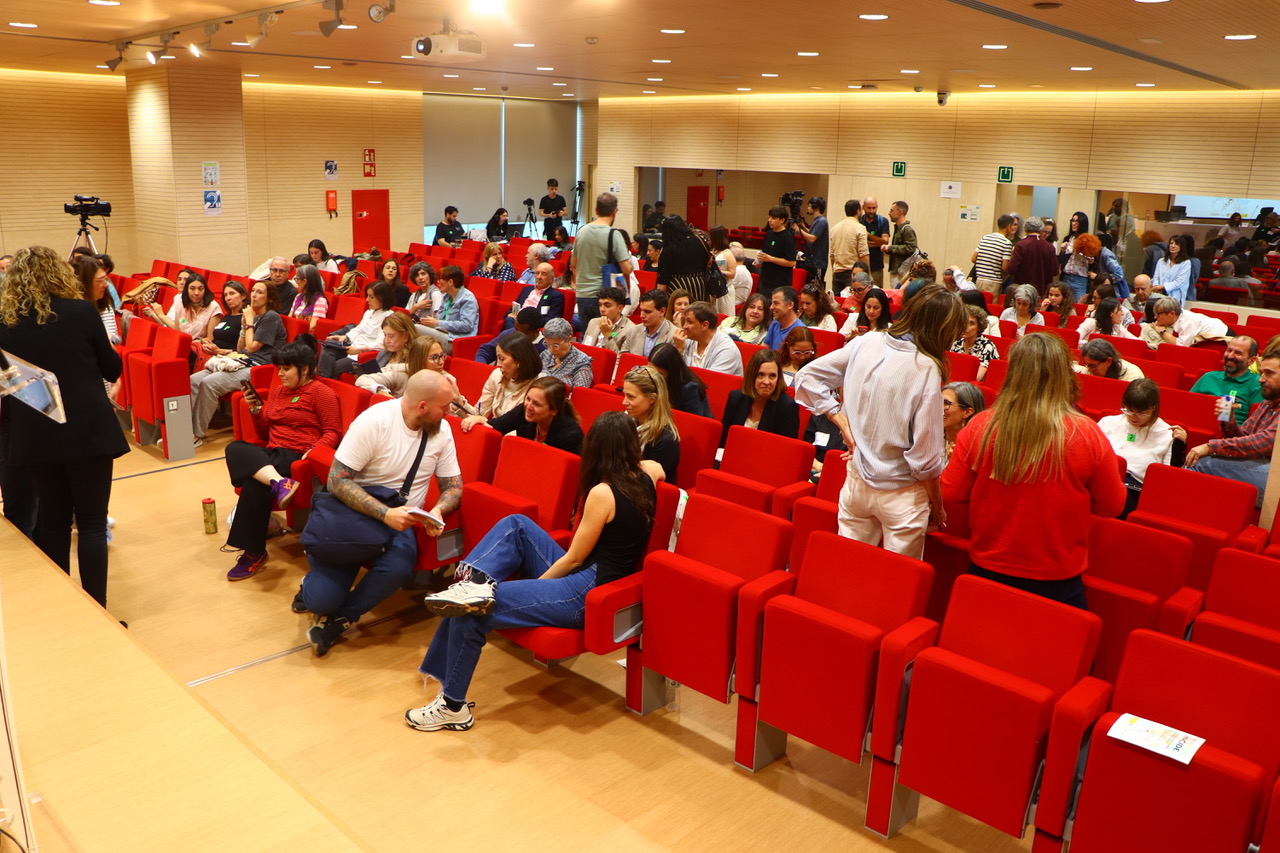
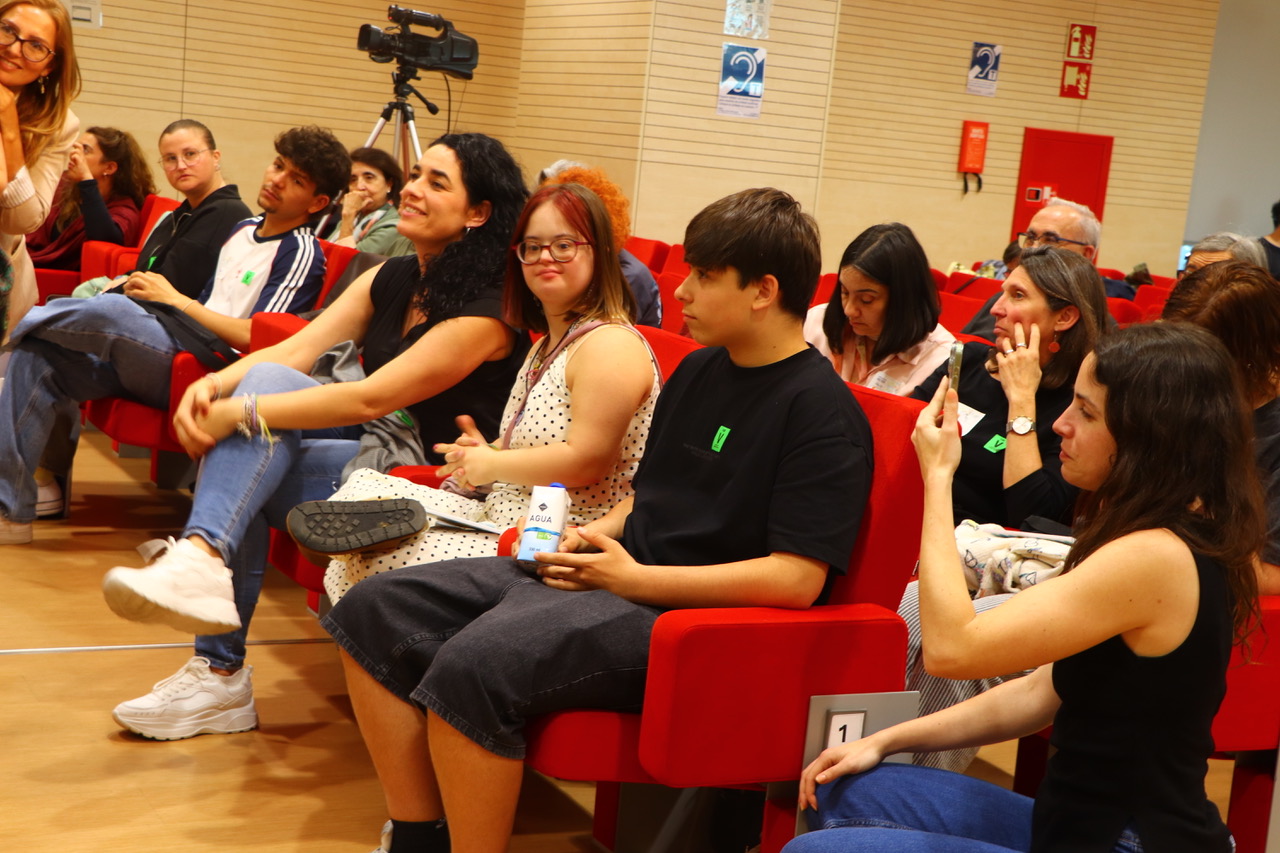
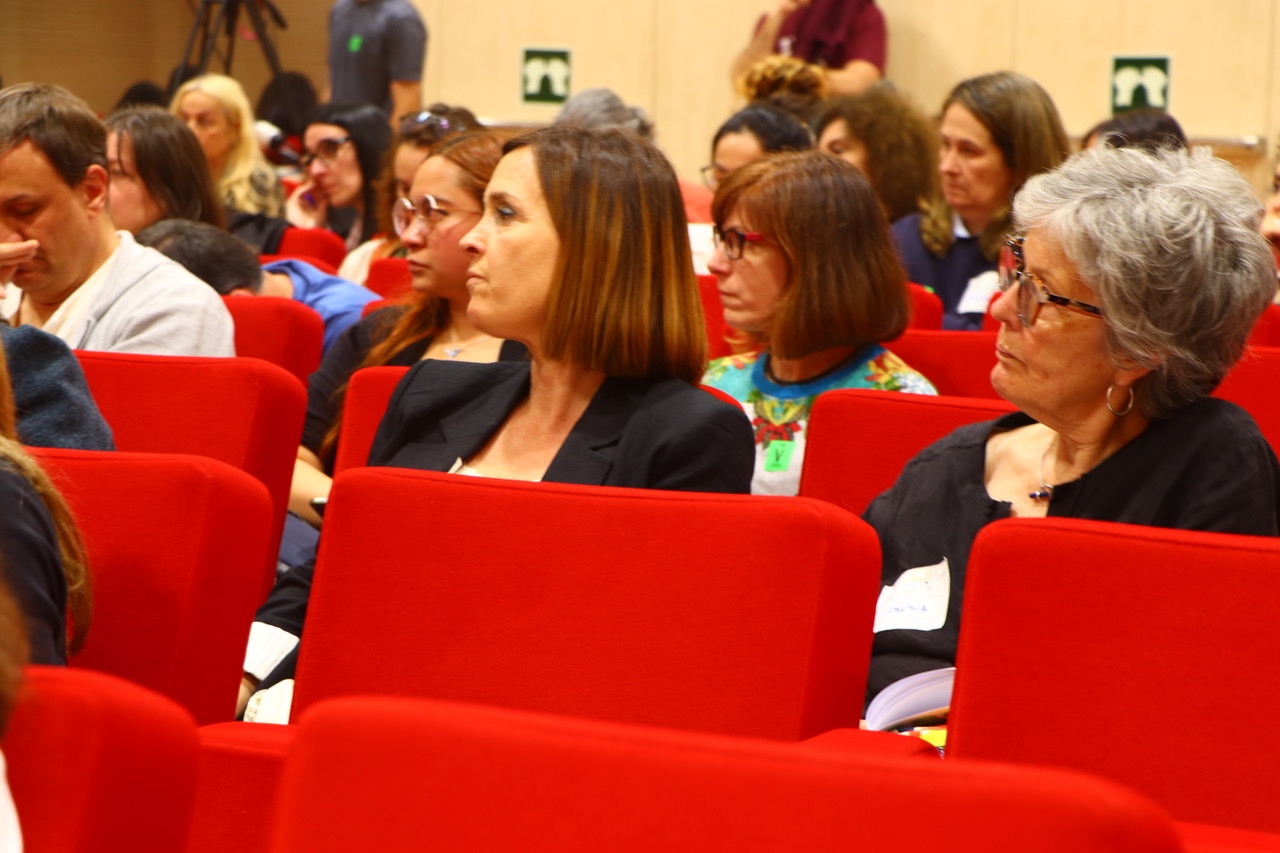
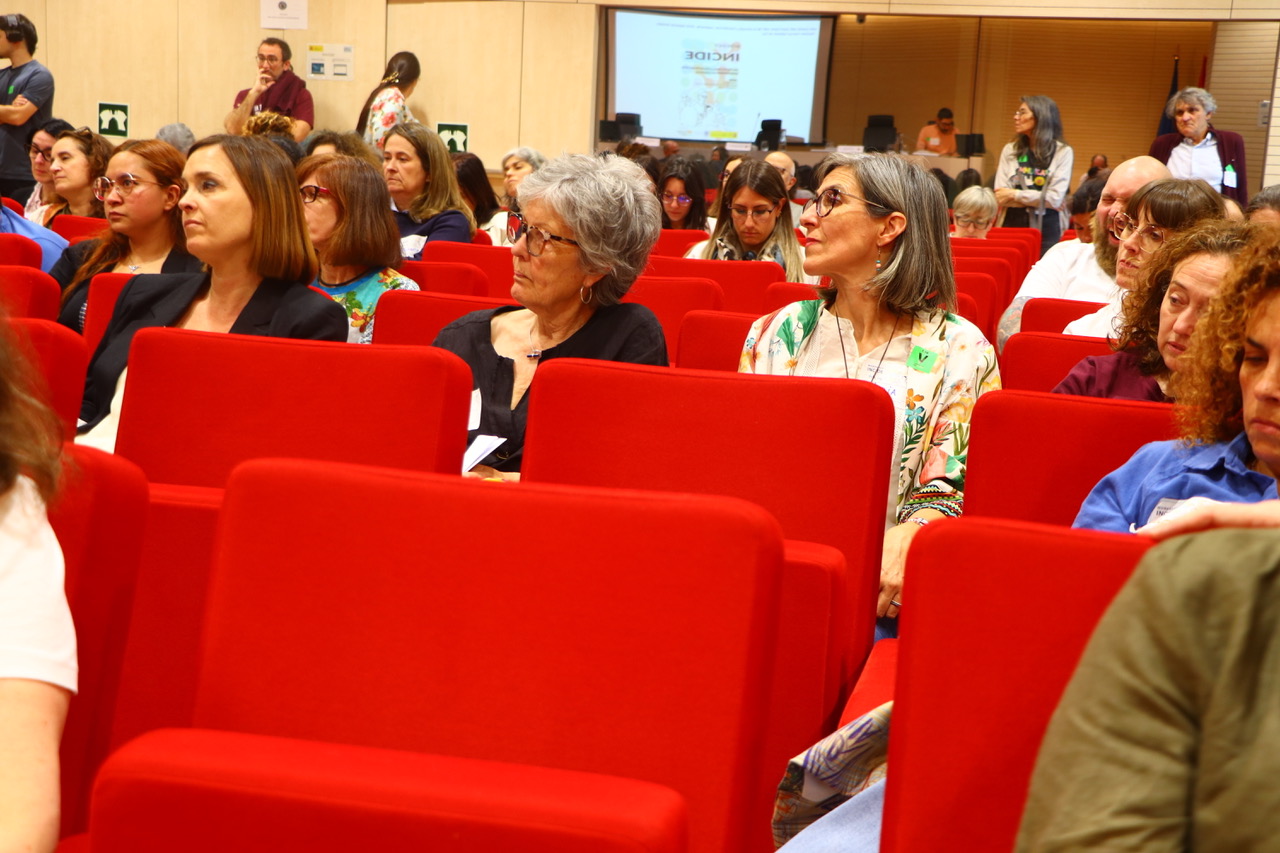
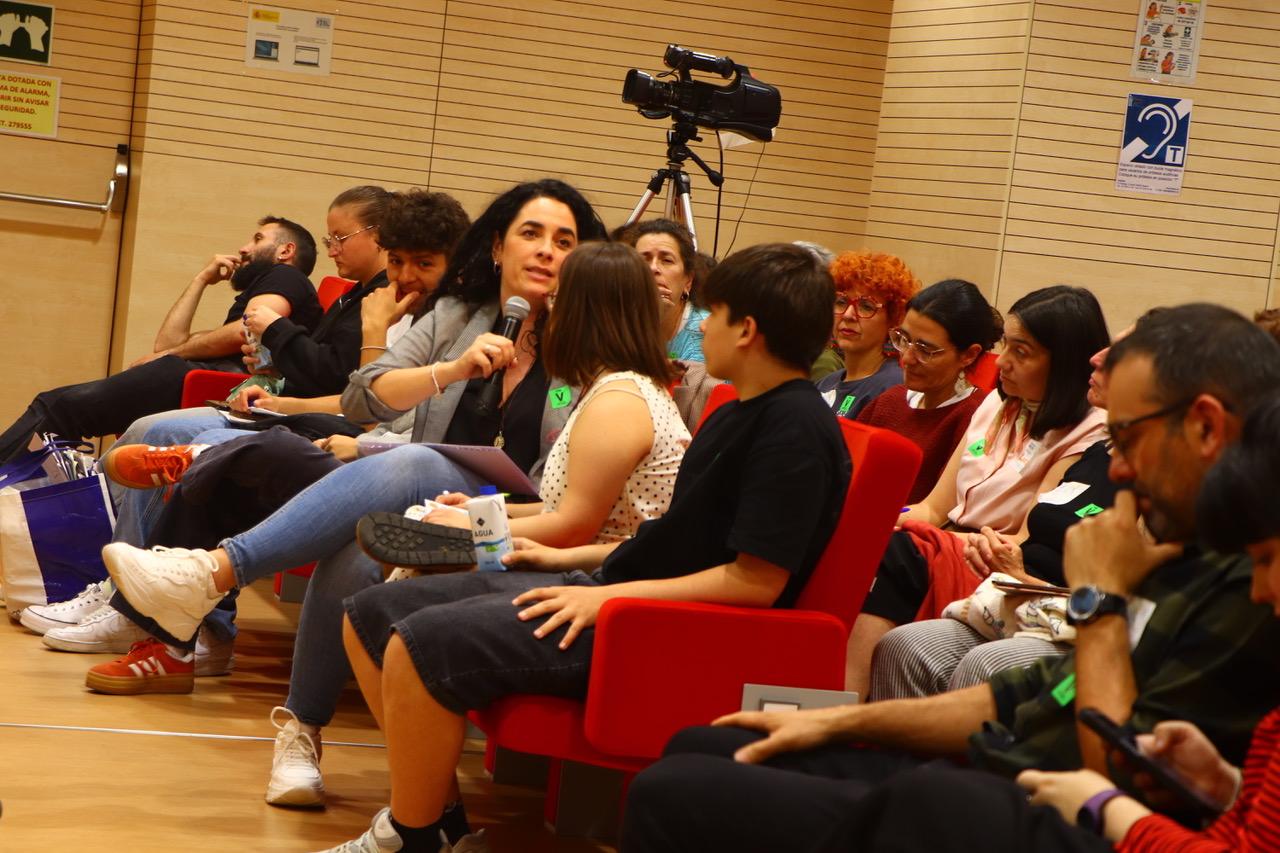
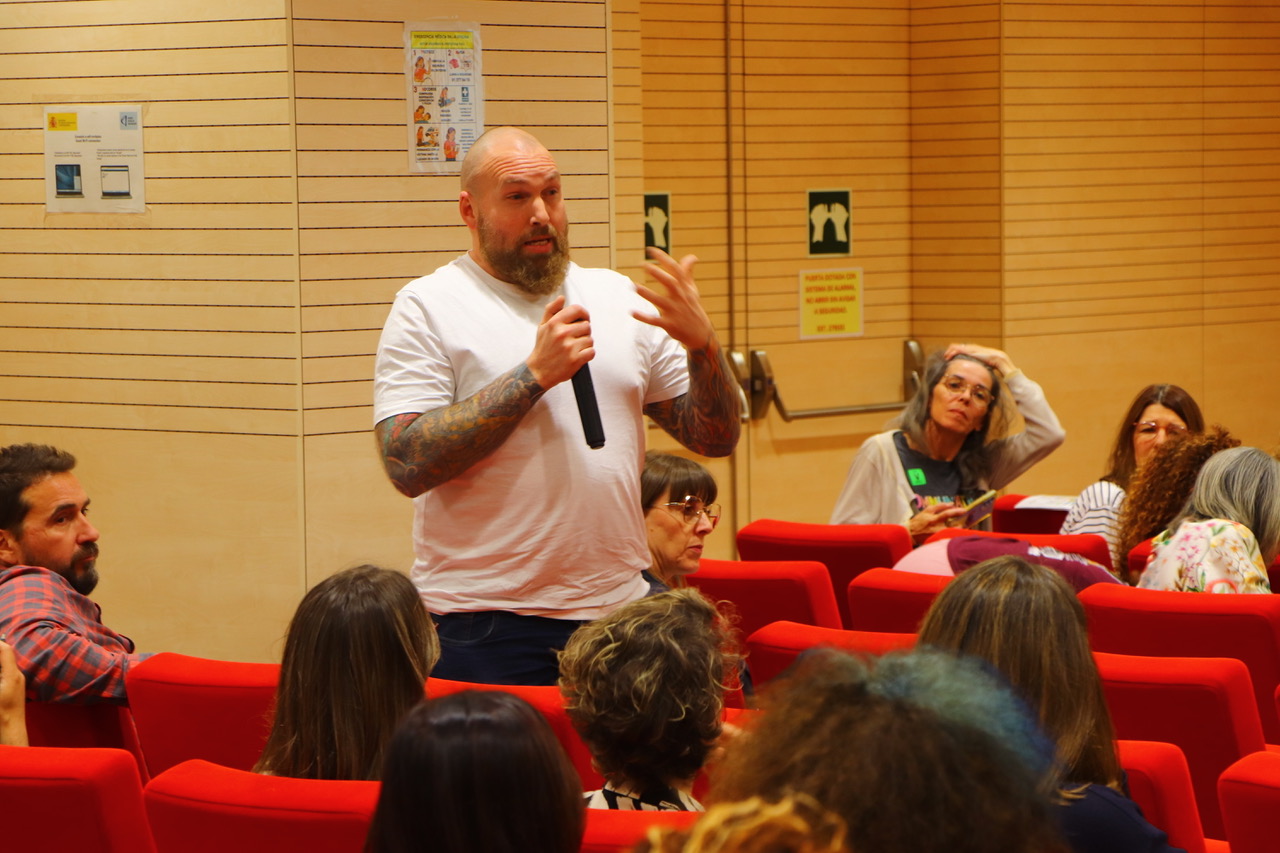
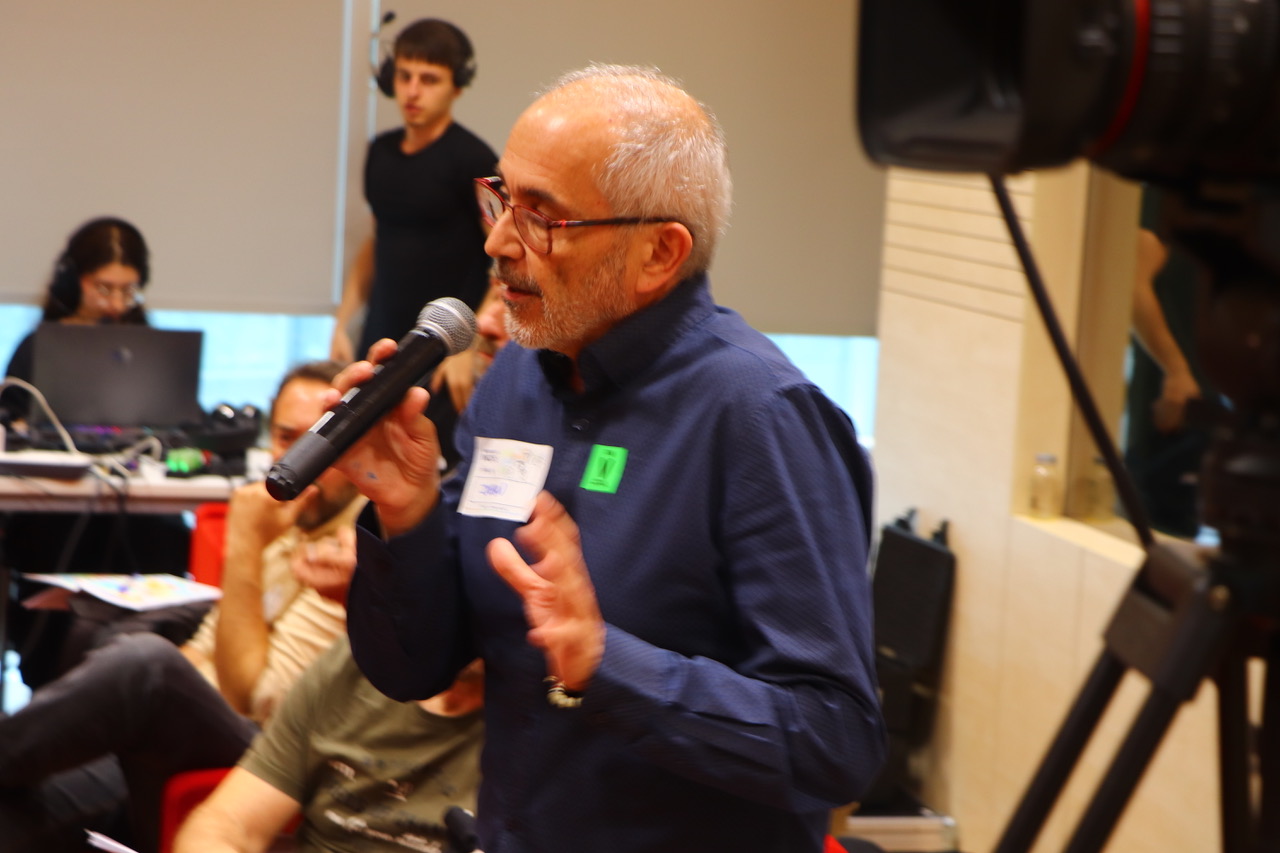
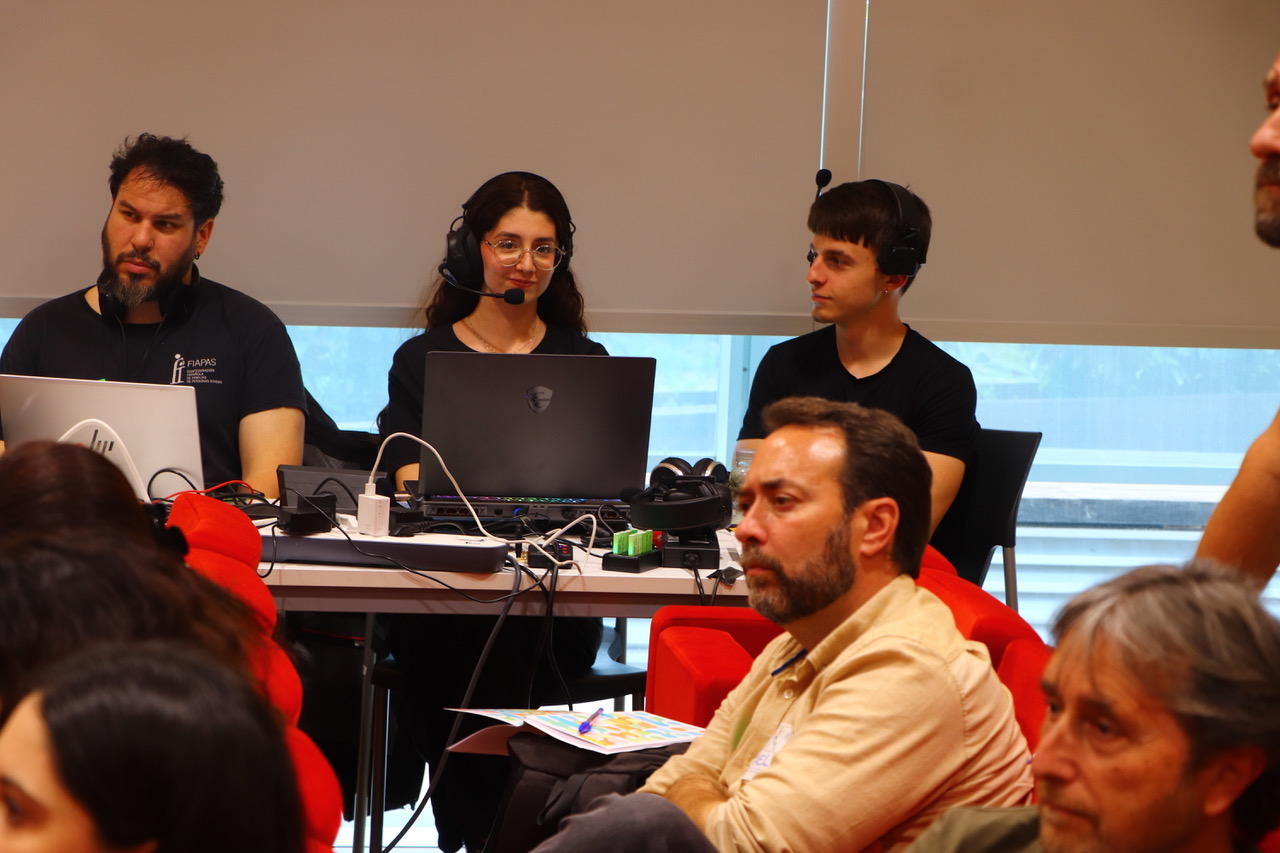
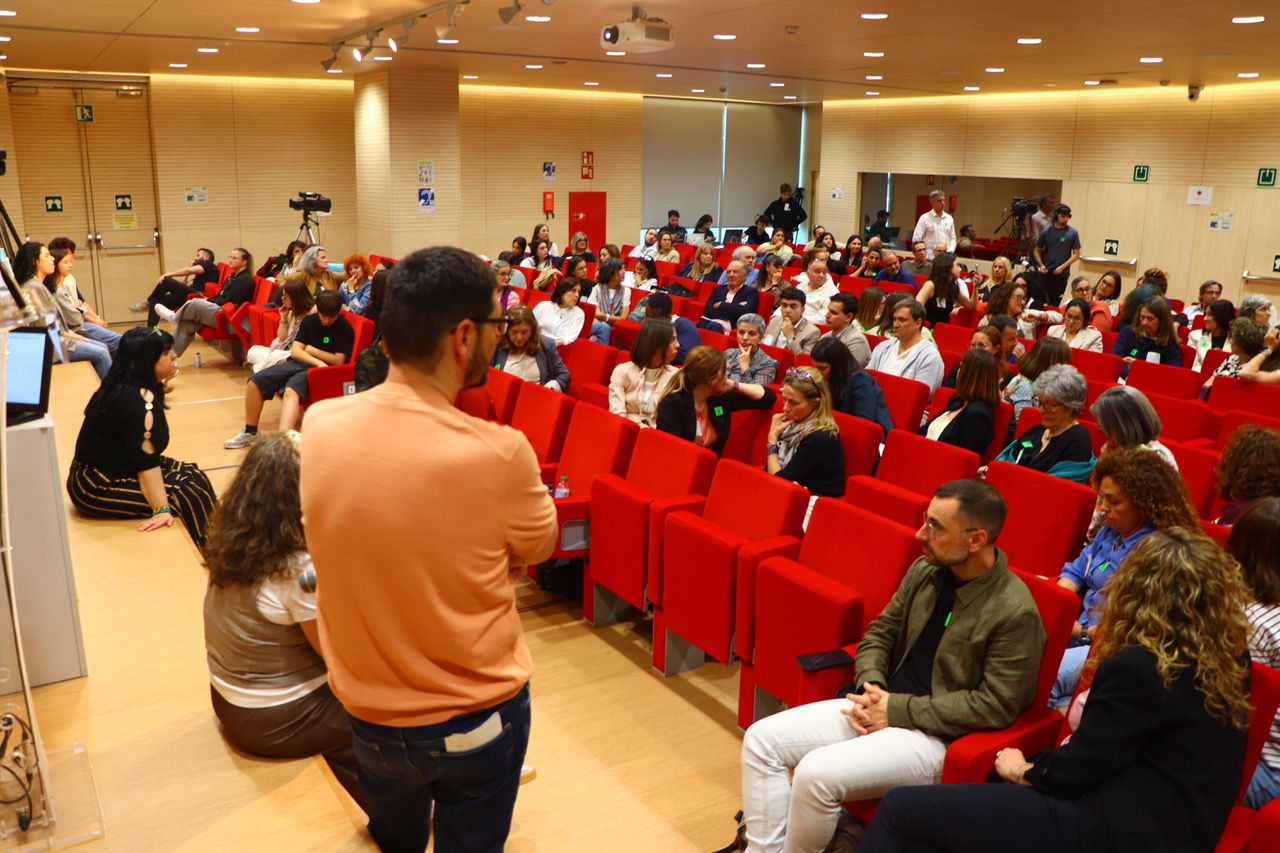
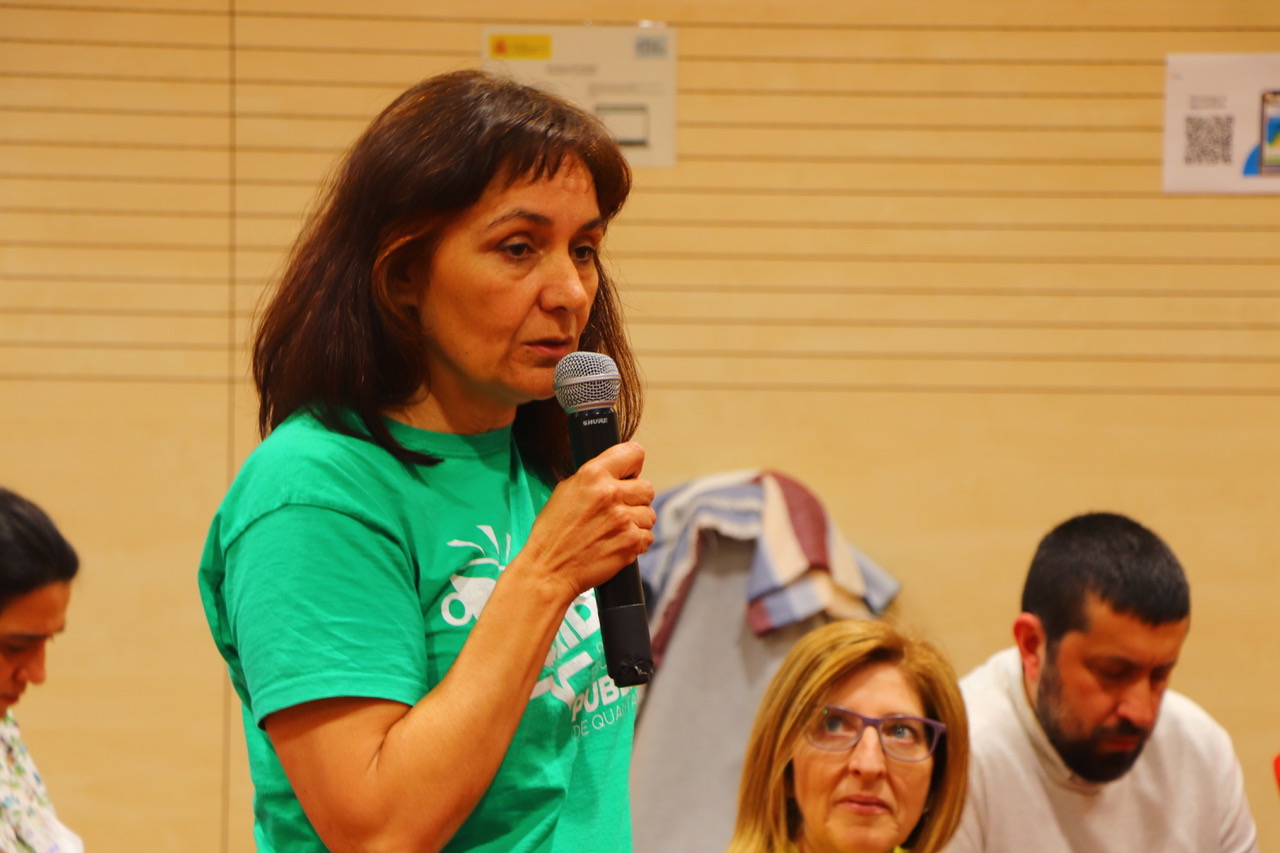
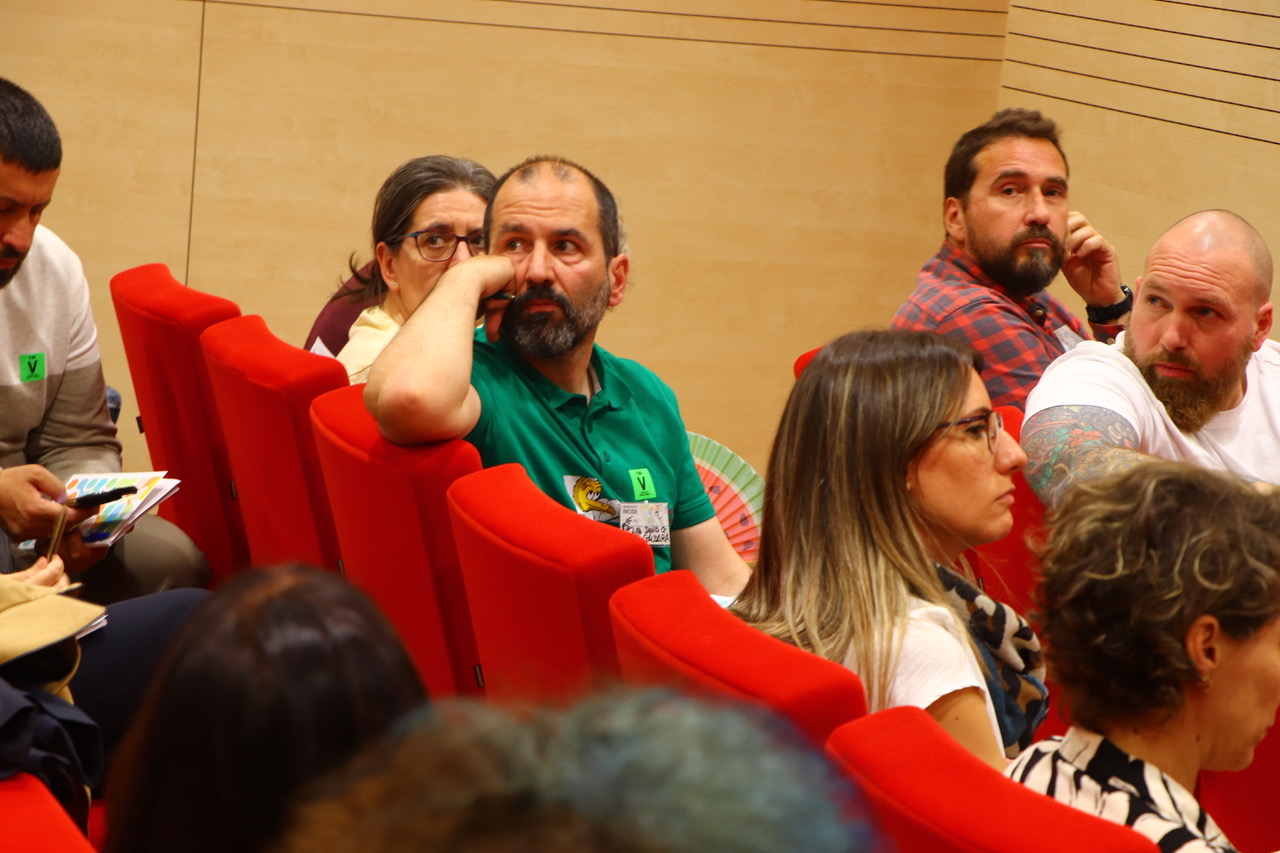
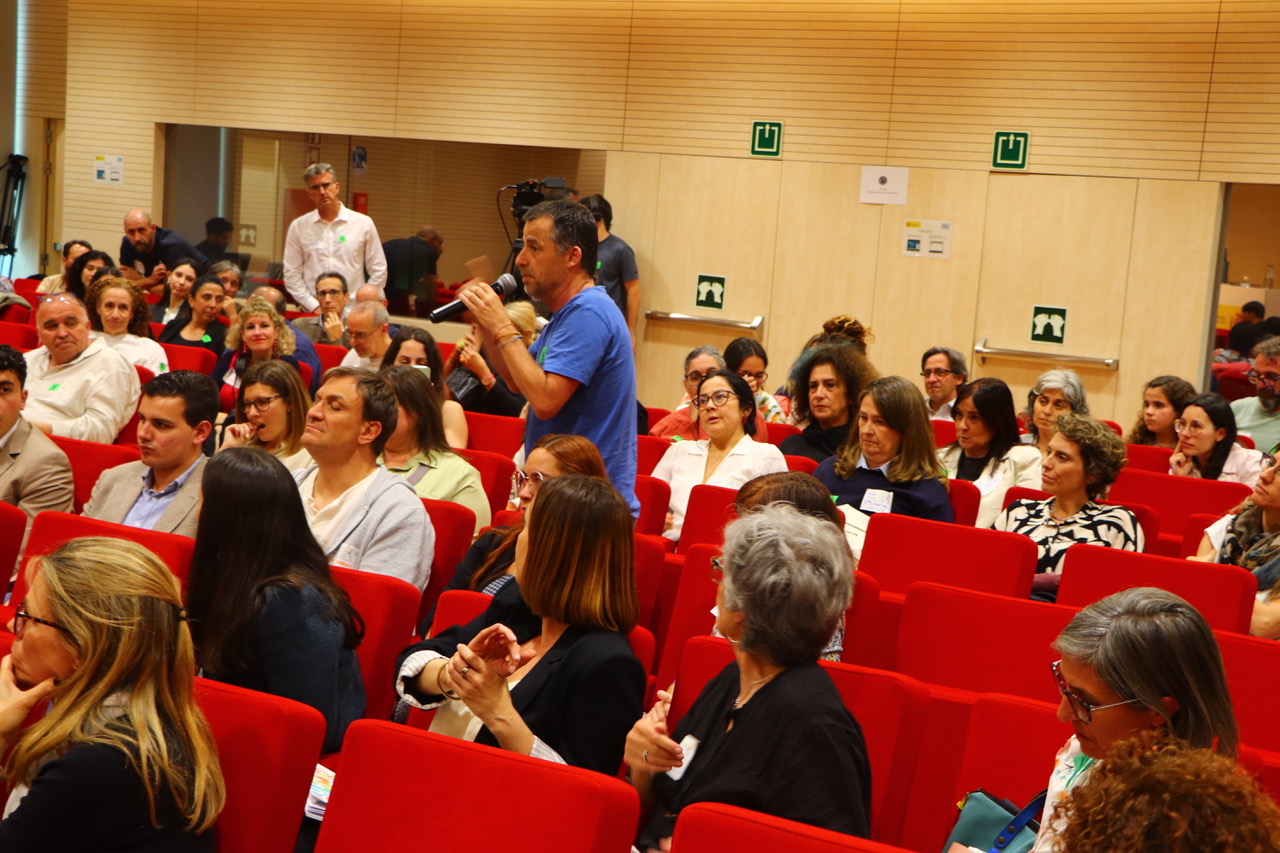
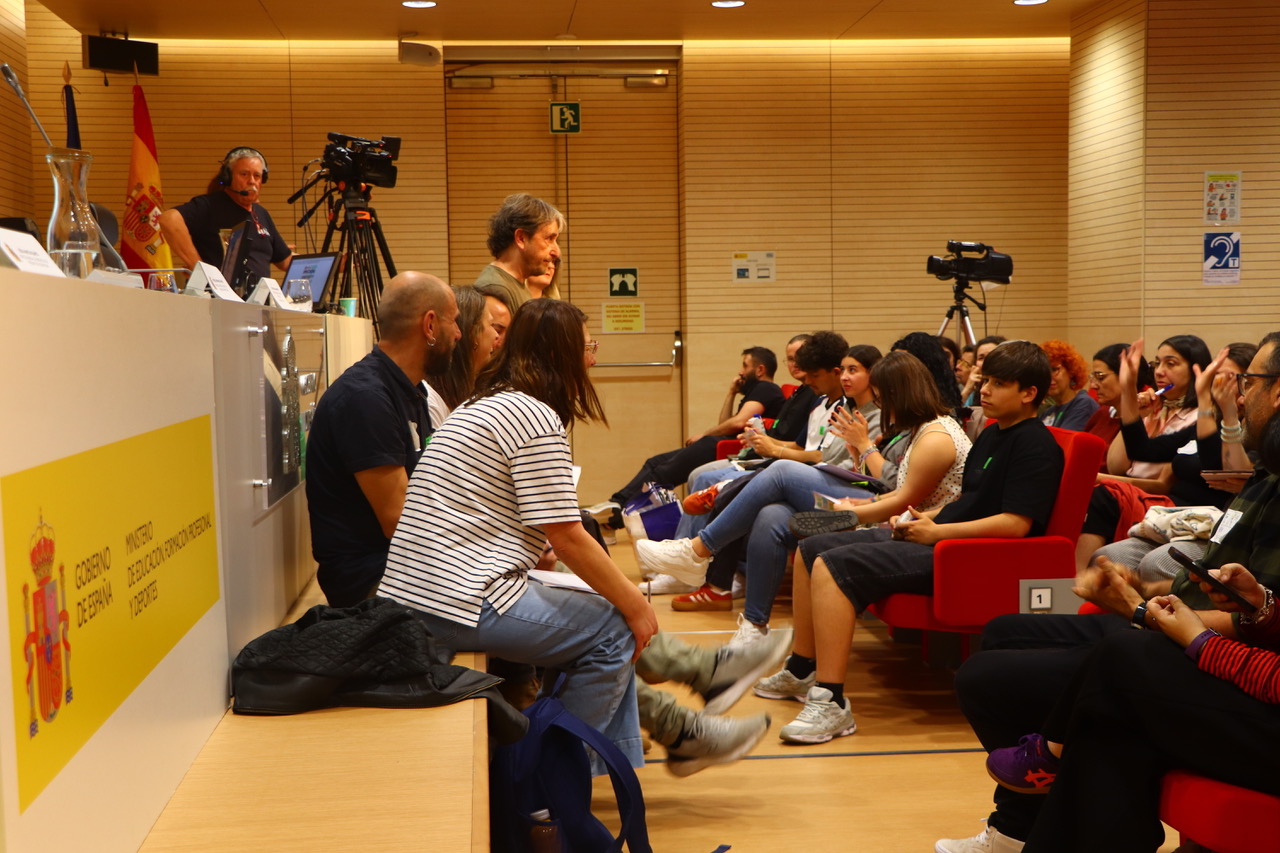
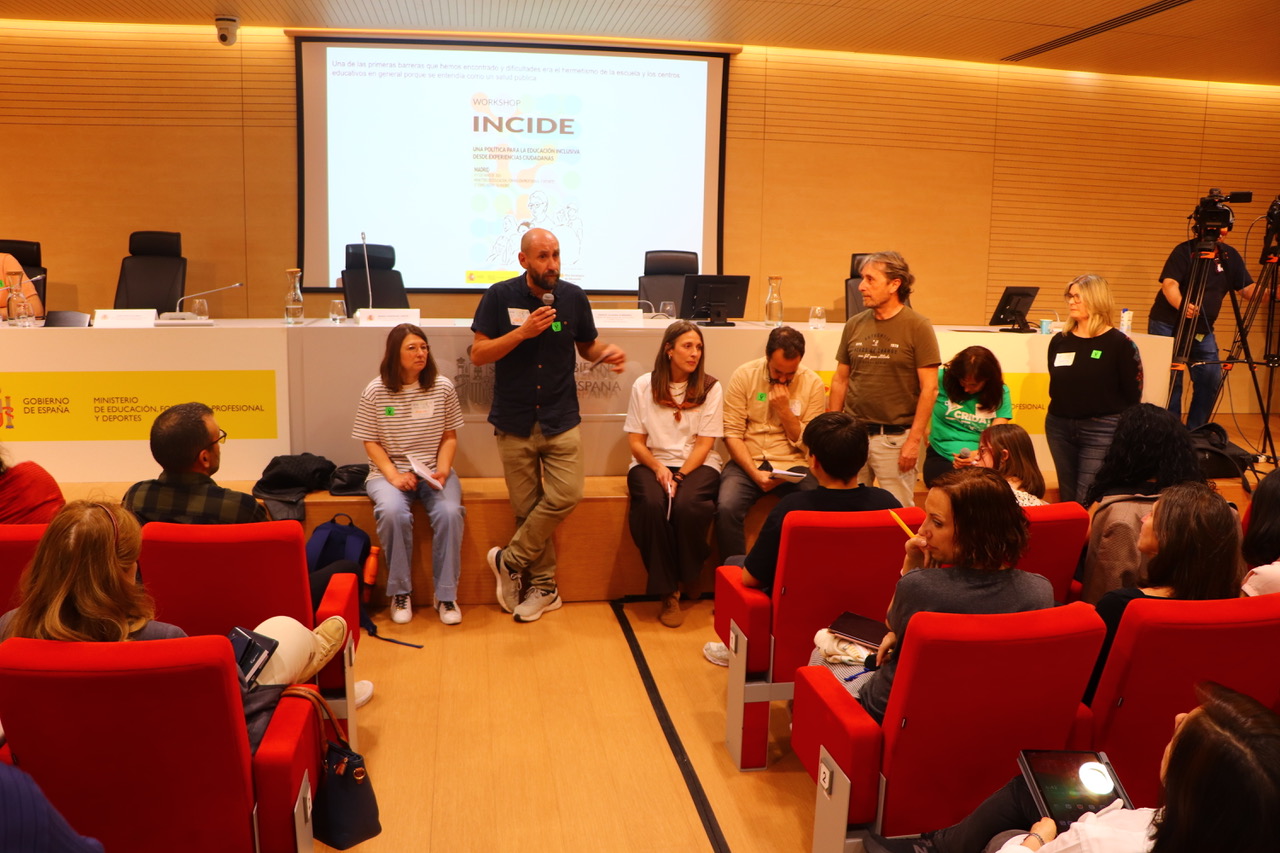
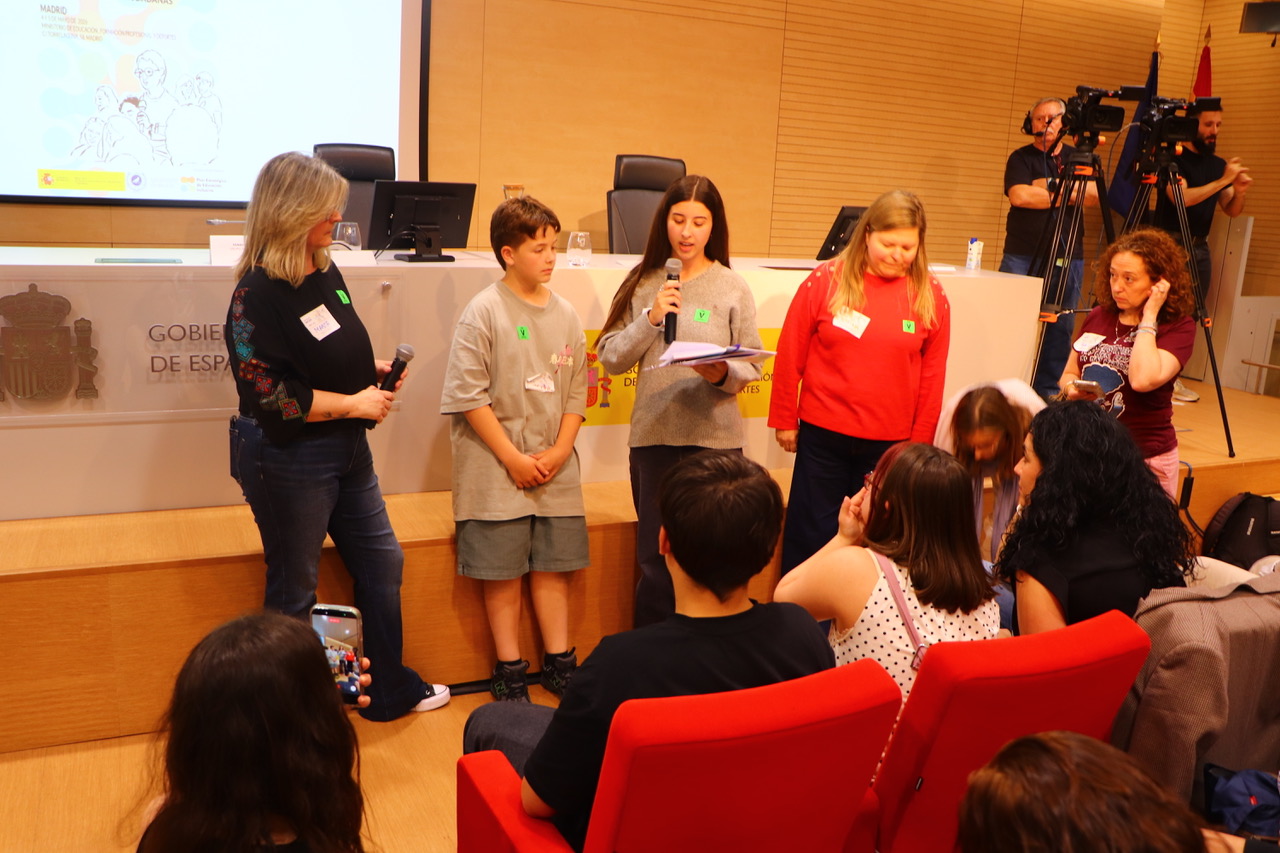
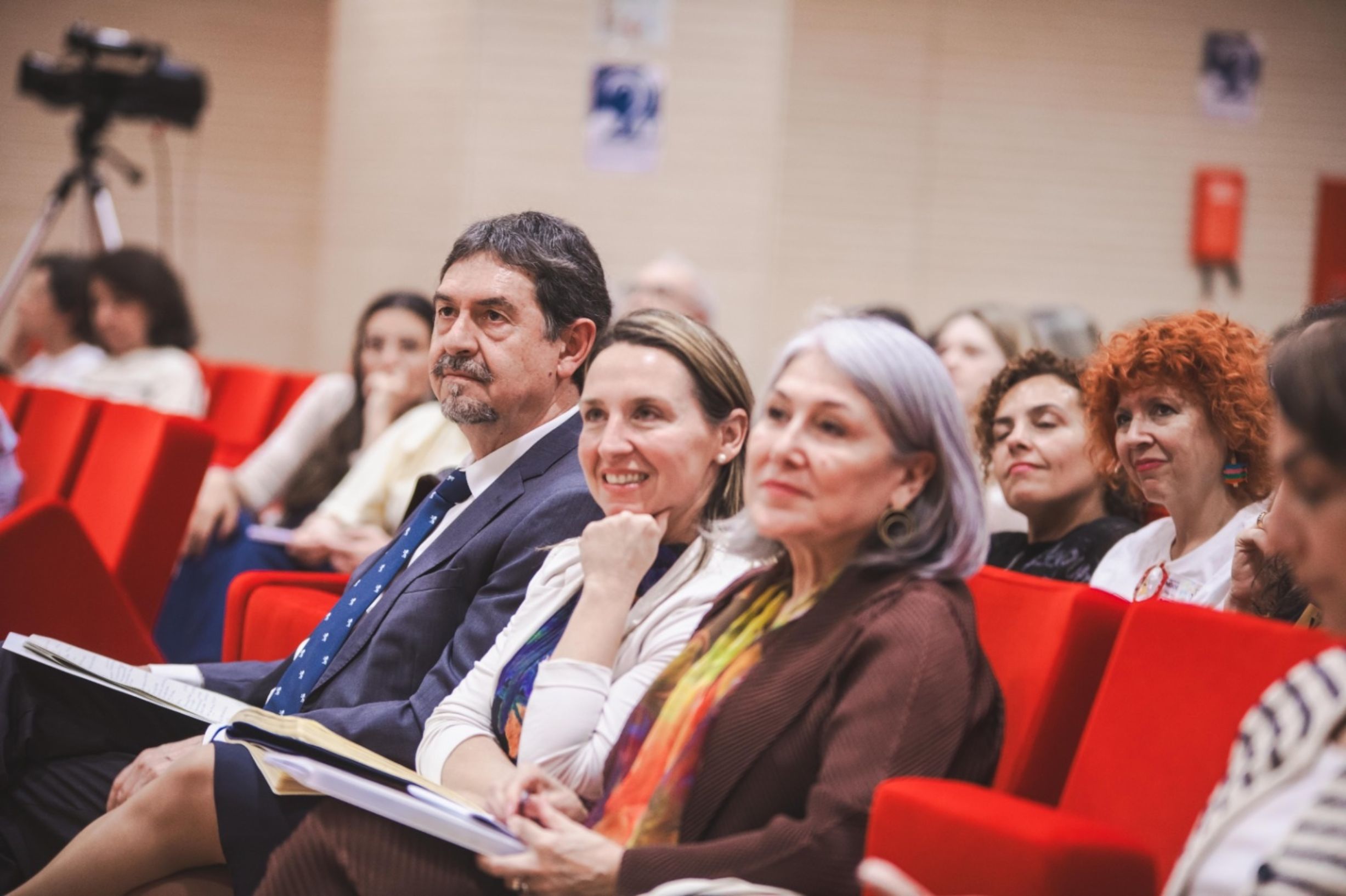
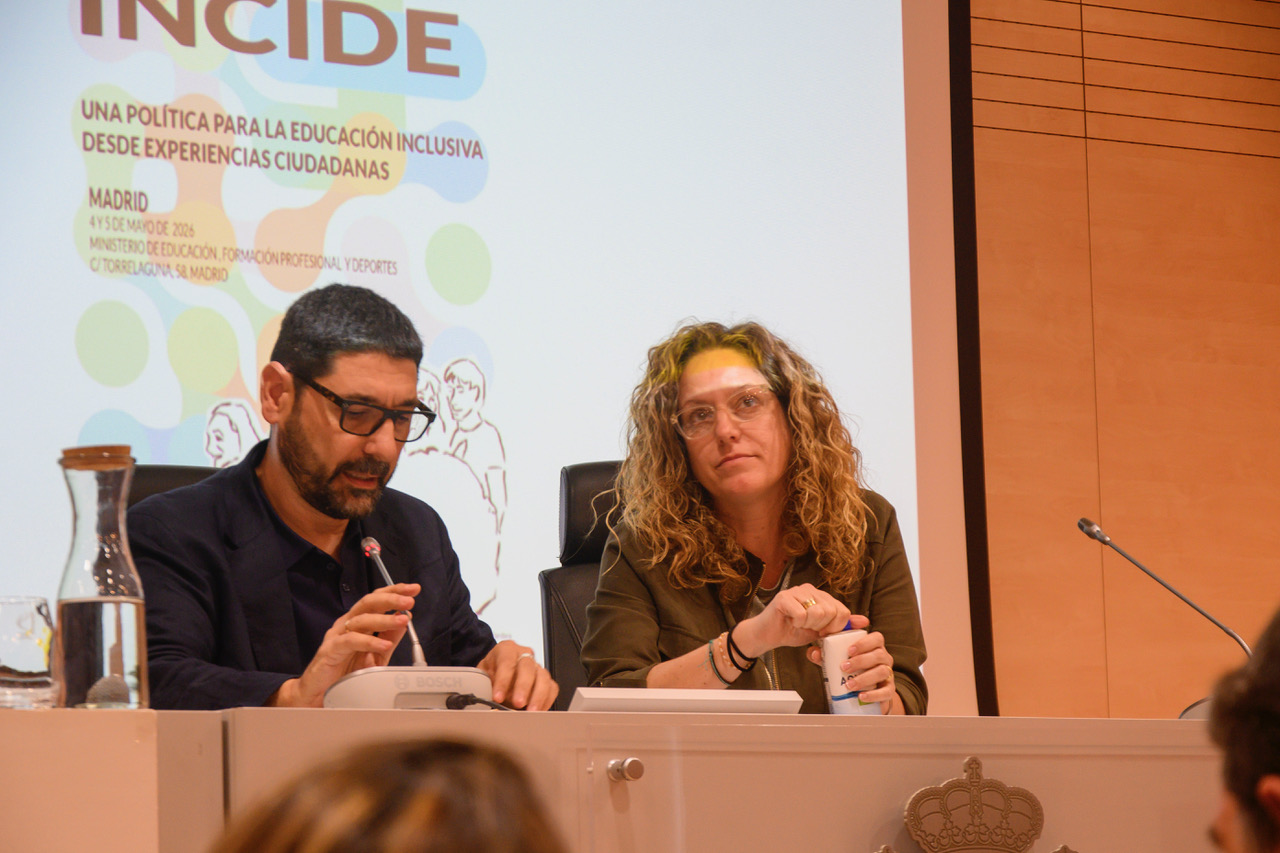
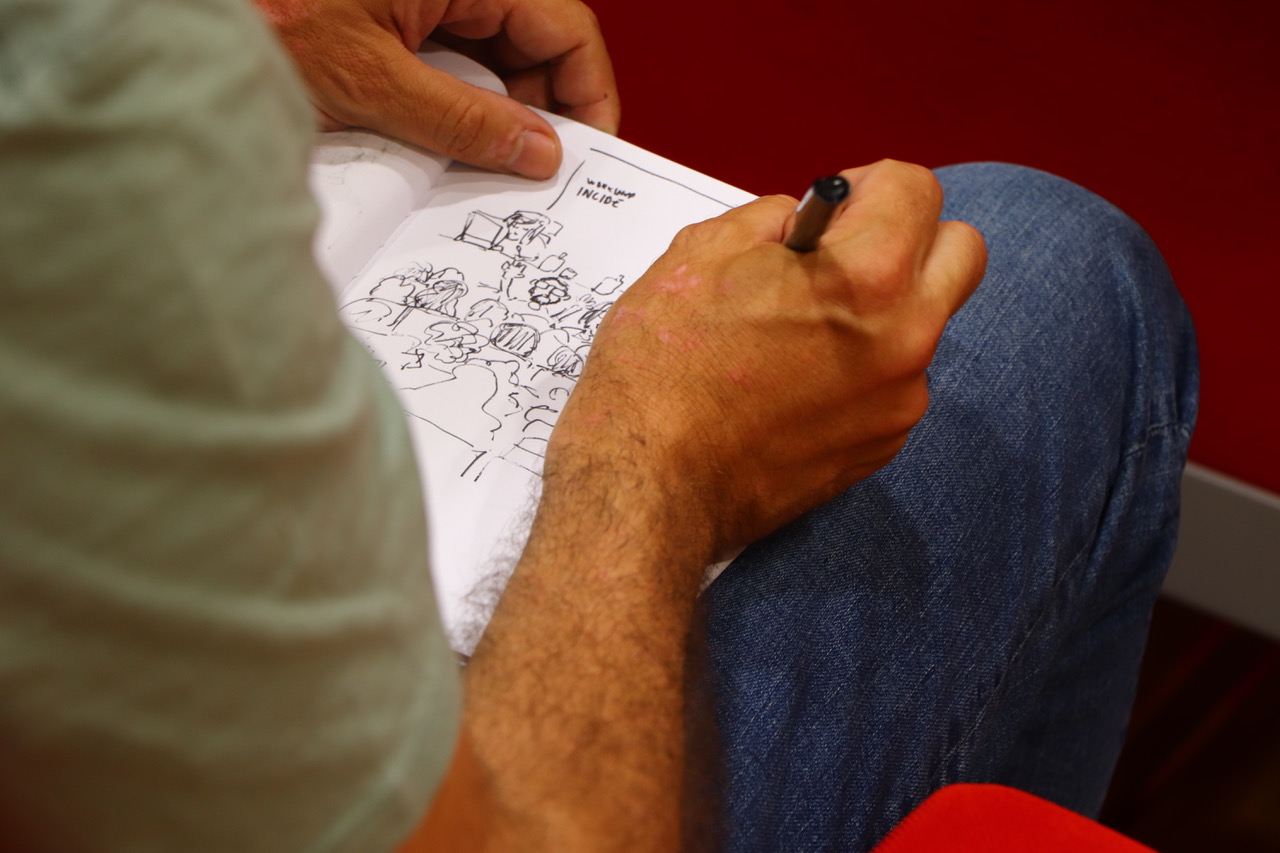
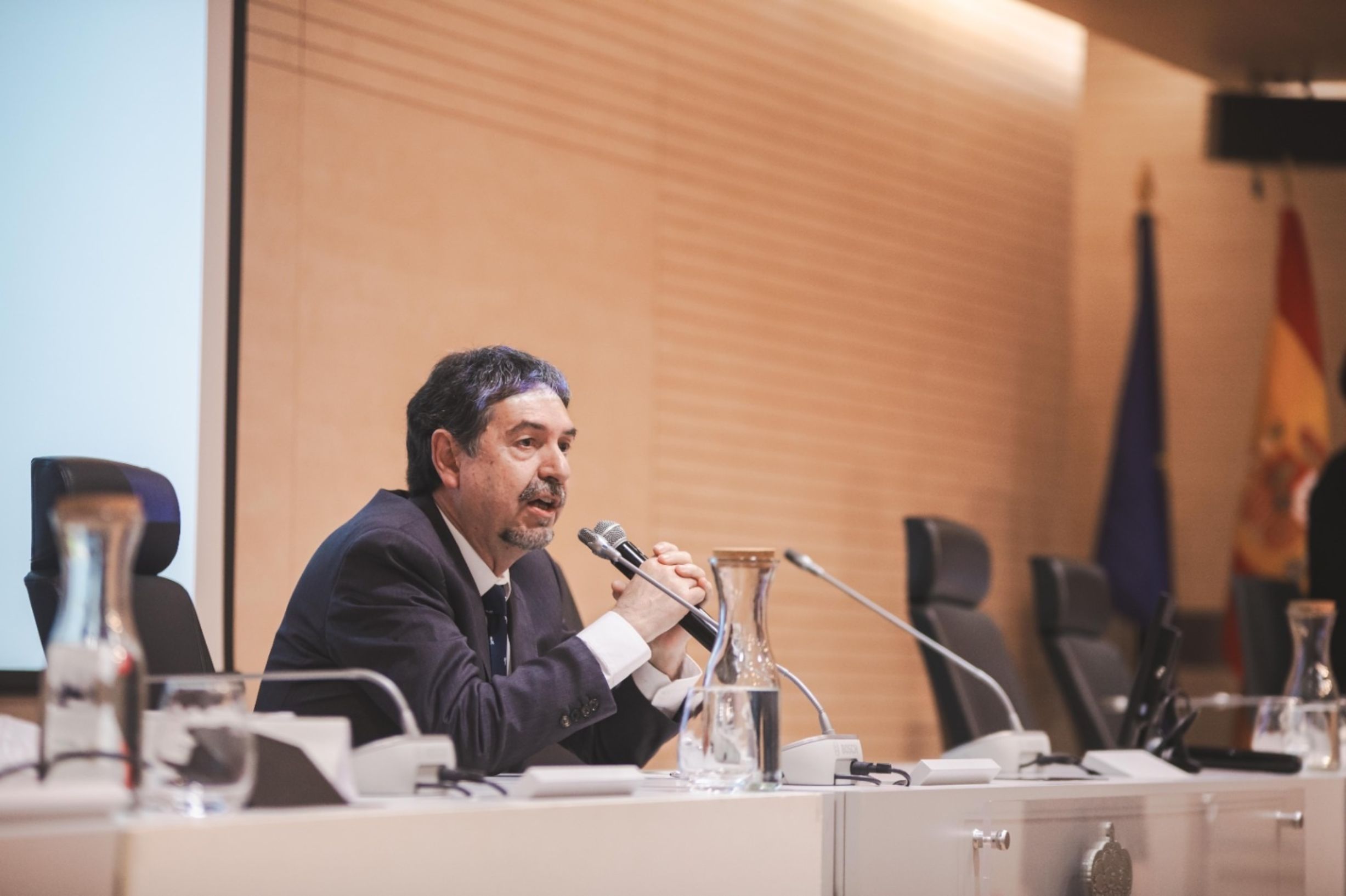
Photographs by Raúl Aguirre, Paula Verde, and MEFPD
Objectives of the Incide Workshop
- Develop a participatory diagnosis of the situation of the Spanish education system through community experiences.
- Facilitate and accelerate the process of transformation of policies, cultures, and practices through participatory methodologies.
- Establish a space for the convergence of good practices in inclusion, with the intention of learning from them, sharing them, and enhancing them.
- Know, understand, and improve through dialogue the educational conceptions, experiences, and professional practices that challenge processes of segregation and exclusion.
- Learn from the knowledge of students, families, and professionals, encouraging them to share their school experiences and proposals for improvement, particularly those of disadvantaged groups.
- Identify, develop, and share collaboration mechanisms used in and among different educational centers.
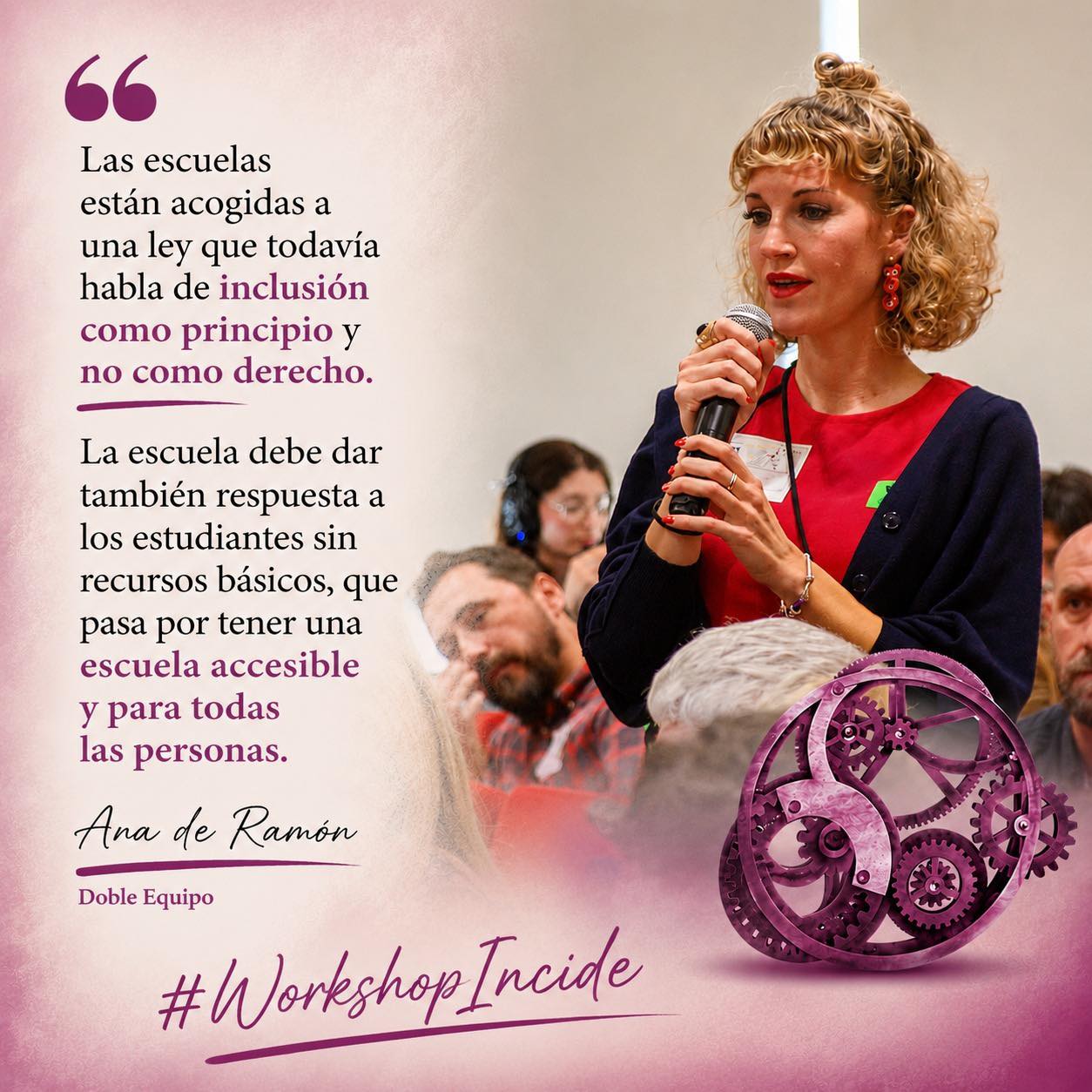
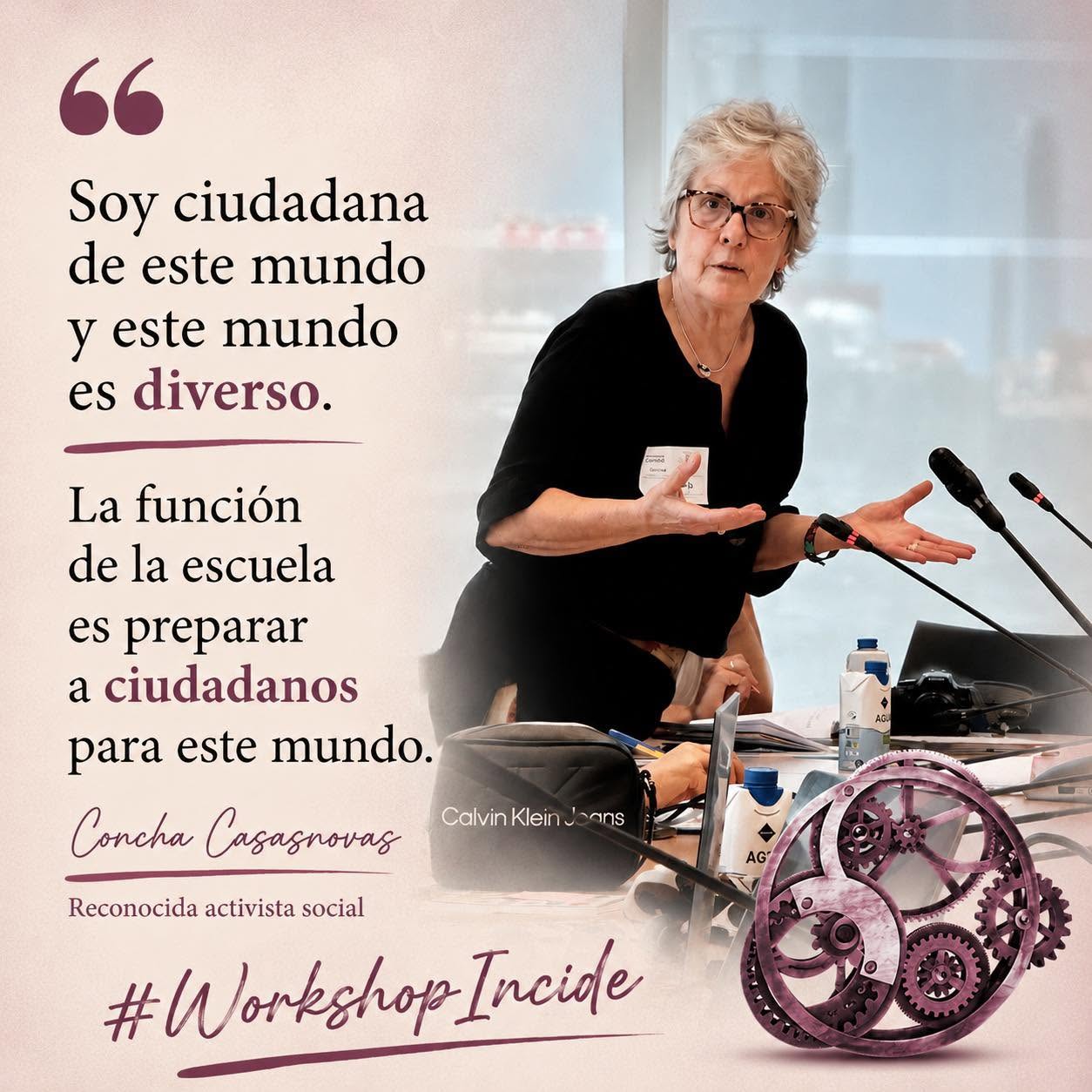
Objective: inclusive education

Following this meeting, a report will be produced that will gather the conclusions and contributions made, with the aim of them being considered in the development and implementation of the Strategic Plan that will allow us to move towards a more inclusive education system. All plenary sessions and workshops were video-recorded for later dissemination.
Among the productions from the meeting, the report produced by RTVE titled “Objective: Educational Inclusion”, broadcast on June 2nd in the program “La aventura del Saber” on La 2, stands out.
All information about the report at: https://play.rtve.es/v/17096502/
Germinating the Incide Workshop
In the days leading up to the event, a series of brief video testimonials were prepared from students, teachers, counselors and specialists, parents of students, as well as school principals.The “Germinating the Incide Workshop” video collection aims to open up questions based on concrete experiences, and was mobilized through two questions, depending on the person being addressed:
- Can you share a pain and a joy related to your experience with inclusive education?
- When have you felt like you belonged and when have you felt like you didn’t belong at school?
The first question was primarily aimed at professionals and families. The second was used to speak with students, referring to belonging: moments, experiences, situations in which they felt they were part of the school or not. Hence the title of the videos:“One more, one less in the education system”, which helps us reflect on the inclusive and exclusive processes that occur simultaneously in schools.
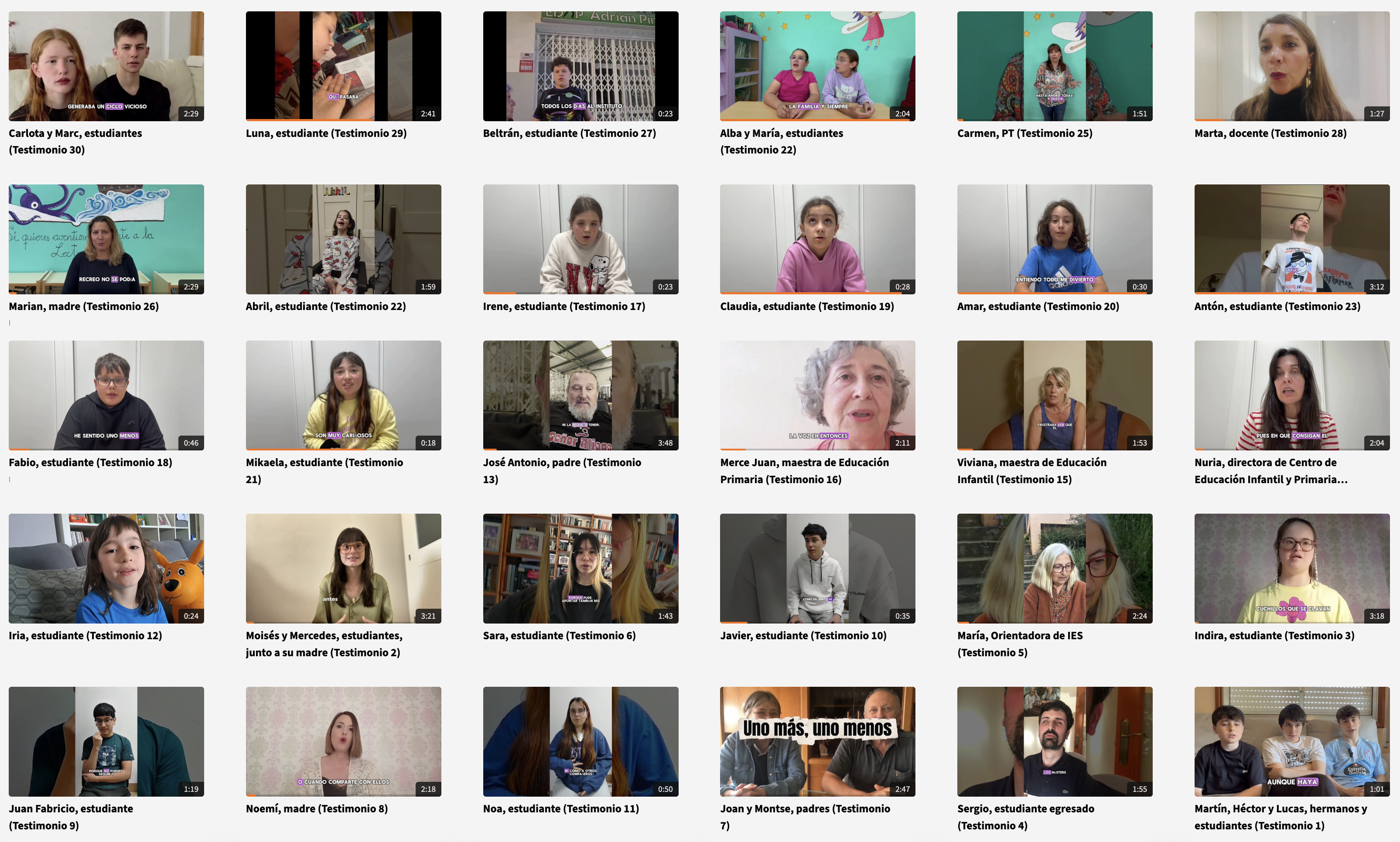
The question arises from the experience of a student –Antón Fontao–, who gives his biographical book its title: “Antón. Just One of Us, Nothing Less” (2025, Manelia Editorial).As a result of this call, the Incide Workshop is germinated, witha series of 30 video-testimonialsof great richness.
- Video-Testimonials: https://creemoseducacioninclusiva.uma.es/c/workshopincidemadrid/
The entire Workshop, open to the public
All the information from the two working days, including videos and minutes, can be found by entering the event program. During the development of the workshop, there was a great deal of coordination, registration, and systematization. Detailed information can be found at the following links:
Day 1: Diagnosis
Transcription of:
- Institutional Inauguration
- Presentation: A Citizens' Agenda for Inclusive Education
- Initial Plenary Assembly: What is Happening to Us in Schools?
LUCIO CALLEJA: Well, good morning to all attendees this morning at this opening event of this meeting, which is a pleasure to see so many people here, to see this auditorium at the headquarters of the Ministry of Education, Vocational Training and Sports practically full. And also to see it full of so much diversity, with children, with young people, with older people, with teachers, with families, with students, people from institutions, from administrations, in short, a variety that, well, is neither more nor less a reflection of the diversity of society and a bit the reason why we are here this morning, to talk about diversity, to talk about inclusion, and to share experiences and share lives. I don't want to prolong this presentation at all. There will be a brief institutional presentation. And then, well, since the important part starts later, I'll just ask Ignacio Calderón, Jesús Martín, and Mónica Domínguez to come up to the stage, please, as they will be the three people inaugurating.
Well, while they are taking their seats, Ignacio Calderón Almendros is a professor at the University of Malaga and is, along with Teresa Rascón, who is also here at the front, the people leading the research group, education and social change. Jesús Martín Blanco is the Director General for the Rights of Persons with Disabilities, of the Ministry of Social Rights, Consumer Affairs and the 2030 Agenda. And Mónica Domínguez García, who is the Director General for Evaluation and Territorial Cooperation of the Ministry of Education, Vocational Training and Sports. I also want to thank Julio del Valle for his presence, who is here in the front row, Director General for Real and Effective Equality of LGTBI Persons, of the Ministry of Equality. Thank you, Julio, for coming. And one last thing, the hearing loop, I've been told, is in that area over there. I'm telling you, in case anyone needs it, that it's on the left side, as I'm looking at the room. That's all, Nacho, the floor is yours when you're ready.
IGNACIO CALDERÓN:Well, thank you very much, Lucio. Thank you all for coming. Thank you very much to the Ministry for giving us the opportunity to create this space for collective construction. I am happy, and also nervous right now, to begin this moment. Well, in the task, Lucio told me, don't ramble, start something quickly, right? And I was thinking about how to introduce this workshop. And I went back 25 years, when I started researching education. And in particular, I was trying to research the experience, the experience of school failure. Particularly, the experience of school failure of boys and girls who lived in precarious situations, in situations of poverty. And I remembered a story, a first story I wrote with Elena, a secondary school student from a working-class neighborhood in Malaga. That life story was titled "Liberating Oneself from School." And "liberating oneself from school" was like a drive that both she and her friends expressed, which was to try to escape the school's control. After writing that story, I did some training for management teams. And I brought some fragments of what Elena told me. Those fragments basically said that she didn't remember many things from school significantly. It started like this: In first grade, I had a teacher, I don't remember his name. I don't remember his classes, nor how he explained, nor what we did in class. And then continued a string of "I don't remember, I don't remember, I don't remember." And a teacher in that room told me, "That girl has amnesia." And then I brought the story of another child, in this case, it was José, a 17-year-old young man, from a family with very scarce resources, with a Roma mother and a non-Roma father. And again, those "I don't remember, I don't remember, I don't remember" started to repeat. And he didn't remember the teachers, nor the classmates, nor the books, nor the subjects. So much so that he reached a point where he told me, "I don't understand what happened here, because my memory of school has been erased." As if the memory of school were in a different place from other memories, right? From that story, from José's story, I wrote his biography with him, which was titled "Unlucky, but a warrior until death." That title also had to do with graffiti that was on the cell where he was, in the reformatory, in the juvenile detention center where I met him.
In other words, that irrelevance of the school had a great impact on the life of a child, just as it had a great impact on Elena's life. Well, around that time, we're talking about 25 years ago, at that time, my brother Rafael, the school that all of us siblings had attended, 'invited' him, and I put that in quotes, to leave the school to go to a special education center. My family refused to accept that ruling and embarked on a complex path of dissent, seeking to recognize my brother's legitimacy as a student in the same school that the rest of us siblings had attended. That story became a book, initially titled, 'Vertebrar la lucha educativa' (Structuring the educational struggle). Its aim was that the story that had happened in my family would not remain solely within one family, but could serve other families in their struggle for the recognition of the educational rights of all children. And this is the purpose of the meeting that begins now. Experiences like the one I've just shared still exist in many places. In some ways, they have even worsened. And it makes me think that we have not learned enough to recognize the value of the knowledge of citizens, of children, of their families, of the teaching staff who work with them. And that knowledge, which I recognized in Elena, in José Medina, in my brother Rafa, in my own family, my mother, that knowledge is much stronger when it becomes collective. And this is what we aim to do here, to generate collective knowledge that will enable or drive the transformation of the system. That's why a space like this holds great value for me and gives me great hope, because it is a commitment from the ministry to work towards ensuring that these experiences, which have occurred, which have been occurring for a long time, and unfortunately continue to occur today, can be stopped, can begin to be resolved. So thank you very much, Mónica, for this opportunity, thank you very much to the ministry, and thank you to everyone for making it possible.
LUCIO CALLEJA:Thank you, Nacho. And next, Jesús Martín, Director General of Disability, will also say a few words.
JESÚS MARTÍN:Thank you very much, dear Lucio, dear Mónica, thank you too, and also dear Nacho. Good morning everyone, and it is an honor to share this space, especially on my birthday. I believe it is the best gift I could receive, sharing my 52nd birthday with people who dedicate their time and talent to improving education, which in my opinion is the greatest asset, along with childhood, that any State possesses. And you are doing so as befits an advanced democracy like ours, from the perspective of human rights, meaning, thinking of all students without exception. Thank you, dear Mónica, for always saying yes, for working hand in hand, for giving your all, you and your team, so that inclusion is a cornerstone of our education system. And thank you also for transcending it beyond disability and for understanding that this is a matter for all human realities, for all girls and all boys. Today we have been convened by education, but from the perspective of a school that equalizes, from a school that liberates, but from a school that also includes. And indeed, that is what inclusive education is about. It is a system that must be flexible, it must be a system that celebrates human diversity, and in which all children must learn in the same spaces. We must take into account that there are different abilities, ethnic groups, heights, sexual orientations, origins, ages, and it is the system that must change to welcome this diversity and adapt to each student. You will understand that school, after family, is the first place of coexistence for a person, and from this perspective, it is essential that all students, all students, including those with disabilities, receive education in the same schools. That the rest of the students from the human family share classrooms, learning experiences, playgrounds, extracurricular activities where affections are built, where children are Laura, Adrián, and Jesús, and not a child with achondroplasia, or a deaf child, or a child with Down syndrome. And above all, that mutual respect is built in these spaces. These girls and boys will be the adults who govern this country in the future. If we build that respect from the beginning, I assure you that our lives, the lives of people with disabilities, the lives of trans people, of Roma people, will be easier. We will have inoculated from the start a wonderful virus, which is inclusion. And the inclusive approach, this is what this seminar is about: it values students as individuals, respects our inherent dignity, and recognizes our needs and our capacity, yes, also, to make a valuable contribution to society. Inclusion also recognizes that difference provides an opportunity for learning and acknowledges the inseparable relationship between school and community to build societies in which we all feel we belong. Not just the students, but also the teaching staff, the personnel in schools, the families. I always tell an anecdote. I am from a very small town in Extremadura, and I went to study, for those of my age, at what were then called 'universidades laborales' (vocational universities). I went to Huesca. At that time, of course, it was a boarding school with over two thousand people, and there were only two people with disabilities: one who was an external student, a woman with cerebral palsy, Noelia, and myself. And without asking me, I was exempted from physical education. When I used to jump over rocks and everywhere in my town, like a wild kid, as a child should be. No one bothered to make a curricular adaptation for me. And in that subject, I don't know what it's like now, Mónica, but back then it was a subject with a lot of recreation and games, so I used to go to the library. And that's where the first labeling began. For not doing something as simple as what you now have very integrated as a curricular adaptation. Inclusive school means transforming the education system so that it welcomes and values diversity without restrictions.
That is to say, that there is presence, that there is progress, that these children are not only in school, but that they learn, and that they also participate in games, extracurricular activities, and playgrounds. And in the Spanish government, we are clear that inclusive education is an undeniable goal. And we do it with determination, with conviction, because that is what the convention, which turns 20 this year, says. And the LOMLOE itself says so. And a decent government must respect its legal framework. Inclusive education, that's why I love to see so many people, to see the kids who are here where they should be, in the front row, because you are the protagonists, to see families, to see civil society, I see Carmen there, the president of Plena Inclusión, to see teachers, to see researchers, because this must be addressed through dialogue, through calm, through encounter. Nothing and no one is superfluous here. All voices are valuable, and they are valuable precisely because we are playing for something very important, which is the right to education for our children. And in this challenge, which is a national challenge, the entire educational community, families, organizations, and of course, you, the boys and girls, whose opinions are very important, must be involved. Because you are the rights holders, something we often forget when we build public policies. I want to make it very clear, my colleague, the Director General, will emphasize it just as I will. This is not a war against anything or anyone. Nothing is being amended here. This is about adding. This is about adding. That's why we have gathered all of you, this amalgam, which is a representation of what society is, to have your knowledge, your doubts about what the next inclusive education plan will be, so that it is sound, so that it is accurate, as mandated by the fourth additional provision of the LOMLOE. In this equation, science cannot be missing, as a key pillar of our individual and social emancipation, and as a lever for our liberation from ableist cultures and structures. Today we are here, and I conclude, to collectively hold the banner of human rights, to crystallize an equality that must be transformative of sociocultural change, and this transformative equality is what questions the hegemonic vision in which differentiated treatment persists due to disability, ethnicity, or sexual orientation, and this transformative equality is what will contribute to eradicating those systemic, structural, and more hidden forms of discrimination. Today here, over these two days, we will seek in education the best ally to rewrite the history of people with disabilities, of Roma people, of trans people, so that this is a story of self-determination, coexistence, inclusion, and above all, of rights. Thank you very much.
LUCIO CALLEJA:Thank you very much, Jesús, for your words and also for your support, both as an administration and as a person. And we conclude this ceremonial act of inaugurating this meeting with Mónica Domínguez García, Director General of Evaluation and Territorial Cooperation of the Ministry of Education and also responsible for the entire development of this strategic plan for inclusive education.
MÓNICA DOMÍNGUEZ:Thank you very much, Lucio, Nacho, Jesús. Good morning to all of you. You know, as my colleagues at the table and Lucio have mentioned, a few months ago the Ministry of Education, Vocational Training and Sports made the decision that we had to develop, begin to design, the strategic plan for inclusive education. A plan that clearly requires science, as Jesús rightly said in his previous remarks, it requires rigor, it requires making a good diagnosis, it requires many things. But what we were very, very clear about from the moment we started talking about creating this plan is what will begin to unfold here today. We were very clear when we started to shape the plan that it could not be done without having something very clear, and that is that we need to have in an auditorium a number of people, almost 200 people here today. People here who have almost 200 different stories, almost 200 lived experiences. And the response to what we want or intend from this moment on is to bring the truth to the table. And the truth in capital letters. We don't want to talk about statistics today, we don't want to talk about diagnoses, we don't want headlines. We truly want to talk about the truth of what is not working in the Spanish education system. We want the truth that we are aware of and fully trust that all the people sitting here today have the capacity to change and improve the education system. Each one of you with your experiences, with your lived realities, with the knowledge of citizenship, as Nacho mentioned earlier, goes far beyond what manuals or theory can offer us. We are not here for a typical conference, and I believe this is what, please, we are here to listen and to build together. We are here to recognize each and every one of you as experts. We are not asking you to give your opinion, we are asking you to participate. And by participation, I mean joint construction, that we can truly add value, as Jesús rightly said. Allow me to speak with complete honesty. I am very aware that in this room today there are students or former students who have learned to adapt to a system where you may have been invisible at times, where you have had to adapt to the system because it has not known how to respond to your needs. I also know that there are others who can speak very positively about how participation can be guaranteed within an educational center, how one can feel part of an educational community, how inclusion can truly be felt in its broadest sense. There are also dads and moms sitting here today who have fought very hard throughout your children's academic journey, who may have felt alone at times. Sometimes you have even had to learn because no one, you haven't found the person who can explain how to get out of that difficulty, that pressure, that pain of seeing that the necessary response is not being given for your daughters or sons. But I also know that here there are fathers and mothers who can speak positively, showing how support can function when coordinated from all sides, how existing barriers can be broken down. I also know that in this room today there are teachers, there are female teachers, there are male teachers who have put brilliant solutions into practice, who, sometimes with hardly any resources, have been able to provide a response, to be a key and significant person for someone, for a student to look up to you, to know that you are the people who allowed them to succeed and to have self-confidence to move forward. We cannot assume that vocation is present in all teachers; we must work to ensure that the pertinent response is truly known. There are also members of management teams here who lead, who trust in your staff, in your families, in your students, who act as a bridge with the educational administration and who generate that transformation that often seems impossible, but you achieve it.
There are researchers, here in this room there are many people from academia, who work at universities, in various research teams, who have managed to turn rigorous knowledge that exists from the classrooms into reality, into an everyday reality, and you have managed to transform it into science, into scientific evidence. Here there are associations, third-sector institutions, who are undoubtedly the ones who know the collective best, the collectives you are working with, and who know how to be fighting, standing up, always coming to work with the educational administration head-on, shaking hands and providing the intended response. And evidently there are members of administrations, not only educational ones, but also from other areas, who have something that the others do not have. And that is precisely the capacity to make everything change scale, to make these dreams and this reality a reality for everyone, to turn the exceptional into the norm. And that is why we are here today. So today, everyone here is essential. I sincerely thank each and every one of you for having accepted, for having put aside your schedules, for being here. And I sincerely ask you to let's build, because this strategic plan for inclusive education needs your voice, needs to be able to contribute the theory that is lived within the experiences of each one of you. I want to take advantage of this moment of gratitude, not only to all of you who are here today, but also very sincerely to the research team, education and social change from the University of Malaga. Nacho is here, Teresa is there, I know you come with a huge team. Thank you very much because you are fully supporting us so that, not only with the content and the perspective, but also with all the methodological support that will be necessary for this congress, not in the usual way, which will last for two days, we are capable of facilitating participation, fostering dialogue, building science, which is what all of you know so much about. We need this to be rigorous and systematic and to truly provide us with what we need. I also want to recognize, evidently, the trajectory of the citizens' movement, Quererla es crearla, it has shown the importance of connection, the connection of definitions that are key to educational improvement, research, innovation, educational experience, and above all, social action. This connection is precisely the key we are looking for in this congress, this meeting.
We want to build public policy based on listening to those who know, those who live, and those who transform educational reality from within. I am very aware that this is necessary and cannot be done solely from offices, nor exclusively from theory. It is very, very, very necessary to always have our feet on the ground so that we know we are providing a coordinated and necessary response. I want to cite a slogan that I am sure Jesús has used many times. It is very simple, just five words. Nothing about us without us. These five simple words embody a fundamental principle: no person, absolutely no one, can be absent from any conversation that will decide their future. All regulations, all actions, everything done from any office, whether it's a ministry, a city council, or any other administration, must take into account personal experience and social action. Decisions cannot be made, programs cannot be designed, plans cannot be created, nor can the great strategic plan for inclusive education be issued without asking, listening, and understanding. Therefore, this is the main objective of the 'incide' workshop, precisely because we do not want to talk about inclusive education from a safe distance. We are here to practice it, to demonstrate that knowledge can only be built when all voices are at the same table. When we consider that the best educational policies are not born in offices, but rather from the experiences in classrooms, hallways, playgrounds, and sometimes uncomfortable conversations, I would say. But discomfort must be heard and confronted in order to contribute. Inclusion. Inclusion is not a destination we want to tick off. We are already an inclusive education system. It is not a goal. It is not a day when we will arrive and celebrate. Inclusion is the way we want to walk together. It is a process. And walking together requires truly listening. I insist again on the word with which I began, which is that truth. We do not want to listen to respond. We do not want to listen to correct. We do not want to listen to defend ourselves from anything. We want to listen to understand, to improve, and to include in this strategic plan for inclusive education. Because we know that all the actions we take have very limited resources within public policies, and therefore, we must be very, very sure that every action we undertake is something that truly generates this help.
Therefore, over these two days we are going to ask you, please, to share those experiences that perhaps you have never put into words, that perhaps even force you to reveal intimacies, but that it is time for you to ask questions, give answers, disagree if necessary. Make mistakes. It's okay. That's what we're here for, to listen to each other and to work together. Because perhaps a single voice, you have often experienced this, a single voice may not be heard enough, may be ignored, or may not be listened to with sufficient action. What we want is for 200 people, 200 voices, to build a path. To conclude, I want to mention a quote from Paulo Freire, a pedagogue from the late 20th century, in what I believe is a sentence that perfectly summarizes the objective of this Congress. No one educates anyone, not even oneself. Humans only educate each other with the mediation of the world. Today in this room, this is not a theory. We want this to truly be a reality. The workshop will end tomorrow afternoon, we will leave through this door, we will finish this workshop. But what really begins today is something else. We hope that bonds will be generated, that we can exchange ideas, that we can hear truths, not always comfortable ones, that we generate commitments, and the question I pose to you today is not whether we are capable of building a more just education, but whether we dare to do it together. Welcome. Let's begin. Thank you very much.
LUCIO CALLEJA:Well, thank you very much to the three of you for your words, and as the Director General said, let's begin. This starts now, it begins with a first presentation that, as you have in your programs, is titled “A Citizen Agenda for Inclusive Education.” Simply for logistical reasons, this will be the main hall, where we will have group meetings. Afterwards, we have four separate rooms where the workshops for discussion will take place. They are, as we leave here to the right, there is another one on the sixth floor, which is accessible, but the team will guide you. All those people behind are the inclusive education team from the ministry, to whom I also sincerely thank for the great effort you are making to make this happen. And, well, from this moment on, as I say, feel at home. You are in your home. I believe it is fundamental that this trust, this tranquility, is generated, that you feel comfortable and that you let yourselves be carried away by emotions and by the need to share everything you have experienced, that you are experiencing, because from this sharing, we as a ministry hope to be able to build educational policies. Thank you very much and let's begin.
IGNACIO CALDERÓN:Yes, yes, hello. Well, we are going to continue, to start the task. Tere and I come with the idea of establishing the framework for the workshop, for the work we are going to develop. First, we had noted down here: welcome. Well, welcome to all of you. Thank you for being here. Thank you for coming from faraway places, for having left behind all the things we always have to do, which are always many and important, and for having decided to dedicate two days to intense work, because what this is about is doing a participatory workshop, that is, generating a space where everyone participates here; no one came to watch, but rather we have all come here to take part. A workshop is founded on something that Mónica was just mentioning, and that is that it is founded on the recognition that all human beings have knowledge that is valuable, and that is also irreplaceable. Therefore, the knowledge, for example, of these boys and girls, is irreplaceable by all those adults out there. What you know, the rest of us don't know. And we are interested in knowing what they think, but also what Nuria or Ricardo thinks. We are interested in knowing what people know. And we are interested because in schools, on many occasions, that knowledge that stems from each person's experience is not sufficiently valued. And if we valued it, our schools would have resources to improve. So, this workshop is a collective construction in which we will try to interweave the different types of knowledge present here in this room. And we will do so to build knowledge that is not just knowledge, but rather knowledge that is, on the one hand, emotional, meaning it has to be linked to our lives, to what matters to us. And, on the other hand, it is knowledge for action, to provoke action, in this case, from the Administration, but also to provoke action in ourselves.
TERESA RASCÓN:Well, first, I would like to join Nacho's welcome. It is a joy to see so much diversity here. And, above all, it is a joy that we have this space to discuss with confidence and freely the fundamental question that brings us here today, with this workshop: what is happening, what is not happening in school, that causes many children not to feel included in it today? And that is a bit of the reason for today, for today's session: to diagnose what is happening and, from there, to think together about what we can do to achieve that school of our dreams, right? That school that all of us want. The students say yes here. So, in reality, today is the first in-person meeting of the workshop, but this workshop began a few days ago when we started asking you for a series of videos from families and students. To the families, we asked, if you remember, to share a joy and, well, and something... A pain. A pain. A pain. And to the students, we asked them to tell us when they had felt like one more person and when they had felt like one less. Well, thank you in advance for the large number of videos we have received. Thank you very much. Obviously, we cannot project all of them here because we have very little time, but we did want to start by sharing one of those student voices, which is Fabricio's voice. I don't know if the video is ready. And well, he will tell us when he has felt like one more and when he has felt like one less.
Well, as you can see, Fabricio was telling us when he felt most included. And when did he feel most included? When he used a language that is sometimes undervalued in school, which is the language of art and another way of communicating, right? But he also said, sometimes I felt less included. When did I feel less included? Well, what Fabricio told us is that he felt less included when he couldn't keep up or noticed he wasn't keeping up with his classmates' pace. What does this tell us? It tells us that inclusive education is a collective process. We need everyone, without exception, in those classrooms. Well, as I was saying, this workshop is divided into two fundamental moments. There is a first moment, which is what we will experience today, which is about diagnosis. Some proposals will be initiated, but above all, what we want is to answer that question we posed at the beginning. And there will be a second moment tomorrow, in more depth, where we will analyze or work together, with all the voices here, on those improvement proposals. These will be the two main moments that will be linked with different assemblies and workshops, which we will be organizing throughout the day, today and tomorrow.
IGNACIO CALDERÓN:Okay, let's continue. After this presentation we are giving, we will begin with the first assembly. We are going to, as Tere said, we are going to link assemblies and workshops. Assemblies are spaces where we share experiences, knowledge, emotions, proposals. They are spaces where we tell, to a great extent, things that are intimate. What would interest us is that this space that begins now, just as Fabricio has just shared something intimate, which is part of his school experience, what we would like is to build the proposal that emanates from this space, from this workshop, from that intimate sharing of each one of you. This sharing also has to take into account, we would like to warn you about this, although you were warned from the beginning when you registered. This is now a large public square. That is to say, we are in a space that is being recorded, in which we want to learn from what we share, so, just as we invite you to share part of your experience, we also tell you, share only the part of your experience that you want to share in that public square that is the Internet, because this recording will be published later. So let's keep that in mind all the time and, keeping that in mind, let's share what we consider valuable. Telling stories, as Fabricio just did, allows us to intertwine our stories. That is to say, Fabricio's story is also related to my own story. And what we intended with this collection of videos, of experiences, was how these stories could be a springboard for our own stories, for us to start thinking about how we have experienced being in school. By intertwining stories, we are building something collective, and that has great power. It has the power that what we are building transcends Fabricio's story, transcends Nacho's story or Tere's story, because what we are doing is building something that encompasses all of us. However, we have very little time. I mean, we have two days, but we have very little time to build. So, we all have to be very clear that, despite having time, we have very little time to talk. And that implies that we must manage our time very well. We will try to keep interventions to about two or three minutes. Brief interventions. Interventions that allow for a lot of conversation. Interventions that allow for a lot of conversation. And this implies that we think very carefully about your entire story, your entire journey as a mother, a teacher, or a student, about everything you have experienced, what do you think is fundamental that you should tell here and that you should tell the Ministry of Education of Spain. That's strong, isn't it? It's strong. You say, well, this happened to me, I have to tell this to the Ministry of Education of Spain. But also, this happened to me, I have to tell it to these people here who are listening without judging. Rather, they are listening to try to learn and build something new. So, we have to prioritize, that's called categorizing experience, and categorization is one of the fundamental steps that we educational researchers take. So, here we have almost 200 people doing educational research. That's called citizen science, it's building knowledge from ordinary people, building our own knowledge that often questions the powers that often subjugate us. And with this idea, we bring the second video, Abril's video, which we will play now to continue with those voices, building what comes next.
TERESA RASCÓN:Well, after this other experience, we have to continue because, as Nacho says, we have little time, but that time is very valuable, so we have had to organize it very well. Well, we are going to start with a brainstorming session to answer that question we posed at the beginning, right? What is happening in our schools that causes many boys and girls to not feel included? Once we finish the brainstorming session, we will go to lunch at two in the afternoon, which they will announce outside. And, in the meantime, for a while, a group of facilitators will meet to, from all the topics that each of you has brought up in this first session, identify some important themes that can encompass others and that will be the subject of the workshops we will hold later. That is to say, the workshop topics will emerge from this first session, okay? So, once the topics have been decided, at the beginning of lunch, a little before four in the afternoon, you will go and sign up. They will tell us where the papers will be placed, where you can sign up for the workshops. You have to sign up because the capacity is very limited, okay? I think there are around forty places per workshop. So, we have to sign up for the ones that interest us. After these workshops, which will begin, as I said, at four in the afternoon, there will be a coffee break. And after the coffee break, we will have a joint session to share what was discussed in the different workshops. This way, those colleagues, those students who have not had the opportunity to attend all the workshops, will get an idea of what happened in those other spaces. And after this joint session, the idea is that we will have a final assembly. In this final assembly, although we will delve deeper into the analysis of this diagnosis we mentioned earlier, it will also be a moment when, as we said at the beginning, the idea is that you will start developing some action proposals. Although tomorrow will be the day we work more on these proposals, well, this can be a start to begin tomorrow's work. So, that will be the plan we have made for today, but we have to stick to the schedule very well, so that all of us have the opportunity to have our little moment to express what we think and what we can propose in this regard.
IGNACIO CALDERÓN: Importante, como decía Tere, el límite de tiempo, asumir el límite de tiempo y que no te lo tengamos que decir, oye, ¿qué te has pasado de tiempo? Pero vaya, que no os preocupéis que os lo decimos. O sea, que no hay problema, ¿vale? Si os pasáis, te vamos a tirar de la oreja sin problema. Cuando alguien toma la palabra, levanta la mano, se le pasará el micro. Es importante que todo lo que se diga, se diga con el micro, porque todo se está grabando y para que la grabación esté correcta, que se diga con el micro. Y lo primero que hacemos es presentarnos. Hola, soy Nacho, vengo de Málaga. ¿Vale? Y nos ponemos de pie. O sea, te pones de pie. Hola, soy Nacho. Y vengo de Málaga o te presentas como quieres y ya cuentas lo que quieres, ¿vale? Cuando alguien habla, el resto... Escuchamos. Pero escuchar es escuchar. Escuchar es querer entender lo que la otra persona está diciendo o lo que la otra persona está contando, ¿eh? Con respeto a la persona y a su experiencia. Y lo que vamos a tratar de construir es una agenda ciudadana. Es una agenda de cómo la ciudadanía puede impulsar el plan estratégico del ministerio y también qué papel tenemos nosotros en el impulsar la educación inclusiva. Bueno, antes del último vídeo con el que vamos a comenzar ya la primera asamblea, yo quería dar las gracias a los intérpretes, a los técnicos que están haciendo la labor de que todo esto quede grabado, a los técnicos del ministerio por el trabajo que han ido desarrollando y, bueno, y a todos y todas por haber venido aquí. Pasamos ahora al tercer vídeo, que es el de Martín, Héctor y Lucas.
Ahí va el primer tema, ¡pum! Primer tema. La pregunta no era baladí, la pregunta que se hizo es una pregunta diseñada por otro estudiante. Hay un vídeo de él, Antón, que dice que de hecho él escribe su historia en una afirmación de que es uno más, no uno menos. Hablar de uno más y uno menos tiene que ver con lo que dice Héctor. To be or not to be. Ser y estar o no ser y estar en la escuela. Y aquí se abre la palabra.
ALEJANDRO: Hola, buenos días. Soy Alejandro, el padre de Rubén Calleja. Muchos me conoceréis seguramente porque ya llevamos una trayectoria muy grande de muchos años de lucha y resistencia por la defensa del derecho a la educación inclusiva. Vengo de León y, bueno, quisiera contar una anécdota que ha ocurrido hace poco, nadie conoce, normalmente hablamos mucho, pero bueno. Es una anécdota que me llamó la atención de hace una semana. Rubén es un joven con síndrome de Down que está trabajando en un centro de Alzheimer, en una empresa ordinaria. Es el único trabajador con discapacidad que está trabajando en el centro de Alzheimer. Y llegó para hacer el ingreso una familia al centro de Alzheimer de León. Y, bueno, el familiar que llevaba a la persona con Alzheimer reconocía a Rubén, que está allí, lógicamente, haciendo labores, trabajando. Y comentó a la administrativa que iba a hacer el ingreso con la guerra que nos dio su padre en la dirección provincial. ¿Cuánto le tuvimos que aguantar y cuánto tuvimos que soportar las presiones que nos venían por la lucha que llevaba esta familia? Claro, la administrativa, Rubén, ya lleva ya unos cuantos años trabajando en este centro. Sabe perfectamente nuestra historia, el León es muy conocida. Y le dijo, pues, lo mismo que tú quieres que tu familiar se le reconozcan los derechos y esté bien atendido, eso es lo que buscaba el padre de Rubén. Que se le reconociese su derecho a la educación inclusiva y que estuviese bien atendido. Pero ya no volví a hablar.
IGNACIO CALDERÓN: Alejandro, yo diría, perdona que te interrumpa, diría, es que hay mucha gente que no conoce vuestra historia. Entonces, no des por sentada la historia en un minutito.
ALEJANDRO:That's what I saw. I wanted to start with the anecdote, in quotes, which is very important. And, well, our story is 15 years of struggle and resistance. We have been fighting for our son's right to inclusive education. At 10 years old, Rubén was removed from the mainstream school, where he had been perfectly enrolled and integrated. Until a teacher emerged who didn't want him in the classroom. And that's when the whole machinery of psycho-educational reports, schooling rulings, was activated. And, in the end, well, the ruling dictated placement in a special center. We refused, logically, Rubén never set foot in a special center. That's when we began a fight to the death with the educational administration, with the educational policy of this country, and with a system that didn't want us. It didn't want Rubén and it didn't want his family. It rejected Rubén, it discriminated against him. It could never segregate him because we didn't allow it. It cost us, as parents, to suffer harassment from both the educational administration and even the Public Prosecutor's Office for Minors, who reported us for the crime of family abandonment, for not taking our son to the special center. And the public prosecutor for minors in León charged us with a criminal offense of family abandonment. A criminal offense. For defending our son's fundamental human right to inclusive education. We had to go to trial, we won, but it was tremendous, incredible pressure that we had to endure, because we could have lost parental custody, we could have gone to jail, we were willing to go to jail to defend our son, and in the end, we saw it through, and logically, as far as we know, the Administration has not reported any family since then, because it is the Administration that is failing, the system is failing, by rejecting and discriminating, not the families, and certainly not the student, I mean, the world upside down, we have to fight to recognize a recognized right, which is a constitutional right and a right that is in the Convention on the Rights of Human Rights, of persons with disabilities, and which is mandatory in this country. It's not something that, well, if I want, yes, if I want, no, no, no, no, no. The right belongs to the minor and it must be yes or yes. We have achieved two very important rulings, because at the end of the whole process, we had to go all the way to the UN, for Rubén's right and dignity to be recognized, and after the ruling of the UN Committee, which found in our favor, after the Constitutional Court, nor Strasbourg, nor the highest instances had found in our favor, we had to appeal for the State to comply with the ruling of the UN Committee, which is mandatory, yes or yes. And we have had to go to the Supreme Court twice, so that now, yes, because the ruling obliges, now, Rubén's right and dignity has been judicially recognized, and we are even to be paid compensation for it, and we have created a basis and a jurisprudence that is there, and against it the Administration cannot, it does not have the power to reject and discriminate against students. So, that's where we have to go, we have to continue, we have to fight, still, today, there is as much or more discrimination than a few years ago, it seems incredible, but the legal basis to fight and strive for it is there, we have achieved it and we have to continue. Thank you.
ALICIA:Hello, good morning everyone. My name is Alicia, I'm from Cantabria, and I'm from an association called Famundi, which is for adoptive and foster families, but in this case I'm representing Cora, which is the national coordinator of all adoptive and foster families in Spain. I wanted to say that many of the children who end up in the child protection system have problems at school, because they usually present pathologies that the school doesn't want to see, which have to do with their past, because many have suffered mistreatment, abuse, and all that influences these children's learning and behavior. They are usually very disruptive, and then the diagnoses made at school are almost all erroneous, if they are made at all, because often no diagnosis is made, right? The diagnosis is that we families don't know how to educate them and that they are ill-mannered or lazy. Also, many of them suffer discrimination because they are adopted, or many of them are racialized and also suffer discrimination. There are many prejudices, both among teachers and in the entire school community, regarding adoption and foster care, and it's a fight that we families have been waging for many years, and we have achieved little so far, honestly, very little. And that's all.
IGNACIO CALDERÓN:For the interventions, I would say that as much as possible, let's keep in mind that there are different ages, from very young to very old, in the room let's try to regulate the language so that it can serve us all, as much as possible.
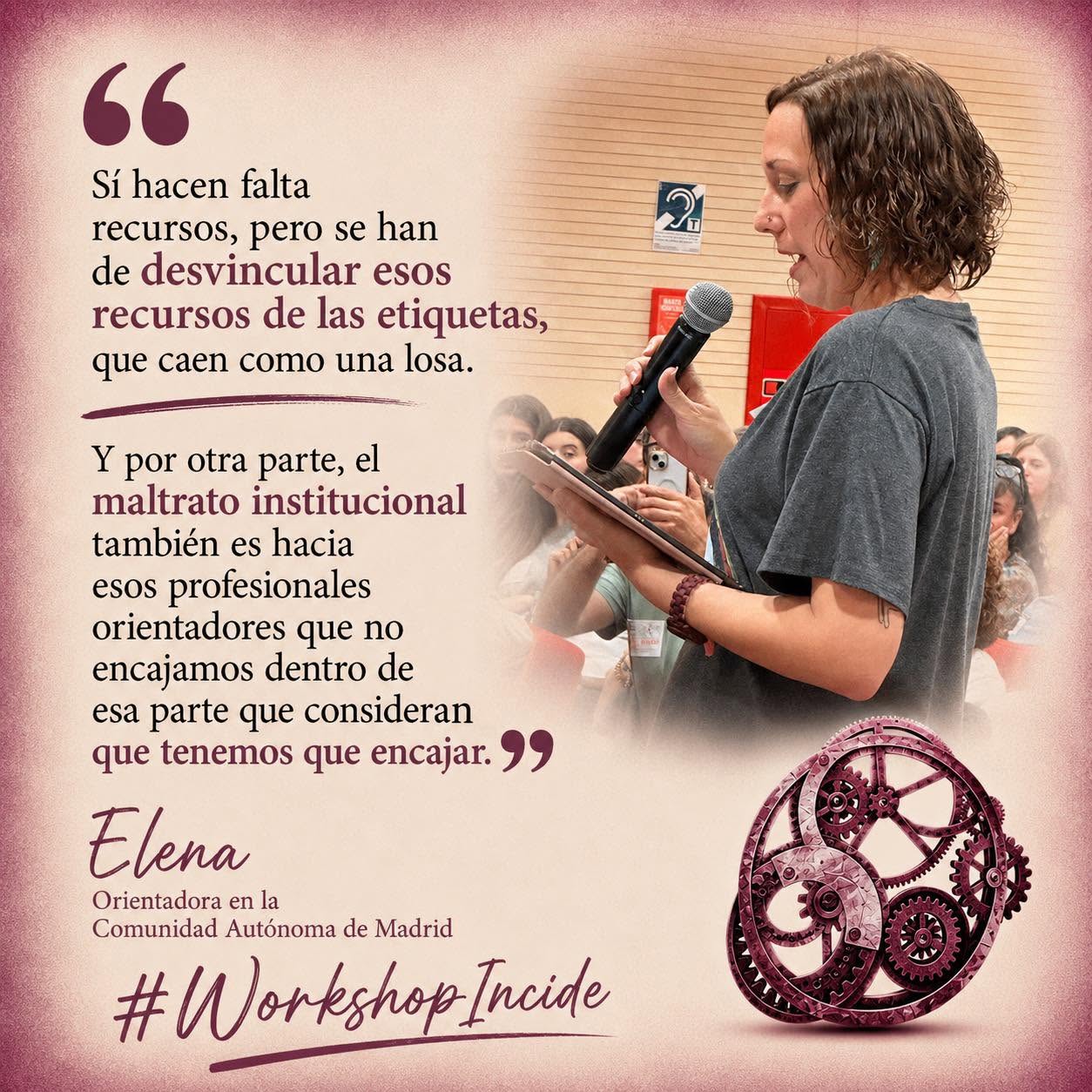
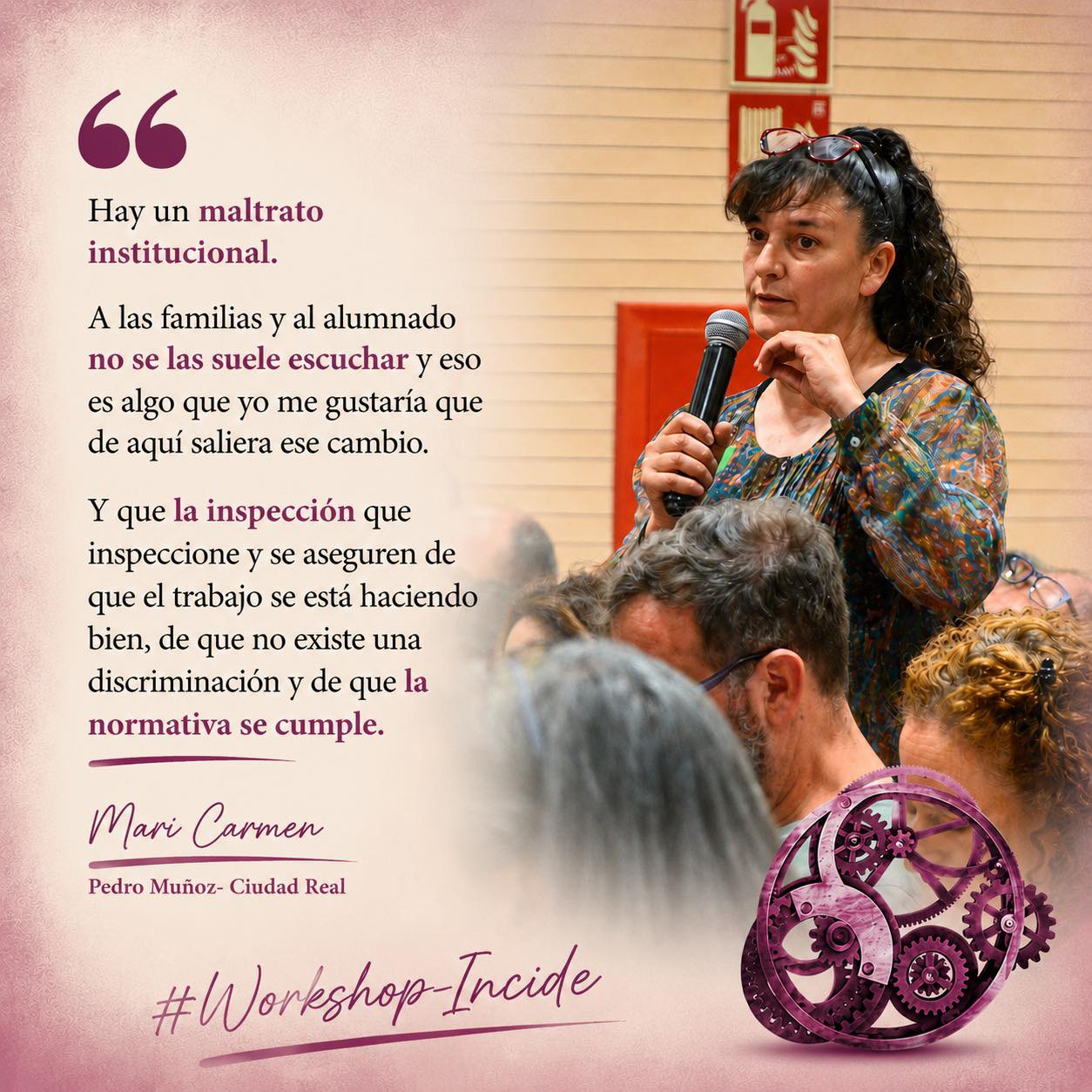
MARI CARMEN:Hello, my name is Mari Carmen, I'm from Pedro Muñoz, a town in Ciudad Real, Castilla-La Mancha, and, well, first of all, I had two things in mind, and I'm sorry, but they are negative. One, the institutional mistreatment that students and families suffer, as Alejandro mentioned, for example. The institutional mistreatment that we families receive, not only due to a lack of response many times, but directly labeling, classifying, and deciding about the students, without giving the students or the family any option to express their opinion. Institutional mistreatment when you try to report these situations and no one listens to you, including the Royal Patronage for the Disability, as was our case. Families and students are not usually listened to, and that is something that I would like to see changed from here, that families are listened to, which I believe is why we are here, and students, very importantly. And another negative point that we find in the functioning of the education system is the inspection, the educational inspection. We greatly miss, and it's something we've tried to work on in the strategic plan for educational inclusion in Castilla-La Mancha, which is now in its final stages, is that inspection inspects and ensures that the work is being done correctly, that there is no discrimination, that the regulations are being complied with. And then I also have to say that there are many teachers, many very good professionals who want to work, who are eager to include and who are not allowed to. They are not allowed because the system doesn't let them, doesn't give them the option. Because when a professional attends these events and recharges their batteries and says, when I get to my center, things will be different. And they arrive at the center and have a management team that tells them, hold on, hold on, we have the resources we have here. Because we talk a lot about the changes that need to be made, but for that, resources must be allocated, in addition to training. And mandatory training, because we cannot allow a change in the system to begin without mandatory training in inclusion. And in inclusion in general, not just in disability. Because we know that there are many DEA (Specific Educational Support) and if we keep training in that, we are segregating, we need to train in UDL (Universal Design for Learning), in the different training systems we have to reach all students.
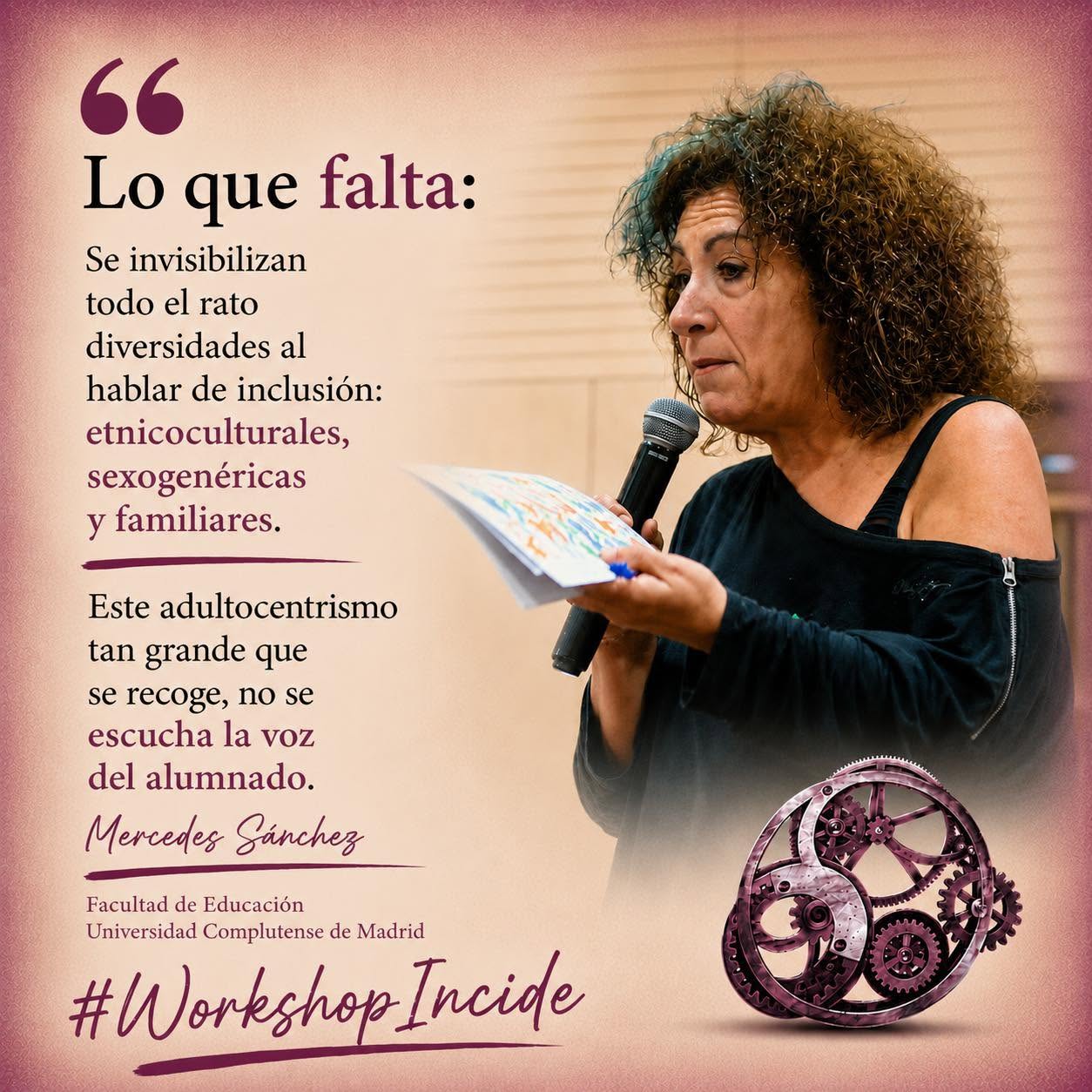
MERCEDES SÁNCHEZ:Good morning. Well, first of all, thank you for the opportunity for this enriching space. My name is Mercedes Sánchez, and I am a professor at the Faculty of Education at Complutense University. It's a faculty where we train future primary school teachers and secondary school teachers with a master's degree in teacher training. Regarding what's missing, I see three key things. First, that in the education system, from early childhood education to university, realities are constantly being made invisible. When we talk about diversity, it's associated with functional diversity, and we overlook ethnic-cultural diversity, gender diversity, family diversity. The mother of adoptive families was talking about this. In reality, a lot of diversities are constantly being made invisible. So, how can something be included that isn't even mentioned at any educational level? Secondly, this overwhelming adultism, the voice of students, whether young children or even students in education faculties, is not heard. And finally, I think the issue of resources is fundamental. There needs to be oversight of what's happening in the autonomous communities. I come from the autonomous community of Madrid, and I find what's happening there astonishing, first, with the student-teacher ratios, and with teachers' salaries. I was talking to an early childhood educator (0-3 years old), and we are currently in an intense struggle for the 0-3 age group. In the Basque Country, they earn double what they do in Madrid. So, something needs to be done from the Ministry to see what's happening with the funds allocated to inclusive education from the different autonomous communities, and especially what's happening with the ratios, because with the ratios we have, it's truly very complex. And also, what's happening with teacher training plans and the ongoing professional development for teachers that is being prioritized.
BELÉN:Hi, I'm Belén, and I'm from Zaragoza. And well, I suppose you might not know because I have an invisible disability; if I don't put my hair up, you can't see it. I've been deaf since birth, I have hearing loss, and I can hear thanks to two cochlear implants. I think it's incredible that you're undertaking this initiative to understand the realities that are hidden in schools. I've finished university, and I'm aware of different realities I've experienced throughout my school years. And well, I wanted to share something that happened last year... We have to take the PAU exam, which used to be the EVAU, well, the PAU, to get into university. Last year, one of our classmates, from Fiapas, was forced to remove his hearing aids to take the exam. This is a right of ours, to be able to hear, and we need it to take the exam. Any instructions the teachers might give us, or anything else, it seems very unfair that this still happens today. Especially knowing that he had requested accommodations and was taking the exam with them, which the examination board already knew, and the teachers he was going to take the exam with also knew. So, I believe there's still a lot that needs to change, and while we are fighting for inclusive education, these small things that can't take away our right to hear are still missing.
BELÉN JURADO: Hola, buenas. Yo soy Belén, madre de dos hijos. Tengo a Lucía con 18 años con autismo y tengo a Marcos con 15 años sin autismo. Yo últimamente, debido a nuestra experiencia en la escuela, que ha sido muy muy mala, horrible, pues a Lucía la diagnosticaron con tres añitos, la metieron en una aula TEA porque no tuvimos opción de otra cosa y en la aula TEA se ha pasado día tras día, de curso tras curso, pues hasta ahora que tiene 18 años y ya sale. Yo pienso mucho últimamente en el valor de las personas, en el valor de mi hijo o en el valor de mi hija. El valor de mi hija en el sistema educativo ha sido cero patatero. Nunca la han querido, nunca han contado con ella, no ha podido ir a excursiones, no ha podido estar en su clase ordinaria con todos los compañeros, pero el valor de mi hijo sí ha sido de un 10, ¿no? Él no tiene autismo, entonces sí ha podido estar en excursiones y sí ha podido estar en su clase ordinaria, sí ha podido participar de todo. Para nosotros, para mi familia, mis hijos tienen el mismo valor, pero para el sistema educativo y para la sociedad en general no tienen el mismo valor. De hecho, mi hijo dentro de unos años tiene oportunidad de estudiar una carrera, un ciclo o lo que le dé la gana. Mi hija, el año que viene, después de toda la lucha que hemos tenido para que estuviera dentro de un aula ordinaria, nada más que su derecho, ¿no? Que eso que te venden muy bonito de que va a estar en el aula TEA cuando necesite, pero luego va a estar en el aula ordinaria casi todo el tiempo, en nuestra experiencia es falso. Al revés, se ha tirado mucho más en el aula TEA. Entonces, mi hijo el año que viene estudiará una carrera, en el curso, en los siguientes, y mi hija el año que viene se va a educación especial porque no hay otra opción. Tenemos que llevarla a un colegio de educación especial con la que no estamos de acuerdo porque creemos que es segregación, al igual que las aulas TEA, y eso es la única opción o dejarla en casa. Tiene 18 años, se le ha negado todo durante todos estos años en la escuela. Si se paras en la escuela, se paras para la vida entera, como decía una amiga, La separaron desde el primer día con tres añitos. Va a estar separada hasta que muera porque la escuela debió hacer su trabajo de no separarla, sino de estar con todos, como era su derecho. Nuestra experiencia ha sido horrible. Muchos me conoceréis. Yo soy Belén Jurado, vivo en Madrid y suelo compartir todas nuestras experiencias por redes sociales. Yo creé lo de él y no pasa nada, que son muchas experiencias reales de prácticas educativas que se silencian y que se ocultan en las escuelas y que existen, pero que no pasa nada porque existan. Nadie va a hacer nada y me gustaría también que luego saliera en algún taller. ¿Qué tenemos que hacer las familias para que se nos escuche, como han dicho antes? ¿O qué tenemos que hacer las familias para que nuestros hijos a los 18 años salgan del colegio y no tengan a dónde ir? Solamente le den la opción de educación especial. Muchas gracias.
DANIEL: Me llamo Daniel. Ahorita estoy en el espectro, fui recogido dentro del espectro como hace unos años. Y una cosa que, desde que he estudiado aquí, desde que bueno, ya estoy unos años ya fuera del colegio, pero en todos los años que he estado en el colegio, una cosa que siempre he notado y siempre me ha impactado era la falta de empatía, la falta de educación y la falta de... Y también la falta de empatía, educación y tolerancia. Que especialmente entre los chicos de los años que estuve, todos actuaban de una forma. Y si no eras visto actuando de esa forma, eras el forastero, eras lo que nadie quería. Y todos estén dispuestos a hacer lo que sepas, que no eras querido en ese ambiente. Y en casi todos los institutos que he ido aquí, hasta en mi primer centro de FP, había poco, poco se hacía cuando había ese tipo de problemas. En todos los centros y colegios que he estado, solo dos donde realmente hicieron alguna cosa respecto de eso. Y eso es todo.
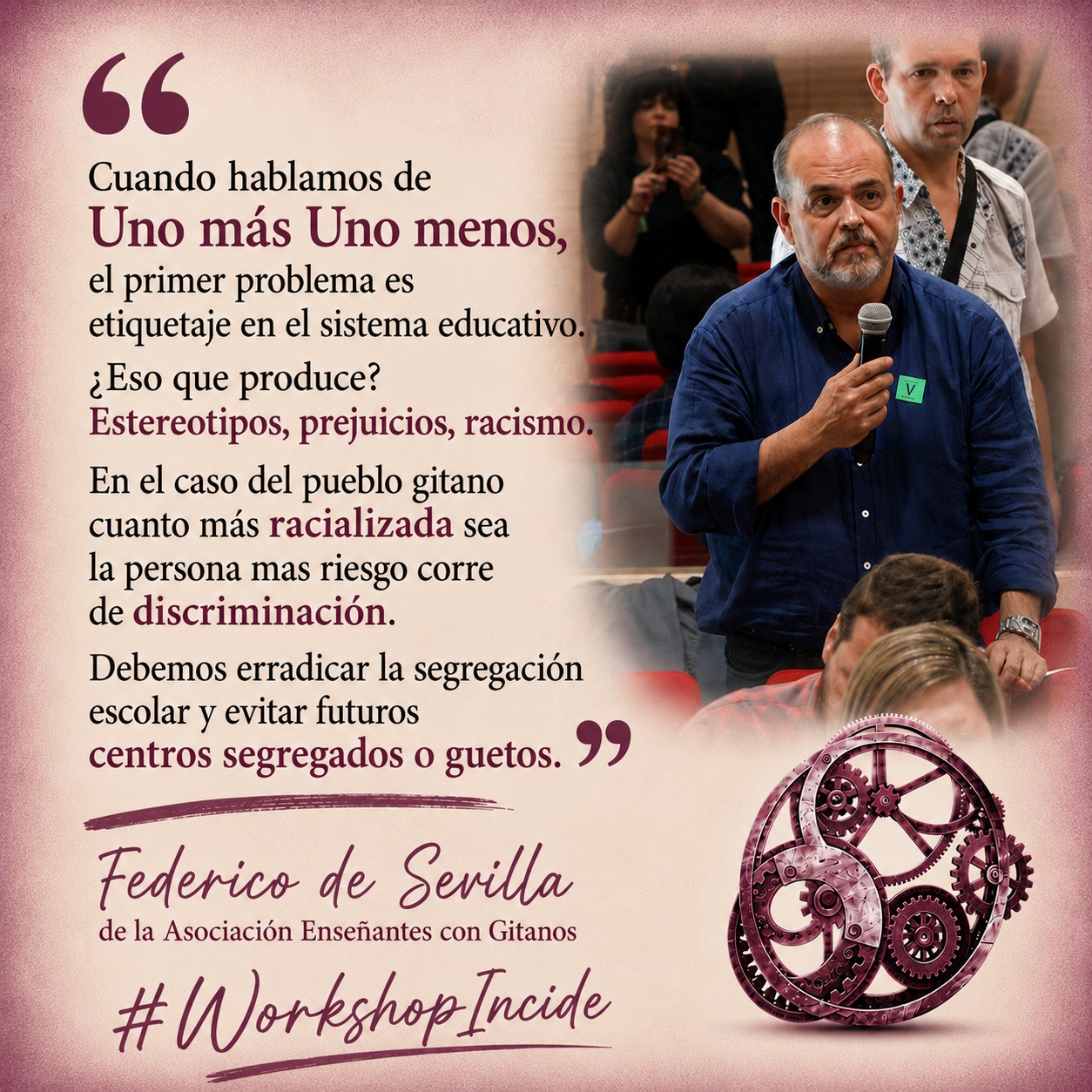
FEDERICO:Good afternoon, my name is Federico. I come from Seville and I represent the Association of Teachers with Roma People. I also have a colleague from Madrid here, but I'll start. With the question of one more, one less, I believe the first problem, and for all, right? For all disabilities, immigrants, or Roma people, the first problem is labeling. And labeling, unfortunately, starts in early childhood, not only because of the families themselves but also because of the educational system itself. When we train, they tell us that labeling is not possible, but the first thing that happens is labeling in the educational center. What does that produce? Stereotypes, prejudices, racism. And while, in the case of Roma people, the more racialized a person is, the more stereotypes, prejudices, and discrimination they will develop throughout their educational journey. Even more so, if we use the excuse, which is not the only excuse for the residential problem, because ghettoized schools are not just a residential problem. There are ghettoized schools for other reasons, which are multidiverse, let's be direct. So, it's even worse in that sense. And in this inclusive education plan, which we have been trying to contribute to theoretically, that is the most important thing: eradicating school segregation and avoiding future segregated schools or ghettos. Just as there is micro-sexism, there is also micro-racism and institutional micro-racism. Fortunately or unfortunately, I am involved in the resettlement processes of Roma families. And when you are not in a process during the enrollment period, the process is to go to the administration with the chief inspector. The chief inspector gives you the letter to go to the educational center based on the proximity and needs of that family. And if the first impression you get is a racist school, imagine how the family will be treated on the third or fourth day when you accompany them. And this needs to be addressed, because, unfortunately, every day we find very, very hardworking teachers, but we also find teachers, male and female teachers, who deprive us of the greatest richness of educational centers, which is diversity. And another important thing that demonstrates all of this is when we encounter non-racialized Roma people. We've been in many places where they say, "No, but there are no Roma people here." And they say outrageous things, "No, they aren't settlers here, they're clean, they're all clean." And this happens in early childhood and primary schools, high schools, and even in public and private universities. And these aspects need to be addressed to truly have an inclusive educational center. Thank you. MARCO:
JOAQUÍN:Hello everyone. First of all, thank you for the opportunity to bring together so many people who are here to rebuild the school. Well, I'm going to present my experience as a teacher. I'm a secondary school teacher, a social educator, and a collaborator in transformative education for development. And what I encounter in my classrooms, what I've encountered in my classrooms, are mainly three walls. The wall of the first evaluation. I'm a secondary education teacher. When, after going through a somewhat traumatic primary school experience, girls and boys arrive and fail eight subjects in the first evaluation, right? And the same old story begins about how they could pass primary school and then fail eight subjects. Well, the problem, I believe, is something else, isn't it? The problem is a culture of exams without support, without a helping relationship, and a conflict manufactured by the system itself, which is why it's called a difficult-to-manage center. This particularly affects Roma students, as well as Moroccan, Afro-descendant, and Romanian students, and of course, students with disabilities, who do not agree with being separated from the group, who do not want to be in a specific classroom within the mainstream school. This, as I said, produces conflict, "sweatshops" where no one wants to be, not the students, not the families, not the teachers themselves. Then we have another wall, which is the screening wall, right? In second and third year of ESO, students with huge backpacks of failing grades, right? With no expectations of success, who start to be absent systematically, right? And they only come so that social services don't intervene. This leads to early dropout at 16 years old and affects all the people I've mentioned previously, those who are still there. They still have the wall of limbo in the fourth year of ESO and in intermediate vocational training. Those who are visibly different are filtered out and excluded, right? This affects racialized students and students with disabilities. They are advised to avoid high school and higher education. The average grade of these students is lowered, which means they cannot access most intermediate vocational training courses. And this, as I said, is especially serious in the case of people with disabilities, because they are not even given the ESO diploma. And they argue and allege that they don't meet the minimum requirements, right? I mean, I find it tremendous.
IGNACIO CALDERÓN:Is that your name, please? Joaquín.
First, I'd really like to hear from the kids and then I'll speak. Because they're waiting there. First, here.
NEYÉN:Hello, my name is Neyén. Hello, my name is Albert. And we want to tell you a story that happened in our school that we saw and that we really didn't like. We were in the dining hall courtyard, okay? And we were playing, and suddenly we saw some children throwing stones at a girl who, let's say, has a kind of autism, right? Who couldn't defend herself. She thought it was a game, but those children weren't playing. They were doing it because they found it fun to throw stones at her. And then, the girl went into the bathroom, right? To hide. And the children kept throwing stones to get into the bathroom. There's a kind of glass. They threw stones at the glass, and so on. And then we went in, and my friend Albert said to one of the children, hey, what are you doing? The child said, throwing stones. And Albert said, why? And he was speechless. And then we went to a dining hall monitor. And we told him what was happening, and they sorted it out a bit, and now he's going to speak.
ALBERT:Well, and in the end, we fixed it, okay? Anyway, we tried to fix it. Yes, it was fixed. And we, well, we don't have many monitors in the dining hall. We have one for every two classes. And there are about 46 children in two classes. And so we wanted to say this because we wanted to have more monitors in the dining hall. Because otherwise, there are more problems in the dining hall.
IGNACIO CALDERÓN:Okay, I loved your anecdote about Neyén and Albert, but I'm asking, how did you fix it? Because you said 'anyway,' and I want to know what that 'anyway' was.
NEYÉN:Well, we went to our course monitor. One, I mean, the one who was throwing stones, we took him to the monitor. And then the monitor spoke with him, and we told him not to throw stones at people again. Not at her, nor at anyone else.
ESTIFO:Yes. I'm Estifo, and I'm here with my mother, Cora. But well, I'm going to speak now as a student of Early Childhood Education teaching and in relation to what the children have said. And simply, I think something that needs to change regarding the question you asked at the beginning is that we need to change the objectives of teaching a bit. That is, not to focus so much on typical curricular content like math, language, and all that, which is very good. But I think if we want a change, especially towards inclusion, we need to focus on creating citizens who are prepared for society, for diversity. And simply, yes, it's true that what I said, math and all that is very important and shouldn't be left behind. But without emphasizing from early childhood and primary school, especially, since they are the youngest, the creation of citizens and understanding what prepares them for society, what society is. Because many, perhaps in primary or early childhood, don't understand that. And if we don't start from there, we will never achieve the change we are looking for with this, for example.
JESÚS MARTÍN:Hey, they're singing to me, honestly, they're singing to me. Well, first of all, in response to what was said, I wanted to apologize to that mother who says we haven't listened to her from the Royal Board of Trustees. Our doors are open to listen to you, and whenever you want, of course. My colleague Carmen is here, and first of all, apologies. Since I'm very interested in this workshop, of course, I want to listen to adults, listen to Neyén, to Albert, to the kids who are here. Because, of course, we're talking about not labeling, about inclusion. But then, as I was a kid with a disability, what did I do? My disability is very visible. Very visible, and it's also associated with very key issues like laughter, like the midget, the jester, all those things, okay? So, I mean, of course, you look for strategies. I come from a very small town in Cáceres, where it was a protected environment, in a way, everyone knew me and everyone had seen me grow up, well, not grow much, but everyone had seen me with this body since forever, and I was just one of them, right? I move away in adolescence, imagine, when everyone's dating except you, to a huge high school where I'm the only kid with a disability. And of course, you want to feel part of the group. Honestly, I don't know if it's because I'm from a small town or for whatever reason, I had my strategies or I had strategies to make people forget about my body. And I had, I don't know why, leadership skills. But not all kids can have that personality. So, listening to them, well, that they do this exercise of denunciation, of protection, I mean, that's difficult. That's difficult because you normally want to feel part of the group. Part of the group, and giving that kind of responsibility to kids, I sometimes find it complicated. In these coexistence plans, those kinds of issues need to be taken into account. You explained it, you explained it very well. I mean, how, how does it appear, how does it coexist, how does a girl with autism or a girl with cerebral palsy who communicates through a computer coexist? What do you explain to those kids? What do you explain to those kids? Do you explain anything, or nothing? And then there's the issue of labels, because here we talk about labeling or not labeling from a philosophical standpoint. But the administration needs to put names to things. Yes, it does, it needs to put names to things. I've been a big defender of no labels. But now, and I know this will be disruptive, but since this is an assembly, you have to be disruptive, you have to generate debate. When the LOSU, the university system law, was being drafted, there was talk of diversity units. And that worried me, because disability in the education system needs spending. It needs investment. And if we don't put names to things, we get lost in an amalgam of diversity, which is clearly not the same, and we have to say things clearly, it's not the same what a gay person needs, a lesbian person needs, I say this because I am one too, it's not the same as what a kid with cerebral palsy or autism needs. It's not the same. And other types of support are needed for them to participate in education. Therefore, we need to find, I don't know if the word is label, but we need to find tools, tools, so that those kids, those boys and girls, have their right to education guaranteed. Therefore, watch out for the kids, I mean, how it's being done. Let's also ask ourselves where these resistances come from, where these resistances come from. If it's fear, because when I've heard voices defending special education, which are also valuable, their fear is that their child will suffer at school. Because mainstream education is not inclusive education. Let's not be mistaken. It is not inclusive education. And this plan is about that. It's about turning the education system upside down so that it welcomes girls like Rocío's daughter, like me, or like Roma girls and boys. That's what this is about. Turning it upside down. And we need to look at how the kids are being attended to, but we also need to look and rethink ourselves. Sorry. Thanks.
MARÍA JOSÉ:Hello. My name is María José. I am Raúl's mother, a boy with great support needs who has no voice. And I am here to give him a voice. Forgive me, I'm a little nervous. I wanted to tell Jesús that my son... Excuse me, Jesús. Listen to me. I'm going to tell you what my son has, what he's diagnosed with. It's just happened to you. I can't put a label on the child because it's just something that's happened to you. He has great support needs, and my son has spent his entire educational journey feeling unwanted in every single center. I want everyone to know that I am emotionally affected for life by the immense suffering I have endured. And I am not here to highlight my suffering, but his, who has no voice. I need you to understand that there are children with great educational support needs and other needs who have no voice and who are human beings and who also want to be in school. And I want, and have always wanted, a place for my son in a mainstream school. Don't turn them away, don't turn children away because they can't speak or have great needs. My son is a citizen with full rights, and you have violated them. The administration, the professionals, you have caused me and especially my son immense harm. And I am here to raise his voice. Please, let professionals be trained. Stop telling us that our children do not have the right to be in an educational center. But why, please? He is a wonderful human being. He is a wonderful human being. He has abilities that many professionals have not known how to see because they have not wanted to see them. He doesn't speak. Well, he walks. But it seems he doesn't pay attention, please. He's a child whose communication area is affected, who doesn't speak, and you don't provide him with an alternative communication system, he doesn't even have digital whiteboards. How do you expect him to listen to you if he can't understand? For God's sake, if he can't understand. And he has been labeled his whole life. Please, listen to me. Our children with great support needs are also sons, they are children. And they have the right to be in an inclusive school. From minute one, my son is already grown. From minute one, when I knew Raúl was a special child, when they told me, 'It just happened to you?' That was the diagnosis, and it's that we don't know what he has. It's just that it happened to me. I am super proud of life because this child was given to me. He has made us a wonderful family. I have two older children, wonderful, to whom I have taught this legacy: to fight for inclusive education. I don't want my grandchildren or future generations to suffer what I have suffered. And I am seeing a regression. Please, I ask the Administration. Please, listen to us. There is a regression. There are people who want us to be shut away. Why? Because my son has to be shut away. I want you to know that many years ago, along with another mother, I opened an open classroom. They told me it was an open classroom, and I said, 'Wow!' This is what I want for my son. First lie. It wasn't an open classroom. It became a ghetto. In a center. In a mini-special education center. In a mainstream center. Raúl. How is he going to enter this? Please, how is he going to enter here? No, man. Where is Raúl going? Do you know where Raúl ended up? Underneath a tennis court. Sitting. That's where he was integrated. In the playground. His father and I looked at him. Through the fence, and we cried. I want you to know that this is the reality. Then came the 16 years, and we went to a special education center. Second lie of education. There was no education. I don't know what happens. I'm telling you about my life experience. My son's life story. Nobody believed in him. Nobody gave him a digital whiteboard. Nobody gave him a communicator. What did Raúl do? Well, 'Oh, oh!' What is it he knows how to do? I wish I could see you, darling. To say that I am here. To support you. And to support so many children like you. So that they don't make them suffer what they have made you suffer. Please. That's all I ask. And I ask for a lot of training, and mandatory training. They don't realize that I, as a teacher, cannot choose whether I understand what this child has or doesn't have, or whether I get trained. We have to help people in mainstream environments. This makes no sense. And please, truly understand that behind every child there is a family. A family that has suffered immensely. Thank you.
JESÚS MARTÍN:Just one thing I didn't mention before, let's not forget, let's not forget, we are in a State of Law and I always encourage, I know it's exhausting, I know it's exhausting and I fear Alejandro, to report, to report practices that are contrary to the legal system. Report them. I mean, it's fine, this assembly space is very interesting, but we also need to go to the reporting channels to denounce discriminatory situations. That's all.
IGNACIO CALDERÓN:But, but, I would say Jesús, one thing is individual reporting and another is what is happening here, which is collective reporting.
JESÚS MARTÍN:We are taking notes, the director of education and I are taking notes and this stems from a government proposal. We want to listen, but when flagrant things happen...
IGNACIO CALDERÓN:But a lot of things happen. Of course, what we are seeing is that a lot of things happen. Okay, let's see, over here...
LAURA BADÍA: Yes, now we have changed because I wanted to tell Jesús something, which is a bit controversial, but I'll take the opportunity. Let's see, well, I am Laura Badía, president of the Second Teacher Association, from... it's an association that supports families of children with disabilities to guarantee their right to education. And before Jesús leaves, I just want to tell you, Jesús, that all the families who have been listening here are making it clear that institutions do not listen to them. And we, as an association, have invited families on numerous occasions to file their complaints, both with the Ombudsman and with the Office for Attention to Disability, and the responses are too constant. This is not our responsibility. This is not our responsibility. We are forwarding it to the people who have the responsibility. It hurts me a lot, it hurts me a lot as a person with a disability. No, no, no, no, I have to educate people about this. We have to educate people about what is happening. When I receive a complaint, a complaint about a specific center, with name and surname, that is committing an act of discrimination, what do I do as a General Administration? I forward it to the competent Administration so that they can act, because I do not have, the disability law prevents me from acting directly to sanction that educational center. I am bringing it to their attention. You cannot sanction them, but you can make a report. I make that report, that is done, Laura, but we have to inform the person that we are not competent and that it is being forwarded with a report and that is done to the competent Administration. Which also does not respond. And when the family goes to the Ombudsman, beware, not all Ombudsmen, it is true that there are regional Ombudsmen who act. And the families, with a simple report, we have done this research, we have requested this from the Administration, from the relevant Ministry, and they have not acted, that does help the family administratively. Not the silence and the 'I am not competent,' because then the families, what they are really making clear here, is that they are alone. They are alone, nobody is competent, not the Ministry of Education, nor the Ministry, nor the Ombudsman, nor the Educational Inspectorate, nor the Territorial Area Directorates, nor the Vice-Ministry, I mean, nobody is competent. Therefore, families have no body, neither regional nor state, to which they can submit their complaints and be heard. Thank you.
IGNACIO CALDERÓN: Thank you. Okay. Well. No, but no. There are many words. There are many words. There are many words. The interventions have to be very brief. Think about how you make them very brief, so that we can all speak.
CAROLINA: Good morning. My name is Carolina. I am representing the Canary Platform for Inclusive Education. I am the mother of a girl with Down syndrome, who has been expelled from the education system for two years now, and I have her at home with me. I have undertaken the same fight that Alejandro Calleja undertook with his son, and I have stood up to the administration to prevent them from mistreating my daughter by forcing her into an environment where she does not want to be, will not learn, and will instead be disabled. Today I have come to speak on my own behalf, as a mother, on behalf of my daughter, and on behalf of all the Canary families who have no voice, who have no one to support them, and who are not being heard.
INMACULADA BLANCO:Well, thank you very much. It's so emotional and exciting to hear you all here today that it's truly thrilling. I'm Inmaculada Blanco, Macu to my friends, and I wanted to say two things. In mainstream education, we have a very significant screening in the sixth year of primary school. In the sixth year of primary school is where the drift towards special education begins, insisted upon mainly by guidance counselors, some of whom should know that it means removing that student from the education system. It's not that they're going... No, no, it's not occupational therapy. You are removing them from the education system. And really, the second screening is, if you've managed to overcome all the challenges that have existed and you move on to secondary school, in the second year of secondary school, we again have the lovely invitation to this special education or to move on to basic vocational training. That is to say, for intellectual disability, there are insurmountable barriers due to the way the education system is structured. Director General, the vocational training education system and the curricula in intermediate vocational training are impossible, without any kind of curricular adaptation that a person with intellectual disability can overcome. It's impossible. Impossible. And the only natural path for intellectual disability is vocational training, Director General. And please review the curricula because it's impossible. And I thank you for all your interest and the notes I've seen you take with all the participants. Thank you, Nacho.
CARMEN:Yes, yes, yes. My name is Carmen and I come from Galicia. My son is very active, he's 21 years old and has a disability. Since he couldn't be here, I will be his voice. First, I wanted to say something to Jesús, but since he's not here, I'll say it anyway. Regarding the need for labels. I think the theory is fantastic. The problem is when the administration uses labels not to help but to exclude. Another issue is the suffering that justifies segregation based on suffering. No one has suffered more than my son and my family. But I have a friend whose daughter is super shy, very fragile, and she also suffers. I have another friend with a trans son, and he suffers too. So, should we create schools for shy children, for trans girls, for kids who are bullied for being fat? Segregation and suffering are only considered for those with disabilities. And I find that abhorrent. Because no one would suggest that if a child doesn't have friends because she's shy, 'Ah, let's send her to a special education school or create a school for children like her.' How is it possible that in schools, in the system, this is still justified? And on top of that, they make you feel terrible, as if you don't want your child's happiness. As if the inspector, the counselor, or the principal cares more about your child's happiness than you do. Well, I'm going to read some words from my son reflecting his experience in secondary education here, between the ages of 14 and 18. He wrote a series of texts, and I'm going to read one of them. It wasn't easy for me, it isn't easy, and it won't be easy. I do have an environment I love living in. I enjoy my life, my family, my friends, and the people I've met recently. In that sense, I couldn't be luckier, but my life also had its ups and downs, although the good outweighs the bad for me. But unfortunately or fortunately, just as I don't forget the good, I don't forget the bad either. Those bad moments, even though it's hard to believe, helped me become a stronger person in one way or another. My time in the education system has been complicated. Some teachers have been very good, but others have treated me badly. I've always felt alone, especially in my final years of high school. So this year I stopped attending classes in person because, especially the last year, it was hell for me. Not just because of some teachers, but also because of my classmates and how I spent my breaks. Completely alone. Now I'm studying and only go to Santiago to take exams. The difference is good compared to attending classes in person because I no longer suffer the things I suffered before. I'm not exactly thrilled about this year either, but if I have to choose, I clearly prefer being at home. Despite all this suffering, it has never been an option for us to separate him from the world because that is segregation. And when you separate someone from the world, you separate them forever. We want a parallel world for certain people, and honestly, we are in the 21st century. We've had the feminist movement, the LGTBI movement, the fight against slavery. When will people with disabilities be considered fully human? Because that's what's behind all of this. They are not considered fully human.
GABRIELE: I'm Gabriele and I'm from Las Palmas de Gran Canaria. I'm a first-year high school student. I feel like one of the group when I can learn and converse with my classmates. And I feel like less of one when I haven't been able to express myself openly to others and have been discriminated against for being different.
ANA:Hello, I'm Ana, and I'm from Valencia. And, well, we've been supporting families as a double team for 14 years. We live alongside families, well, through all this suffering of school. And from home, what have we done? From home, we've taught their children to read and write. We've given them opportunities to access a communication system. Because schools don't even know that assistive technology exists. And to the question of what schools lack, because from double team we've also supported many schools that want this transformation. Schools are subject to a law that still speaks of inclusion as a principle and not as a right. An education law that is incoherent, which continues to maintain special education centers as a way, in some cases, to send some students away. They have to personalize learning and provide responses to students without resources. Not just without staff, which is obvious, and with very high ratios, but sometimes without resources like a digital whiteboard, internet access, and basic things that are necessary for a school to be accessible for everyone. And well, apart from a personal anecdote, I just wanted to share that I'm also the mother of a little one who doesn't have it easy, who has many difficulties and challenges going to school, and also a nephew. There's a lot of neurodivergence in my family, and the other day he discovered what special education was. He discovered that special education centers existed, and he asked me a question that I'm going to ask here today. So when I told him what a special education center was, he said, Mom, why would anyone want a child to suffer? That's it, thank you.
ESTELA:Hello. Hello, I'm Estela, I'm the mother of a boy with a label, like the one this mother mentioned, I've had to deal with it, he doesn't have a diagnosis, so he's in the 'nobody' category, and another daughter who doesn't have a label. My son is now 27 years old, he turned 27 on the 13th of last month. While my daughter is preparing for civil service exams and will work, she has a partner, my son, who went through special education classrooms, has nothing, not even friends. Well, I was mainly going to speak because Jesús prompted me. He says that when he was in Cáceres, he felt very supported because everyone in his town knew him, there were no problems. Yes, and there are no problems with families because coexistence exists. Why did he end up in a place where he was the only child with a disability? Why weren't there more children with disabilities? Because he was segregated, because he was pushed aside, because disability is not understood. And disability is understood through coexistence, just like a gay boy, a lesbian girl, or a racialized person is understood. And he spoke of expense, the expense of a communicator. As long as we talk about expense and not about it being an investment for the future, because the independent living of persons with disabilities generates much more socio-economically, it generates much more than separation. And then we see, because I have an association called Vida Independiente Andalucía. We did the first pilot project on personal assistance in Andalusia, and it included minors and also assistance for persons with intellectual disabilities. Well, that project has generated socio-economic benefit. That evaluation can be seen on our website. For every euro invested, there is a socio-economic return of 3.64 euros. So don't talk to me about expense. Everything is an investment, an investment in the future. And then we see, because I have an association called Vida Independiente Andalucía. We did the first pilot project on personal assistance in Andalusia, and it included minors and also assistance for persons with intellectual disabilities. Well, that project has generated socio-economic benefit. That evaluation can be seen on our website. For every euro invested, there is a socio-economic return of 3.64 euros. So don't talk to me about expense. Everything is an investment, an investment in the future.
BELÉN:Hello, good morning. My name is Belén. I am the mother of a daughter with borderline intelligence. It's not a label, it's a little label. And we are excluded from mainstream education. There is a very high percentage of people with borderline intelligence for whom there are no resources in mainstream education to train them. I consider ourselves to be the vanguard of intellectual disability. Mainstream education is not prepared, not even, truly, not even for people with mild intellectual disabilities. And then they tell you that it's the best for her. It's just that this is not your place. It's a constant in mainstream education schools. We are here because we fight. And I'll tell you, there's a problem with families. Families are very afraid to confront schools. Because they think that if they don't, they'll kick their child out. So, going to the ministries or filing a complaint with the ombudsman. All of that for families. Because here we are already professionals in disability. But when you start to live the world of disability, your knees tremble. Because you die of fear. And if it's even, I'm telling you, from mild intellectual disability and slight intellectual disability. You say, my God, what world am I getting into? Irene, sit up straight. Because you say, I don't want my daughter to belong to the world of disability. Because we know how society treats people with intellectual disabilities. That's the fear we have. Shame hounds us, fear hounds us. And until we settle in and overcome it, our children don't settle into society. And society is tremendously harsh with intellectual disability. And we have to see this from the point of view that if intellectual disability doesn't enter the classroom, it won't enter society, which doesn't know intellectual disability. Thank you very much.
VANESSA:Good morning. I'm Vanessa, recently a professor at UNED. But I'm going to speak from my experience, responding to the question posed as an educational counselor from 2006 until a few months ago. For me, the fundamental key in the experience I've had in schools, on excursions where children have gone on occasion and other times not, at the moment when they have participated and other times not, is what is coming out, which is the difference between belonging to a family or a town, or the difference of not belonging. And for me, the key there, apart from ratios, apart from training resources, the fundamental key is the universal language of those teachers who are capable of looking through affection and the gaze of situating themselves and welcoming those boys and girls we are talking about. That is the difference, affection and that inclusive gaze that the teacher has. With training and with the right ratio, they will be able to do it better, but under the same circumstances, I, as a counselor, have experienced two realities of children who seemed to be in different worlds within the same educational center, two completely different situations, and only the person attending to that boy or girl changed.
ELENA:Hello. Good morning. My name is Elena, I am an educational counselor here in the Community of Madrid, and although I have experience as a student and as a mother, I will focus a bit on this part. I consider it very important, yes, resources are needed, but I believe that these resources should be detached from those categories, from those labels that fall on children like a burden. In reality, our psychopedagogical evaluation is of no use if in the end we have to tick that little box for them to receive those resources. I believe that these resources, just like a physical education teacher, are not taken into account for the child with diabetes or the child with overweight, but rather they are for everyone. The resource of therapeutic pedagogy, the TIS, the one for hearing and language must also be taken into account for children who may be, I don't know, going through a difficult divorce at home and that also prevents them from learning at school. On the other hand, I wanted to consider that it is no longer about having more resources if they continue to be used in the same way. The training part, the awareness part, not only for teachers and professors, but also for educational inspection, for the unit of programs, okay? Review the training that is done in universities, both in teaching and in psychology, in the master's degree for secondary education. And then, well, I also want to tell you that institutional mistreatment also exists towards the profiles of counselors, who also do not fit into the part they consider we have to fit into. On the other hand, I would like, during the days we are here, I always take families and the student into account in my psychopedagogical evaluation, to the extent that they can respond to me, especially those in primary school. I ask them how they think they can learn best, what they think we can do better for them. I am focusing a lot on the feedback to families, on letting you know what you have to ask for, what you can demand, how to fight for your children, because in the end I am at the center, but I am something temporary, let's say. That's all. Thank you.
ELENA: Thank you. Well, you have tested my patience, I almost got up to the microphone. Thank you very much. I am Elena, I preside over the Lazarillo Caregiver Association, and what I believe schools lack for children with serious illnesses are two important things: that there be a nurse in schools and that it be mandatory, that the ratios be similar to those in companies, so for every 500 students one nurse, and that it be something that is offered as a state guarantee for this to exist, because in the end children also, by the fact of needing constant health care, have to leave many centers and well, I have experienced that firsthand with my daughter. And then, on the other hand, apart from the school nurse, a pool of hours would be needed for accompanying excursions, outings, with or without overnight stays, etc. Sometimes only children with economic resources in their family can go, who can afford those resources to be one more, and it cannot be that they are discriminated against doubly or triply, for being children, for having a serious illness, and also for not having the economic resources to pay for the resource they need. And everything else you have already said. Thank you very much.
IGNACIO CALDERÓN: Before you continue, I would say, we know there isn't time for everyone in this assembly, then there are the workshops where we split up, there are fewer of us, we can talk more there. I would say, for those who, as we have very limited time, those who feel that the topic they were going to address has been addressed, let them leave it, okay? Let them give up now on addressing it and address it later in the workshop. Okay, I'll continue... No one is giving up.
JAVIER:It didn't work, Ignacio. Try another way. (Laughter) No, look, I'm going to play a trick on you. I can't add anything new, but I do think it's a voice that hasn't come out yet. I'm Javier, well, I come from Mallorca, I work in a special education center, at the Joan Mesquida special education center, and I'm currently a counselor and coordinator of the reference and support center for mainstream schools, which in our case, well, we've managed to have a school, like other colleagues I have here like Marta, that's getting smaller and smaller, and it's very small now, and we have a team of 20 professionals in total, apart from teachers, working in 30 schools, okay? 600 euros. What did I want to contribute when I took the microphone as a voice that perhaps hadn't come out here yet? Well, I think a courageous step is needed in special education centers to want to transform ourselves. It makes me think, I've thought about it now when you were talking, about the caterpillar and the butterfly. That is, this isn't about me no longer being what I was, I no longer want to be what I was. And this must be accepted with all the consequences and all the obstacles and setbacks we're going to face from everywhere. But the butterfly is no longer a caterpillar. That is, special education centers and the work within them must be something different. I like the comparison because what we want is to go from flower to flower, go from school to school and take children out and leave. What have we contributed? That we've been doing it for several years now. That I think one of the keys is here. This isn't about some experts who come and tell you what to do. This is about going to see people who are not being seen. It's validation. This has been written. It's in a manual. It's the social model. I don't know how much. I mean, we haven't invented anything at all, at all, at all. We're clumsy in that sense. But it's not seen. Later I'll quote a philosopher who I think explains why it's not seen. And the other key for me is responsibility. Never, ever can it be on the student. It's always on the system and the people who make it up. This is key. Whatever happens. And I say this because serious things happen sometimes. But it doesn't matter. The focus is on me. It's not on them. These are the two key points for us as a special education center wanting to be a butterfly. And what are we going to contribute? Well, that school becomes a more human place. Less competitive. Less oppressive. Okay? Where you don't want to leave, but want to enter. Ignacio said that people from the ministry are listening. This seems like a letter to Santa Claus to me. Like something magical. But, well, I'm going to take advantage of it. I believe the schooling modality must be abolished. I'm sorry. This is very serious. It can't be. It can't be. That is, we can't talk about wanting a non-sexist society and say that divorce is forbidden. I think there are things that cannot exist. I'm sorry. I say this because it complicates my work a lot. I try. But then they tell me, yes, but this option is there. Yes, you're right. I'm going to jail. We cannot continue to maintain a system of evaluations focused on the person. For the reason I've given, the fault is ours. Of course, there are conditions and needs. That's obvious. We all have them. We do. But no, the system cannot maintain it. And support is not to fix anyone. It's to see what they needed to be able to be there well, under conditions, and participate. I think these are the three keys I would give to the ministry. I'm sorry. They're asking me about the philosopher. Robert Pirsig, I don't know if you know him, a philosopher, said, when you look at a madman, when you really look into the eyes of a madman, all you see is the reflection of your perception that there is a madman there. The problem with this is that you haven't seen the person. This is what happens to the educational system. Thank you.
TOMÁS PERLA:Yes. Hello. My name is Tomás Perla, I'm from Madrid and that's it. I completely agree with what my colleague just said. I am the father of a person with an intellectual disability. Yes, I am the father of a person with an intellectual disability and I completely agree with what... Well, completely, I mean, in general I agree with him. I wanted to say two things. First, to point out. Intellectual disability is the great hidden one within disability in schools. About 40% of students with disabilities are in this category. They are the cannon fodder, along with some part of ASD and, of course, with multiple disabilities, the cannon fodder of special education centers. But intellectual disability dies when compulsory education ends. After that, there is nothing left. There is nothing left, nothing remains. There are no centers to go to, nowhere to turn. The only thing left for people with intellectual disabilities is the residence, the occupational center, and that's it. That's the end of it. And this doesn't... I mean, this starts in school. It starts in school. Two things. And another very important thing. We are talking about the importance of teachers. We are talking about what our children and students think. We are talking about what we families think. But there is one more element in school, which is what on earth are we teaching? What are we teaching for? How are we teaching? That is not addressed. We talk about resources, we talk about other things. But we have to get to the core. And that is what school is for. And this school we have, I doubt very much that it serves to bring out people who have a different way of acting. Because we always talk about disability as a negation. Never as a possibility. We talk... We don't talk about what possibilities these people have, what they can do. We talk about what they cannot do. But we don't give them a chance to tell them, go ahead. Move forward. Move forward. And that is something that needs to be addressed in school. Thank you very much.
IGNACIO CALDERÓN:Thank you very much. A topic is added here. Because we haven't gone much, we haven't veered much towards disability. And it would be interesting to get back on track so that these last questions you've asked have led us to rethink school not just for one group, but for many groups. So, there are important reflections to be made here. Okay.
VIKY:I'm Viky. I'm a counselor who is part of the network of schools for equity and inclusion. The network of schools for equity and inclusion. Here we are some people. Well, we are a group of 12 centers that have joined together, and our commitment is to do things similar to what we are doing here today, but in our centers. To improve equity and inclusion. I wanted to say something. We've been doing these things for a while now. And it turns out that every time we focus, what worries us? What worries us? One thing always worries us. Coexistence and relationships. And do you know one of the big issues that comes up in our school, but has come up in many others? Loneliness. The loneliness of students. When we ask this question, it's not about students with one label, with two or three. No, no, and no. No. What happens is that when we ask this question in a class, the majority of students have experienced it at some point. And that's very important. And before, people used to say, well, leave something like this to the students. Well, what we've realized is that by doing these collective research processes, we come up with super creative, super beautiful solutions, but above all, what emerges is a very strong commitment from the students themselves. A super strong commitment to prevent that from happening. And I think this is the way to advance inclusion. This is it. And labels are the path that cuts off inclusion.
ROSA: I managed to trick Nacho. For gender reasons, go ahead. Well, I'm Rosa, and I come from Convive Fundación Cepaim, which is an organization that works throughout Spain with comprehensive action for migrants. I'm going to tell you about the reality we have here in Madrid specifically. We are in the Carabanchel neighborhood. In Carabanchel, as in the rest of the peripheral neighborhoods, public schools have a percentage of migrant students of 90%. In private schools, the story is that 90% are boys and girls from local families. If we go to the center of Madrid, the opposite happens. That is, public schools have boys and girls from local families, or if they are foreign families, they are from OECD families, like a girl with a Japanese mother and a French father. You understand where I'm going with this. The Ministry of Inclusion is also currently promoting the intercultural coexistence plan. It's something that is being worked on, that they want to... In fact, Fundación CEPAIM is participating. How can an intercultural coexistence plan be worked on or implemented if that intercultural coexistence doesn't happen in the daily lives of children and girls? That's all.
RUBÉN:Well, I am Rubén, I come from the State Council of Colleges of Social Educators and I joined in 2009 to work in an educational guidance team in Andalusia, in Santa Fe, a municipality of about 15,000 inhabitants more or less. And there, thinking a bit about when I am, when I am present, when I am not, there were many things that challenged me. Because, well, I was lucky enough to join the education system and there were many issues that grated on me on a daily basis. And I saw that I was not part of it. I mean, I was buried in absenteeism protocols, over a hundred, in a single municipality of a thousand students. And for years I was involved in that and also in issues of expulsions, coexistence, all these conflicts, which when you looked back you said what's missing here is that we think about citizens and that we think about territory and community. Which I think is a part that I would like to bring to this debate. We are not schools that should be on the sidelines of what happens in the territory and we have many agents in the territory working and who are also eager to collaborate with educational centers. They don't know who to approach, they don't know which teacher, teaching staff, who changes continuously. And well, it's true that I was overwhelmed. There was a moment when the system overwhelmed me because they asked me for these hundred and so protocols to be completed. I found myself sitting with families facing trials in which those two years in prison, which you mentioned at the beginning, were being requested. Look, you would go to see these protocols and you would see what you were talking about. Which also really challenged me to hear 'we are families, what is happening to us?' Well, you were lucky to hear this. Because luckily you could leave the educational center, I would sit with the families, talk to them. And of course, you saw prostitution, battered women, families who were fighting against the system because all this that had been mentioned about my son with diversity, disability and so on. Of course, many stories that, however, from the educational system we treated as numbers, protocols, moreover, super anonymized. And that led me to a crisis. I said, there was even a moment when I proposed to my own department, I'm not going to keep working like this. I was lucky that a colleague took over the provincial coordination of educational compensation. He was Roma. He knew the protection system very well. And he also came from the world of community development. So there, well, I made a bold move saying, look, I'm going to be honest with you. If you want me to continue reporting families, because the wonderful solution for a pregnant teenage girl is for her father and mother to go to prison for two years for abandoning a minor. It was like, I don't want to be part of this. If you want me to continue being part of this, I'll take a leave of absence and leave. I don't believe in this, this is not me. I am here. You are asking me for the students to be here too from 8 to 3, but they are not like that. They have many experiences, many stories and perhaps we need to look for that being. So, well, I was lucky that they let me work for several years on that idea until COVID arrived and you know how everything stopped. But I was working with community assets, with referents from Roma families, with disability associations in the area, with sports leaders. Sports technicians were key for the inclusion and interaction of many students who we were losing in the education system. I mean, we had to accept that we were not a reference for them in the morning, but that there were other agents in the territory who were. And luckily for several years I was able to do this networking work, for me these are the keys, network, community, work outside the classroom, and it was really a motivation not only for me, but there were many colleagues from the educational teams who said, I stop feeling alone, I finally find people to collaborate with, to integrate other families, people in the classroom, other voices, for me that would be the key, that is to say, we don't have to focus only on inclusion, on all this about support, which I think is super important, I hope you achieve it and continue working for it, but I think we need to open the center to the territory. In that sense, I have been lucky to be a social educator in the education system, I think it's wonderful, it's a job that I hope many more people can do, because we have also seen that teachers are very alone, there are situations that are overwhelming for them, they are asked for reports, suddenly the educational center uncovers a situation of harassment, a sexual assault, and they ask for that support, I think it's wonderful to be able to support my colleagues in all of that. It's the two, we're going to close now. We're going to close now.
SANDRA:Good morning. My name is Sandra, and I am an intercultural mediator. We are a group of Roma women, through an initiative from the Barro Association, and we have been working for quite some time with the group of teachers of Roma students. I wanted to share a very brief reflection with you. First of all, I am very pleased that the approach and the issue of the Roma population are also on the table, because unfortunately, in the education system, the Roma population is almost out of the game, if not entirely. Except for Roma individuals who may have a better economic or social standing, there is a strong perception that the socioeconomic system of this population, which is my population, the Roma population, requires a different type of education, where the system falls short. I have encountered over 400 Roma students who have only graduated from secondary school, about 6 or 7, over these 17 years. What I have observed is that the professionals who are most prepared, most qualified, and most involved with the Roma population achieve better outcomes. Those who are educated in ghetto schools, and also considering that families have not been instilled with a culture of education and its importance, are also left behind. So, we find children who, due to a lack of family culture – I wouldn't want to say culture, because a marginal culture doesn't belong to any culture, the culture of poverty doesn't exist, for me it's a socioeconomic situation, not cultural. And starting from that premise, I am truly delighted that there are professionals who consider that the education system does not accommodate the Roma population.
ALEJANDRA:Hello, good morning. I am Alejandra, I come from Vigo, from an association called APAN, which supports and assists families and people with cerebral palsy. We have a part of our work where, well, part of the entity's professional team visits educational centers, thanks to an agreement we have with the Ministry of Education. It's not a contract, they don't fund us; everything is at the entity's expense, but they do authorize us to enter as an external resource, to support and accompany students affiliated with our entity, and to develop different awareness projects. Many things have been mentioned that I won't repeat, but I would like to mention that just as special education centers are mentioned as potential resource centers, non-profit social entities can also be agents of support resources. The reality we encounter is that we are often told no. So, regarding the topic of resources that was mentioned here, we should question whether it's a lack of resources or also a lack of resource utilization, that's one point. And finally, one of the things we have perceived over all these years is that the focus, there is a great deal of pointing fingers at the students. When we ask what needs exist, the students are heavily singled out. It's very easy to say what problem the student has, what difficulties the student has. But this year, we started asking another question: What are you doing regarding the student's autonomy, participation, and relationships? And there is a truly uncomfortable silence. So, I believe it is also time to point to the context and identify barriers and facilitators from the school context, and stop singling out students in situations of diversity. Thank you.
PAULA:Now, yes, I am Paula and I also come from Vigo. I have seen, well, I identify with many of the words that have been used this morning, but there is one thing that is clear to me and that is that we have to start thinking and stop talking about inclusion. Students belong to the school, okay? And we have to stop excluding them. Therefore, I think the only way to end exclusion is for segregated resources, segregated units, segregated centers to stop existing. We have to use those resources to truly ensure that students stop being excluded and continue to belong, because we are not talking about inclusion, we are talking about everyone belonging to the school.
IGNACIO CALDERÓN:Well, there are many more words. I apologize because it's impossible, we've already gone over time. We will have space now in the workshops to continue talking, then we have another assembly, so you won't be left without talking, we will talk, we will converse. Let's take the break for lunch now. It has been a brilliant initial assembly. I congratulate you and thank you very much for your work.
Opening, presentation, and initial assembly
- Institutional opening
- Presentation: a citizens’ agenda for inclusive education (Min. 35:30)
- Initial Plenary Assembly: What is happening to us in schools? (Min. 57:05)
Simultaneous Diagnosis Workshops
- Workshop on the diagnosis of children and youth: Reality and dreams in education
Simultaneous Diagnosis Workshops
- Diagnosis Workshop: Barriers to the Transition from Worm to Butterfly
Transcription of:
- Institutional Inauguration
- Presentation: A Citizens' Agenda for Inclusive Education
- Initial Plenary Assembly: What is Happening to Us in Schools?
LUCIO CALLEJA: Well, good morning to all attendees this morning at this opening event of this meeting, which is a pleasure to see so many people here, to see this auditorium at the headquarters of the Ministry of Education, Vocational Training and Sports practically full. And also to see it full of so much diversity, with children, with young people, with older people, with teachers, with families, with students, people from institutions, from administrations, in short, a variety that, well, is neither more nor less a reflection of the diversity of society and a bit the reason why we are here this morning, to talk about diversity, to talk about inclusion, and to share experiences and share lives. I don't want to prolong this presentation at all. There will be a brief institutional presentation. And then, well, since the important part starts later, I'll just ask Ignacio Calderón, Jesús Martín, and Mónica Domínguez to come up to the stage, please, as they will be the three people inaugurating.
Well, while they are taking their seats, Ignacio Calderón Almendros is a professor at the University of Malaga and is, along with Teresa Rascón, who is also here at the front, the people leading the research group, education and social change. Jesús Martín Blanco is the Director General for the Rights of Persons with Disabilities, of the Ministry of Social Rights, Consumer Affairs and the 2030 Agenda. And Mónica Domínguez García, who is the Director General for Evaluation and Territorial Cooperation of the Ministry of Education, Vocational Training and Sports. I also want to thank Julio del Valle for his presence, who is here in the front row, Director General for Real and Effective Equality of LGTBI Persons, of the Ministry of Equality. Thank you, Julio, for coming. And one last thing, the hearing loop, I've been told, is in that area over there. I'm telling you, in case anyone needs it, that it's on the left side, as I'm looking at the room. That's all, Nacho, the floor is yours when you're ready.
IGNACIO CALDERÓN:Well, thank you very much, Lucio. Thank you all for coming. Thank you very much to the Ministry for giving us the opportunity to create this space for collective construction. I am happy, and also nervous right now, to begin this moment. Well, in the task, Lucio told me, don't ramble, start something quickly, right? And I was thinking about how to introduce this workshop. And I went back 25 years, when I started researching education. And in particular, I was trying to research the experience, the experience of school failure. Particularly, the experience of school failure of boys and girls who lived in precarious situations, in situations of poverty. And I remembered a story, a first story I wrote with Elena, a secondary school student from a working-class neighborhood in Malaga. That life story was titled "Liberating Oneself from School." And "liberating oneself from school" was like a drive that both she and her friends expressed, which was to try to escape the school's control. After writing that story, I did some training for management teams. And I brought some fragments of what Elena told me. Those fragments basically said that she didn't remember many things from school significantly. It started like this: In first grade, I had a teacher, I don't remember his name. I don't remember his classes, nor how he explained, nor what we did in class. And then continued a string of "I don't remember, I don't remember, I don't remember." And a teacher in that room told me, "That girl has amnesia." And then I brought the story of another child, in this case, it was José, a 17-year-old young man, from a family with very scarce resources, with a Roma mother and a non-Roma father. And again, those "I don't remember, I don't remember, I don't remember" started to repeat. And he didn't remember the teachers, nor the classmates, nor the books, nor the subjects. So much so that he reached a point where he told me, "I don't understand what happened here, because my memory of school has been erased." As if the memory of school were in a different place from other memories, right? From that story, from José's story, I wrote his biography with him, which was titled "Unlucky, but a warrior until death." That title also had to do with graffiti that was on the cell where he was, in the reformatory, in the juvenile detention center where I met him.
In other words, that irrelevance of the school had a great impact on the life of a child, just as it had a great impact on Elena's life. Well, around that time, we're talking about 25 years ago, at that time, my brother Rafael, the school that all of us siblings had attended, 'invited' him, and I put that in quotes, to leave the school to go to a special education center. My family refused to accept that ruling and embarked on a complex path of dissent, seeking to recognize my brother's legitimacy as a student in the same school that the rest of us siblings had attended. That story became a book, initially titled, 'Vertebrar la lucha educativa' (Structuring the educational struggle). Its aim was that the story that had happened in my family would not remain solely within one family, but could serve other families in their struggle for the recognition of the educational rights of all children. And this is the purpose of the meeting that begins now. Experiences like the one I've just shared still exist in many places. In some ways, they have even worsened. And it makes me think that we have not learned enough to recognize the value of the knowledge of citizens, of children, of their families, of the teaching staff who work with them. And that knowledge, which I recognized in Elena, in José Medina, in my brother Rafa, in my own family, my mother, that knowledge is much stronger when it becomes collective. And this is what we aim to do here, to generate collective knowledge that will enable or drive the transformation of the system. That's why a space like this holds great value for me and gives me great hope, because it is a commitment from the ministry to work towards ensuring that these experiences, which have occurred, which have been occurring for a long time, and unfortunately continue to occur today, can be stopped, can begin to be resolved. So thank you very much, Mónica, for this opportunity, thank you very much to the ministry, and thank you to everyone for making it possible.
LUCIO CALLEJA:Thank you, Nacho. And next, Jesús Martín, Director General of Disability, will also say a few words.
JESÚS MARTÍN:Thank you very much, dear Lucio, dear Mónica, thank you too, and also dear Nacho. Good morning everyone, and it is an honor to share this space, especially on my birthday. I believe it is the best gift I could receive, sharing my 52nd birthday with people who dedicate their time and talent to improving education, which in my opinion is the greatest asset, along with childhood, that any State possesses. And you are doing so as befits an advanced democracy like ours, from the perspective of human rights, meaning, thinking of all students without exception. Thank you, dear Mónica, for always saying yes, for working hand in hand, for giving your all, you and your team, so that inclusion is a cornerstone of our education system. And thank you also for transcending it beyond disability and for understanding that this is a matter for all human realities, for all girls and all boys. Today we have been convened by education, but from the perspective of a school that equalizes, from a school that liberates, but from a school that also includes. And indeed, that is what inclusive education is about. It is a system that must be flexible, it must be a system that celebrates human diversity, and in which all children must learn in the same spaces. We must take into account that there are different abilities, ethnic groups, heights, sexual orientations, origins, ages, and it is the system that must change to welcome this diversity and adapt to each student. You will understand that school, after family, is the first place of coexistence for a person, and from this perspective, it is essential that all students, all students, including those with disabilities, receive education in the same schools. That the rest of the students from the human family share classrooms, learning experiences, playgrounds, extracurricular activities where affections are built, where children are Laura, Adrián, and Jesús, and not a child with achondroplasia, or a deaf child, or a child with Down syndrome. And above all, that mutual respect is built in these spaces. These girls and boys will be the adults who govern this country in the future. If we build that respect from the beginning, I assure you that our lives, the lives of people with disabilities, the lives of trans people, of Roma people, will be easier. We will have inoculated from the start a wonderful virus, which is inclusion. And the inclusive approach, this is what this seminar is about: it values students as individuals, respects our inherent dignity, and recognizes our needs and our capacity, yes, also, to make a valuable contribution to society. Inclusion also recognizes that difference provides an opportunity for learning and acknowledges the inseparable relationship between school and community to build societies in which we all feel we belong. Not just the students, but also the teaching staff, the personnel in schools, the families. I always tell an anecdote. I am from a very small town in Extremadura, and I went to study, for those of my age, at what were then called 'universidades laborales' (vocational universities). I went to Huesca. At that time, of course, it was a boarding school with over two thousand people, and there were only two people with disabilities: one who was an external student, a woman with cerebral palsy, Noelia, and myself. And without asking me, I was exempted from physical education. When I used to jump over rocks and everywhere in my town, like a wild kid, as a child should be. No one bothered to make a curricular adaptation for me. And in that subject, I don't know what it's like now, Mónica, but back then it was a subject with a lot of recreation and games, so I used to go to the library. And that's where the first labeling began. For not doing something as simple as what you now have very integrated as a curricular adaptation. Inclusive school means transforming the education system so that it welcomes and values diversity without restrictions.
That is to say, that there is presence, that there is progress, that these children are not only in school, but that they learn, and that they also participate in games, extracurricular activities, and playgrounds. And in the Spanish government, we are clear that inclusive education is an undeniable goal. And we do it with determination, with conviction, because that is what the convention, which turns 20 this year, says. And the LOMLOE itself says so. And a decent government must respect its legal framework. Inclusive education, that's why I love to see so many people, to see the kids who are here where they should be, in the front row, because you are the protagonists, to see families, to see civil society, I see Carmen there, the president of Plena Inclusión, to see teachers, to see researchers, because this must be addressed through dialogue, through calm, through encounter. Nothing and no one is superfluous here. All voices are valuable, and they are valuable precisely because we are playing for something very important, which is the right to education for our children. And in this challenge, which is a national challenge, the entire educational community, families, organizations, and of course, you, the boys and girls, whose opinions are very important, must be involved. Because you are the rights holders, something we often forget when we build public policies. I want to make it very clear, my colleague, the Director General, will emphasize it just as I will. This is not a war against anything or anyone. Nothing is being amended here. This is about adding. This is about adding. That's why we have gathered all of you, this amalgam, which is a representation of what society is, to have your knowledge, your doubts about what the next inclusive education plan will be, so that it is sound, so that it is accurate, as mandated by the fourth additional provision of the LOMLOE. In this equation, science cannot be missing, as a key pillar of our individual and social emancipation, and as a lever for our liberation from ableist cultures and structures. Today we are here, and I conclude, to collectively hold the banner of human rights, to crystallize an equality that must be transformative of sociocultural change, and this transformative equality is what questions the hegemonic vision in which differentiated treatment persists due to disability, ethnicity, or sexual orientation, and this transformative equality is what will contribute to eradicating those systemic, structural, and more hidden forms of discrimination. Today here, over these two days, we will seek in education the best ally to rewrite the history of people with disabilities, of Roma people, of trans people, so that this is a story of self-determination, coexistence, inclusion, and above all, of rights. Thank you very much.
LUCIO CALLEJA:Thank you very much, Jesús, for your words and also for your support, both as an administration and as a person. And we conclude this ceremonial act of inaugurating this meeting with Mónica Domínguez García, Director General of Evaluation and Territorial Cooperation of the Ministry of Education and also responsible for the entire development of this strategic plan for inclusive education.
MÓNICA DOMÍNGUEZ:Thank you very much, Lucio, Nacho, Jesús. Good morning to all of you. You know, as my colleagues at the table and Lucio have mentioned, a few months ago the Ministry of Education, Vocational Training and Sports made the decision that we had to develop, begin to design, the strategic plan for inclusive education. A plan that clearly requires science, as Jesús rightly said in his previous remarks, it requires rigor, it requires making a good diagnosis, it requires many things. But what we were very, very clear about from the moment we started talking about creating this plan is what will begin to unfold here today. We were very clear when we started to shape the plan that it could not be done without having something very clear, and that is that we need to have in an auditorium a number of people, almost 200 people here today. People here who have almost 200 different stories, almost 200 lived experiences. And the response to what we want or intend from this moment on is to bring the truth to the table. And the truth in capital letters. We don't want to talk about statistics today, we don't want to talk about diagnoses, we don't want headlines. We truly want to talk about the truth of what is not working in the Spanish education system. We want the truth that we are aware of and fully trust that all the people sitting here today have the capacity to change and improve the education system. Each one of you with your experiences, with your lived realities, with the knowledge of citizenship, as Nacho mentioned earlier, goes far beyond what manuals or theory can offer us. We are not here for a typical conference, and I believe this is what, please, we are here to listen and to build together. We are here to recognize each and every one of you as experts. We are not asking you to give your opinion, we are asking you to participate. And by participation, I mean joint construction, that we can truly add value, as Jesús rightly said. Allow me to speak with complete honesty. I am very aware that in this room today there are students or former students who have learned to adapt to a system where you may have been invisible at times, where you have had to adapt to the system because it has not known how to respond to your needs. I also know that there are others who can speak very positively about how participation can be guaranteed within an educational center, how one can feel part of an educational community, how inclusion can truly be felt in its broadest sense. There are also dads and moms sitting here today who have fought very hard throughout your children's academic journey, who may have felt alone at times. Sometimes you have even had to learn because no one, you haven't found the person who can explain how to get out of that difficulty, that pressure, that pain of seeing that the necessary response is not being given for your daughters or sons. But I also know that here there are fathers and mothers who can speak positively, showing how support can function when coordinated from all sides, how existing barriers can be broken down. I also know that in this room today there are teachers, there are female teachers, there are male teachers who have put brilliant solutions into practice, who, sometimes with hardly any resources, have been able to provide a response, to be a key and significant person for someone, for a student to look up to you, to know that you are the people who allowed them to succeed and to have self-confidence to move forward. We cannot assume that vocation is present in all teachers; we must work to ensure that the pertinent response is truly known. There are also members of management teams here who lead, who trust in your staff, in your families, in your students, who act as a bridge with the educational administration and who generate that transformation that often seems impossible, but you achieve it.
There are researchers, here in this room there are many people from academia, who work at universities, in various research teams, who have managed to turn rigorous knowledge that exists from the classrooms into reality, into an everyday reality, and you have managed to transform it into science, into scientific evidence. Here there are associations, third-sector institutions, who are undoubtedly the ones who know the collective best, the collectives you are working with, and who know how to be fighting, standing up, always coming to work with the educational administration head-on, shaking hands and providing the intended response. And evidently there are members of administrations, not only educational ones, but also from other areas, who have something that the others do not have. And that is precisely the capacity to make everything change scale, to make these dreams and this reality a reality for everyone, to turn the exceptional into the norm. And that is why we are here today. So today, everyone here is essential. I sincerely thank each and every one of you for having accepted, for having put aside your schedules, for being here. And I sincerely ask you to let's build, because this strategic plan for inclusive education needs your voice, needs to be able to contribute the theory that is lived within the experiences of each one of you. I want to take advantage of this moment of gratitude, not only to all of you who are here today, but also very sincerely to the research team, education and social change from the University of Malaga. Nacho is here, Teresa is there, I know you come with a huge team. Thank you very much because you are fully supporting us so that, not only with the content and the perspective, but also with all the methodological support that will be necessary for this congress, not in the usual way, which will last for two days, we are capable of facilitating participation, fostering dialogue, building science, which is what all of you know so much about. We need this to be rigorous and systematic and to truly provide us with what we need. I also want to recognize, evidently, the trajectory of the citizens' movement, Quererla es crearla, it has shown the importance of connection, the connection of definitions that are key to educational improvement, research, innovation, educational experience, and above all, social action. This connection is precisely the key we are looking for in this congress, this meeting.
We want to build public policy based on listening to those who know, those who live, and those who transform educational reality from within. I am very aware that this is necessary and cannot be done solely from offices, nor exclusively from theory. It is very, very, very necessary to always have our feet on the ground so that we know we are providing a coordinated and necessary response. I want to cite a slogan that I am sure Jesús has used many times. It is very simple, just five words. Nothing about us without us. These five simple words embody a fundamental principle: no person, absolutely no one, can be absent from any conversation that will decide their future. All regulations, all actions, everything done from any office, whether it's a ministry, a city council, or any other administration, must take into account personal experience and social action. Decisions cannot be made, programs cannot be designed, plans cannot be created, nor can the great strategic plan for inclusive education be issued without asking, listening, and understanding. Therefore, this is the main objective of the 'incide' workshop, precisely because we do not want to talk about inclusive education from a safe distance. We are here to practice it, to demonstrate that knowledge can only be built when all voices are at the same table. When we consider that the best educational policies are not born in offices, but rather from the experiences in classrooms, hallways, playgrounds, and sometimes uncomfortable conversations, I would say. But discomfort must be heard and confronted in order to contribute. Inclusion. Inclusion is not a destination we want to tick off. We are already an inclusive education system. It is not a goal. It is not a day when we will arrive and celebrate. Inclusion is the way we want to walk together. It is a process. And walking together requires truly listening. I insist again on the word with which I began, which is that truth. We do not want to listen to respond. We do not want to listen to correct. We do not want to listen to defend ourselves from anything. We want to listen to understand, to improve, and to include in this strategic plan for inclusive education. Because we know that all the actions we take have very limited resources within public policies, and therefore, we must be very, very sure that every action we undertake is something that truly generates this help.
Therefore, over these two days we are going to ask you, please, to share those experiences that perhaps you have never put into words, that perhaps even force you to reveal intimacies, but that it is time for you to ask questions, give answers, disagree if necessary. Make mistakes. It's okay. That's what we're here for, to listen to each other and to work together. Because perhaps a single voice, you have often experienced this, a single voice may not be heard enough, may be ignored, or may not be listened to with sufficient action. What we want is for 200 people, 200 voices, to build a path. To conclude, I want to mention a quote from Paulo Freire, a pedagogue from the late 20th century, in what I believe is a sentence that perfectly summarizes the objective of this Congress. No one educates anyone, not even oneself. Humans only educate each other with the mediation of the world. Today in this room, this is not a theory. We want this to truly be a reality. The workshop will end tomorrow afternoon, we will leave through this door, we will finish this workshop. But what really begins today is something else. We hope that bonds will be generated, that we can exchange ideas, that we can hear truths, not always comfortable ones, that we generate commitments, and the question I pose to you today is not whether we are capable of building a more just education, but whether we dare to do it together. Welcome. Let's begin. Thank you very much.
LUCIO CALLEJA:Well, thank you very much to the three of you for your words, and as the Director General said, let's begin. This starts now, it begins with a first presentation that, as you have in your programs, is titled “A Citizen Agenda for Inclusive Education.” Simply for logistical reasons, this will be the main hall, where we will have group meetings. Afterwards, we have four separate rooms where the workshops for discussion will take place. They are, as we leave here to the right, there is another one on the sixth floor, which is accessible, but the team will guide you. All those people behind are the inclusive education team from the ministry, to whom I also sincerely thank for the great effort you are making to make this happen. And, well, from this moment on, as I say, feel at home. You are in your home. I believe it is fundamental that this trust, this tranquility, is generated, that you feel comfortable and that you let yourselves be carried away by emotions and by the need to share everything you have experienced, that you are experiencing, because from this sharing, we as a ministry hope to be able to build educational policies. Thank you very much and let's begin.
IGNACIO CALDERÓN:Yes, yes, hello. Well, we are going to continue, to start the task. Tere and I come with the idea of establishing the framework for the workshop, for the work we are going to develop. First, we had noted down here: welcome. Well, welcome to all of you. Thank you for being here. Thank you for coming from faraway places, for having left behind all the things we always have to do, which are always many and important, and for having decided to dedicate two days to intense work, because what this is about is doing a participatory workshop, that is, generating a space where everyone participates here; no one came to watch, but rather we have all come here to take part. A workshop is founded on something that Mónica was just mentioning, and that is that it is founded on the recognition that all human beings have knowledge that is valuable, and that is also irreplaceable. Therefore, the knowledge, for example, of these boys and girls, is irreplaceable by all those adults out there. What you know, the rest of us don't know. And we are interested in knowing what they think, but also what Nuria or Ricardo thinks. We are interested in knowing what people know. And we are interested because in schools, on many occasions, that knowledge that stems from each person's experience is not sufficiently valued. And if we valued it, our schools would have resources to improve. So, this workshop is a collective construction in which we will try to interweave the different types of knowledge present here in this room. And we will do so to build knowledge that is not just knowledge, but rather knowledge that is, on the one hand, emotional, meaning it has to be linked to our lives, to what matters to us. And, on the other hand, it is knowledge for action, to provoke action, in this case, from the Administration, but also to provoke action in ourselves.
TERESA RASCÓN:Well, first, I would like to join Nacho's welcome. It is a joy to see so much diversity here. And, above all, it is a joy that we have this space to discuss with confidence and freely the fundamental question that brings us here today, with this workshop: what is happening, what is not happening in school, that causes many children not to feel included in it today? And that is a bit of the reason for today, for today's session: to diagnose what is happening and, from there, to think together about what we can do to achieve that school of our dreams, right? That school that all of us want. The students say yes here. So, in reality, today is the first in-person meeting of the workshop, but this workshop began a few days ago when we started asking you for a series of videos from families and students. To the families, we asked, if you remember, to share a joy and, well, and something... A pain. A pain. A pain. And to the students, we asked them to tell us when they had felt like one more person and when they had felt like one less. Well, thank you in advance for the large number of videos we have received. Thank you very much. Obviously, we cannot project all of them here because we have very little time, but we did want to start by sharing one of those student voices, which is Fabricio's voice. I don't know if the video is ready. And well, he will tell us when he has felt like one more and when he has felt like one less.
Well, as you can see, Fabricio was telling us when he felt most included. And when did he feel most included? When he used a language that is sometimes undervalued in school, which is the language of art and another way of communicating, right? But he also said, sometimes I felt less included. When did I feel less included? Well, what Fabricio told us is that he felt less included when he couldn't keep up or noticed he wasn't keeping up with his classmates' pace. What does this tell us? It tells us that inclusive education is a collective process. We need everyone, without exception, in those classrooms. Well, as I was saying, this workshop is divided into two fundamental moments. There is a first moment, which is what we will experience today, which is about diagnosis. Some proposals will be initiated, but above all, what we want is to answer that question we posed at the beginning. And there will be a second moment tomorrow, in more depth, where we will analyze or work together, with all the voices here, on those improvement proposals. These will be the two main moments that will be linked with different assemblies and workshops, which we will be organizing throughout the day, today and tomorrow.
IGNACIO CALDERÓN:Okay, let's continue. After this presentation we are giving, we will begin with the first assembly. We are going to, as Tere said, we are going to link assemblies and workshops. Assemblies are spaces where we share experiences, knowledge, emotions, proposals. They are spaces where we tell, to a great extent, things that are intimate. What would interest us is that this space that begins now, just as Fabricio has just shared something intimate, which is part of his school experience, what we would like is to build the proposal that emanates from this space, from this workshop, from that intimate sharing of each one of you. This sharing also has to take into account, we would like to warn you about this, although you were warned from the beginning when you registered. This is now a large public square. That is to say, we are in a space that is being recorded, in which we want to learn from what we share, so, just as we invite you to share part of your experience, we also tell you, share only the part of your experience that you want to share in that public square that is the Internet, because this recording will be published later. So let's keep that in mind all the time and, keeping that in mind, let's share what we consider valuable. Telling stories, as Fabricio just did, allows us to intertwine our stories. That is to say, Fabricio's story is also related to my own story. And what we intended with this collection of videos, of experiences, was how these stories could be a springboard for our own stories, for us to start thinking about how we have experienced being in school. By intertwining stories, we are building something collective, and that has great power. It has the power that what we are building transcends Fabricio's story, transcends Nacho's story or Tere's story, because what we are doing is building something that encompasses all of us. However, we have very little time. I mean, we have two days, but we have very little time to build. So, we all have to be very clear that, despite having time, we have very little time to talk. And that implies that we must manage our time very well. We will try to keep interventions to about two or three minutes. Brief interventions. Interventions that allow for a lot of conversation. Interventions that allow for a lot of conversation. And this implies that we think very carefully about your entire story, your entire journey as a mother, a teacher, or a student, about everything you have experienced, what do you think is fundamental that you should tell here and that you should tell the Ministry of Education of Spain. That's strong, isn't it? It's strong. You say, well, this happened to me, I have to tell this to the Ministry of Education of Spain. But also, this happened to me, I have to tell it to these people here who are listening without judging. Rather, they are listening to try to learn and build something new. So, we have to prioritize, that's called categorizing experience, and categorization is one of the fundamental steps that we educational researchers take. So, here we have almost 200 people doing educational research. That's called citizen science, it's building knowledge from ordinary people, building our own knowledge that often questions the powers that often subjugate us. And with this idea, we bring the second video, Abril's video, which we will play now to continue with those voices, building what comes next.
TERESA RASCÓN:Well, after this other experience, we have to continue because, as Nacho says, we have little time, but that time is very valuable, so we have had to organize it very well. Well, we are going to start with a brainstorming session to answer that question we posed at the beginning, right? What is happening in our schools that causes many boys and girls to not feel included? Once we finish the brainstorming session, we will go to lunch at two in the afternoon, which they will announce outside. And, in the meantime, for a while, a group of facilitators will meet to, from all the topics that each of you has brought up in this first session, identify some important themes that can encompass others and that will be the subject of the workshops we will hold later. That is to say, the workshop topics will emerge from this first session, okay? So, once the topics have been decided, at the beginning of lunch, a little before four in the afternoon, you will go and sign up. They will tell us where the papers will be placed, where you can sign up for the workshops. You have to sign up because the capacity is very limited, okay? I think there are around forty places per workshop. So, we have to sign up for the ones that interest us. After these workshops, which will begin, as I said, at four in the afternoon, there will be a coffee break. And after the coffee break, we will have a joint session to share what was discussed in the different workshops. This way, those colleagues, those students who have not had the opportunity to attend all the workshops, will get an idea of what happened in those other spaces. And after this joint session, the idea is that we will have a final assembly. In this final assembly, although we will delve deeper into the analysis of this diagnosis we mentioned earlier, it will also be a moment when, as we said at the beginning, the idea is that you will start developing some action proposals. Although tomorrow will be the day we work more on these proposals, well, this can be a start to begin tomorrow's work. So, that will be the plan we have made for today, but we have to stick to the schedule very well, so that all of us have the opportunity to have our little moment to express what we think and what we can propose in this regard.
IGNACIO CALDERÓN: Importante, como decía Tere, el límite de tiempo, asumir el límite de tiempo y que no te lo tengamos que decir, oye, ¿qué te has pasado de tiempo? Pero vaya, que no os preocupéis que os lo decimos. O sea, que no hay problema, ¿vale? Si os pasáis, te vamos a tirar de la oreja sin problema. Cuando alguien toma la palabra, levanta la mano, se le pasará el micro. Es importante que todo lo que se diga, se diga con el micro, porque todo se está grabando y para que la grabación esté correcta, que se diga con el micro. Y lo primero que hacemos es presentarnos. Hola, soy Nacho, vengo de Málaga. ¿Vale? Y nos ponemos de pie. O sea, te pones de pie. Hola, soy Nacho. Y vengo de Málaga o te presentas como quieres y ya cuentas lo que quieres, ¿vale? Cuando alguien habla, el resto... Escuchamos. Pero escuchar es escuchar. Escuchar es querer entender lo que la otra persona está diciendo o lo que la otra persona está contando, ¿eh? Con respeto a la persona y a su experiencia. Y lo que vamos a tratar de construir es una agenda ciudadana. Es una agenda de cómo la ciudadanía puede impulsar el plan estratégico del ministerio y también qué papel tenemos nosotros en el impulsar la educación inclusiva. Bueno, antes del último vídeo con el que vamos a comenzar ya la primera asamblea, yo quería dar las gracias a los intérpretes, a los técnicos que están haciendo la labor de que todo esto quede grabado, a los técnicos del ministerio por el trabajo que han ido desarrollando y, bueno, y a todos y todas por haber venido aquí. Pasamos ahora al tercer vídeo, que es el de Martín, Héctor y Lucas.
Ahí va el primer tema, ¡pum! Primer tema. La pregunta no era baladí, la pregunta que se hizo es una pregunta diseñada por otro estudiante. Hay un vídeo de él, Antón, que dice que de hecho él escribe su historia en una afirmación de que es uno más, no uno menos. Hablar de uno más y uno menos tiene que ver con lo que dice Héctor. To be or not to be. Ser y estar o no ser y estar en la escuela. Y aquí se abre la palabra.
ALEJANDRO: Hola, buenos días. Soy Alejandro, el padre de Rubén Calleja. Muchos me conoceréis seguramente porque ya llevamos una trayectoria muy grande de muchos años de lucha y resistencia por la defensa del derecho a la educación inclusiva. Vengo de León y, bueno, quisiera contar una anécdota que ha ocurrido hace poco, nadie conoce, normalmente hablamos mucho, pero bueno. Es una anécdota que me llamó la atención de hace una semana. Rubén es un joven con síndrome de Down que está trabajando en un centro de Alzheimer, en una empresa ordinaria. Es el único trabajador con discapacidad que está trabajando en el centro de Alzheimer. Y llegó para hacer el ingreso una familia al centro de Alzheimer de León. Y, bueno, el familiar que llevaba a la persona con Alzheimer reconocía a Rubén, que está allí, lógicamente, haciendo labores, trabajando. Y comentó a la administrativa que iba a hacer el ingreso con la guerra que nos dio su padre en la dirección provincial. ¿Cuánto le tuvimos que aguantar y cuánto tuvimos que soportar las presiones que nos venían por la lucha que llevaba esta familia? Claro, la administrativa, Rubén, ya lleva ya unos cuantos años trabajando en este centro. Sabe perfectamente nuestra historia, el León es muy conocida. Y le dijo, pues, lo mismo que tú quieres que tu familiar se le reconozcan los derechos y esté bien atendido, eso es lo que buscaba el padre de Rubén. Que se le reconociese su derecho a la educación inclusiva y que estuviese bien atendido. Pero ya no volví a hablar.
IGNACIO CALDERÓN: Alejandro, yo diría, perdona que te interrumpa, diría, es que hay mucha gente que no conoce vuestra historia. Entonces, no des por sentada la historia en un minutito.
ALEJANDRO:That's what I saw. I wanted to start with the anecdote, in quotes, which is very important. And, well, our story is 15 years of struggle and resistance. We have been fighting for our son's right to inclusive education. At 10 years old, Rubén was removed from the mainstream school, where he had been perfectly enrolled and integrated. Until a teacher emerged who didn't want him in the classroom. And that's when the whole machinery of psycho-educational reports, schooling rulings, was activated. And, in the end, well, the ruling dictated placement in a special center. We refused, logically, Rubén never set foot in a special center. That's when we began a fight to the death with the educational administration, with the educational policy of this country, and with a system that didn't want us. It didn't want Rubén and it didn't want his family. It rejected Rubén, it discriminated against him. It could never segregate him because we didn't allow it. It cost us, as parents, to suffer harassment from both the educational administration and even the Public Prosecutor's Office for Minors, who reported us for the crime of family abandonment, for not taking our son to the special center. And the public prosecutor for minors in León charged us with a criminal offense of family abandonment. A criminal offense. For defending our son's fundamental human right to inclusive education. We had to go to trial, we won, but it was tremendous, incredible pressure that we had to endure, because we could have lost parental custody, we could have gone to jail, we were willing to go to jail to defend our son, and in the end, we saw it through, and logically, as far as we know, the Administration has not reported any family since then, because it is the Administration that is failing, the system is failing, by rejecting and discriminating, not the families, and certainly not the student, I mean, the world upside down, we have to fight to recognize a recognized right, which is a constitutional right and a right that is in the Convention on the Rights of Human Rights, of persons with disabilities, and which is mandatory in this country. It's not something that, well, if I want, yes, if I want, no, no, no, no, no. The right belongs to the minor and it must be yes or yes. We have achieved two very important rulings, because at the end of the whole process, we had to go all the way to the UN, for Rubén's right and dignity to be recognized, and after the ruling of the UN Committee, which found in our favor, after the Constitutional Court, nor Strasbourg, nor the highest instances had found in our favor, we had to appeal for the State to comply with the ruling of the UN Committee, which is mandatory, yes or yes. And we have had to go to the Supreme Court twice, so that now, yes, because the ruling obliges, now, Rubén's right and dignity has been judicially recognized, and we are even to be paid compensation for it, and we have created a basis and a jurisprudence that is there, and against it the Administration cannot, it does not have the power to reject and discriminate against students. So, that's where we have to go, we have to continue, we have to fight, still, today, there is as much or more discrimination than a few years ago, it seems incredible, but the legal basis to fight and strive for it is there, we have achieved it and we have to continue. Thank you.
ALICIA:Hello, good morning everyone. My name is Alicia, I'm from Cantabria, and I'm from an association called Famundi, which is for adoptive and foster families, but in this case I'm representing Cora, which is the national coordinator of all adoptive and foster families in Spain. I wanted to say that many of the children who end up in the child protection system have problems at school, because they usually present pathologies that the school doesn't want to see, which have to do with their past, because many have suffered mistreatment, abuse, and all that influences these children's learning and behavior. They are usually very disruptive, and then the diagnoses made at school are almost all erroneous, if they are made at all, because often no diagnosis is made, right? The diagnosis is that we families don't know how to educate them and that they are ill-mannered or lazy. Also, many of them suffer discrimination because they are adopted, or many of them are racialized and also suffer discrimination. There are many prejudices, both among teachers and in the entire school community, regarding adoption and foster care, and it's a fight that we families have been waging for many years, and we have achieved little so far, honestly, very little. And that's all.
IGNACIO CALDERÓN:For the interventions, I would say that as much as possible, let's keep in mind that there are different ages, from very young to very old, in the room let's try to regulate the language so that it can serve us all, as much as possible.
MARI CARMEN:Hello, my name is Mari Carmen, I'm from Pedro Muñoz, a town in Ciudad Real, Castilla-La Mancha, and, well, first of all, I had two things in mind, and I'm sorry, but they are negative. One, the institutional mistreatment that students and families suffer, as Alejandro mentioned, for example. The institutional mistreatment that we families receive, not only due to a lack of response many times, but directly labeling, classifying, and deciding about the students, without giving the students or the family any option to express their opinion. Institutional mistreatment when you try to report these situations and no one listens to you, including the Royal Patronage for the Disability, as was our case. Families and students are not usually listened to, and that is something that I would like to see changed from here, that families are listened to, which I believe is why we are here, and students, very importantly. And another negative point that we find in the functioning of the education system is the inspection, the educational inspection. We greatly miss, and it's something we've tried to work on in the strategic plan for educational inclusion in Castilla-La Mancha, which is now in its final stages, is that inspection inspects and ensures that the work is being done correctly, that there is no discrimination, that the regulations are being complied with. And then I also have to say that there are many teachers, many very good professionals who want to work, who are eager to include and who are not allowed to. They are not allowed because the system doesn't let them, doesn't give them the option. Because when a professional attends these events and recharges their batteries and says, when I get to my center, things will be different. And they arrive at the center and have a management team that tells them, hold on, hold on, we have the resources we have here. Because we talk a lot about the changes that need to be made, but for that, resources must be allocated, in addition to training. And mandatory training, because we cannot allow a change in the system to begin without mandatory training in inclusion. And in inclusion in general, not just in disability. Because we know that there are many DEA (Specific Educational Support) and if we keep training in that, we are segregating, we need to train in UDL (Universal Design for Learning), in the different training systems we have to reach all students.
MERCEDES SÁNCHEZ:Good morning. Well, first of all, thank you for the opportunity for this enriching space. My name is Mercedes Sánchez, and I am a professor at the Faculty of Education at Complutense University. It's a faculty where we train future primary school teachers and secondary school teachers with a master's degree in teacher training. Regarding what's missing, I see three key things. First, that in the education system, from early childhood education to university, realities are constantly being made invisible. When we talk about diversity, it's associated with functional diversity, and we overlook ethnic-cultural diversity, gender diversity, family diversity. The mother of adoptive families was talking about this. In reality, a lot of diversities are constantly being made invisible. So, how can something be included that isn't even mentioned at any educational level? Secondly, this overwhelming adultism, the voice of students, whether young children or even students in education faculties, is not heard. And finally, I think the issue of resources is fundamental. There needs to be oversight of what's happening in the autonomous communities. I come from the autonomous community of Madrid, and I find what's happening there astonishing, first, with the student-teacher ratios, and with teachers' salaries. I was talking to an early childhood educator (0-3 years old), and we are currently in an intense struggle for the 0-3 age group. In the Basque Country, they earn double what they do in Madrid. So, something needs to be done from the Ministry to see what's happening with the funds allocated to inclusive education from the different autonomous communities, and especially what's happening with the ratios, because with the ratios we have, it's truly very complex. And also, what's happening with teacher training plans and the ongoing professional development for teachers that is being prioritized.
BELÉN:Hi, I'm Belén, and I'm from Zaragoza. And well, I suppose you might not know because I have an invisible disability; if I don't put my hair up, you can't see it. I've been deaf since birth, I have hearing loss, and I can hear thanks to two cochlear implants. I think it's incredible that you're undertaking this initiative to understand the realities that are hidden in schools. I've finished university, and I'm aware of different realities I've experienced throughout my school years. And well, I wanted to share something that happened last year... We have to take the PAU exam, which used to be the EVAU, well, the PAU, to get into university. Last year, one of our classmates, from Fiapas, was forced to remove his hearing aids to take the exam. This is a right of ours, to be able to hear, and we need it to take the exam. Any instructions the teachers might give us, or anything else, it seems very unfair that this still happens today. Especially knowing that he had requested accommodations and was taking the exam with them, which the examination board already knew, and the teachers he was going to take the exam with also knew. So, I believe there's still a lot that needs to change, and while we are fighting for inclusive education, these small things that can't take away our right to hear are still missing.
BELÉN JURADO: Hola, buenas. Yo soy Belén, madre de dos hijos. Tengo a Lucía con 18 años con autismo y tengo a Marcos con 15 años sin autismo. Yo últimamente, debido a nuestra experiencia en la escuela, que ha sido muy muy mala, horrible, pues a Lucía la diagnosticaron con tres añitos, la metieron en una aula TEA porque no tuvimos opción de otra cosa y en la aula TEA se ha pasado día tras día, de curso tras curso, pues hasta ahora que tiene 18 años y ya sale. Yo pienso mucho últimamente en el valor de las personas, en el valor de mi hijo o en el valor de mi hija. El valor de mi hija en el sistema educativo ha sido cero patatero. Nunca la han querido, nunca han contado con ella, no ha podido ir a excursiones, no ha podido estar en su clase ordinaria con todos los compañeros, pero el valor de mi hijo sí ha sido de un 10, ¿no? Él no tiene autismo, entonces sí ha podido estar en excursiones y sí ha podido estar en su clase ordinaria, sí ha podido participar de todo. Para nosotros, para mi familia, mis hijos tienen el mismo valor, pero para el sistema educativo y para la sociedad en general no tienen el mismo valor. De hecho, mi hijo dentro de unos años tiene oportunidad de estudiar una carrera, un ciclo o lo que le dé la gana. Mi hija, el año que viene, después de toda la lucha que hemos tenido para que estuviera dentro de un aula ordinaria, nada más que su derecho, ¿no? Que eso que te venden muy bonito de que va a estar en el aula TEA cuando necesite, pero luego va a estar en el aula ordinaria casi todo el tiempo, en nuestra experiencia es falso. Al revés, se ha tirado mucho más en el aula TEA. Entonces, mi hijo el año que viene estudiará una carrera, en el curso, en los siguientes, y mi hija el año que viene se va a educación especial porque no hay otra opción. Tenemos que llevarla a un colegio de educación especial con la que no estamos de acuerdo porque creemos que es segregación, al igual que las aulas TEA, y eso es la única opción o dejarla en casa. Tiene 18 años, se le ha negado todo durante todos estos años en la escuela. Si se paras en la escuela, se paras para la vida entera, como decía una amiga, La separaron desde el primer día con tres añitos. Va a estar separada hasta que muera porque la escuela debió hacer su trabajo de no separarla, sino de estar con todos, como era su derecho. Nuestra experiencia ha sido horrible. Muchos me conoceréis. Yo soy Belén Jurado, vivo en Madrid y suelo compartir todas nuestras experiencias por redes sociales. Yo creé lo de él y no pasa nada, que son muchas experiencias reales de prácticas educativas que se silencian y que se ocultan en las escuelas y que existen, pero que no pasa nada porque existan. Nadie va a hacer nada y me gustaría también que luego saliera en algún taller. ¿Qué tenemos que hacer las familias para que se nos escuche, como han dicho antes? ¿O qué tenemos que hacer las familias para que nuestros hijos a los 18 años salgan del colegio y no tengan a dónde ir? Solamente le den la opción de educación especial. Muchas gracias.
DANIEL: Me llamo Daniel. Ahorita estoy en el espectro, fui recogido dentro del espectro como hace unos años. Y una cosa que, desde que he estudiado aquí, desde que bueno, ya estoy unos años ya fuera del colegio, pero en todos los años que he estado en el colegio, una cosa que siempre he notado y siempre me ha impactado era la falta de empatía, la falta de educación y la falta de... Y también la falta de empatía, educación y tolerancia. Que especialmente entre los chicos de los años que estuve, todos actuaban de una forma. Y si no eras visto actuando de esa forma, eras el forastero, eras lo que nadie quería. Y todos estén dispuestos a hacer lo que sepas, que no eras querido en ese ambiente. Y en casi todos los institutos que he ido aquí, hasta en mi primer centro de FP, había poco, poco se hacía cuando había ese tipo de problemas. En todos los centros y colegios que he estado, solo dos donde realmente hicieron alguna cosa respecto de eso. Y eso es todo.
FEDERICO:Good afternoon, my name is Federico. I come from Seville and I represent the Association of Teachers with Roma People. I also have a colleague from Madrid here, but I'll start. With the question of one more, one less, I believe the first problem, and for all, right? For all disabilities, immigrants, or Roma people, the first problem is labeling. And labeling, unfortunately, starts in early childhood, not only because of the families themselves but also because of the educational system itself. When we train, they tell us that labeling is not possible, but the first thing that happens is labeling in the educational center. What does that produce? Stereotypes, prejudices, racism. And while, in the case of Roma people, the more racialized a person is, the more stereotypes, prejudices, and discrimination they will develop throughout their educational journey. Even more so, if we use the excuse, which is not the only excuse for the residential problem, because ghettoized schools are not just a residential problem. There are ghettoized schools for other reasons, which are multidiverse, let's be direct. So, it's even worse in that sense. And in this inclusive education plan, which we have been trying to contribute to theoretically, that is the most important thing: eradicating school segregation and avoiding future segregated schools or ghettos. Just as there is micro-sexism, there is also micro-racism and institutional micro-racism. Fortunately or unfortunately, I am involved in the resettlement processes of Roma families. And when you are not in a process during the enrollment period, the process is to go to the administration with the chief inspector. The chief inspector gives you the letter to go to the educational center based on the proximity and needs of that family. And if the first impression you get is a racist school, imagine how the family will be treated on the third or fourth day when you accompany them. And this needs to be addressed, because, unfortunately, every day we find very, very hardworking teachers, but we also find teachers, male and female teachers, who deprive us of the greatest richness of educational centers, which is diversity. And another important thing that demonstrates all of this is when we encounter non-racialized Roma people. We've been in many places where they say, "No, but there are no Roma people here." And they say outrageous things, "No, they aren't settlers here, they're clean, they're all clean." And this happens in early childhood and primary schools, high schools, and even in public and private universities. And these aspects need to be addressed to truly have an inclusive educational center. Thank you. MARCO:
JOAQUÍN:Hello everyone. First of all, thank you for the opportunity to bring together so many people who are here to rebuild the school. Well, I'm going to present my experience as a teacher. I'm a secondary school teacher, a social educator, and a collaborator in transformative education for development. And what I encounter in my classrooms, what I've encountered in my classrooms, are mainly three walls. The wall of the first evaluation. I'm a secondary education teacher. When, after going through a somewhat traumatic primary school experience, girls and boys arrive and fail eight subjects in the first evaluation, right? And the same old story begins about how they could pass primary school and then fail eight subjects. Well, the problem, I believe, is something else, isn't it? The problem is a culture of exams without support, without a helping relationship, and a conflict manufactured by the system itself, which is why it's called a difficult-to-manage center. This particularly affects Roma students, as well as Moroccan, Afro-descendant, and Romanian students, and of course, students with disabilities, who do not agree with being separated from the group, who do not want to be in a specific classroom within the mainstream school. This, as I said, produces conflict, "sweatshops" where no one wants to be, not the students, not the families, not the teachers themselves. Then we have another wall, which is the screening wall, right? In second and third year of ESO, students with huge backpacks of failing grades, right? With no expectations of success, who start to be absent systematically, right? And they only come so that social services don't intervene. This leads to early dropout at 16 years old and affects all the people I've mentioned previously, those who are still there. They still have the wall of limbo in the fourth year of ESO and in intermediate vocational training. Those who are visibly different are filtered out and excluded, right? This affects racialized students and students with disabilities. They are advised to avoid high school and higher education. The average grade of these students is lowered, which means they cannot access most intermediate vocational training courses. And this, as I said, is especially serious in the case of people with disabilities, because they are not even given the ESO diploma. And they argue and allege that they don't meet the minimum requirements, right? I mean, I find it tremendous.
IGNACIO CALDERÓN:Is that your name, please? Joaquín.
First, I'd really like to hear from the kids and then I'll speak. Because they're waiting there. First, here.
NEYÉN:Hello, my name is Neyén. Hello, my name is Albert. And we want to tell you a story that happened in our school that we saw and that we really didn't like. We were in the dining hall courtyard, okay? And we were playing, and suddenly we saw some children throwing stones at a girl who, let's say, has a kind of autism, right? Who couldn't defend herself. She thought it was a game, but those children weren't playing. They were doing it because they found it fun to throw stones at her. And then, the girl went into the bathroom, right? To hide. And the children kept throwing stones to get into the bathroom. There's a kind of glass. They threw stones at the glass, and so on. And then we went in, and my friend Albert said to one of the children, hey, what are you doing? The child said, throwing stones. And Albert said, why? And he was speechless. And then we went to a dining hall monitor. And we told him what was happening, and they sorted it out a bit, and now he's going to speak.
ALBERT:Well, and in the end, we fixed it, okay? Anyway, we tried to fix it. Yes, it was fixed. And we, well, we don't have many monitors in the dining hall. We have one for every two classes. And there are about 46 children in two classes. And so we wanted to say this because we wanted to have more monitors in the dining hall. Because otherwise, there are more problems in the dining hall.
IGNACIO CALDERÓN:Okay, I loved your anecdote about Neyén and Albert, but I'm asking, how did you fix it? Because you said 'anyway,' and I want to know what that 'anyway' was.
NEYÉN:Well, we went to our course monitor. One, I mean, the one who was throwing stones, we took him to the monitor. And then the monitor spoke with him, and we told him not to throw stones at people again. Not at her, nor at anyone else.
ESTIFO:Yes. I'm Estifo, and I'm here with my mother, Cora. But well, I'm going to speak now as a student of Early Childhood Education teaching and in relation to what the children have said. And simply, I think something that needs to change regarding the question you asked at the beginning is that we need to change the objectives of teaching a bit. That is, not to focus so much on typical curricular content like math, language, and all that, which is very good. But I think if we want a change, especially towards inclusion, we need to focus on creating citizens who are prepared for society, for diversity. And simply, yes, it's true that what I said, math and all that is very important and shouldn't be left behind. But without emphasizing from early childhood and primary school, especially, since they are the youngest, the creation of citizens and understanding what prepares them for society, what society is. Because many, perhaps in primary or early childhood, don't understand that. And if we don't start from there, we will never achieve the change we are looking for with this, for example.
JESÚS MARTÍN:Hey, they're singing to me, honestly, they're singing to me. Well, first of all, in response to what was said, I wanted to apologize to that mother who says we haven't listened to her from the Royal Board of Trustees. Our doors are open to listen to you, and whenever you want, of course. My colleague Carmen is here, and first of all, apologies. Since I'm very interested in this workshop, of course, I want to listen to adults, listen to Neyén, to Albert, to the kids who are here. Because, of course, we're talking about not labeling, about inclusion. But then, as I was a kid with a disability, what did I do? My disability is very visible. Very visible, and it's also associated with very key issues like laughter, like the midget, the jester, all those things, okay? So, I mean, of course, you look for strategies. I come from a very small town in Cáceres, where it was a protected environment, in a way, everyone knew me and everyone had seen me grow up, well, not grow much, but everyone had seen me with this body since forever, and I was just one of them, right? I move away in adolescence, imagine, when everyone's dating except you, to a huge high school where I'm the only kid with a disability. And of course, you want to feel part of the group. Honestly, I don't know if it's because I'm from a small town or for whatever reason, I had my strategies or I had strategies to make people forget about my body. And I had, I don't know why, leadership skills. But not all kids can have that personality. So, listening to them, well, that they do this exercise of denunciation, of protection, I mean, that's difficult. That's difficult because you normally want to feel part of the group. Part of the group, and giving that kind of responsibility to kids, I sometimes find it complicated. In these coexistence plans, those kinds of issues need to be taken into account. You explained it, you explained it very well. I mean, how, how does it appear, how does it coexist, how does a girl with autism or a girl with cerebral palsy who communicates through a computer coexist? What do you explain to those kids? What do you explain to those kids? Do you explain anything, or nothing? And then there's the issue of labels, because here we talk about labeling or not labeling from a philosophical standpoint. But the administration needs to put names to things. Yes, it does, it needs to put names to things. I've been a big defender of no labels. But now, and I know this will be disruptive, but since this is an assembly, you have to be disruptive, you have to generate debate. When the LOSU, the university system law, was being drafted, there was talk of diversity units. And that worried me, because disability in the education system needs spending. It needs investment. And if we don't put names to things, we get lost in an amalgam of diversity, which is clearly not the same, and we have to say things clearly, it's not the same what a gay person needs, a lesbian person needs, I say this because I am one too, it's not the same as what a kid with cerebral palsy or autism needs. It's not the same. And other types of support are needed for them to participate in education. Therefore, we need to find, I don't know if the word is label, but we need to find tools, tools, so that those kids, those boys and girls, have their right to education guaranteed. Therefore, watch out for the kids, I mean, how it's being done. Let's also ask ourselves where these resistances come from, where these resistances come from. If it's fear, because when I've heard voices defending special education, which are also valuable, their fear is that their child will suffer at school. Because mainstream education is not inclusive education. Let's not be mistaken. It is not inclusive education. And this plan is about that. It's about turning the education system upside down so that it welcomes girls like Rocío's daughter, like me, or like Roma girls and boys. That's what this is about. Turning it upside down. And we need to look at how the kids are being attended to, but we also need to look and rethink ourselves. Sorry. Thanks.
MARÍA JOSÉ:Hello. My name is María José. I am Raúl's mother, a boy with great support needs who has no voice. And I am here to give him a voice. Forgive me, I'm a little nervous. I wanted to tell Jesús that my son... Excuse me, Jesús. Listen to me. I'm going to tell you what my son has, what he's diagnosed with. It's just happened to you. I can't put a label on the child because it's just something that's happened to you. He has great support needs, and my son has spent his entire educational journey feeling unwanted in every single center. I want everyone to know that I am emotionally affected for life by the immense suffering I have endured. And I am not here to highlight my suffering, but his, who has no voice. I need you to understand that there are children with great educational support needs and other needs who have no voice and who are human beings and who also want to be in school. And I want, and have always wanted, a place for my son in a mainstream school. Don't turn them away, don't turn children away because they can't speak or have great needs. My son is a citizen with full rights, and you have violated them. The administration, the professionals, you have caused me and especially my son immense harm. And I am here to raise his voice. Please, let professionals be trained. Stop telling us that our children do not have the right to be in an educational center. But why, please? He is a wonderful human being. He is a wonderful human being. He has abilities that many professionals have not known how to see because they have not wanted to see them. He doesn't speak. Well, he walks. But it seems he doesn't pay attention, please. He's a child whose communication area is affected, who doesn't speak, and you don't provide him with an alternative communication system, he doesn't even have digital whiteboards. How do you expect him to listen to you if he can't understand? For God's sake, if he can't understand. And he has been labeled his whole life. Please, listen to me. Our children with great support needs are also sons, they are children. And they have the right to be in an inclusive school. From minute one, my son is already grown. From minute one, when I knew Raúl was a special child, when they told me, 'It just happened to you?' That was the diagnosis, and it's that we don't know what he has. It's just that it happened to me. I am super proud of life because this child was given to me. He has made us a wonderful family. I have two older children, wonderful, to whom I have taught this legacy: to fight for inclusive education. I don't want my grandchildren or future generations to suffer what I have suffered. And I am seeing a regression. Please, I ask the Administration. Please, listen to us. There is a regression. There are people who want us to be shut away. Why? Because my son has to be shut away. I want you to know that many years ago, along with another mother, I opened an open classroom. They told me it was an open classroom, and I said, 'Wow!' This is what I want for my son. First lie. It wasn't an open classroom. It became a ghetto. In a center. In a mini-special education center. In a mainstream center. Raúl. How is he going to enter this? Please, how is he going to enter here? No, man. Where is Raúl going? Do you know where Raúl ended up? Underneath a tennis court. Sitting. That's where he was integrated. In the playground. His father and I looked at him. Through the fence, and we cried. I want you to know that this is the reality. Then came the 16 years, and we went to a special education center. Second lie of education. There was no education. I don't know what happens. I'm telling you about my life experience. My son's life story. Nobody believed in him. Nobody gave him a digital whiteboard. Nobody gave him a communicator. What did Raúl do? Well, 'Oh, oh!' What is it he knows how to do? I wish I could see you, darling. To say that I am here. To support you. And to support so many children like you. So that they don't make them suffer what they have made you suffer. Please. That's all I ask. And I ask for a lot of training, and mandatory training. They don't realize that I, as a teacher, cannot choose whether I understand what this child has or doesn't have, or whether I get trained. We have to help people in mainstream environments. This makes no sense. And please, truly understand that behind every child there is a family. A family that has suffered immensely. Thank you.
JESÚS MARTÍN:Just one thing I didn't mention before, let's not forget, let's not forget, we are in a State of Law and I always encourage, I know it's exhausting, I know it's exhausting and I fear Alejandro, to report, to report practices that are contrary to the legal system. Report them. I mean, it's fine, this assembly space is very interesting, but we also need to go to the reporting channels to denounce discriminatory situations. That's all.
IGNACIO CALDERÓN:But, but, I would say Jesús, one thing is individual reporting and another is what is happening here, which is collective reporting.
JESÚS MARTÍN:We are taking notes, the director of education and I are taking notes and this stems from a government proposal. We want to listen, but when flagrant things happen...
IGNACIO CALDERÓN:But a lot of things happen. Of course, what we are seeing is that a lot of things happen. Okay, let's see, over here...
LAURA BADÍA: Yes, now we have changed because I wanted to tell Jesús something, which is a bit controversial, but I'll take the opportunity. Let's see, well, I am Laura Badía, president of the Second Teacher Association, from... it's an association that supports families of children with disabilities to guarantee their right to education. And before Jesús leaves, I just want to tell you, Jesús, that all the families who have been listening here are making it clear that institutions do not listen to them. And we, as an association, have invited families on numerous occasions to file their complaints, both with the Ombudsman and with the Office for Attention to Disability, and the responses are too constant. This is not our responsibility. This is not our responsibility. We are forwarding it to the people who have the responsibility. It hurts me a lot, it hurts me a lot as a person with a disability. No, no, no, no, I have to educate people about this. We have to educate people about what is happening. When I receive a complaint, a complaint about a specific center, with name and surname, that is committing an act of discrimination, what do I do as a General Administration? I forward it to the competent Administration so that they can act, because I do not have, the disability law prevents me from acting directly to sanction that educational center. I am bringing it to their attention. You cannot sanction them, but you can make a report. I make that report, that is done, Laura, but we have to inform the person that we are not competent and that it is being forwarded with a report and that is done to the competent Administration. Which also does not respond. And when the family goes to the Ombudsman, beware, not all Ombudsmen, it is true that there are regional Ombudsmen who act. And the families, with a simple report, we have done this research, we have requested this from the Administration, from the relevant Ministry, and they have not acted, that does help the family administratively. Not the silence and the 'I am not competent,' because then the families, what they are really making clear here, is that they are alone. They are alone, nobody is competent, not the Ministry of Education, nor the Ministry, nor the Ombudsman, nor the Educational Inspectorate, nor the Territorial Area Directorates, nor the Vice-Ministry, I mean, nobody is competent. Therefore, families have no body, neither regional nor state, to which they can submit their complaints and be heard. Thank you.
IGNACIO CALDERÓN: Thank you. Okay. Well. No, but no. There are many words. There are many words. There are many words. The interventions have to be very brief. Think about how you make them very brief, so that we can all speak.
CAROLINA: Good morning. My name is Carolina. I am representing the Canary Platform for Inclusive Education. I am the mother of a girl with Down syndrome, who has been expelled from the education system for two years now, and I have her at home with me. I have undertaken the same fight that Alejandro Calleja undertook with his son, and I have stood up to the administration to prevent them from mistreating my daughter by forcing her into an environment where she does not want to be, will not learn, and will instead be disabled. Today I have come to speak on my own behalf, as a mother, on behalf of my daughter, and on behalf of all the Canary families who have no voice, who have no one to support them, and who are not being heard.
INMACULADA BLANCO:Well, thank you very much. It's so emotional and exciting to hear you all here today that it's truly thrilling. I'm Inmaculada Blanco, Macu to my friends, and I wanted to say two things. In mainstream education, we have a very significant screening in the sixth year of primary school. In the sixth year of primary school is where the drift towards special education begins, insisted upon mainly by guidance counselors, some of whom should know that it means removing that student from the education system. It's not that they're going... No, no, it's not occupational therapy. You are removing them from the education system. And really, the second screening is, if you've managed to overcome all the challenges that have existed and you move on to secondary school, in the second year of secondary school, we again have the lovely invitation to this special education or to move on to basic vocational training. That is to say, for intellectual disability, there are insurmountable barriers due to the way the education system is structured. Director General, the vocational training education system and the curricula in intermediate vocational training are impossible, without any kind of curricular adaptation that a person with intellectual disability can overcome. It's impossible. Impossible. And the only natural path for intellectual disability is vocational training, Director General. And please review the curricula because it's impossible. And I thank you for all your interest and the notes I've seen you take with all the participants. Thank you, Nacho.
CARMEN:Yes, yes, yes. My name is Carmen and I come from Galicia. My son is very active, he's 21 years old and has a disability. Since he couldn't be here, I will be his voice. First, I wanted to say something to Jesús, but since he's not here, I'll say it anyway. Regarding the need for labels. I think the theory is fantastic. The problem is when the administration uses labels not to help but to exclude. Another issue is the suffering that justifies segregation based on suffering. No one has suffered more than my son and my family. But I have a friend whose daughter is super shy, very fragile, and she also suffers. I have another friend with a trans son, and he suffers too. So, should we create schools for shy children, for trans girls, for kids who are bullied for being fat? Segregation and suffering are only considered for those with disabilities. And I find that abhorrent. Because no one would suggest that if a child doesn't have friends because she's shy, 'Ah, let's send her to a special education school or create a school for children like her.' How is it possible that in schools, in the system, this is still justified? And on top of that, they make you feel terrible, as if you don't want your child's happiness. As if the inspector, the counselor, or the principal cares more about your child's happiness than you do. Well, I'm going to read some words from my son reflecting his experience in secondary education here, between the ages of 14 and 18. He wrote a series of texts, and I'm going to read one of them. It wasn't easy for me, it isn't easy, and it won't be easy. I do have an environment I love living in. I enjoy my life, my family, my friends, and the people I've met recently. In that sense, I couldn't be luckier, but my life also had its ups and downs, although the good outweighs the bad for me. But unfortunately or fortunately, just as I don't forget the good, I don't forget the bad either. Those bad moments, even though it's hard to believe, helped me become a stronger person in one way or another. My time in the education system has been complicated. Some teachers have been very good, but others have treated me badly. I've always felt alone, especially in my final years of high school. So this year I stopped attending classes in person because, especially the last year, it was hell for me. Not just because of some teachers, but also because of my classmates and how I spent my breaks. Completely alone. Now I'm studying and only go to Santiago to take exams. The difference is good compared to attending classes in person because I no longer suffer the things I suffered before. I'm not exactly thrilled about this year either, but if I have to choose, I clearly prefer being at home. Despite all this suffering, it has never been an option for us to separate him from the world because that is segregation. And when you separate someone from the world, you separate them forever. We want a parallel world for certain people, and honestly, we are in the 21st century. We've had the feminist movement, the LGTBI movement, the fight against slavery. When will people with disabilities be considered fully human? Because that's what's behind all of this. They are not considered fully human.
GABRIELE: I'm Gabriele and I'm from Las Palmas de Gran Canaria. I'm a first-year high school student. I feel like one of the group when I can learn and converse with my classmates. And I feel like less of one when I haven't been able to express myself openly to others and have been discriminated against for being different.
ANA:Hello, I'm Ana, and I'm from Valencia. And, well, we've been supporting families as a double team for 14 years. We live alongside families, well, through all this suffering of school. And from home, what have we done? From home, we've taught their children to read and write. We've given them opportunities to access a communication system. Because schools don't even know that assistive technology exists. And to the question of what schools lack, because from double team we've also supported many schools that want this transformation. Schools are subject to a law that still speaks of inclusion as a principle and not as a right. An education law that is incoherent, which continues to maintain special education centers as a way, in some cases, to send some students away. They have to personalize learning and provide responses to students without resources. Not just without staff, which is obvious, and with very high ratios, but sometimes without resources like a digital whiteboard, internet access, and basic things that are necessary for a school to be accessible for everyone. And well, apart from a personal anecdote, I just wanted to share that I'm also the mother of a little one who doesn't have it easy, who has many difficulties and challenges going to school, and also a nephew. There's a lot of neurodivergence in my family, and the other day he discovered what special education was. He discovered that special education centers existed, and he asked me a question that I'm going to ask here today. So when I told him what a special education center was, he said, Mom, why would anyone want a child to suffer? That's it, thank you.
ESTELA:Hello. Hello, I'm Estela, I'm the mother of a boy with a label, like the one this mother mentioned, I've had to deal with it, he doesn't have a diagnosis, so he's in the 'nobody' category, and another daughter who doesn't have a label. My son is now 27 years old, he turned 27 on the 13th of last month. While my daughter is preparing for civil service exams and will work, she has a partner, my son, who went through special education classrooms, has nothing, not even friends. Well, I was mainly going to speak because Jesús prompted me. He says that when he was in Cáceres, he felt very supported because everyone in his town knew him, there were no problems. Yes, and there are no problems with families because coexistence exists. Why did he end up in a place where he was the only child with a disability? Why weren't there more children with disabilities? Because he was segregated, because he was pushed aside, because disability is not understood. And disability is understood through coexistence, just like a gay boy, a lesbian girl, or a racialized person is understood. And he spoke of expense, the expense of a communicator. As long as we talk about expense and not about it being an investment for the future, because the independent living of persons with disabilities generates much more socio-economically, it generates much more than separation. And then we see, because I have an association called Vida Independiente Andalucía. We did the first pilot project on personal assistance in Andalusia, and it included minors and also assistance for persons with intellectual disabilities. Well, that project has generated socio-economic benefit. That evaluation can be seen on our website. For every euro invested, there is a socio-economic return of 3.64 euros. So don't talk to me about expense. Everything is an investment, an investment in the future. And then we see, because I have an association called Vida Independiente Andalucía. We did the first pilot project on personal assistance in Andalusia, and it included minors and also assistance for persons with intellectual disabilities. Well, that project has generated socio-economic benefit. That evaluation can be seen on our website. For every euro invested, there is a socio-economic return of 3.64 euros. So don't talk to me about expense. Everything is an investment, an investment in the future.
BELÉN:Hello, good morning. My name is Belén. I am the mother of a daughter with borderline intelligence. It's not a label, it's a little label. And we are excluded from mainstream education. There is a very high percentage of people with borderline intelligence for whom there are no resources in mainstream education to train them. I consider ourselves to be the vanguard of intellectual disability. Mainstream education is not prepared, not even, truly, not even for people with mild intellectual disabilities. And then they tell you that it's the best for her. It's just that this is not your place. It's a constant in mainstream education schools. We are here because we fight. And I'll tell you, there's a problem with families. Families are very afraid to confront schools. Because they think that if they don't, they'll kick their child out. So, going to the ministries or filing a complaint with the ombudsman. All of that for families. Because here we are already professionals in disability. But when you start to live the world of disability, your knees tremble. Because you die of fear. And if it's even, I'm telling you, from mild intellectual disability and slight intellectual disability. You say, my God, what world am I getting into? Irene, sit up straight. Because you say, I don't want my daughter to belong to the world of disability. Because we know how society treats people with intellectual disabilities. That's the fear we have. Shame hounds us, fear hounds us. And until we settle in and overcome it, our children don't settle into society. And society is tremendously harsh with intellectual disability. And we have to see this from the point of view that if intellectual disability doesn't enter the classroom, it won't enter society, which doesn't know intellectual disability. Thank you very much.
VANESSA:Good morning. I'm Vanessa, recently a professor at UNED. But I'm going to speak from my experience, responding to the question posed as an educational counselor from 2006 until a few months ago. For me, the fundamental key in the experience I've had in schools, on excursions where children have gone on occasion and other times not, at the moment when they have participated and other times not, is what is coming out, which is the difference between belonging to a family or a town, or the difference of not belonging. And for me, the key there, apart from ratios, apart from training resources, the fundamental key is the universal language of those teachers who are capable of looking through affection and the gaze of situating themselves and welcoming those boys and girls we are talking about. That is the difference, affection and that inclusive gaze that the teacher has. With training and with the right ratio, they will be able to do it better, but under the same circumstances, I, as a counselor, have experienced two realities of children who seemed to be in different worlds within the same educational center, two completely different situations, and only the person attending to that boy or girl changed.
ELENA:Hello. Good morning. My name is Elena, I am an educational counselor here in the Community of Madrid, and although I have experience as a student and as a mother, I will focus a bit on this part. I consider it very important, yes, resources are needed, but I believe that these resources should be detached from those categories, from those labels that fall on children like a burden. In reality, our psychopedagogical evaluation is of no use if in the end we have to tick that little box for them to receive those resources. I believe that these resources, just like a physical education teacher, are not taken into account for the child with diabetes or the child with overweight, but rather they are for everyone. The resource of therapeutic pedagogy, the TIS, the one for hearing and language must also be taken into account for children who may be, I don't know, going through a difficult divorce at home and that also prevents them from learning at school. On the other hand, I wanted to consider that it is no longer about having more resources if they continue to be used in the same way. The training part, the awareness part, not only for teachers and professors, but also for educational inspection, for the unit of programs, okay? Review the training that is done in universities, both in teaching and in psychology, in the master's degree for secondary education. And then, well, I also want to tell you that institutional mistreatment also exists towards the profiles of counselors, who also do not fit into the part they consider we have to fit into. On the other hand, I would like, during the days we are here, I always take families and the student into account in my psychopedagogical evaluation, to the extent that they can respond to me, especially those in primary school. I ask them how they think they can learn best, what they think we can do better for them. I am focusing a lot on the feedback to families, on letting you know what you have to ask for, what you can demand, how to fight for your children, because in the end I am at the center, but I am something temporary, let's say. That's all. Thank you.
ELENA: Thank you. Well, you have tested my patience, I almost got up to the microphone. Thank you very much. I am Elena, I preside over the Lazarillo Caregiver Association, and what I believe schools lack for children with serious illnesses are two important things: that there be a nurse in schools and that it be mandatory, that the ratios be similar to those in companies, so for every 500 students one nurse, and that it be something that is offered as a state guarantee for this to exist, because in the end children also, by the fact of needing constant health care, have to leave many centers and well, I have experienced that firsthand with my daughter. And then, on the other hand, apart from the school nurse, a pool of hours would be needed for accompanying excursions, outings, with or without overnight stays, etc. Sometimes only children with economic resources in their family can go, who can afford those resources to be one more, and it cannot be that they are discriminated against doubly or triply, for being children, for having a serious illness, and also for not having the economic resources to pay for the resource they need. And everything else you have already said. Thank you very much.
IGNACIO CALDERÓN: Before you continue, I would say, we know there isn't time for everyone in this assembly, then there are the workshops where we split up, there are fewer of us, we can talk more there. I would say, for those who, as we have very limited time, those who feel that the topic they were going to address has been addressed, let them leave it, okay? Let them give up now on addressing it and address it later in the workshop. Okay, I'll continue... No one is giving up.
JAVIER:It didn't work, Ignacio. Try another way. (Laughter) No, look, I'm going to play a trick on you. I can't add anything new, but I do think it's a voice that hasn't come out yet. I'm Javier, well, I come from Mallorca, I work in a special education center, at the Joan Mesquida special education center, and I'm currently a counselor and coordinator of the reference and support center for mainstream schools, which in our case, well, we've managed to have a school, like other colleagues I have here like Marta, that's getting smaller and smaller, and it's very small now, and we have a team of 20 professionals in total, apart from teachers, working in 30 schools, okay? 600 euros. What did I want to contribute when I took the microphone as a voice that perhaps hadn't come out here yet? Well, I think a courageous step is needed in special education centers to want to transform ourselves. It makes me think, I've thought about it now when you were talking, about the caterpillar and the butterfly. That is, this isn't about me no longer being what I was, I no longer want to be what I was. And this must be accepted with all the consequences and all the obstacles and setbacks we're going to face from everywhere. But the butterfly is no longer a caterpillar. That is, special education centers and the work within them must be something different. I like the comparison because what we want is to go from flower to flower, go from school to school and take children out and leave. What have we contributed? That we've been doing it for several years now. That I think one of the keys is here. This isn't about some experts who come and tell you what to do. This is about going to see people who are not being seen. It's validation. This has been written. It's in a manual. It's the social model. I don't know how much. I mean, we haven't invented anything at all, at all, at all. We're clumsy in that sense. But it's not seen. Later I'll quote a philosopher who I think explains why it's not seen. And the other key for me is responsibility. Never, ever can it be on the student. It's always on the system and the people who make it up. This is key. Whatever happens. And I say this because serious things happen sometimes. But it doesn't matter. The focus is on me. It's not on them. These are the two key points for us as a special education center wanting to be a butterfly. And what are we going to contribute? Well, that school becomes a more human place. Less competitive. Less oppressive. Okay? Where you don't want to leave, but want to enter. Ignacio said that people from the ministry are listening. This seems like a letter to Santa Claus to me. Like something magical. But, well, I'm going to take advantage of it. I believe the schooling modality must be abolished. I'm sorry. This is very serious. It can't be. It can't be. That is, we can't talk about wanting a non-sexist society and say that divorce is forbidden. I think there are things that cannot exist. I'm sorry. I say this because it complicates my work a lot. I try. But then they tell me, yes, but this option is there. Yes, you're right. I'm going to jail. We cannot continue to maintain a system of evaluations focused on the person. For the reason I've given, the fault is ours. Of course, there are conditions and needs. That's obvious. We all have them. We do. But no, the system cannot maintain it. And support is not to fix anyone. It's to see what they needed to be able to be there well, under conditions, and participate. I think these are the three keys I would give to the ministry. I'm sorry. They're asking me about the philosopher. Robert Pirsig, I don't know if you know him, a philosopher, said, when you look at a madman, when you really look into the eyes of a madman, all you see is the reflection of your perception that there is a madman there. The problem with this is that you haven't seen the person. This is what happens to the educational system. Thank you.
TOMÁS PERLA:Yes. Hello. My name is Tomás Perla, I'm from Madrid and that's it. I completely agree with what my colleague just said. I am the father of a person with an intellectual disability. Yes, I am the father of a person with an intellectual disability and I completely agree with what... Well, completely, I mean, in general I agree with him. I wanted to say two things. First, to point out. Intellectual disability is the great hidden one within disability in schools. About 40% of students with disabilities are in this category. They are the cannon fodder, along with some part of ASD and, of course, with multiple disabilities, the cannon fodder of special education centers. But intellectual disability dies when compulsory education ends. After that, there is nothing left. There is nothing left, nothing remains. There are no centers to go to, nowhere to turn. The only thing left for people with intellectual disabilities is the residence, the occupational center, and that's it. That's the end of it. And this doesn't... I mean, this starts in school. It starts in school. Two things. And another very important thing. We are talking about the importance of teachers. We are talking about what our children and students think. We are talking about what we families think. But there is one more element in school, which is what on earth are we teaching? What are we teaching for? How are we teaching? That is not addressed. We talk about resources, we talk about other things. But we have to get to the core. And that is what school is for. And this school we have, I doubt very much that it serves to bring out people who have a different way of acting. Because we always talk about disability as a negation. Never as a possibility. We talk... We don't talk about what possibilities these people have, what they can do. We talk about what they cannot do. But we don't give them a chance to tell them, go ahead. Move forward. Move forward. And that is something that needs to be addressed in school. Thank you very much.
IGNACIO CALDERÓN:Thank you very much. A topic is added here. Because we haven't gone much, we haven't veered much towards disability. And it would be interesting to get back on track so that these last questions you've asked have led us to rethink school not just for one group, but for many groups. So, there are important reflections to be made here. Okay.
VIKY:I'm Viky. I'm a counselor who is part of the network of schools for equity and inclusion. The network of schools for equity and inclusion. Here we are some people. Well, we are a group of 12 centers that have joined together, and our commitment is to do things similar to what we are doing here today, but in our centers. To improve equity and inclusion. I wanted to say something. We've been doing these things for a while now. And it turns out that every time we focus, what worries us? What worries us? One thing always worries us. Coexistence and relationships. And do you know one of the big issues that comes up in our school, but has come up in many others? Loneliness. The loneliness of students. When we ask this question, it's not about students with one label, with two or three. No, no, and no. No. What happens is that when we ask this question in a class, the majority of students have experienced it at some point. And that's very important. And before, people used to say, well, leave something like this to the students. Well, what we've realized is that by doing these collective research processes, we come up with super creative, super beautiful solutions, but above all, what emerges is a very strong commitment from the students themselves. A super strong commitment to prevent that from happening. And I think this is the way to advance inclusion. This is it. And labels are the path that cuts off inclusion.
ROSA: I managed to trick Nacho. For gender reasons, go ahead. Well, I'm Rosa, and I come from Convive Fundación Cepaim, which is an organization that works throughout Spain with comprehensive action for migrants. I'm going to tell you about the reality we have here in Madrid specifically. We are in the Carabanchel neighborhood. In Carabanchel, as in the rest of the peripheral neighborhoods, public schools have a percentage of migrant students of 90%. In private schools, the story is that 90% are boys and girls from local families. If we go to the center of Madrid, the opposite happens. That is, public schools have boys and girls from local families, or if they are foreign families, they are from OECD families, like a girl with a Japanese mother and a French father. You understand where I'm going with this. The Ministry of Inclusion is also currently promoting the intercultural coexistence plan. It's something that is being worked on, that they want to... In fact, Fundación CEPAIM is participating. How can an intercultural coexistence plan be worked on or implemented if that intercultural coexistence doesn't happen in the daily lives of children and girls? That's all.
RUBÉN:Well, I am Rubén, I come from the State Council of Colleges of Social Educators and I joined in 2009 to work in an educational guidance team in Andalusia, in Santa Fe, a municipality of about 15,000 inhabitants more or less. And there, thinking a bit about when I am, when I am present, when I am not, there were many things that challenged me. Because, well, I was lucky enough to join the education system and there were many issues that grated on me on a daily basis. And I saw that I was not part of it. I mean, I was buried in absenteeism protocols, over a hundred, in a single municipality of a thousand students. And for years I was involved in that and also in issues of expulsions, coexistence, all these conflicts, which when you looked back you said what's missing here is that we think about citizens and that we think about territory and community. Which I think is a part that I would like to bring to this debate. We are not schools that should be on the sidelines of what happens in the territory and we have many agents in the territory working and who are also eager to collaborate with educational centers. They don't know who to approach, they don't know which teacher, teaching staff, who changes continuously. And well, it's true that I was overwhelmed. There was a moment when the system overwhelmed me because they asked me for these hundred and so protocols to be completed. I found myself sitting with families facing trials in which those two years in prison, which you mentioned at the beginning, were being requested. Look, you would go to see these protocols and you would see what you were talking about. Which also really challenged me to hear 'we are families, what is happening to us?' Well, you were lucky to hear this. Because luckily you could leave the educational center, I would sit with the families, talk to them. And of course, you saw prostitution, battered women, families who were fighting against the system because all this that had been mentioned about my son with diversity, disability and so on. Of course, many stories that, however, from the educational system we treated as numbers, protocols, moreover, super anonymized. And that led me to a crisis. I said, there was even a moment when I proposed to my own department, I'm not going to keep working like this. I was lucky that a colleague took over the provincial coordination of educational compensation. He was Roma. He knew the protection system very well. And he also came from the world of community development. So there, well, I made a bold move saying, look, I'm going to be honest with you. If you want me to continue reporting families, because the wonderful solution for a pregnant teenage girl is for her father and mother to go to prison for two years for abandoning a minor. It was like, I don't want to be part of this. If you want me to continue being part of this, I'll take a leave of absence and leave. I don't believe in this, this is not me. I am here. You are asking me for the students to be here too from 8 to 3, but they are not like that. They have many experiences, many stories and perhaps we need to look for that being. So, well, I was lucky that they let me work for several years on that idea until COVID arrived and you know how everything stopped. But I was working with community assets, with referents from Roma families, with disability associations in the area, with sports leaders. Sports technicians were key for the inclusion and interaction of many students who we were losing in the education system. I mean, we had to accept that we were not a reference for them in the morning, but that there were other agents in the territory who were. And luckily for several years I was able to do this networking work, for me these are the keys, network, community, work outside the classroom, and it was really a motivation not only for me, but there were many colleagues from the educational teams who said, I stop feeling alone, I finally find people to collaborate with, to integrate other families, people in the classroom, other voices, for me that would be the key, that is to say, we don't have to focus only on inclusion, on all this about support, which I think is super important, I hope you achieve it and continue working for it, but I think we need to open the center to the territory. In that sense, I have been lucky to be a social educator in the education system, I think it's wonderful, it's a job that I hope many more people can do, because we have also seen that teachers are very alone, there are situations that are overwhelming for them, they are asked for reports, suddenly the educational center uncovers a situation of harassment, a sexual assault, and they ask for that support, I think it's wonderful to be able to support my colleagues in all of that. It's the two, we're going to close now. We're going to close now.
SANDRA:Good morning. My name is Sandra, and I am an intercultural mediator. We are a group of Roma women, through an initiative from the Barro Association, and we have been working for quite some time with the group of teachers of Roma students. I wanted to share a very brief reflection with you. First of all, I am very pleased that the approach and the issue of the Roma population are also on the table, because unfortunately, in the education system, the Roma population is almost out of the game, if not entirely. Except for Roma individuals who may have a better economic or social standing, there is a strong perception that the socioeconomic system of this population, which is my population, the Roma population, requires a different type of education, where the system falls short. I have encountered over 400 Roma students who have only graduated from secondary school, about 6 or 7, over these 17 years. What I have observed is that the professionals who are most prepared, most qualified, and most involved with the Roma population achieve better outcomes. Those who are educated in ghetto schools, and also considering that families have not been instilled with a culture of education and its importance, are also left behind. So, we find children who, due to a lack of family culture – I wouldn't want to say culture, because a marginal culture doesn't belong to any culture, the culture of poverty doesn't exist, for me it's a socioeconomic situation, not cultural. And starting from that premise, I am truly delighted that there are professionals who consider that the education system does not accommodate the Roma population.
ALEJANDRA:Hello, good morning. I am Alejandra, I come from Vigo, from an association called APAN, which supports and assists families and people with cerebral palsy. We have a part of our work where, well, part of the entity's professional team visits educational centers, thanks to an agreement we have with the Ministry of Education. It's not a contract, they don't fund us; everything is at the entity's expense, but they do authorize us to enter as an external resource, to support and accompany students affiliated with our entity, and to develop different awareness projects. Many things have been mentioned that I won't repeat, but I would like to mention that just as special education centers are mentioned as potential resource centers, non-profit social entities can also be agents of support resources. The reality we encounter is that we are often told no. So, regarding the topic of resources that was mentioned here, we should question whether it's a lack of resources or also a lack of resource utilization, that's one point. And finally, one of the things we have perceived over all these years is that the focus, there is a great deal of pointing fingers at the students. When we ask what needs exist, the students are heavily singled out. It's very easy to say what problem the student has, what difficulties the student has. But this year, we started asking another question: What are you doing regarding the student's autonomy, participation, and relationships? And there is a truly uncomfortable silence. So, I believe it is also time to point to the context and identify barriers and facilitators from the school context, and stop singling out students in situations of diversity. Thank you.
PAULA:Now, yes, I am Paula and I also come from Vigo. I have seen, well, I identify with many of the words that have been used this morning, but there is one thing that is clear to me and that is that we have to start thinking and stop talking about inclusion. Students belong to the school, okay? And we have to stop excluding them. Therefore, I think the only way to end exclusion is for segregated resources, segregated units, segregated centers to stop existing. We have to use those resources to truly ensure that students stop being excluded and continue to belong, because we are not talking about inclusion, we are talking about everyone belonging to the school.
IGNACIO CALDERÓN:Well, there are many more words. I apologize because it's impossible, we've already gone over time. We will have space now in the workshops to continue talking, then we have another assembly, so you won't be left without talking, we will talk, we will converse. Let's take the break for lunch now. It has been a brilliant initial assembly. I congratulate you and thank you very much for your work.
Simultaneous Diagnostic Workshops
- Diagnostic Workshop: barriers to opening the school to the community and the territory
Simultaneous Diagnosis Workshops
- Diagnosis Workshop: barriers generated by labeling
Sharing and Projection Assembly
- Sharing of diagnostic workshops: we share analysis
- Projection Assembly: beginning of development proposals (Min. 27:38)
Day 2: Proposals
Initial Assembly
- Plenary Assembly: We reclaim what has been built
Simultaneous workshops for action
- Workshop for action: alternatives for children and youth to make their dreams in education a reality
Simultaneous workshops for action
- Workshop for action: alternatives for the caterpillar-to-butterfly transition
Simultaneous workshops for action
- Workshop for action: barriers generated by labeling
Closing Assembly
- Final Assembly: What will we do tomorrow?
- Conclusions and closing (Min. 01:19:43)
The testimonies from the Incide Workshop
During the two days dedicated to shared reflection in the Incide Workshop, different voices emerged, originating from different realities, from very diverse experiences according to the groups they belonged to, and from the lived experiences they had. Each of these voices contributed something new to the conversation, which was modulated by them, redirected the debates, and generated new nodes and analyses that considered emotions and knowledge, diagnoses and proposals.
In this way, constructions move from being personal to collective, from one group to several, from some realities to others. It is, therefore, about building an intersectional dialogue in which each testimony sheds light on the barriers to presence, learning, and participation in schools, that is, everything that prevents the entire community from feeling fully part of the education system. A participatory diagnosis of the school reality in relation to inclusion and equity is thus constructed, based on concrete experiences, and which advances through collective construction towards alternative models that overcome the detected inequalities.
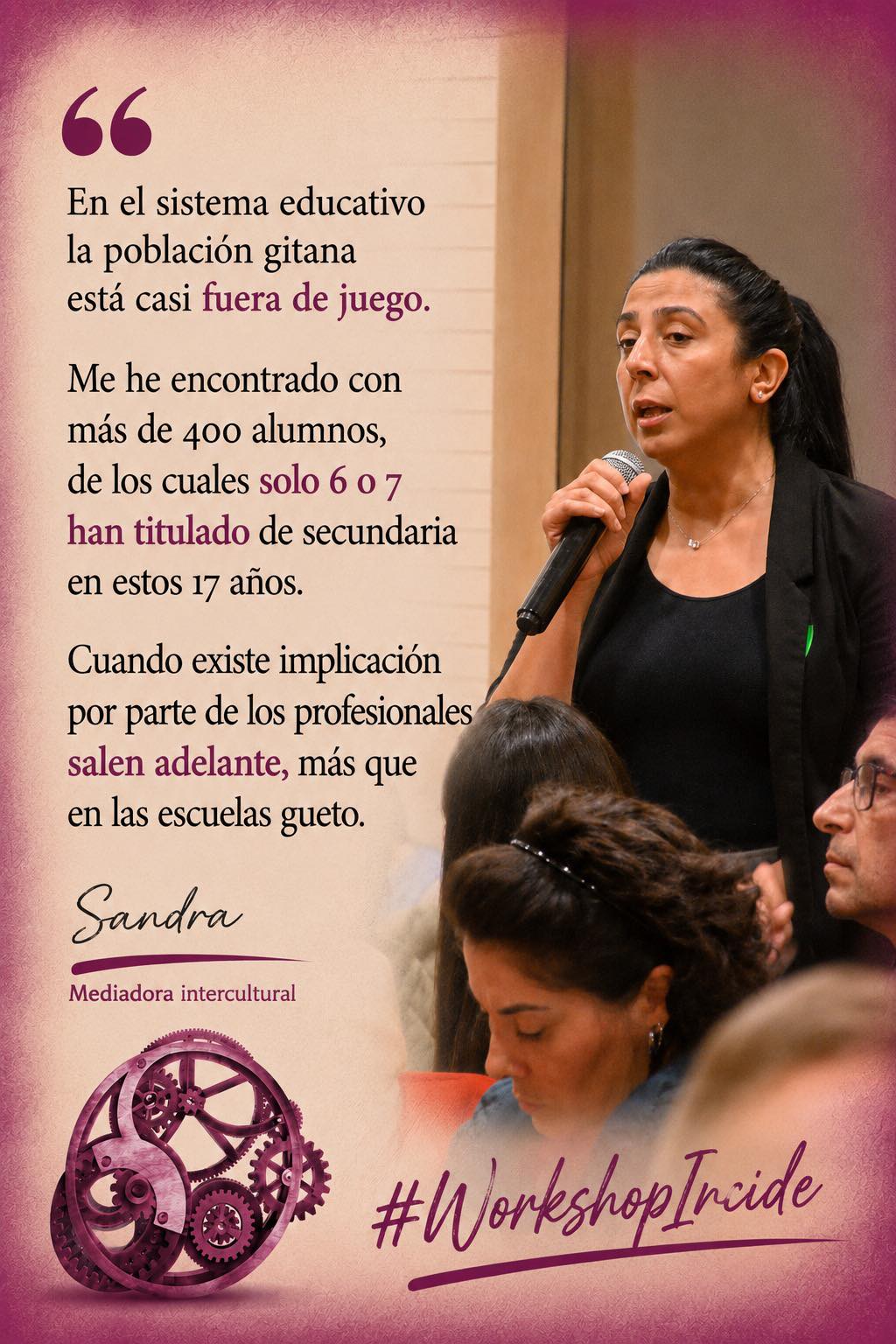
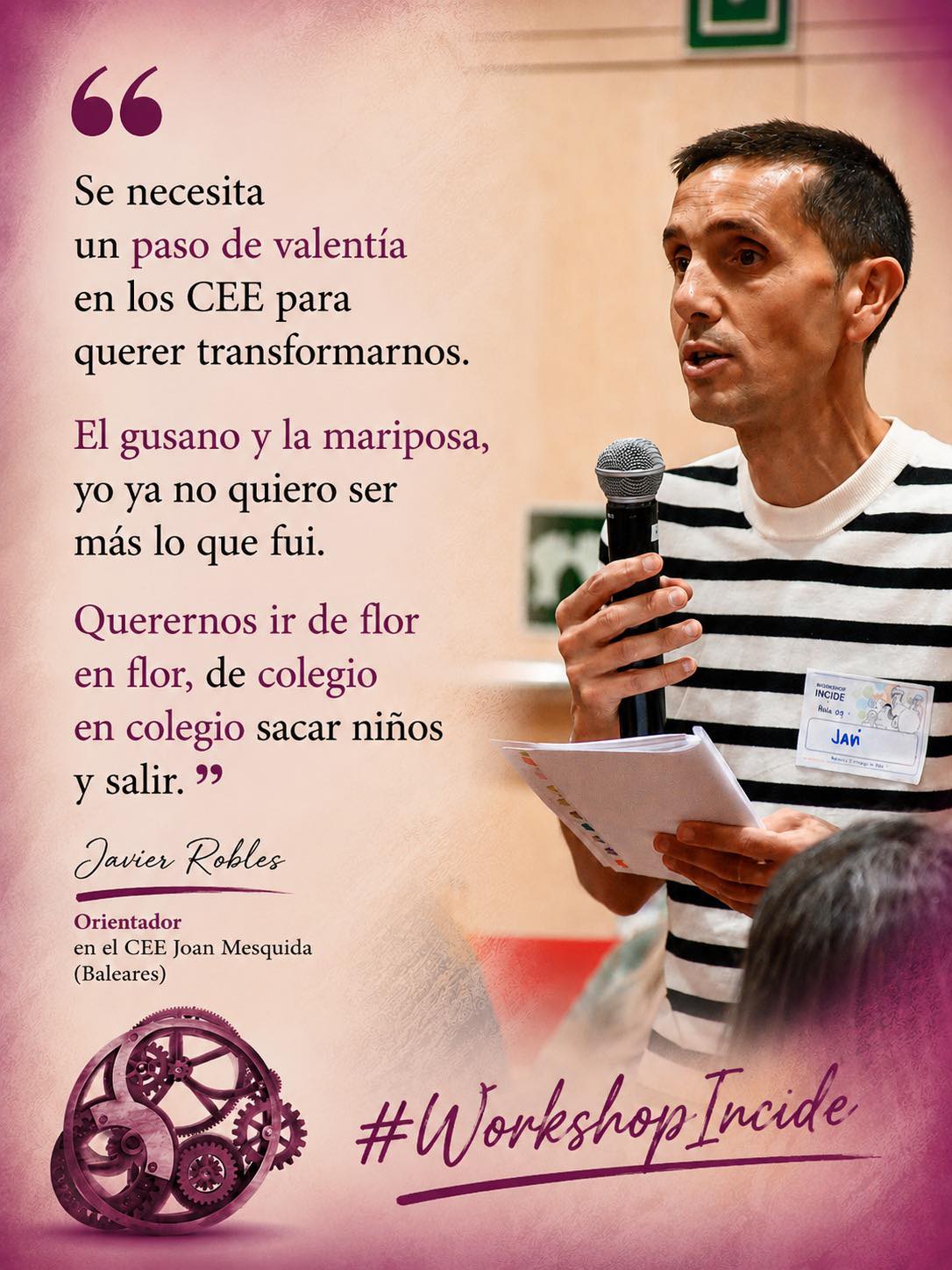
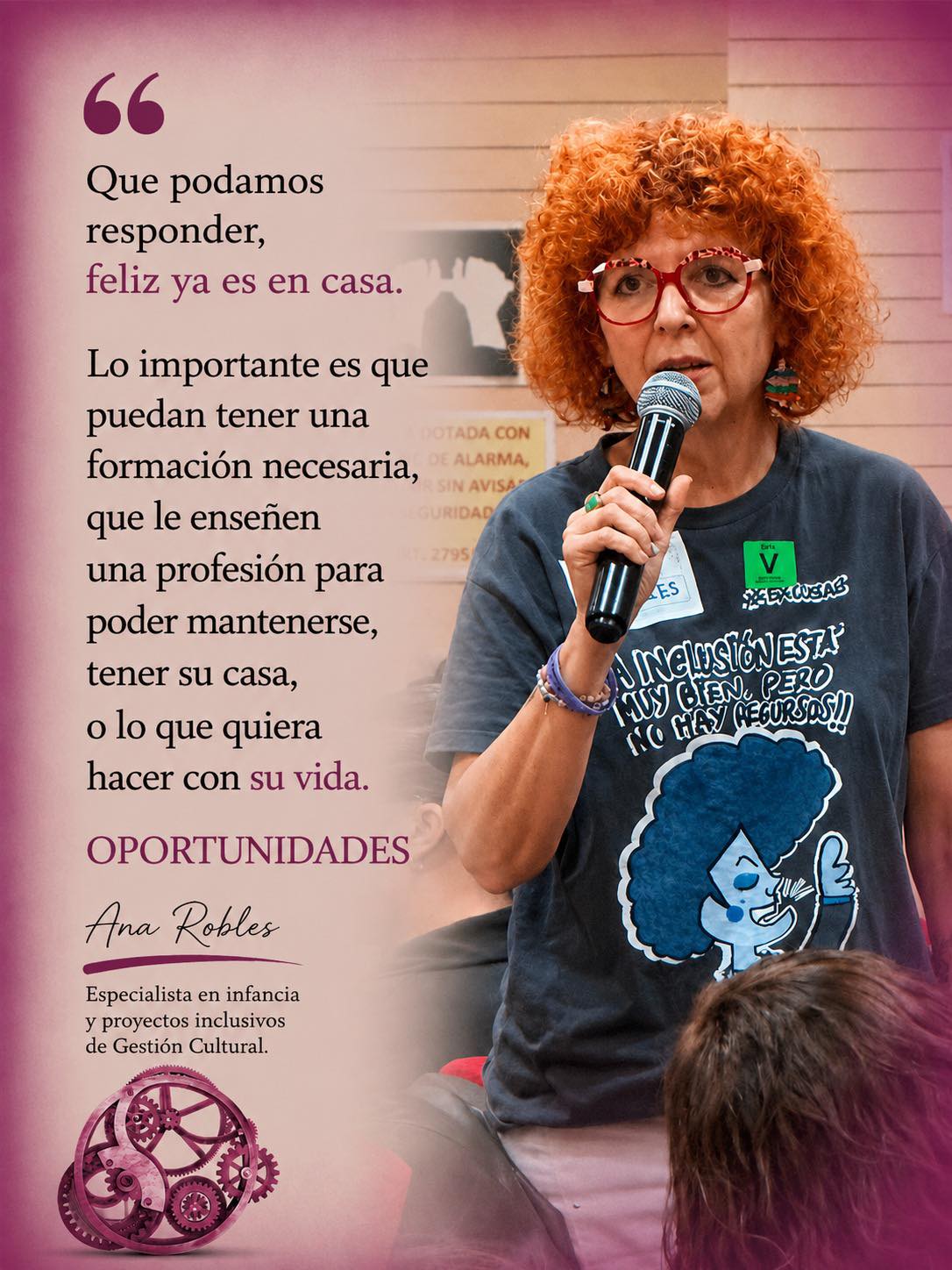
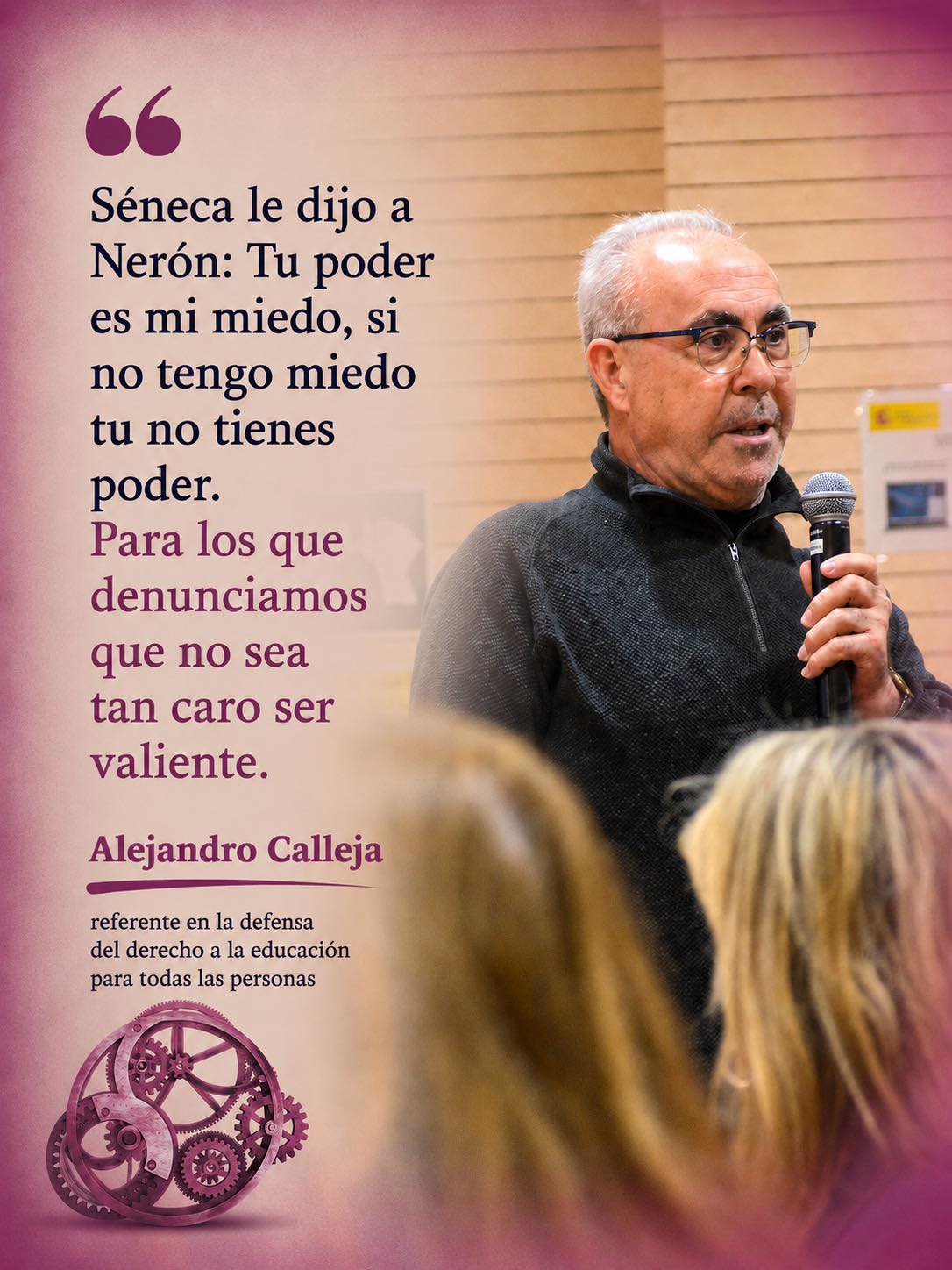
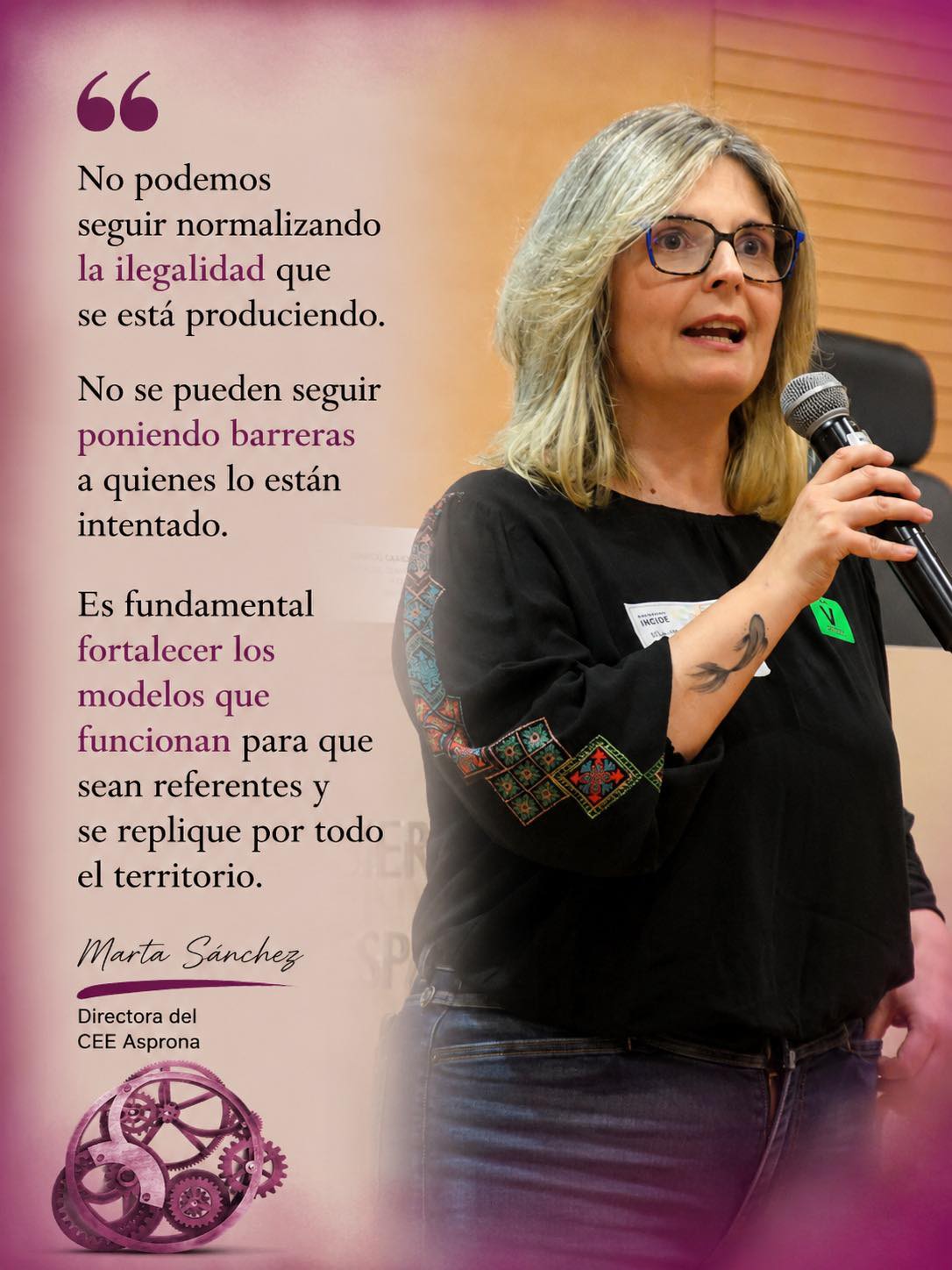
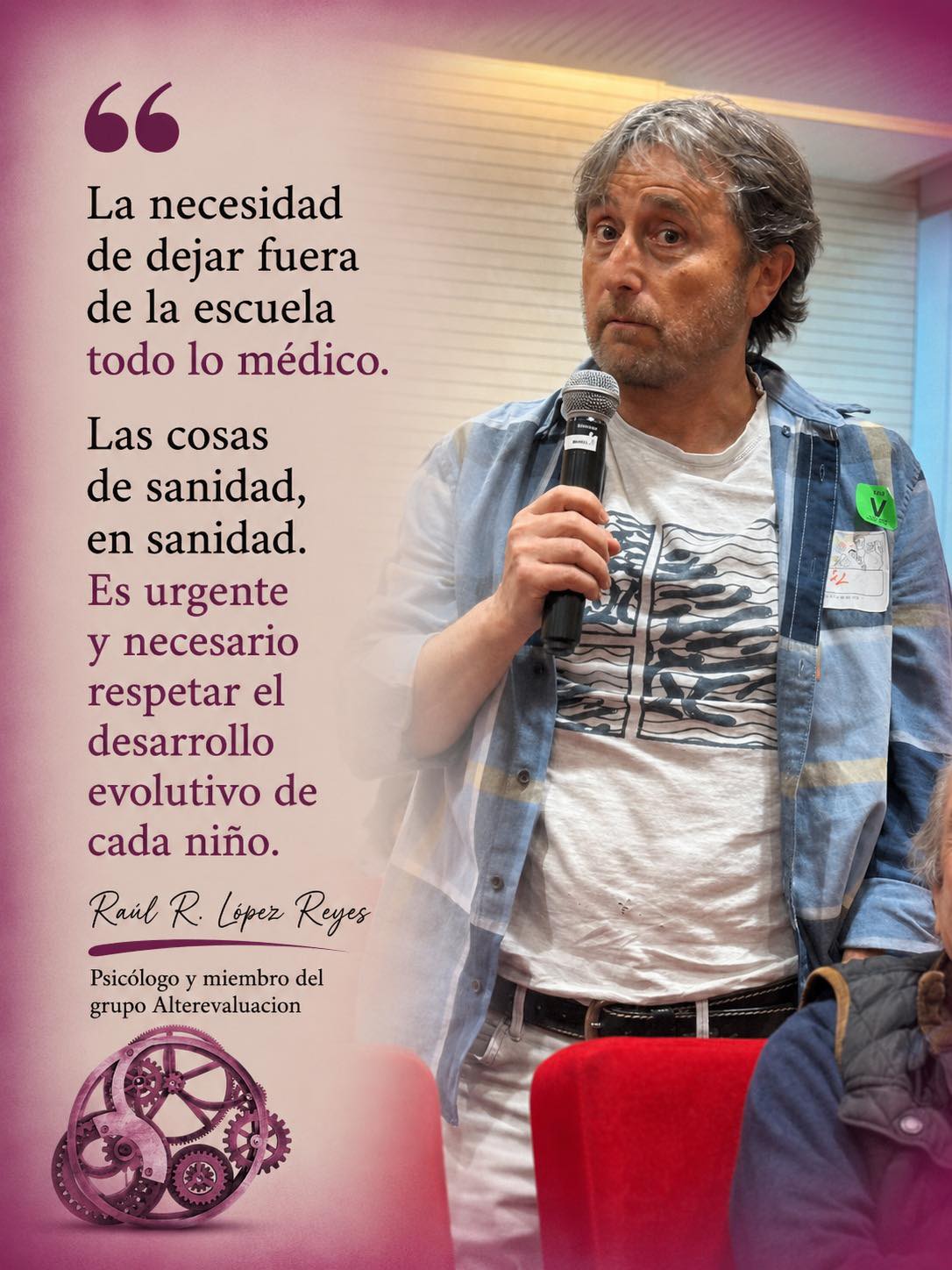
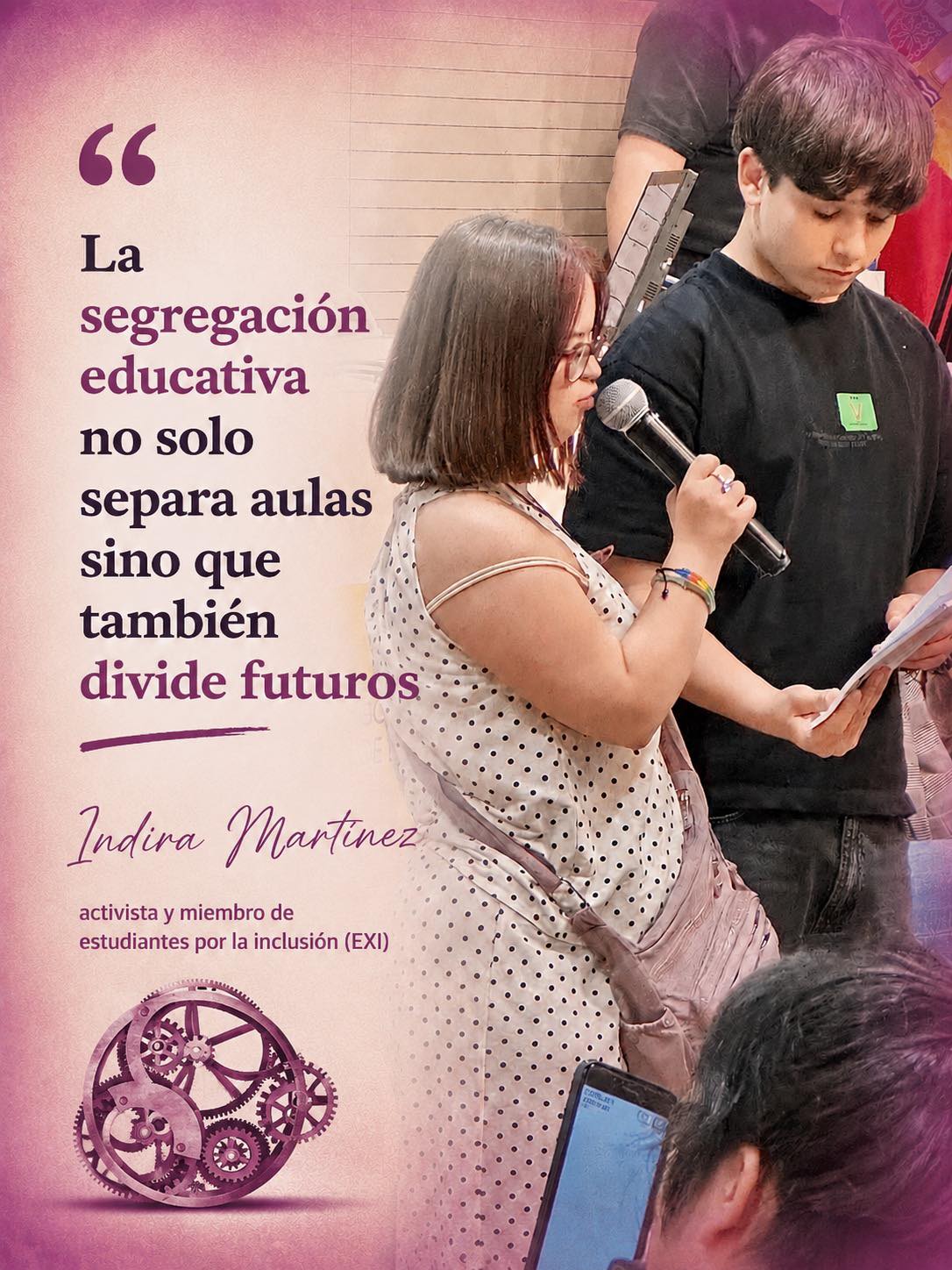
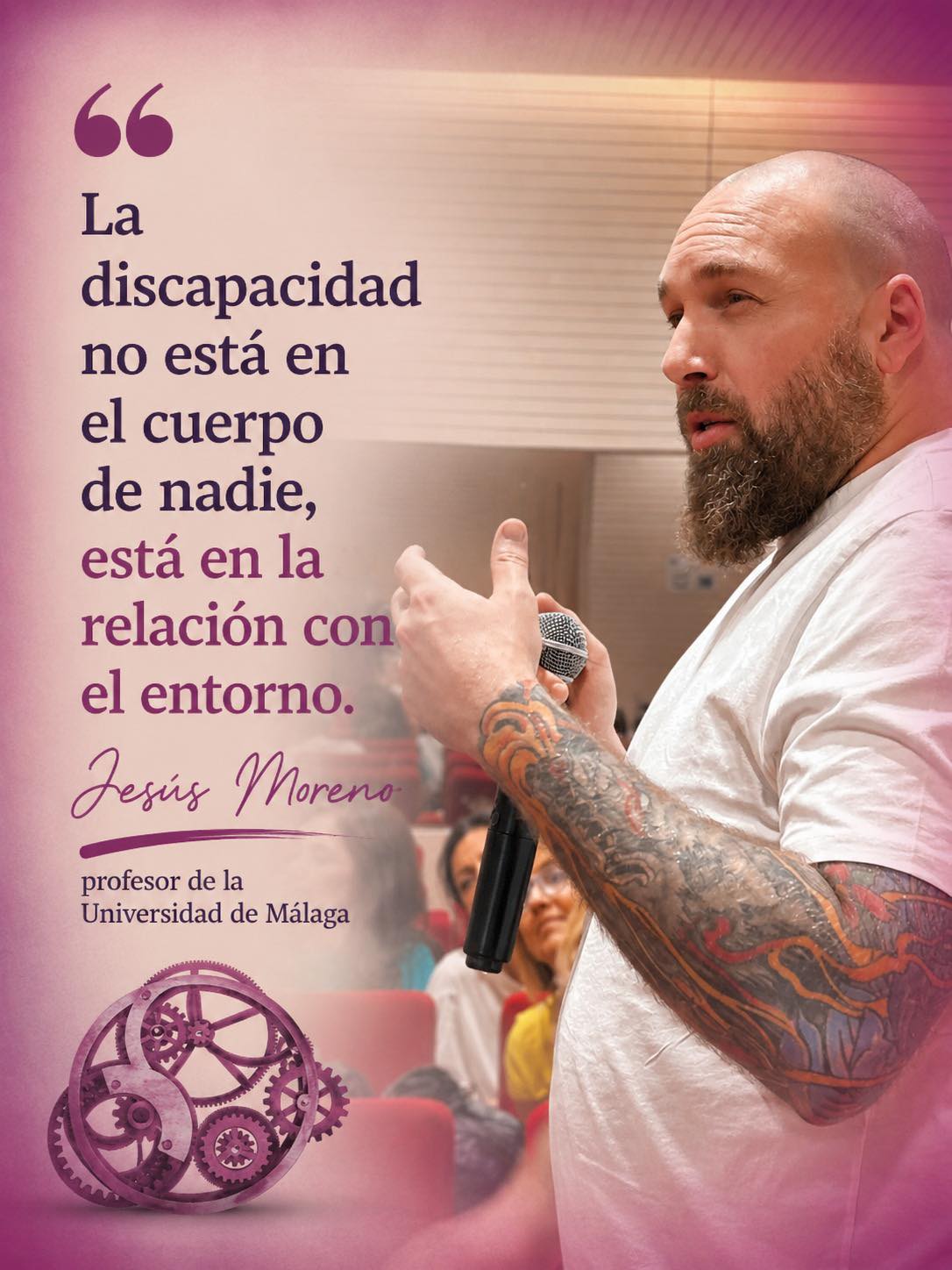
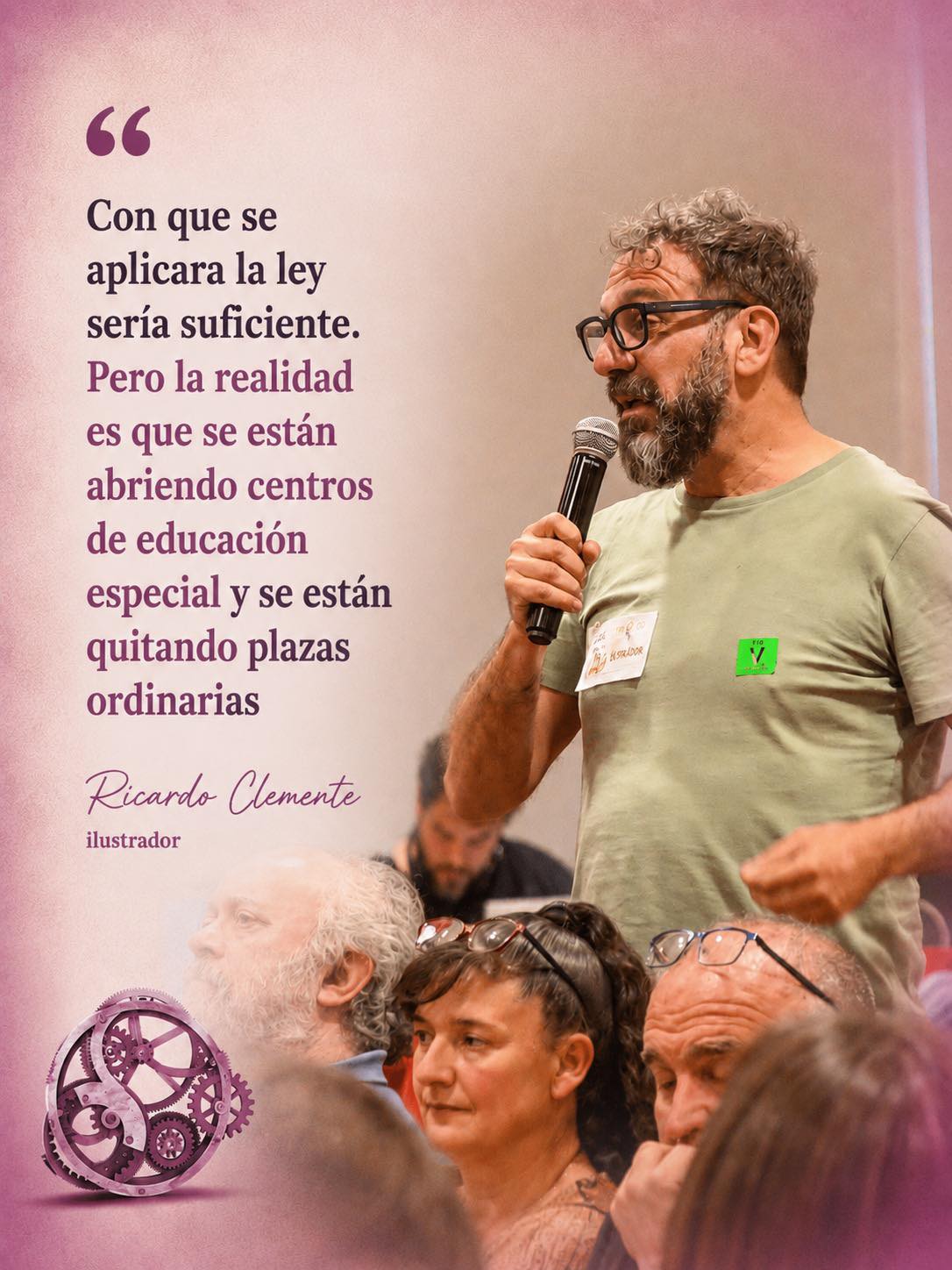
A tested methodology
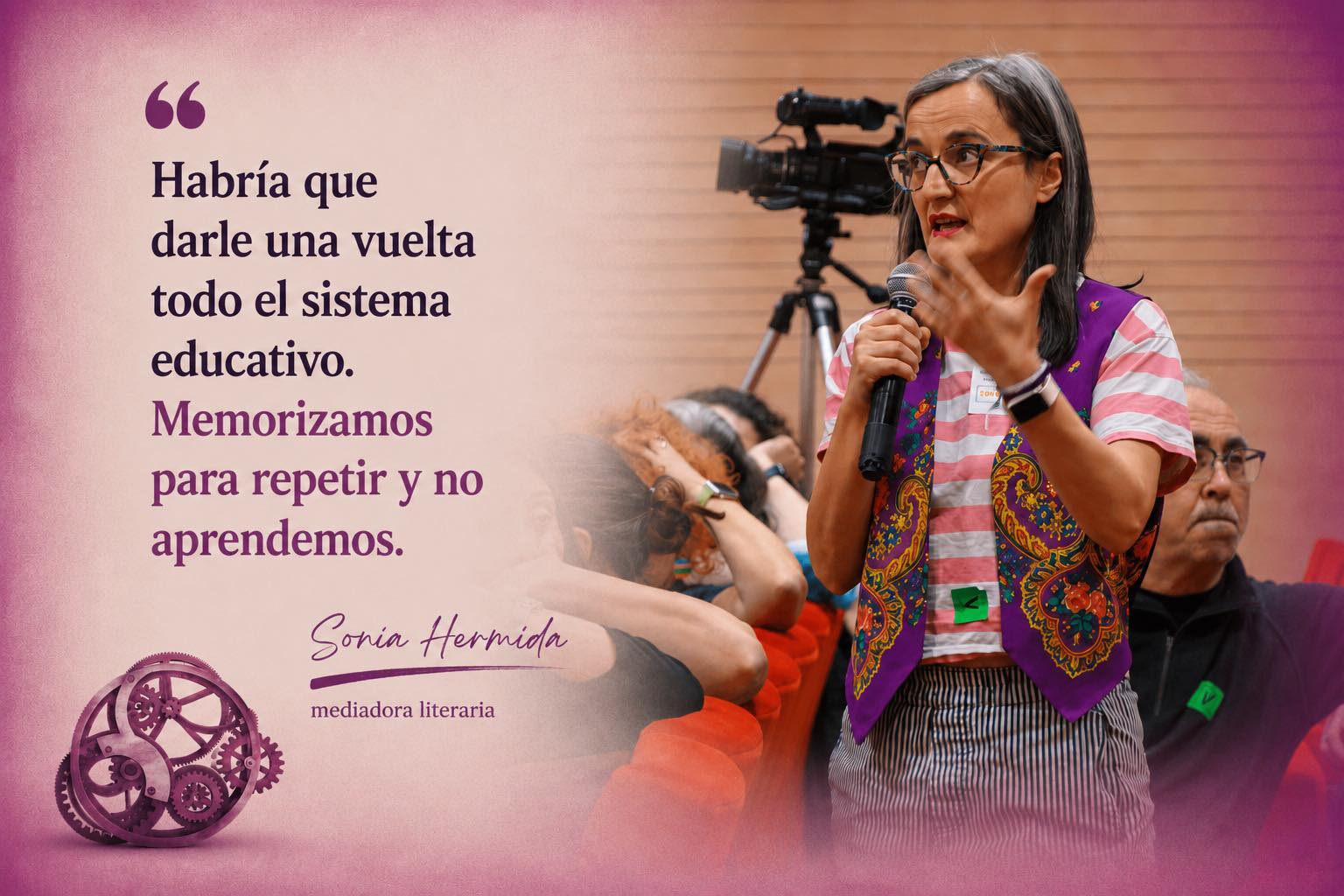
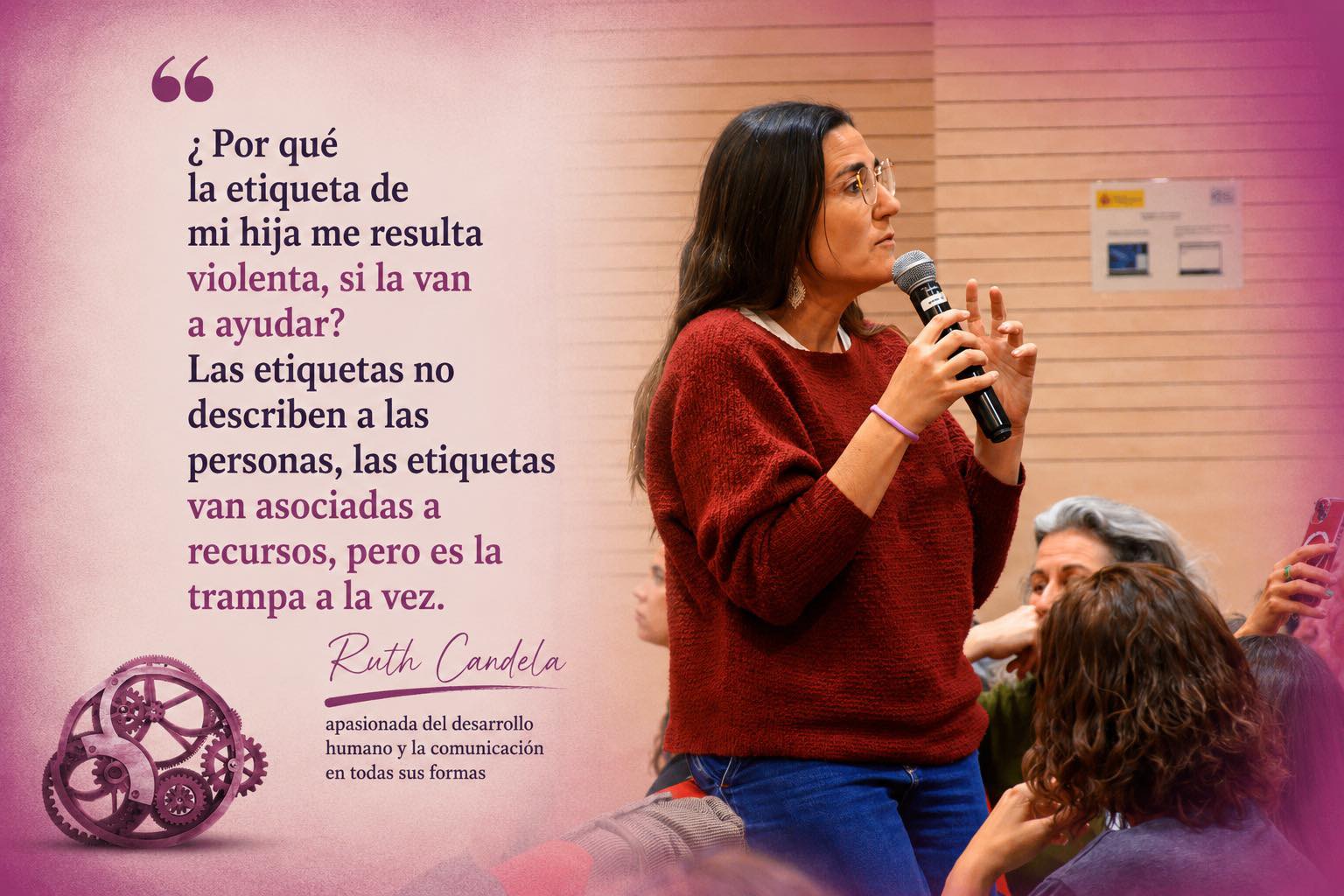
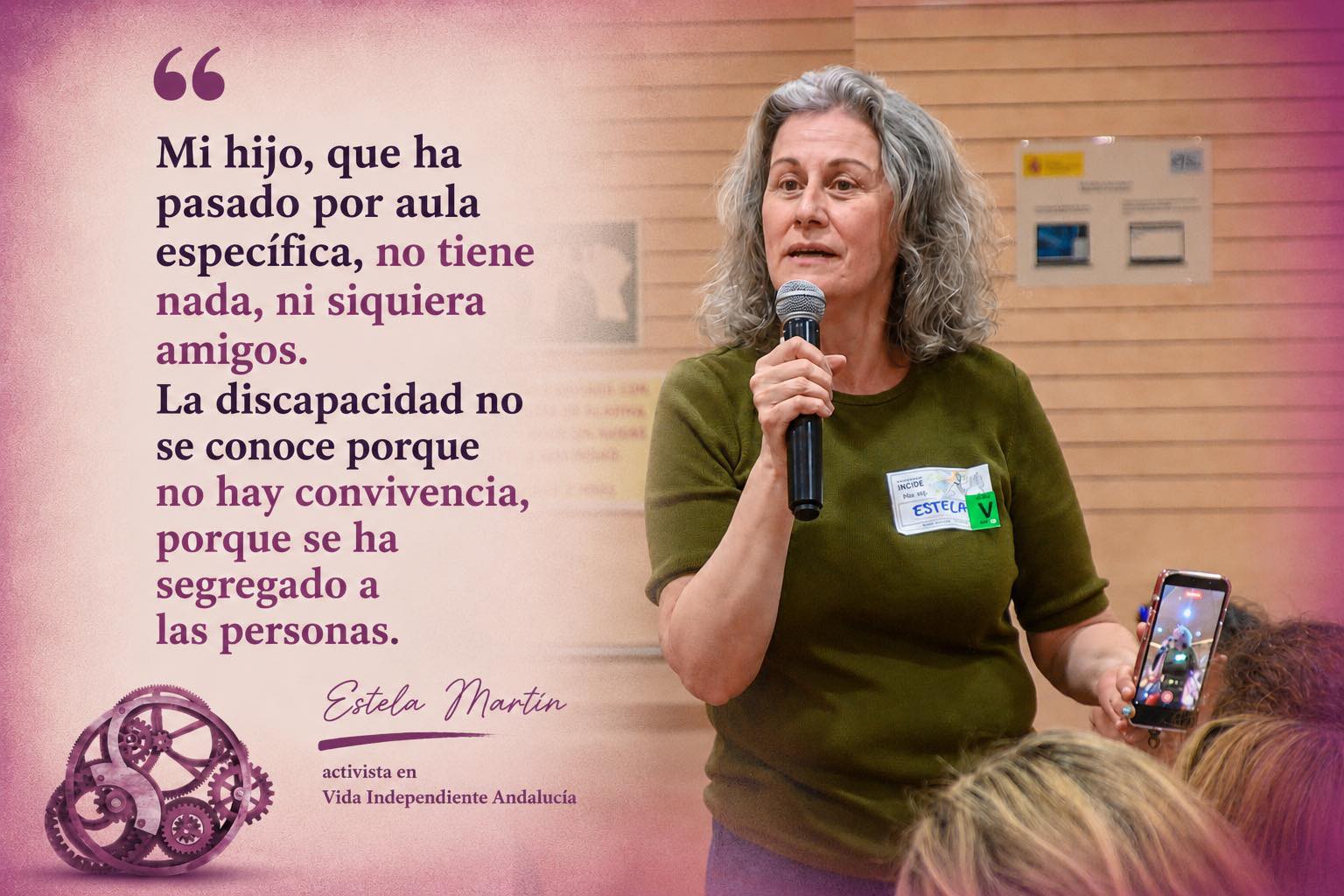
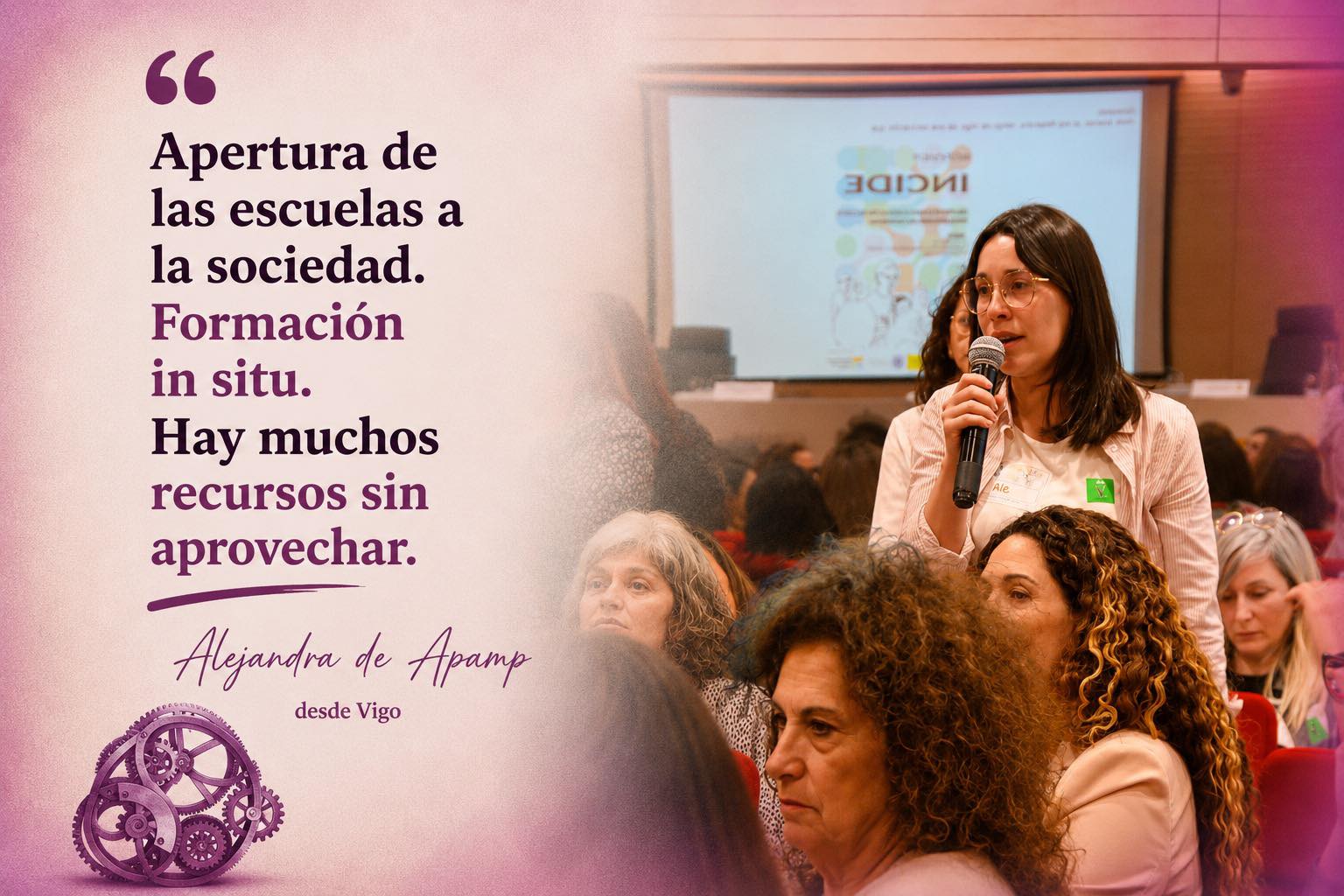
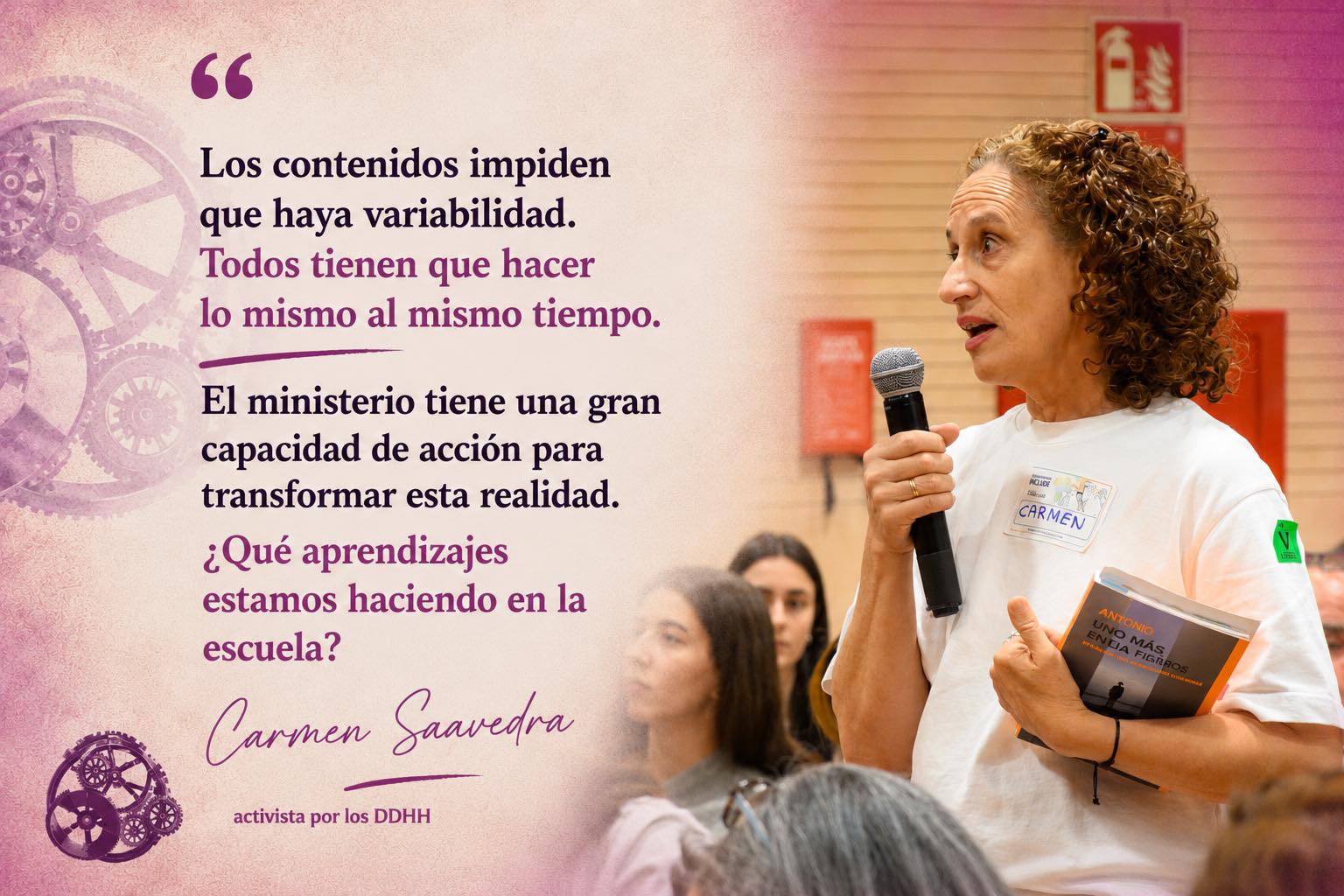
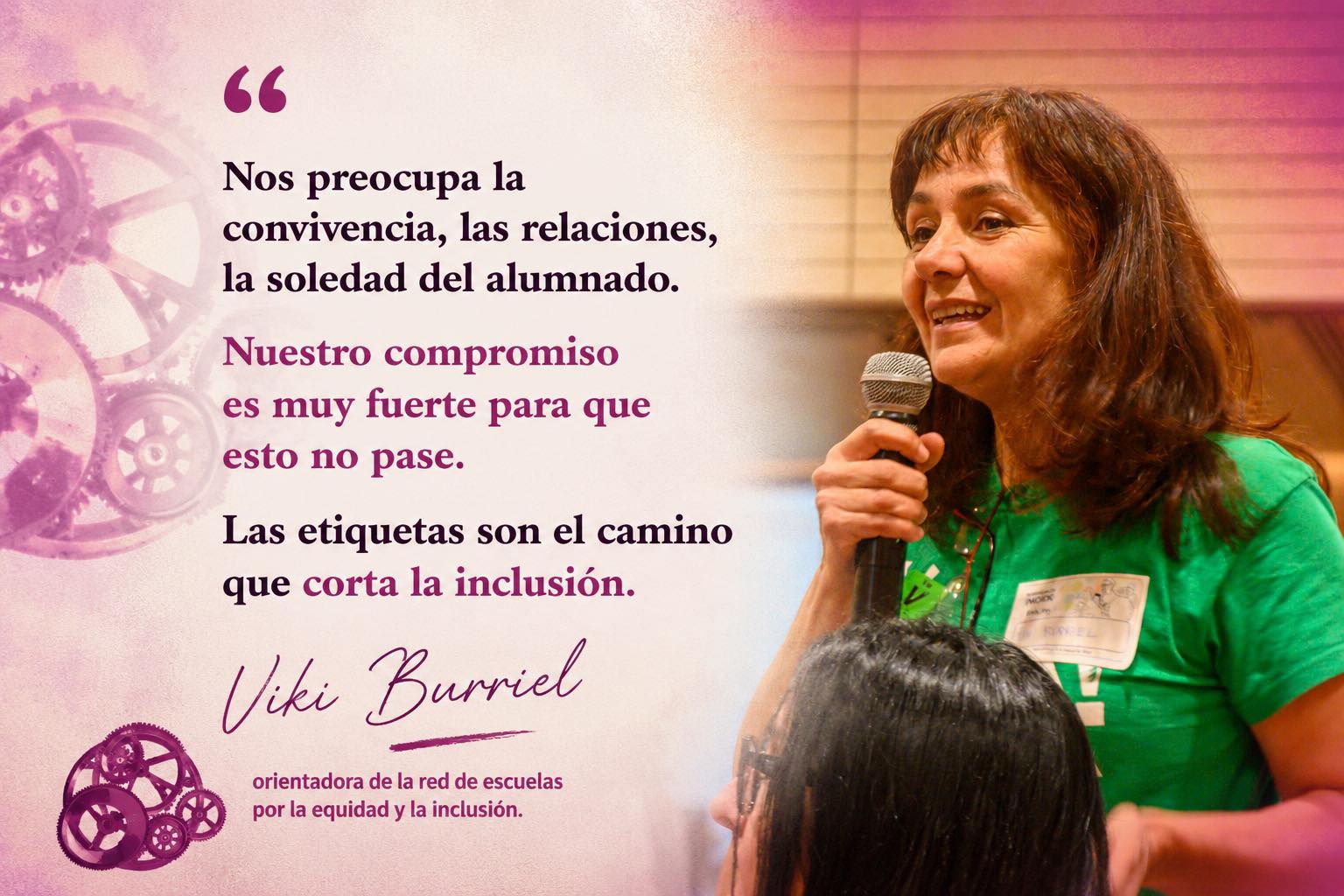
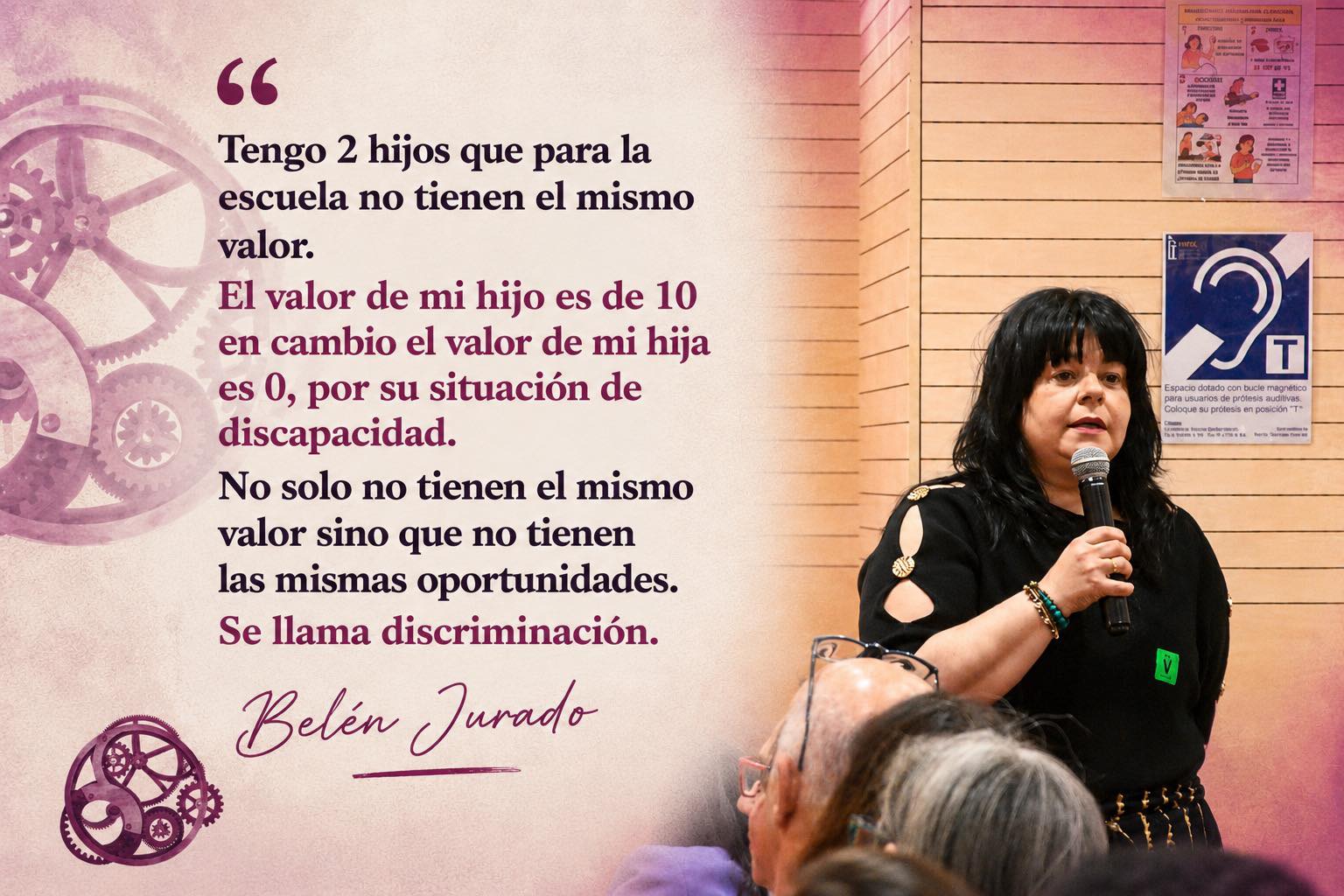
The methodology used in this workshop has been previously developed in the R&D&I Projects RTI2018-099218-A-I00 and PID2022-140193OB-I00, funded by the Ministry of Science, Innovation and Universities. These projects, led by the University of Malaga, have facilitated the emergence of the movement for inclusive education Quererla es Crearla, which combines social and educational activism, citizen participation, and international scientific evidence. The results have been presented at major International Education Congresses, published in some of the world’s most prestigious scientific journals in this field, and all of this has garnered a significant number of recognitions, including awards from the American Educational Research Association (Chicago, 2023) and from Down Syndrome International(United Nations, New York, 2024).
More information about the academic work of Quererla es crearla can be found HERE.
Related news
- Report: “Objective: educational inclusion”(RTVE)
- The Secretary of State closes the participatory process held with the educational community to design the Inclusive Education plan(MEFPD)
- Teachers from the UMA participate, at the Ministry’s headquarters, in a meeting on inclusive education(University of Málaga)
- The Andrés de Ribera school and Flampa participate in Madrid in a meeting on Inclusive Education(Diario de Jerez)
- Education gathers proposals from the educational community for the development of the Strategic Plan for Inclusive Education(Valencia Plaza)
- We attended in Madrid the meeting “Workshop INCIDE. A policy for inclusive education from citizen experiences”(COPOE)
- We participate in the INCIDE Workshop, a proposal from the Ministry of Education to move towards a more inclusive school(APROSCOM)
- The Government defends that citizens must be “protagonists and allies” in the design of the Strategic Plan for Inclusive Education(Servimedia)