Inclusive education as a fight against normality
- Jesús Soldevila Pérez (University of Vic)
- Ignacio Calderón Almendros (University of Málaga)
This text arises from the analysis of the #Excusas Campaign carried out by Belén Jurado, from the learning developed thanks to so many brave families and professionals, and from the recognition of the educational and revolutionary work they do every time they raise their voices to denounce what is absolutely unjust in school, at the risk of being misunderstood.
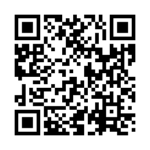
“No hay recursos” es un mantra que se ha repetido tantas veces que algunos se convencen de que es la “verdad”. Tanto se ha repetido que lo han convertido en una “realidad” y que al ser compartida y transmitida por la mayoría se ha instaurado como parte de la cultura escolar y social. Así, la falta de recursos es sin duda la principal, histórica y más aceptada excusa que se puede dar para no incluir. Como pasa con el resto de las excusas, una respuesta tan simple a un fenómeno tan complejo como es educar en las escuelas a toda la infancia junta deja muchas preguntas por responder. No es nuestra pretensión responderlas todas, pero sí algunas que ayuden a pensar y a caminar hacia una educación más inclusiva.
What school logic is hidden behind the damning phrase “there are no resources”?
It seems that by saying it, rights become discarded, children can be excluded, and the person who utters it can free their conscience from all responsibility. But it is a phrase that does not argue, it only sentences.
Beneath it lies the power of “normality” in school. Everything that deviates from the norm is, as if by magic, delegitimized and dismantled. In other words, in school everything is subordinate to normality, which becomes a requirement; upon deviating from it, it seems understandable to lose the right to learn there, to make friends there, and even to be there.
In this way, a dichotomous response is naturalized: one for those considered normal—those who can meet the school’s demands, even if with great difficulty and suffering—and another for the rest, who become the “other,” the abnormal.
This is what happens when we talk about “special”.Instead of understanding differences as inherent to being human, a reductionist view is adopted that pathologizes those differences that strain the standard, condemning them to the pit of the strange, the undesirable, and even the dispensable (Soldevila Pérez, Calderón Almendros & Echeita, 2024).
These differences thus become something that must be dealt with in the parallel universe of the special: teaching is now done by a special education teacher (because they must repair the damage), and it occurs in special classrooms (separate from “normal” classrooms) or in special education centers, even far from their neighborhoods, which prevents the building of relationships in the natural context. Diversity ends up being seen and experienced in school as a problem that can only be solved with some resource that normalizes it, which usually means segregation.
We all know, however, that talking about normality is a great exercise in hypocrisy. That dividing human beings through certain differences and not others is arbitrary and unjust. Carlos Skliar calls this differentialism.
The differences have been tragically confused with the different ones. The “different ones” are a construction, an invention, a reflection of a long process that we could call differentialism, that is, an attitude – undoubtedly racist – of separation and diminution of certain traits, certain marks, certain identities in relation to the vast generality of differences.
Skliar, 2005, p. 13
The constant division of the normal and the abnormal, to which every individual is subjected, extends to us and applies to other objects, the binary marking and exile of the leper; the existence of a whole set of techniques and institutions that claim the task of measuring, controlling, and correcting the abnormal, makes the disciplinary devices to which the fear of the plague appealed function. All the mechanisms of power that, still today, are arranged around the abnormal, to mark it, as well as to modify it, compose these two forms, from which they derive from afar.
Foucault, 2003, pp. 203-204
There are many “-isms” that legitimize the construction of a dividing line between the normal and the rest: classism, racism, sexism, ableism… These are forms of discrimination based on a difference. Among them, ableism is deeply ingrained in school culture. The school constantly evaluates with all its internal and external mechanisms to discriminate who it considers capable/normal, and therefore, who is a member of the school and who is not. Many of those who are rejected are named by disability. A disability—a form of differentialism—constructed, endorsed, and supported by the second pillar of the logic of normality: the rehabilitative model.
From this model, anyone who does not meet the standards is considered ill and must be rehabilitated/normalized. Thus, a person who can be normalized and adapt to school will be able to remain in it. Those who do not achieve this will be subjected to blackmail: remaining in a context where “there are no resources,” or moving to where they do exist. In any case, accepting exclusion. This, in turn, exerts great pressure on the other group: accepting that they must camouflage themselves in normality to avoid exclusion. All of this leads us to ask ourselves a new question.
What do we mean by resources?
In a recently awarded research paper, Rappoport et al. (2019) gather evidence from international research over the past decades that shows some of the negative effects produced by individual and group supports, which constitute the main way of understanding resources:
- The work of specialists leads to a delegation of responsibility in tutor teachers (Bourke, 2010; Takala, 2007).
- There is a reduction in opportunities for students to develop autonomy (Giangreco, 2010; Takala, 2007; Ware et al., 2011).
- Interaction between peers is limited (Rose & O’Neill, 2009; Torres & Castillo, 2016).
Therefore, instead of understanding resources as individual supports and trying to normalize or act as crutches, it makes sense to question the frameworks that sustain these conceptions, beliefs, values, and attitudes (Rappoport et al., 2019; European Agency, 2012; Curcic, 2009; Loreman, 2014; Owens, 2001).
In this direction, Booth and Ainscow (2002, p. 8) propose that we move beyond this limited view of resources and supports, understanding them as “all activities that increase a school’s capacity to respond to student diversity.” From this perspective and way of understanding diversity, the school increases its capacity to develop support actions even without any cost (Cuomo, 2007). For example, we can develop processes ofParticipatory Action Research by recognizing students’ voicesas an asset for the democratic and inclusive transformation of the school. This is what theCEIP La Parra in Malagainitiated and what the emergingInternational Network of Schools for Inclusion and Equitysustains. Or develop processes ofCollaborative Action Research, using the resource box “Reaching All Students” from UNESCO (Ainscow, Calderón, Duk & Viola, In press). Or structuring the teaching-learning processes in a cooperative way so that students can support and accompany each other in them. From Quererla es crearlawe have been designingdifferent guidesto make those necessary transformations a reality.
How to use resources?
No one should pay the human cost of exclusion. It is obvious that a society that invests in education and healthcare will be a more just society with greater well-being. Therefore, it is necessary to fight for greater investment in education, because any effort we make to improve our education system is always insufficient. Even more so when there is scientific evidence showing the impact of the lack of resources particularly on disadvantaged populations (Rogero and Turienzo, 2024), something absolutely in line with what has been discussed here. We want more resources, but not at any cost. And in no case can they be a justification for restricting the right to inclusive education.
As we have seen, the same resource can serve inclusion or exclusion, social justice or injustice (Soldevila et al., 2017; Camacho et al., 2023, 2024). For example, support teachers can function as a resource for exclusion if they operate from the perspective of the rehabilitation model, intervene individually, and perform their tasks attempting to normalize students in segregated spaces; or, they can operate from a social model that understands reality as our own construction, work cooperatively with the classroom teacher to identify and remove barriers to presence, participation, and learning, and develop co-teaching tasks within the mainstream classroom. The same resource, two opposite realities. Thus, it is not so much a question of more resources, but of their inclusive use. How will you use them?
Excuses are for self-convincing and quieting one’s conscience. But educating requires a commitment to the other person, to their construction in freedom; and a commitment to the world, to the fight for social justice and democracy. It is a fight against normality, against the schemes that exclude, objectify, and harm. It is there that inclusive education gains its full meaning, and that… is free.

References
Here is the scientific bibliography used in this response, so you can delve deeper. Faced with unfair and false statements, inform yourself and do not remain silent!
European Agency for Development in Special Needs Education (2012). Professional profile of teachers in inclusive education.Odense.
Ainscow, M., Calderón-Almendros, I.; Duk, C.; & Viola, M. (In press). Using professional development to promote inclusive education in Latin America: possibilities and challenges. Professional Development in Education.Booth, T., & Ainscow, M. (2002). The Index for Inclusion: Developing learning and participation in schools. CSIE.
Bourke, P. (2010). Inclusive education reform in Queensland: Implications for policy and practice. International Journal of Inclusive Education, 14 , 183-193.
Calderón Almendros, I. (2014). Education and hope at the borders of disability.Cinca.
Camacho-Vallejo, S; Collet-Sabé, J. & Soldevila-Pérez, J (2024). Teachers, families, and inclusion: divergent perspectives, barriers, and (in)communications between teachers and families. Revista de Educación Inclusiva, 17 (1), 182-201. https://revistaeducacioninclusiva.es/index.php/REI/article/view/946
Camacho-Vallejo, S. Collet-Sabé, J. & Soldevila-Pérez, J. (2023). Are Spanish schools for inclusion? A systematic review of the measures in response to diversity. Pedagogy and Social Work. Journal of Applied Social Sciences, 12 (2), 29-45. https://tinyurl.com/27x89ow4
Cuomo, N. (2007). Towards a school of the emotion of knowing: The future teacher, teacher of the future.ETS Editions.
Curcic, S. (2009). Inclusion in PK-12: An international perspective. International Journal of Inclusive Education, 13 (5), 517–538. https://doi.org/10.1080/13603110801899585
Foucault, M. (2003). Discipline and Punish: The Birth of the Prison. 21st Century.
Giangreco, M. F. (2010). One-to-one paraprofessionals for students with disabilities in inclusive classrooms: Is conventional wisdom wrong? Intellectual and Developmental Disabilities, 48 , 1–13. https://doi.org/10.1352/1934-9556-48.1.1
Loreman, T. (2014). Measuring inclusive education outcomes in Alberta, Canada. International Journal of Inclusive Education, 18, 459–483. https://doi.org/10.1080/13603116.2013.788223
Owens, R.G. (2001). Organizational behavior in education: Instructional leadership and school reform.
Allyn and Bacon. Rappoport, S., Sandoval, M., Simón, C., & Echeita, G. (2019). Understanding inclusion support systems: three inspiring experiences / Understanding inclusion support systems: three inspiring experiences. Culture and Education, 31 (1), 120–151. https://doi.org/10.1080/11356405.2019.1565250
Rogero, J. and Turienzo, D. (2024). Educa Fakes: 50 lies and half-truths about Spanish education. Capitán Swing.
Rose, R., & O’Neill, A. (2009). Classroom support for inclusion in England and Ireland: An evaluation of contrasting models. Research in Comparative and International Studies, 4 , 250–261. https://doi.org/10.2304/rcie.2009.4.3.250
Skliar, C. (2005). Questioning normality, not abnormality. Policies and lack of policies regarding differences in education. Revista Educación y Pedagogía , 17 (41), 11-22. https://dialnet.unirioja.es/descarga/articulo/1419230.pdf
Soldevila, J.; Calderón, I. & Echeita, G. (2024). Mi vida (escolar) es prescindible:radicalizar un discurso contra lasmiserias del sistema escolar. En J. Collet, M. Naranjo & J. Soldevila (Ed), Educación inclusiva Global (pp. 41-62). Octaedro. https://tinyurl.com/28ctz4mn
Soldevila, J., Naranjo, M., Muntaner, J.J. (2017). Inclusive practices: the role of the support teacher. Aula Abierta, 46 , 49‐56. https://doi.org/10.17811/rifie.46.2.2017.49‐55
Takala, M. (2007). The work of classroom assistants in special and mainstream education in Finland. British Journal of Special Education, 34, 50–57. https://doi.org/10.1111/j.1467-8578.2007.00453.x
Torres, J. A., & Castillo, S. (2016). Incidence of educational support policies on the organizational structures of schools from the perspective of teachers: A study in the province of Jaén. Educación XXI, 19 , 205–228. https://doi.org/10.5944/educXX1.14223
Ware, J., Butler, C., Robertson, C., O’Donnell, M., & Gould, M. (2011). Access to the curriculum for pupils with a variety of special educational needs in mainstream classes. An exploration of the experiences of young pupils in primary school (Research Report no. 8).
National Council for Special Education. Understanding inclusion support systems. https://tinyurl.com/29uzpgku